1. ArchDaily
  2. Gerrit Rietveld

Gerrit Rietveld: The Latest Architecture and News

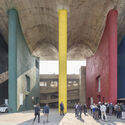
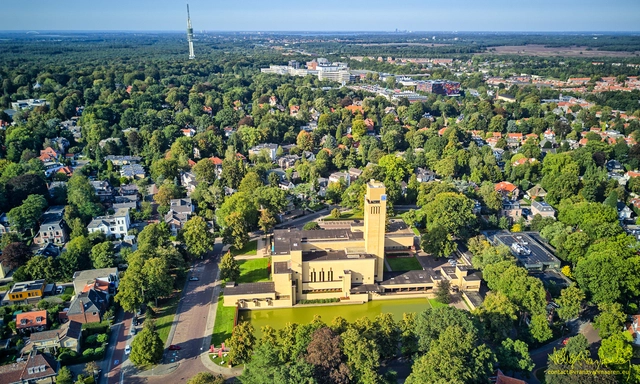
Hilversum Town Hall: Willem Dudok’s Monument to Civic Architecture

Subscriber Access | 

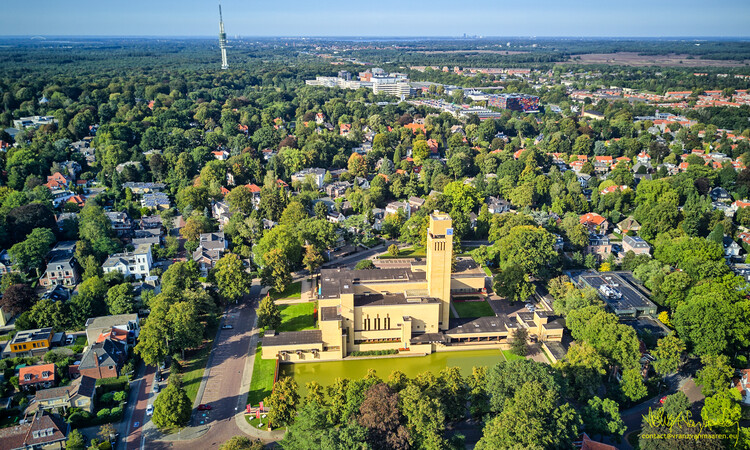
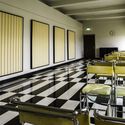
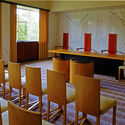
In the Dutch city of Hilversum, a municipal building completed in 1931 redefined the very idea of what a town hall could be. More than a house for local administration, the Hilversum Town Hall became the architectural expression of a community in transformation. With its tower rising above reflective ponds, its brick masses composed around courtyards, and its carefully detailed interiors, the building asserted that civic architecture could unite function with symbolism, efficiency with ceremony.

The architect behind this vision, Willem Marinus Dudok, was not only responsible for individual buildings but for the broader shaping of Hilversum itself. As a city architect and planner, he designed schools, housing districts, and parks, developing a language that fused Dutch craftsmanship with Modernist clarity. The town hall represented the culmination of this trajectory: a civic centerpiece where urban ambition, material refinement, and human scale converged in a single, coherent form.
Hilversum Town Hall: Willem Dudok’s Monument to Civic Architecture - Image 1 of 4Hilversum Town Hall: Willem Dudok’s Monument to Civic Architecture - Image 2 of 4Hilversum Town Hall: Willem Dudok’s Monument to Civic Architecture - Image 3 of 4Hilversum Town Hall: Willem Dudok’s Monument to Civic Architecture - Image 4 of 4Hilversum Town Hall: Willem Dudok’s Monument to Civic Architecture - More Images+ 24

Netherlands Pavilion at 2025 Venice Architecture Biennale Reimagines the Sports Bar Through a Queer Lens

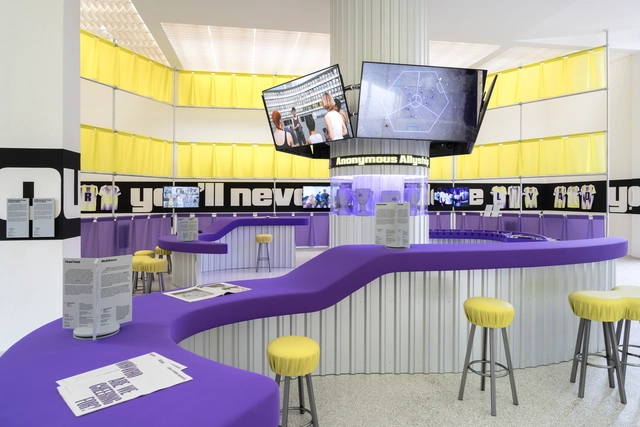
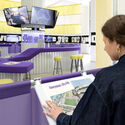
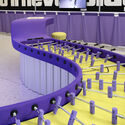
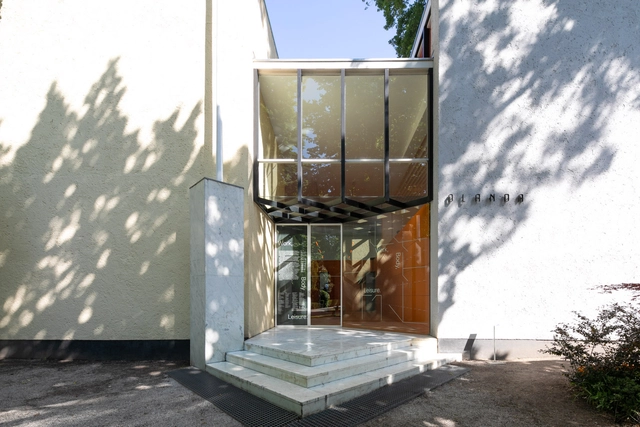
Nieuwe Instituut, the national museum and institute for architecture, design, and digital culture in the Netherlands, has opened the Dutch Pavilion at the 2025 Venice Architecture Biennale. This year, the Giardini pavilion, designed by Gerrit Rietveld in 1953, is transformed into a sports bar. Titled "SIDELINED: A Space to Rethink Togetherness", the exhibition is curated by Amanda Pinatih, Design & Contemporary Art Curator at the Stedelijk Museum in Amsterdam, in collaboration with social designer Gabriel Fontana. Through a queer lens, the project examines sport as an architectural system that regulates spaces, bodies, and behavior, offering an alternative perspective on societal norms related to gender, identity, and group dynamics.

Netherlands Pavilion at 2025 Venice Architecture Biennale Reimagines the Sports Bar Through a Queer Lens - Image 1 of 4Netherlands Pavilion at 2025 Venice Architecture Biennale Reimagines the Sports Bar Through a Queer Lens - Image 2 of 4Netherlands Pavilion at 2025 Venice Architecture Biennale Reimagines the Sports Bar Through a Queer Lens - Image 3 of 4Netherlands Pavilion at 2025 Venice Architecture Biennale Reimagines the Sports Bar Through a Queer Lens - Image 4 of 4Netherlands Pavilion at 2025 Venice Architecture Biennale Reimagines the Sports Bar Through a Queer Lens - More Images+ 6

Netherlands on the Drawing Board: Exploring the Past and Present Futures of Dutch Architecture and Planning

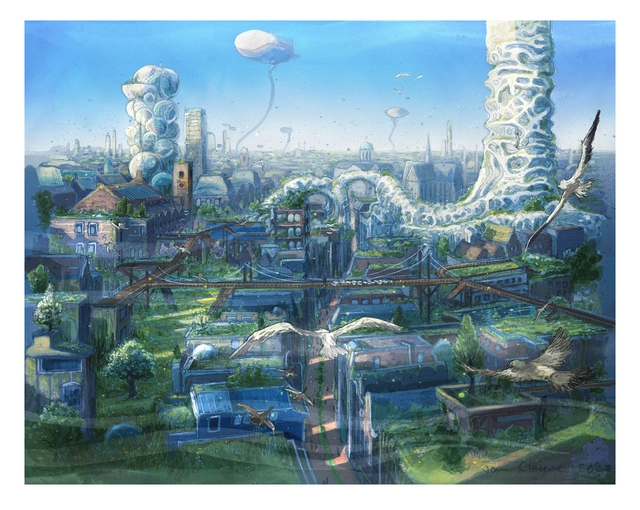
Internationally, the Netherlands is recognized as a country willing to experiment at a large scale, to devise state-wide systems to protect its land and improve the quality of life for its citizens. Provocative proposals from architects and urban planners such as Gerrit Rietveld, Piet Blom, Rem Koolhaas, and the Office for Metropolitan Architecture (OMA), have had an international impact, as they often challenge traditional ways of practice.

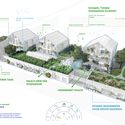
Still, the country faces expected and unexpected challenges, from an acute housing shortage to raising concerns regarding climate change and shifting ideas of ecology. In the words of curator Suzanne Mulder, the country is “once again on the drawing board,” as architects, urban planners, and designers are reopening conversations about the future by looking at past lessons. To come to their help, Rotterdam’s Nieuwe Instituut is organizing the exhibition ‘Designing the Netherlands: 100 Years of Past & Present Futures.’

Netherlands on the Drawing Board: Exploring the Past and Present Futures of Dutch Architecture and Planning - Image 1 of 4Netherlands on the Drawing Board: Exploring the Past and Present Futures of Dutch Architecture and Planning - Image 2 of 4Netherlands on the Drawing Board: Exploring the Past and Present Futures of Dutch Architecture and Planning - Image 3 of 4Netherlands on the Drawing Board: Exploring the Past and Present Futures of Dutch Architecture and Planning - Image 4 of 4Netherlands on the Drawing Board: Exploring the Past and Present Futures of Dutch Architecture and Planning - More Images+ 29

The Myth of Pure White Architecture: How Architects of Modernity Used Color

Given that the architects of modernity were in search of purity of form, it stands to reason that the image of this modern architecture is almost inevitably rendered in white in the collective imagination. Relieved of superfluous decorations, modern architecture became associated with the predominant use of white surfaces to highlight the volumetric composition. Combined with the concept of “material truth” first articulated by Victorian critic John Ruskin, white-colored architecture is often understood as straightforward, clear, and sincere.

The Myth of Pure White Architecture: How Architects of Modernity Used Color - Image 1 of 4The Myth of Pure White Architecture: How Architects of Modernity Used Color - Image 2 of 4The Myth of Pure White Architecture: How Architects of Modernity Used Color - Image 3 of 4The Myth of Pure White Architecture: How Architects of Modernity Used Color - Image 4 of 4The Myth of Pure White Architecture: How Architects of Modernity Used Color - More Images+ 9

“Building Ecosystems”: The Dutch Pavilion at the 2023 Venice Biennale is Curated by Jan Jongert / Superuse Studios

Nieuwe Instituut has appointed Jan Jongert / Superuse Studios from Rotterdam as curator of the Dutch Pavilion at the 18th International Architecture Exhibition – La Biennale di Venezia. In response to Lesley Lokko’s overarching theme for this edition of the Biennale, “Laboratory of the Future,” the Dutch curatorial team aims to explore the complex systems that underpin the structures of our societies. The exhibition will be open from 20 May to 26 November 2023.

“Building Ecosystems”: The Dutch Pavilion at the 2023 Venice Biennale is Curated by Jan Jongert / Superuse Studios - Image 1 of 4“Building Ecosystems”: The Dutch Pavilion at the 2023 Venice Biennale is Curated by Jan Jongert / Superuse Studios - Image 2 of 4“Building Ecosystems”: The Dutch Pavilion at the 2023 Venice Biennale is Curated by Jan Jongert / Superuse Studios - Image 3 of 4“Building Ecosystems”: The Dutch Pavilion at the 2023 Venice Biennale is Curated by Jan Jongert / Superuse Studios - Image 4 of 4“Building Ecosystems”: The Dutch Pavilion at the 2023 Venice Biennale is Curated by Jan Jongert / Superuse Studios - More Images

Why Are Architects So Obsessed With Piet Mondrian?

Subscriber Access | 

In the 1920s, Dutch-born artist Piet Mondrian began painting his iconic black grids populated with shifting planes of primary colors. By moving beyond references to the world around him, his simplified language of lines and rectangles known as Neo Plasticism explored the dynamics of movement through color and form alone. Though his red, yellow and blue color-blocked canvases were important elements of the De Stijl movement in the early 1900s, almost a century later Mondrian’s abstractions still inspire architects across the globe.

But, what is it about these spatial explorations that have captivated artists and designers for so long?

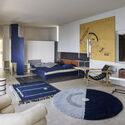
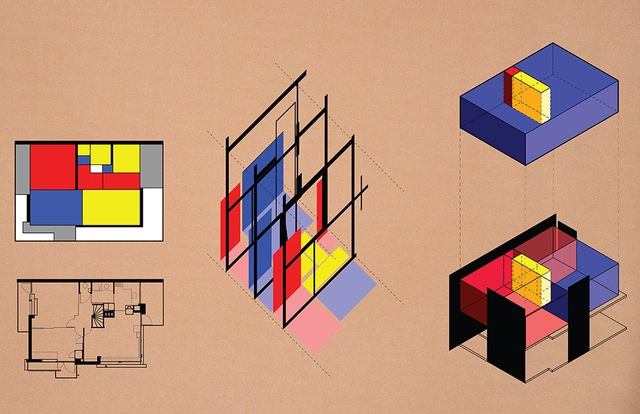
Diagrams of the Rietveld Schroder House Reveal its Graphic and Geometric Brilliance

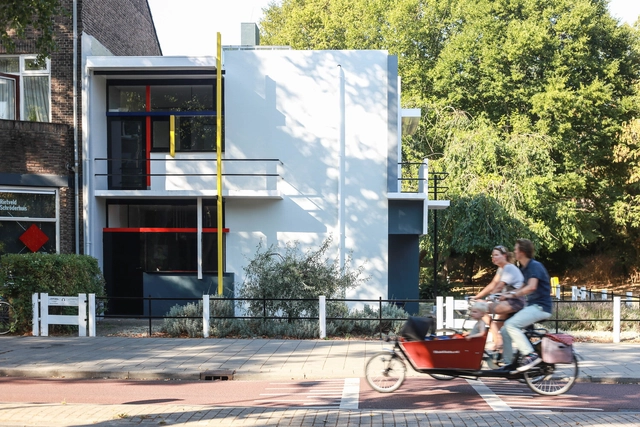
As one of the most prominent examples of the De Stijl movement, the 1925 Rietveld Schroder House represents a radical moment in modern architecture. Categorized by refining components to their geometric forms and primary paint hues, characteristics of the movement are evident in the architect Gerrit Rietveld's approach to residential design. Located in Utrecht, the house experiments with modular elements such as collapsible walls that provide a transformable way of living that still influences design to this day.

Because of its significance, the Schroder House has been the subject of study for many architects, artists, and historians. Inspired by its revolutionary design, aspiring architect and visual artist Yun Frank Zhang created a series of analytical diagrams and an accompanying video in order to understand the functionality, dimensions, and programmatic elements of the house. Below is a sample of Zhang’s exploration.

Diagrams of the Rietveld Schroder House Reveal its Graphic and Geometric Brilliance - Featured ImageDiagrams of the Rietveld Schroder House Reveal its Graphic and Geometric Brilliance - Image 1 of 4Diagrams of the Rietveld Schroder House Reveal its Graphic and Geometric Brilliance - Image 2 of 4Diagrams of the Rietveld Schroder House Reveal its Graphic and Geometric Brilliance - Image 3 of 4Diagrams of the Rietveld Schroder House Reveal its Graphic and Geometric Brilliance - More Images

Video: Artist Animates 5 Iconic Modern Homes

Subscriber Access | 

Five of history's most iconic modern houses are re-created as illustrations in this two-minute video created by Matteo Muci. Set to the tune of cleverly timed, light-hearted music, the animation constructs the houses piece-by-piece on playful pastel backgrounds. The five homes featured in the short but sweet video are Le Courbusier's Villa Savoye, Gerrit Rietveld's Rietveld Schröder House, Ludwig Mies van der Rohe's Farnsworth House, Philip Johnson's Glass House and Frank Lloyd Wright's Fallingwater.

'Gerrit Rietveld – The Revolution of Space' Exhibition

Subscriber Access | 
'Gerrit Rietveld – The Revolution of Space' Exhibition - Featured Image
Red-Blue Chair, Gerrit Rietveld, 1918/1923 © VG Bild-Kunst, Bonn 2012, Photo: Andreas Sutterlin

Taking place now until September 16, 2012, the Vitra Design Museum is exhibiting “Gerrit Rietveld – The Revolution of Space”. The Dutchman Gerrit Rietveld (1888-1964) was one of the most important designers and architects of the 20th century. Today his work is primarily associated with his two most famous designs, which have become icons of modernism: the Red-Blue Chair (1918/1923) and the Rietveld-Schröder House (1924). But this exhibition shows that Rietveld’s oeuvre contains many more facets that deserve to be rediscovered. This is the first major retrospective on Gerrit Rietveld to be presented to the German-speaking public since 1996. Comprising around 320 objects – including furniture, models, paintings, photographs, films and approximately 100 original drawings and plans – it offers a comprehensive overview of the Dutch designer’s work. For more information on the exhibition, please visit here.

Gerrit Rietveld: Born June 24, 1888

Subscriber Access | 
Gerrit Rietveld: Born June 24, 1888 - Featured Image

Designed in 1924 in collaboration with the house owner Truus Schröder-Schräder, the Rietveld Schröder House continues to impress architects and interior designers with its innovative solutions to prominent design questions of its time (see our AD Classics about it).