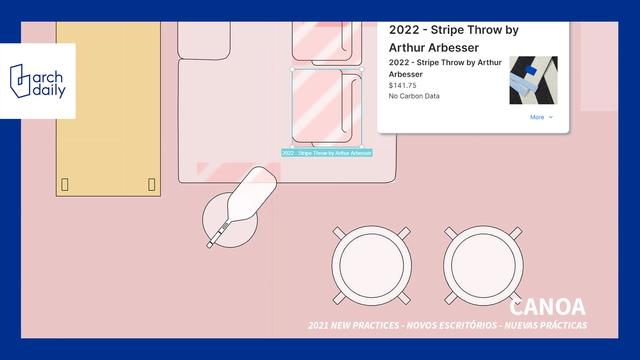
Providing an end-to-end design and construction framework for creating low-carbon workplaces, Canoa is a design tool with an embedded marketplace that aims to reduce the environmental impact of commercial interiors. Operating under the circular economy principles, Canoa seeks to keep goods in use for as long as possible, design out waste, and help preserve natural resources while supporting businesses, designers, and suppliers in carrying out commercial retrofits.
Selected as one of Archdaily's Best New Practices of 2021, Canoa is a New-York based start-up founded in 2019 by designer and entrepreneur Federico Negro, with the purpose of delivering environmentally conscious working environments for a wide range of businesses. Canoa is a business-to-business marketplace for low-carbon office products, ranging from furniture to lighting and accessories. The company focuses on providing conscious, durable furniture and prefabricated units with traceable materials and manufacturing that can be easily moved and reused.
The glass-shatter sound effect has been a mainstay of classic comedy routines for a long time. Whenever a lightweight prop object flies off-screen or stage, it inevitably smashes through glass a beat later. Right now, it’s still amusing, if harmlessly ludicrous, but before long, the idea of a rogue schoolchild’s rogue football shattering through a neighbor’s window will be met only with query and disdain.
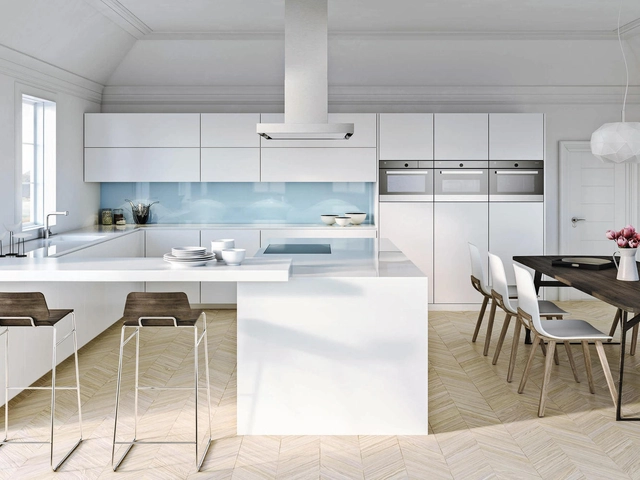
At its heart, extreme-minimalism is a rebellion against consumerism, it’s a cathartic process of learning to live without. But it’s also a decorative style in its own right – a clean world for a clean mind.
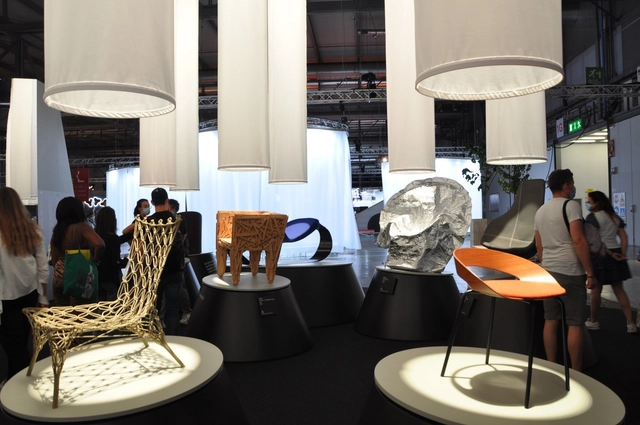
The 60th edition of Salone del Mobile.Milano has been postponed and will now take place from the 7th till the 12th of June 2022. The decision was taken by the Board of Federlegno Arredo Eventi, in agreement with Fiera Milano, who voted to postpone the event from April 2022 to June 2022.
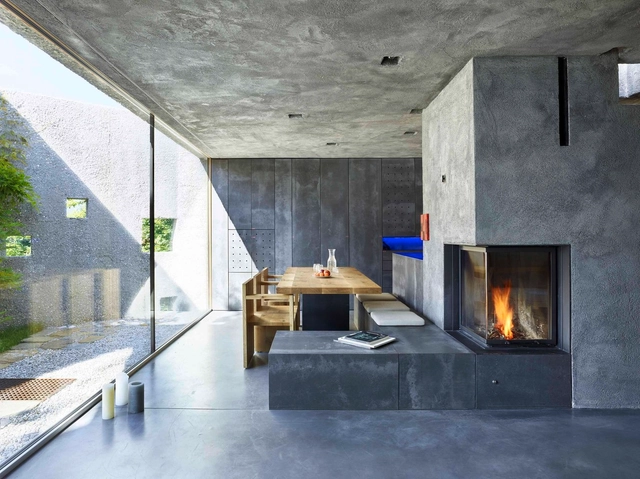
Concrete is not purely a structural element. As we demonstrated in an article about kitchen projects using concrete countertops, the material is gaining significant traction in the world of residential furnishings and fixtures. To further exemplify this, we have curated a list of several projects that use concrete benches to create beautiful moments inside and outside the home.
Bringing the latest contemporary furniture from Milan Design Week straight to Shanghai, B&B Italia curated the setting at Villa 17 in Amanyangyun, an impressive Chinese antique architecture.
Steeped in history, culture, and tradition, Switzerland is a country with a lot of pride. The famous Swiss exports of watches, financial services, chocolate, and cheese are all synonymous with ‘quality’, but perhaps Switzerland’s greatest export of all is its landscape.
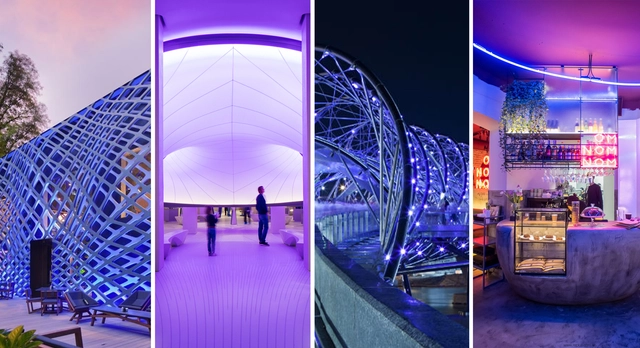
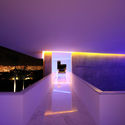
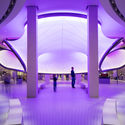
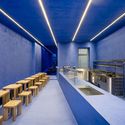
Pantone has revealed its Color of the Year for 2022; 17-3938 Very Peri, a brand new color "whose courageous presence encourages personal inventiveness and creativity". The shade falls under the blue color family but with violet red undertones, illustrating the fusion of our modern times and how the digital world has morphed with our physical one. In architecture, shades of periwinkle blue and lavender have long been used in installations, commercial spaces, and lighting, instilling an overall calming, optimistic, and positive effect on the human mind.
The use of organic and natural materials, as well as products that successfully emulate them, has been a strong ongoing trend that continues to gain popularity in interior design. Especially in the past year, where confinement restrictions have heavily influenced the amount of time people spend in their homes, the industry has experienced an increased demand for products capable of bringing nature and visual comfort indoors – whether it be in the form of furniture or other decorative elements. It is, without a doubt, a design movement that is here to stay.
However, besides the interest in nature inspired objects, architects’ and designers’ primary consideration when selecting a material is often its quality, resistance, and maintenance needs. It is, therefore, ideal to combine a natural look with functionality when creating a user-friendly indoor environment. With that in mind, wood-based materials manufacturer EGGER has expanded its lacquer portfolio to develop a new line that unites an organic look with other beneficial properties.
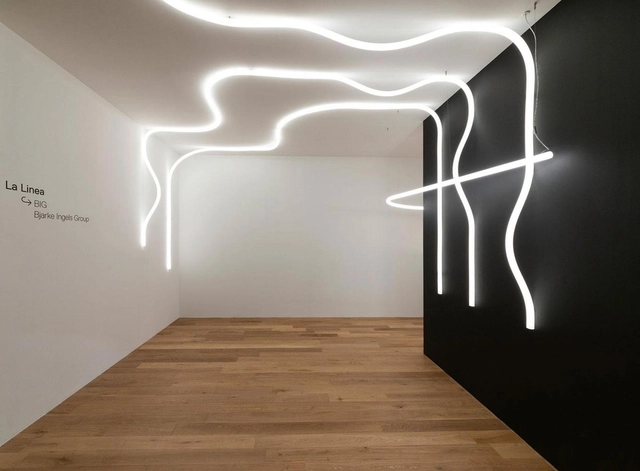
After a year-long absence, Milan Design Week has wrapped up yet another year of creativity and innovation. From the 5th to the 10th of September, thousands of design companies displayed their creations to more than 200,000 visitors hailing from different countries, demographics, and industries. And while the design fair gravitated towards the world of interior design, many renowned architects such as Bjarke Ingels, Foster + Partners, and Herzon & de Meuron participated in the week-long exhibition and joined forces with interior and furniture design brands to create signature pieces.
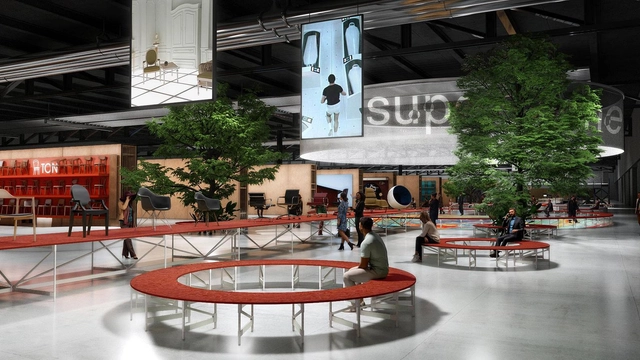
After a year of absence in light of the pandemic, Milan Design Week, one of the most anticipated design events to take place in Italy, will finally open its doors to visitors. From the 5th to the 10th of September, more than 350,000 architects, designers, artists, and craftsmen from all around the world will have the chance to explore new design innovations and exchange ideas about the interior design, furniture, and lighting. During the week-long event, Salone del Mobile, the awaited furniture and interior design event of the year, will be hosting local and international exhibitors at the Fiera Milano, Rho, along with interventions by world-renowned architects across the city.
ArchDaily will be attending the Salone del Mobile so stay tuned for exclusive interviews and collaborations, and read on to discover what to expect during the week-long exhibition and how architects are taking part of the event.
Over the past couple of years, many designers have voiced their commitment to ethical and ecological sourcing, resorting to frugal designs through local materials, traditional techniques, and equitable architecture. Having this approach in mind, many found inspiration in their cultural heritage, reimagining ancient designs in contemporary contexts.
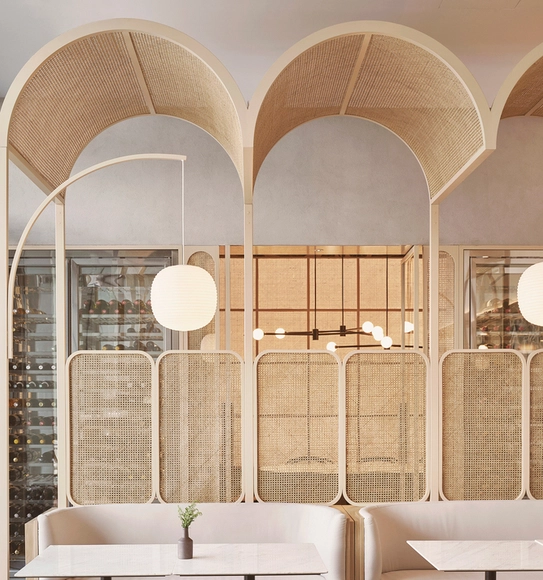
When thinking of recycled design trends, we can't overlook one of the most well-known and popular materials that was shared by nations all around the globe over the span of 100 years; on balconies, outdoor patios, gardens, and indoor living spaces: rattan. It is estimated that almost seven hundred million people worldwide use rattan, with many countries presenting it as an integral part of their cultures. In this article, we look at how architects and designers integrated rattan in their designs and found numerous ways to make the best out of Southeast Asia's popular local material.
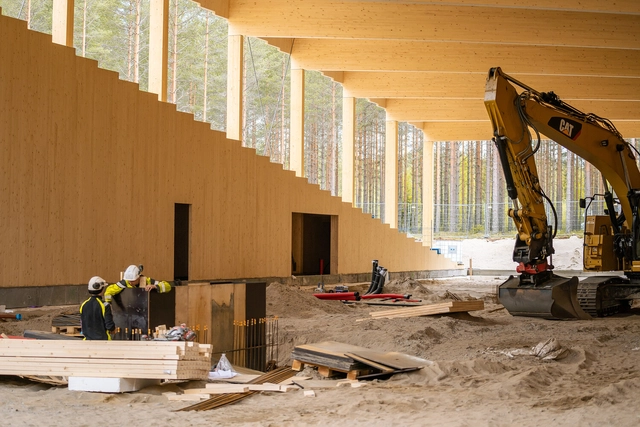
Construction is underway at Vestre's new facility designed by BIG, set to become the world's most sustainable furniture factory through carbon-neutral fabrication processes and the use of renewable energy. Called the Plus and placed within the Norwegian forest, the project will be an example of efficient manufacturing, using Industry 4.0 solutions, while also developing Magnor as a tourist destination through its attractive design.
Charles (June 17, 1907 – August 21, 1978) and Ray Eames (December 15, 1912 – August 21, 1988) are best known for their personal and artistic collaboration and their innovative designs that shaped the course of modernism. Their firm worked on a diverse array of projects, with designs for exhibitions, furniture, houses, monuments, and toys. Together they developed manufacturing processes to take advantage of new materials and technology, aiming to produce high-quality everyday objects at a reasonable cost. Many of their furniture designs are considered contemporary classics, particularly the Eames Lounge & Shell Chairs, while the Eames House is a seminal work of architectural modernism.
https://www.archdaily.com/642966/spotlight-charles-and-ray-eamesArchDaily Team
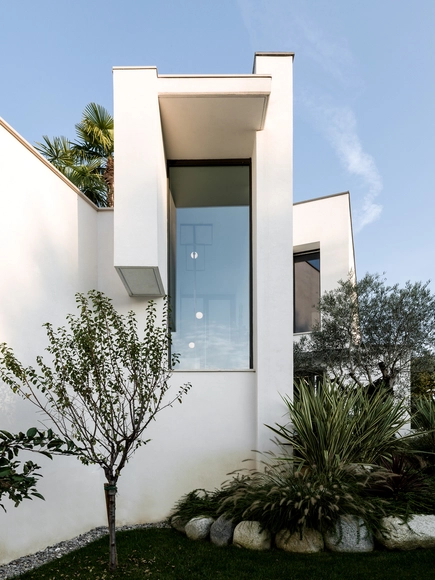
The interlacing of sleek, sharp lines contrast with the delicate beauty of the lake and the softly rolling hills of Brianza. Image Courtesy of Flexform
Along the waters of Lago di Alserio, in Como, Italy is a contemporary private residence designed by architect Annalisa Mauri which contrasts the interlacing of sleek, sharp lines with the delicate beauty of the lake and the softly rolling hills of Brianza which surround it. The geography of the site has undoubtedly influenced the flow of the building, which is expressed through well-defined geometric spaces featuring large sliding glass windows and glass spandrels that offer seamless visual continuity between indoor and outdoor.
Many architects work in a variety of areas, designing everything from the layout of a city block to the most minute details of a building. A common trend among these projects is that the furnishings, the very things that make a structure usable and livable, are often afterthoughts for the project's creators and only become important when the structure is already built.
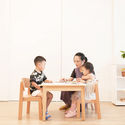
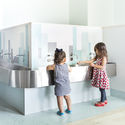
Children's furniture is all furniture –fixed or mobile– that is designed according to the ergonomic guidelines and anatomical dimensions of children specifically. Following this definition, we can identify two types of furniture: (1) those that facilitate a relationship between the caregiver and the child, and (2) those that allow the child to use them independently.
The big difference between these two types is that the first has dimensions that mainly adapt to the ergonomics of the adult, while the second is designed to meet the ergonomic needs of the child at each stage of their development. Since the growth of children occurs relatively quickly, it is common for the furniture of this second group to be multifunctional or even extendable.
When designing in times of quick and constant transformations, one must keep a close eye on the surge of new demands, and one must design spaces that embrace such mutability.
Flexible furniture is a reflection of this contemporary behavior because they can be moved around easily, they have great adaptability, and because they can perform different functions in a single piece. These pieces enable several different layouts, being able to adjust their shape according to specific requirements and changes, which helps optimizing interiors.









.jpg?1639435789 "© Wen Studio")






.jpg?1632222873 "El Poris. Image Courtesy of Artemide")







.jpg?1592346164&format=webp&width=640&height=580)
.jpg?1602872084&format=webp&width=640&height=580)
.jpg?1602872196 "Photo: 1931, Kaunas, Lithuania. Two children working on reading/writing words at Maria Varnienė's Children's House. The child on the left is Stasys Ragaišis, who later became a medical doctor.. Image via @montistory101")

.jpg?1602872084)
.gif?1604578732)


