1. ArchDaily
  2. Food system

Food system: The Latest Architecture and News

The Long Table as a Spatial Protocol: Designing Conditions for Gathering and Pause

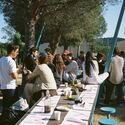
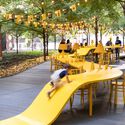
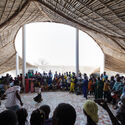
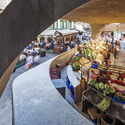
A long table can sit almost anywhere and still do the same work. It can stretch beneath a market canopy, run along a school dining hall, or occupy the center of a shared living room, and it immediately changes the room's temperature.

That is why the long table is less an object than a spatial instrument. It does not guarantee a connection, and it rarely looks "inclusive" by default. Instead, it sets conditions: a shared edge, a common rhythm of arrival, a field of mutual visibility, or a rule that turns eating into a scene with others. Food studies describe this practice as commensality, the act of eating together and the social order it can create, reinforce, or contest. But what matters here is not a specific dimension or the table's function, but the way a long surface holds difference, conversation, and silence; intimacy and distance; the decision to join and the right to hesitate.

The Long Table as a Spatial Protocol: Designing Conditions for Gathering and Pause - Image 1 of 4The Long Table as a Spatial Protocol: Designing Conditions for Gathering and Pause - Image 2 of 4The Long Table as a Spatial Protocol: Designing Conditions for Gathering and Pause - Image 3 of 4The Long Table as a Spatial Protocol: Designing Conditions for Gathering and Pause - Image 4 of 4The Long Table as a Spatial Protocol: Designing Conditions for Gathering and Pause - More Images+ 22

Rhythms of the Soil: Architecture as Agroecology

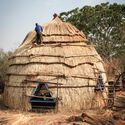
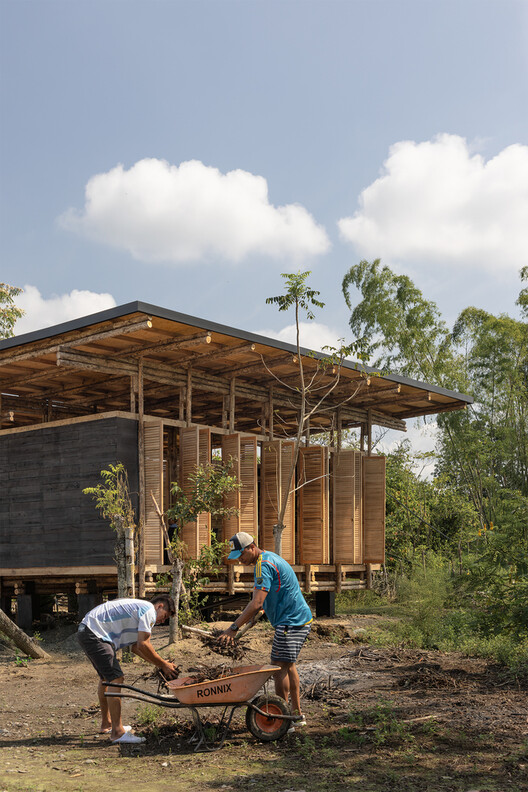
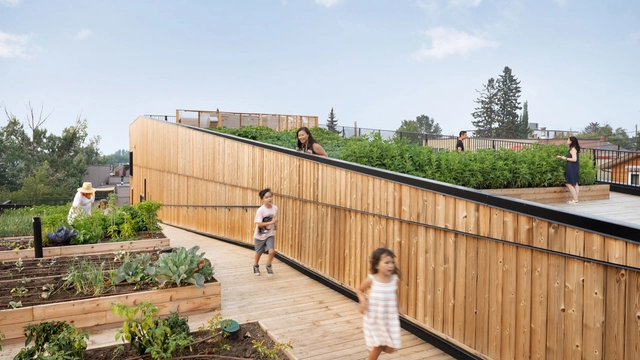
At a time of ecological collapse and rising food insecurity, architecture is increasingly called upon to engage not only with landscapes but with the systems that sustain and regenerate them. Among these systems, agriculture occupies a paradoxical role, as both a leading contributor to environmental degradation and a potential agent of ecological recovery. Industrial farming has depleted soils, fragmented habitats, and driven climate change through monocultures, fossil-fuel dependency, and territorial standardization. In response, agroecology has emerged as a counter-practice rooted in biodiversity, local knowledge, and the cyclical rhythms of nature. It reframes farming not as extraction, but as regeneration of ecosystems, communities, and the soil itself.
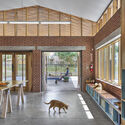
This reframing opens space for architecture to contribute meaningfully. To align with agroecology is not only to support food production, but to engage with the broader cultural, spatial, and ecological conditions that sustain it. It implies designing with seasonal variation, supporting shared use, and building in ways that respect both the land and those who work it. Architecture becomes more than enclosure — it becomes a mediator of cultivation, reciprocity, and coexistence.

Rhythms of the Soil: Architecture as Agroecology - Image 1 of 4Rhythms of the Soil: Architecture as Agroecology - Image 2 of 4Rhythms of the Soil: Architecture as Agroecology - Image 3 of 4Rhythms of the Soil: Architecture as Agroecology - Image 4 of 4Rhythms of the Soil: Architecture as Agroecology - More Images+ 47

Slow Architecture as an Ethical Practice of Design and Construction

At the Bruder Klaus Field Chapel, designed by Peter Zumthor, the construction process involved the direct participation of residents from the small Swiss village of Mechernich. Using an internal formwork made of vertically placed wooden logs, concrete was prepared in small batches and poured manually, day after day, forming layers marked by subtle variations in the mix and application. At the end of the process, the wooden structure was reduced to ashes, leaving the chapel's interior impregnated with traces of fire and revealing a dark, tactile surface. The result was a quiet and deeply meaningful space, where collective action, time, and material transformation became part of the architecture. Centered on locally available resources and manual techniques, this construction method highlights how the choice of materials and building system can shape the experience of a space, reveal the time invested, and embed the culture of a place into the very matter of architecture. In doing so, it offers an example of how construction itself can become a regenerative act, restoring meaning, connecting communities, and honoring material cycles.

Slow Architecture as an Ethical Practice of Design and Construction - Image 1 of 4Slow Architecture as an Ethical Practice of Design and Construction - Image 2 of 4Slow Architecture as an Ethical Practice of Design and Construction - Image 3 of 4Slow Architecture as an Ethical Practice of Design and Construction - Image 4 of 4Slow Architecture as an Ethical Practice of Design and Construction - More Images+ 6

National Pavilion UAE Highlights Food Security at 2025 Venice Architecture Biennale, Led by Azza Aboualam

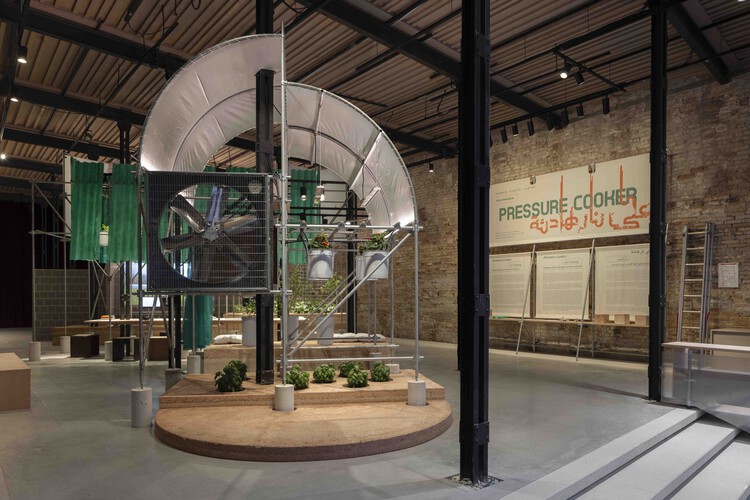
The National Pavilion UAE has opened at the 19th International Architecture Exhibition - La Biennale di Venezia with the exhibition titled Pressure Cooker. Curated by Emirati architect Azza Aboualam, assistant Professor at Zayed University and Co-founder of Holesum Studio, the exhibition explores the evolving relationship between architecture and food production in the UAE, proposing innovative solutions for sustainable and self-sufficient food systems. Positioning the built environment as a catalyst for ecological resilience, it asks: In the face of climate and resource challenges, how can design shape more secure and sustainable food systems?

National Pavilion UAE Highlights Food Security at 2025 Venice Architecture Biennale, Led by Azza Aboualam - Image 1 of 4National Pavilion UAE Highlights Food Security at 2025 Venice Architecture Biennale, Led by Azza Aboualam - Image 2 of 4National Pavilion UAE Highlights Food Security at 2025 Venice Architecture Biennale, Led by Azza Aboualam - Image 3 of 4National Pavilion UAE Highlights Food Security at 2025 Venice Architecture Biennale, Led by Azza Aboualam - Image 4 of 4National Pavilion UAE Highlights Food Security at 2025 Venice Architecture Biennale, Led by Azza Aboualam - More Images+ 11

Cultivating Spaces: Where Architecture Meets the Farm-to-Table Movement

Subscriber Access | 

The farm-to-table movement represents a profound shift in how food is grown, distributed, and consumed. Rooted in sustainability and the support of local economies, it prioritizes fresh, locally sourced ingredients and fosters direct relationships between producers and consumers. While the concept focuses on food, the spaces where these connections occur are equally important in shaping the experience, highlighting the critical role of architecture.

Cultivating Spaces: Where Architecture Meets the Farm-to-Table Movement - Image 1 of 4Cultivating Spaces: Where Architecture Meets the Farm-to-Table Movement - Image 5 of 4Cultivating Spaces: Where Architecture Meets the Farm-to-Table Movement - Image 2 of 4Cultivating Spaces: Where Architecture Meets the Farm-to-Table Movement - Image 3 of 4Cultivating Spaces: Where Architecture Meets the Farm-to-Table Movement - More Images+ 60

Studio Gang's Brooklyn Community Center Reimagines Equitable Food Systems in the United States

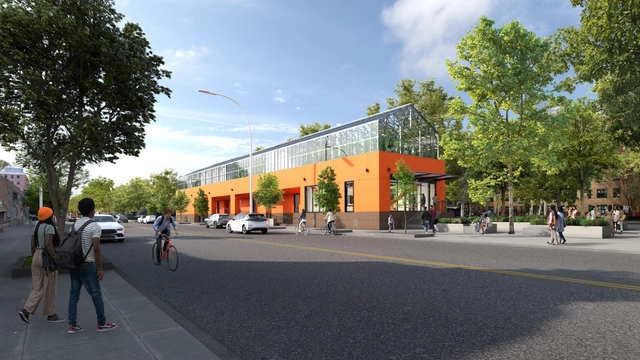
Studio Gang has just released the design for the new Marlboro Agricultural Education Center in Brooklyn, New York. Reimagining a more equitable and inclusive food system, the design transforms a New York City Housing Authority (NYCHA) campus into a hub for multigenerational education, job training, and community leadership in urban agriculture. Operated by the nonprofit organization The Campaign Against Hunger (TCAH), the Center seeks to leverage longstanding efforts across the city to enhance food autonomy and security in underserved neighborhoods.

The Challenge of Food Production in a Planetary City

Subscriber Access | 

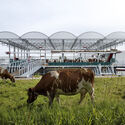
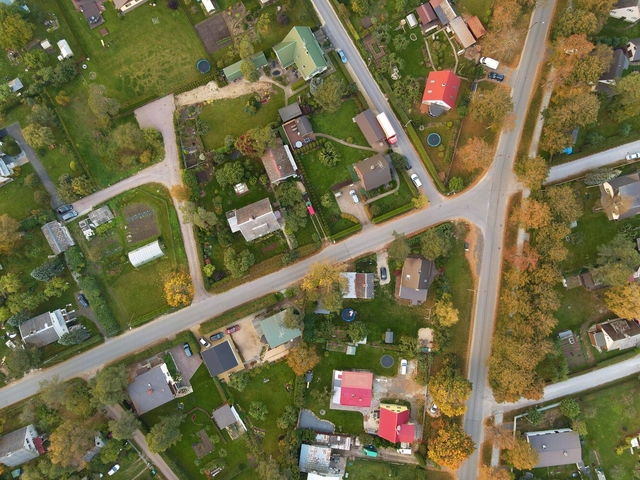
In an age of unprecedented globalization, our food supply chains — the institutions and mechanisms involved in food production and distribution — have become longer. So much so that they are hardly perceived as chains or systems. They have been integrated into our lives, and into our cities, and transformed our relationships with food. And yet, those very long food supply chains are implicated in some of our most pressing global problems, from food security and waste to biodiversity and climate change. These food supply chains have come to their current state, their current length, over decades, or centuries perhaps, through all sorts of political, social, cultural, and economic processes, and carry with them a range of burdens: vague producer-consumer relationships, and a host of negative environmental externalities, among many others.

The Challenge of Food Production in a Planetary City - Image 1 of 4The Challenge of Food Production in a Planetary City - Image 2 of 4The Challenge of Food Production in a Planetary City - Image 3 of 4The Challenge of Food Production in a Planetary City - Image 4 of 4The Challenge of Food Production in a Planetary City - More Images+ 9

MASS Releases Spatial Strategies for Restaurants in Response to COVID-19

MASS Design Group has released a guideline for restaurants in response to the coronavirus pandemic, to help these business reopen safely, viably, and vibrantly. Based on world health recommendations, the drafted protocols aim to keep both staff and customers safe, as well as facilitate operations.

The Gastro Safe Zone: A Public Space Proposal that Considers Social Distancing Measures

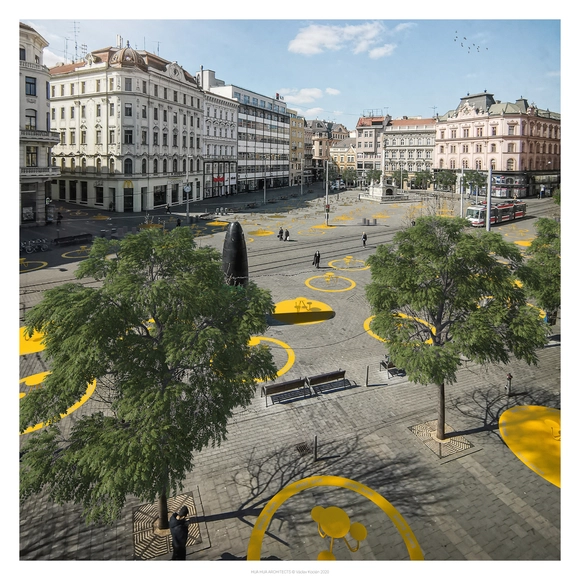
HUA HUA Architects has imagined a proposal that can reconcile people and public spaces, post Covid-19. The Gastro Safe Zone program aims to awaken stagnant gastronomic businesses by regulating outside eating and ensuring the required social distancing measures. The first prototype has been already installed in the streets of Brno in the Czech Republic.

The Gastro Safe Zone: A Public Space Proposal that Considers Social Distancing Measures - Image 1 of 4The Gastro Safe Zone: A Public Space Proposal that Considers Social Distancing Measures - Image 2 of 4The Gastro Safe Zone: A Public Space Proposal that Considers Social Distancing Measures - Image 3 of 4The Gastro Safe Zone: A Public Space Proposal that Considers Social Distancing Measures - Image 4 of 4The Gastro Safe Zone: A Public Space Proposal that Considers Social Distancing Measures - More Images+ 3