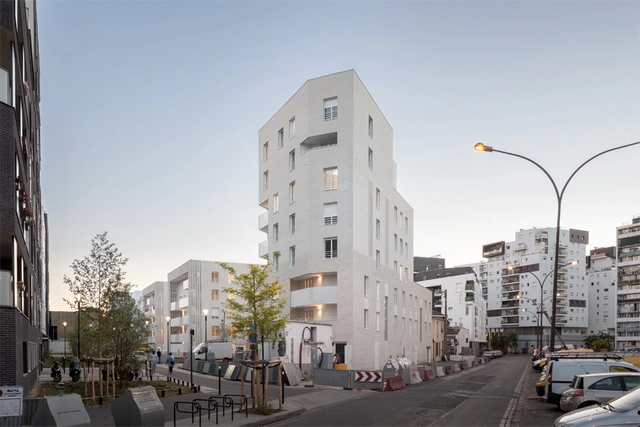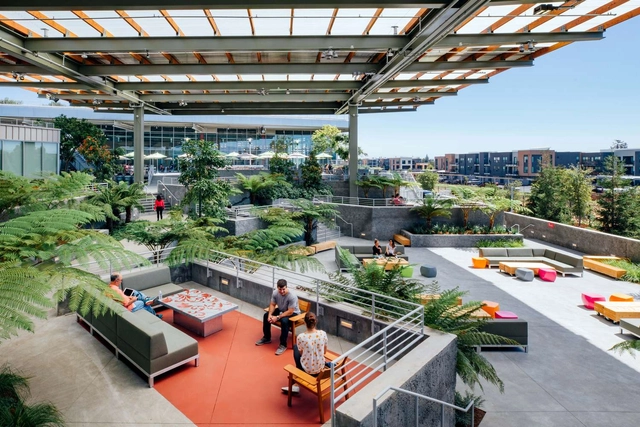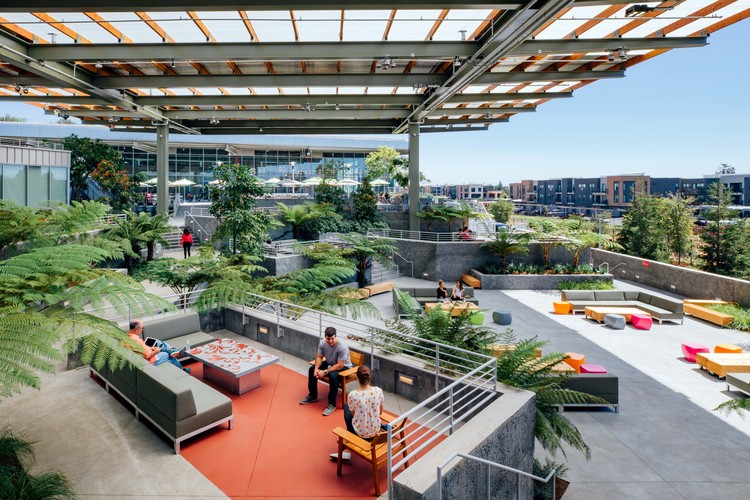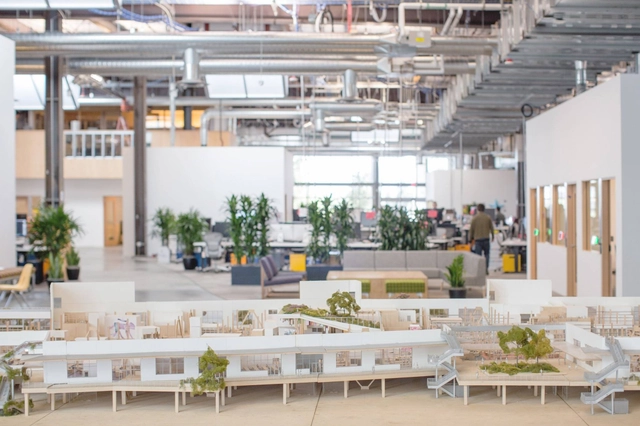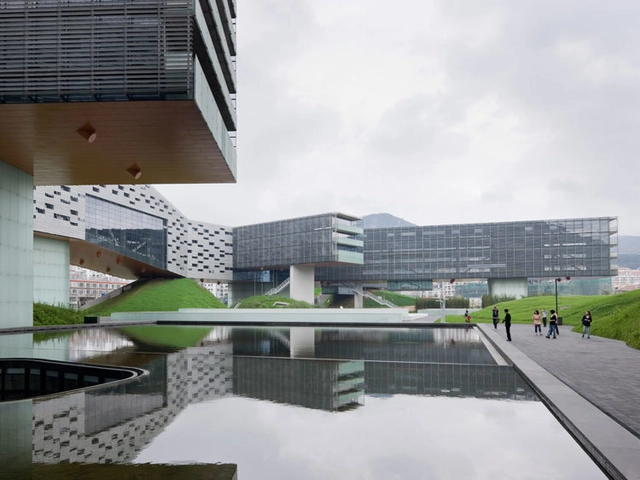
A ground scraper is essentially the opposite of a skyscraper - a large building that sprawls outward horizontally instead of soaring vertically into the sky. Though no strict definition exists, groundscrapers are generally described as extremely long but low-rise buildings with over 1 million square feet of space, sometimes called sidescrapers or landscrapers. The term came into the spotlight with Google's plans for their massive $1.3 billion London headquarters. Designed to be only 11 stories tall but over 1,000 feet long, this vast office block epitomizes using horizontal expansion to create immense space for thousands of employees.
Fashion Street in Decentraland. Image Courtesy of Decentraland
Imagine if a few years ago you woke up to the news that someone paid more than one million dollars for three plots of digital land next to famed rapper Snoop Dogg’s digital mansion. You’d probably ask yourself, “What is digital real estate, and why would someone pay for that?” Over the past year, there’s been a rush to buy properties, art, and land- but all of it exists in a virtual world called the metaverse. Although this world existed long before the pandemic, lockdowns propelled the online world to a new level, catching the attention of private buyers and brokerages alike who began to funnel tier money into this augmented reality. But how did this world emerge, what does the future hold, and can anyone join the virtual world?
For technology companies, image is everything. Whether it be the latest iPhone, the newest Slack interface, or the latest Uber app update, these multimillion-dollar giants strive daily to keep the user engaged, and to keep their image young, current, and cutting edge. Invariably, this need to be noticed transcends the digital screen, and manifests in the architecture of the offices where this innovation takes place.
Across the world, from Dublin to Tel Aviv to Tokyo, the workspaces of the world's largest tech companies are redefining how offices are designed, aided by leading architects such as Foster + Partners, Snøhetta, and Gehry Partners. While our recent article on solutions for flexible home offices reflects on strategic functionality and individual expression, the 30 workspaces below dedicate themselves to collaboration and inspiration through a play on scales, color, shapes, and unexpected fixtures.
Facebook has announced plans for a new mixed-use neighborhood adjoining their existing headquarters in Menlo Park, California to be led by the New York office of OMA and Partner Shohei Shigematsu. Known as Willow Campus, the campus masterplan seeks to further invest in Facebook’s home community, joining the original campus designed by Frank Gehry.
“It’s exciting to collaborate with Facebook, whose innovation in networking and social media extends to urban ambitions for connectivity in the Bay Area,” commented Shigematsu. “The Willow Campus masterplan creates a sense of place with diverse programming that responds to the needs of the Menlo Park community. The site has the potential to impact the future of regional transportation, housing, and environment.”
Social media is one of the most critical elements for a successful marketing strategy. For architecture firms, the bounty of online platforms supporting visual content can allow ideas, commissions, and buildings to reach millions of architecture lovers around the world with a single click.
Since its launch in 2004, Facebook has proven to be an enduring platform for sharing architectural ideas, with even ArchDaily taking the decision in February to make Facebook a primary avenue for reader comments. Below, we have rounded up the 20 architecture firms worldwide with the most Facebook followers, demonstrating how a well-maintained, engaging presence on social media can allow architectural ideas to be spread to millions of enthusiasts. Are you following all of them?
https://www.archdaily.com/872815/the-20-most-popular-architecture-offices-on-facebookNiall Patrick Walsh
HP, Apple, Google – they all found their success amongst the peach groves and Suburban houses of California. But why? What is it about Silicon Valley that makes it the site of technological innovation the world over?
It’s tempting to assume that the Valley’s success must be, at least in part, due to its design. But how does innovation prosper? What kind of environment does it require? In a recent interview with The Atlantic Cities, Jonah Lehrer, author of Imagine: How Creativity Works, suggests that creativity is sparked from casual exchanges, the mingling of diversity, the constant interaction with the strange and new. In short, and as a recent study corroborates, innovation flourishes in dense metropolises.
Seemingly then, Silicon Valley, a sprawl of highways and office parks, has become a hotspot of creativity in spite of its design. But let’s not write off design just yet.
As technology makes location more and more irrelevant, many are looking to distill the magic of Silicon Valley and transplant it elsewhere. The key will be to design environments that can recreate the Valley’s culture of collaboration. The future Valleys of the world will be microsystems of creativity that imitate and utilize the structure of the city.
The AIA is hosting its first ever design competition on Facebook—the AIA Facebook Young Designers Challenge. The competition is targeting emerging professionals, and is open to all AIAS members, all Assoc. AIA members, and all AIA young architect members. (The AIA defines young architects as being licensed 10 years or less.)
Couple of weeks ago we launched a competition through our Facebook Fan Page to find the best architectural animation video you could send us. After looking at 34 videos and receiving more than 2,500 votes, we have a winner!
Armir Shapllo, with his Space Camp Nou video (see it after the break), received more than 800 votes to win a brand new iPod Touch. Matej Štefanac came second and Alex Roman third. Congratulations to Armir, and to everyone who participated. And remember to follow us through Twitter and our Facebook Fan Page for more competitions!
As you may know, to celebrate 25,000 fans on our Facebook Fans (we are now over 29,000!), we launched a competition to look for the best architectural animation video. We received many submissions and now it’s time for you to decide the winner. You have till December 6 to cast your vote.
The good thing is you may vote once per day, so come back here and vote to support your favorite entry! Results will be published on December 7 and the winner will receive a brand new iPod Touch. See all the videos after the break and startvoting right now!
To see the videos in a larger size, just click on them to launch them on YouTube.
Our Facebook Fan Page has been growing a lot lately, and your feedback has been amazing. So to celebrate our 25,000 fans, we decided to launch a special competition, in which anybody can win. We are looking for the best architecture animation that you can show us! What makes this competition so special? Not only will the winners be featured in ArchDaily.com, but the best one will receive a brand new Ipod Touch. Who will win? That’s up to you to decide…
A great part of our day is spent browsing architects websites looking for new works to share with our readers, and we have noticed that some are very good, while others were such a pain to navigate… So we decided to go and ask our community about this.
Last week, we asked our Facebook Fans for the best architecture office website they knew. We checked them out and decided the top 10, with no particular order. We looked for the best ones in terms of looks, navigation (is is easy to navigate? Is it fast? Can you go back without reloading the menu? Can you link directly to a specific project?), presentation quality, does it look up to date?, projects (can you sort them by location? by year?).
Also, you will notice that no flash website made the list. That’s because we think flash websites have some dificulties. For example, you can’t link a specific project and Google can´t index most of the contents. So we decided to create a ‘honorable mention’ list with all the flash websites we thought deserve it.
Remember to keep participating through our Facebook Fan Page! The complete list, after the break.
Last week, we asked all of you to send photos of your architecture office through our Facebook Fan Page. Your response was huge, as we received a lot of photos from all over the world. Selecting the best was not easy, but we decided to focus on diversity, creativity and image quality. Thanks to everyone who got to send their photos and we hope you keep participating through our Facebook Fan Page.
The picture above was submitted by Catherine Dilly and belongs to Jasmax Studio in Auckland, New Zealand. You can see all 14 offices after the break. And remember, you can also become a fan of ArchDaily in Facebook, just click here!