1. ArchDaily
  2. Exterior Architecture

Exterior Architecture: The Latest Architecture and News

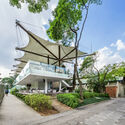
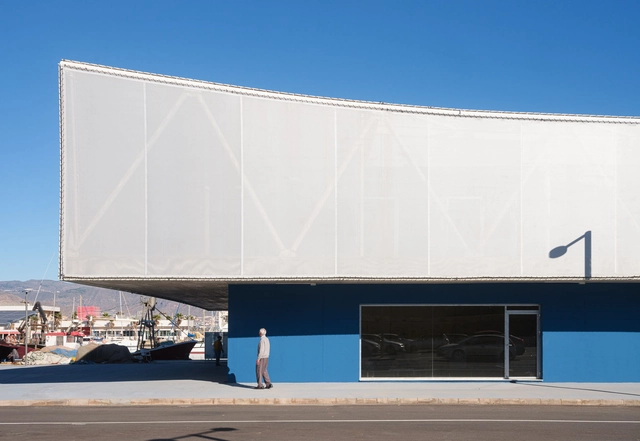
Pushing Boundaries: 11 Exteriors That Use Fabric For Protection, Shape, and Longevity

Architecture – once it moved out from under its cavernous beginnings – started off largely nomadic. For a long time, the shade of trees and moveable tents made from animal skin were utilized instead of more permanent dwellings to meet nomadic lifestyles and basic survival needs. These early portable structures were primarily supported by wooden frames and were used by various ancient civilizations, including the Bedouins in the Arabian Peninsula and the Native American tribes in North America. The advent of woven cloth some 40,000 years ago made the dwellings even lighter and easier to transport, a boon to nomadic cultures around the globe.

Though tents have remained popular since then in recreational contexts and as a staple of the architectural form, contemporary architecture has rediscovered the principle of draping fabric and taken its development further – not just for temporary structures, but for permanent buildings and installations, too. Advanced and durable materials have turned fabric into a facade and roof alternative that has sparked a highly specialized sector within the construction industry and created some of the most intriguing exteriors around the globe.
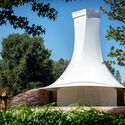
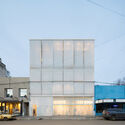
Pushing Boundaries: 11 Exteriors That Use Fabric For Protection, Shape, and Longevity - Image 1 of 4Pushing Boundaries: 11 Exteriors That Use Fabric For Protection, Shape, and Longevity - Image 2 of 4Pushing Boundaries: 11 Exteriors That Use Fabric For Protection, Shape, and Longevity - Image 3 of 4Pushing Boundaries: 11 Exteriors That Use Fabric For Protection, Shape, and Longevity - Image 4 of 4Pushing Boundaries: 11 Exteriors That Use Fabric For Protection, Shape, and Longevity - More Images+ 12

Grimshaw Develops the New Waterloo Station Masterplan in London

Grimshaw has been commissioned to develop the busiest transport hub in the UK, as well as London's surrounding Southbank area. The master plan will improve the traffic of 5 connections and renovate the terrain, home to world-famous attractions like the London Eye and the Tate Modern. The project is aligned with Lambeth Council's and the Network Rail's commitment to net zero emissions by 2030, through the extension of pedestrian and cycling routes.

Grimshaw Develops the New Waterloo Station Masterplan in London - Image 1 of 4Grimshaw Develops the New Waterloo Station Masterplan in London - Image 2 of 4Grimshaw Develops the New Waterloo Station Masterplan in London - Image 3 of 4Grimshaw Develops the New Waterloo Station Masterplan in London - Image 4 of 4Grimshaw Develops the New Waterloo Station Masterplan in London - More Images

The Possibilities of Wire Mesh in Architectural Facades

 | Sponsored Content

From creating a new parking structure with an awe-inspiring aesthetic to retrofitting an existing building, architectural wire mesh provides versatility and durability which makes it unique from other design material options.

How to Design Elevated Cycling Structures that Actually Work

Subscriber Access | 

There's no doubt about it - cycling in cities is a big deal these days. But, while cycle lanes and bike-sharing schemes are all well and good for our cities, the cycling revolution hasn't yet brought us many examples of beautifully designed infrastructure to gawp at. This article, originally printed on The Dirt as "Do Elevated Cycletracks Solve Problems or Just Create More?" discusses two seemingly similar examples of high profile cycling infrastructure, examining why one is a success and the other a non-starter.

This year, two designs – one proposed and one built – for elevated cycletracks, which create bicycle highways above street level, have gained considerable media attention. They highlight questions at the heart of urban design: Should cities blend or separate transportation options? How can cities best mitigate the hazards created when cars, bikes, mass transit, and pedestrians mix? How can cities create low-cost transportation networks in increasingly dense urban cores?

Norman Foster-Designed Scheme Aims to Transform London into “Cycling Utopia”

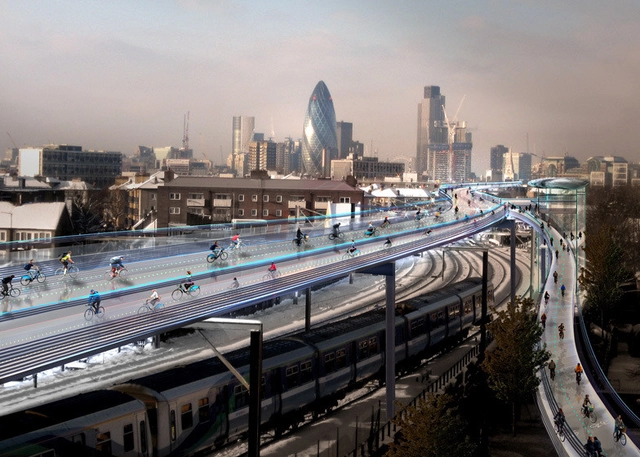
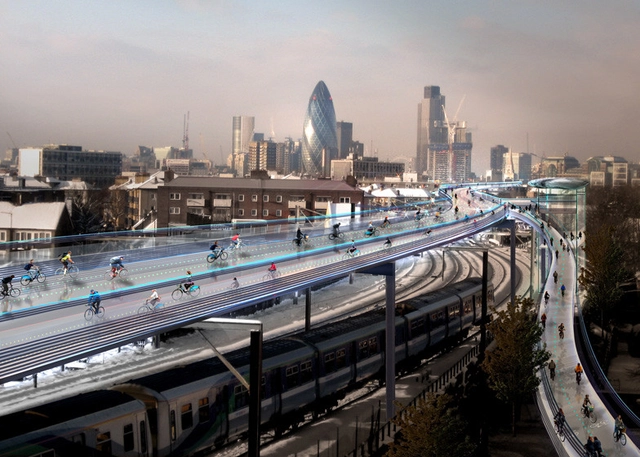
Foster + Partners has unveiled a scheme that aims to transform London’s railways into cycling freeways. The seemingly plausible proposal, which was designed with the help of landscape firm Exterior Architecture and transportation consultant Space Syntax, would connect more than six million residents to an elevated network of car-free bicycle paths built above London’s existing railway lines if approved.

"SkyCycle is a lateral approach to finding space in a congested city," said Norman Foster, who is both a regular cyclist and the president of Britain's National Byway Trust. "By using the corridors above the suburban railways, we could create a world-class network of safe, car free cycle routes that are ideally located for commuters."