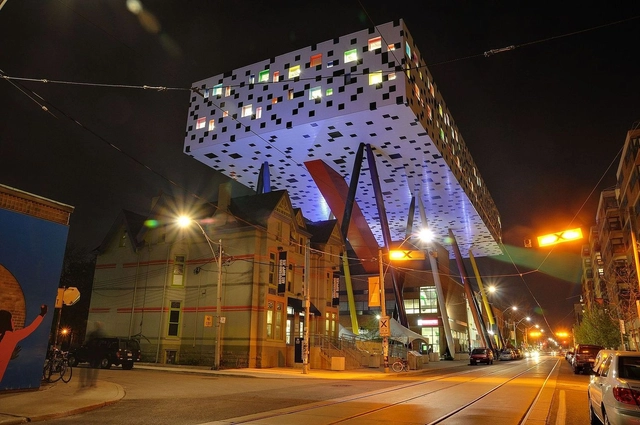
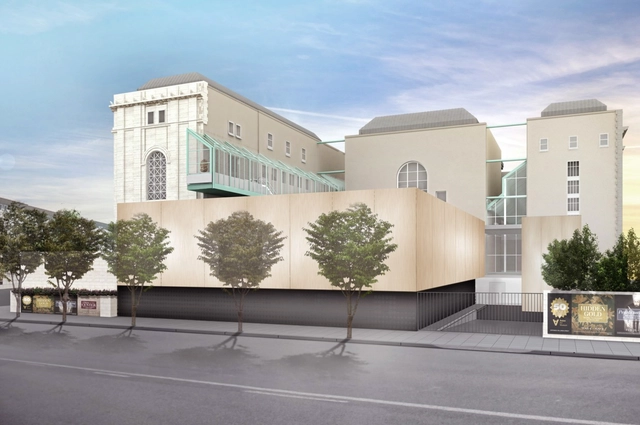
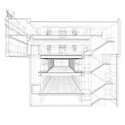
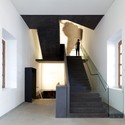
The project aims to extend and reinvigorate the campus core along McCaul Street in downtown Toronto and will include approximately 55,000 square feet of new construction, in addition to the renovation of 95,000 square feet of existing campus space.
https://www.archdaily.com/803612/morphosis-teeple-architects-among-firms-to-lead-ocad-universitys-expansion-in-torontoOsman Bari
As part of its 50th anniversary celebrations, the Asian Art Museum of San Francisco has announced major renovation and expansion plans by wHY Architecture. The practice is expected to design a new 12,000-square-foot exhibition pavilion, reconfigure the Museum’s existing galleries, and modernize its education and public programming spaces. Work will begin in 2017.
"The new pavilion will underscore San Francisco’s cultural diversity, create one of the nation’s premier exhibition spaces dedicated to Asian art, and increase the number of special exhibitions on view for visitors," says the Museum.
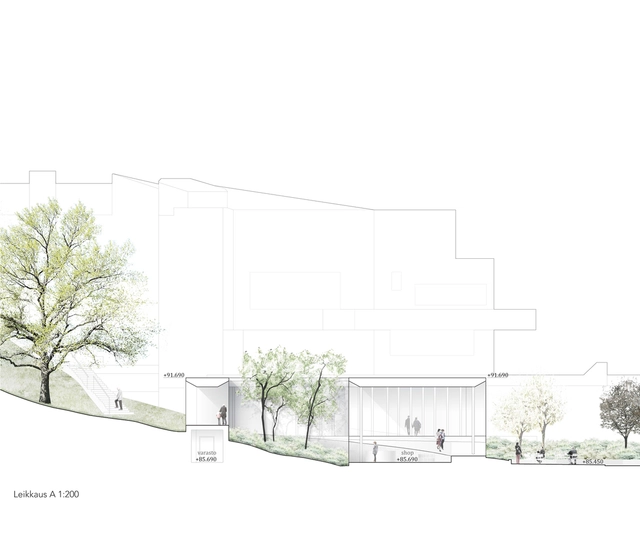
A group of young Finnish architects - Sini Rahikainen, Hannele Cederström, Inka Norros, Kirsti Paloheimo, Maria Kleimola - has won an open competition seeking ideas to "connect and integrate" two Alvar Aalto masterpieces - the Alvar Aalto museum and the Museum of Central Finland in Jyväskylä's Ruusupuisto park. With their entry, "Silmu," the winning team was selected over 689 other entries for creating a sensible proposal that met the competitions main goal - "to adapt to its worthy environment in a balanced way, and to find a natural connection with the architecture of Alvar Aalto."
“The high-end entries stand out from the rest with their clear, striking ideas and formal properties. The best things about Silmu were its atmosphere and the subtle contours. It was also seen as adding an extra, tranquil element between the Alvar Aalto Museum and the Museum of Central Finland, while further increasing the functionality of the outdoor spaces,” says Director of the Alvar Aalto Foundation Tommi Lindh.
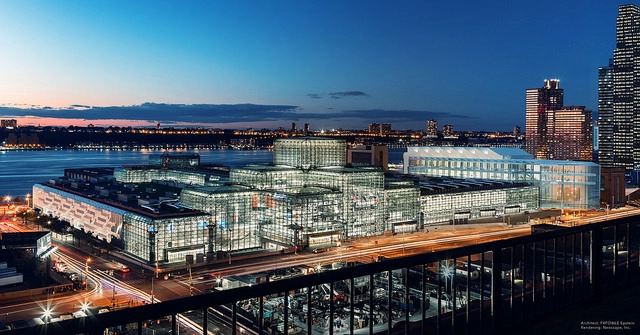
Alongside a series of 2016 proposals, including the plans to transform Penn Station, Governor Andrew Cuomo has announced that New York will be expanding its Jacob K. Javits Convention Center - the busiest convention center in the US. Originally designed by James Ingo Freed of Pei Cobb Freed & Partners in 1986, the structure has undergone a number of renovations since; this time, it will be expanded by 1.2 million-square-feet, totaling 3.3 million-square-feet, with the addition of "the largest ballroom in the Northeast," new exhibition space, a four-level truck garage, and a 34,000-square-foot solar array.
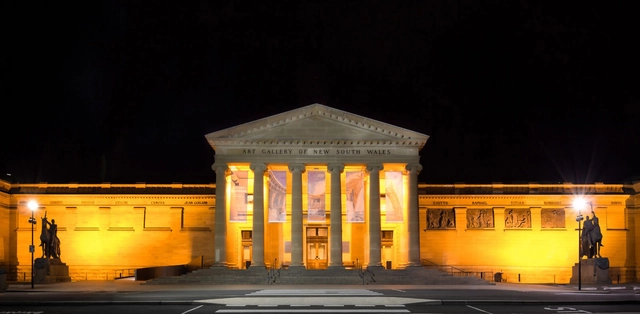
Art Gallery of NSW. Image Courtesy of Flickr CC User Jason Starr
Twelve local and international practices have been invited to participate in a two-stage competition for the “Sydney Modern Project,” a $450 million expansion of the Art Gallery of New South Wales (NSW). Five practices from the shortlist, which also includes SANAA, Tod Williams and Billie Tsien, and Herzog & de Meuron, will move on to produce conceptual designs in the competition’s final round.
“The Sydney Modern vision for expansion and transformation is much more than just a building project,” stated gallery director Dr. Michael Brand. “Through this invited competition the Gallery is seeking ideas that will create an architecturally ambitious, intelligent, sensitive, sustainable and highly functional design. Our site overlooking Sydney Harbor will inspire each of the invited architectural practices, all of whom have extraordinary design skills.”
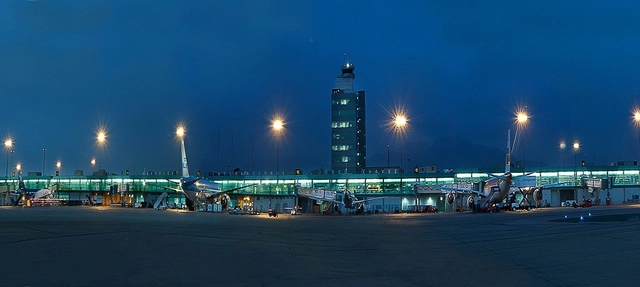
Aeropuerto Internacional Jorge Chávez. Image Courtesy of LAP
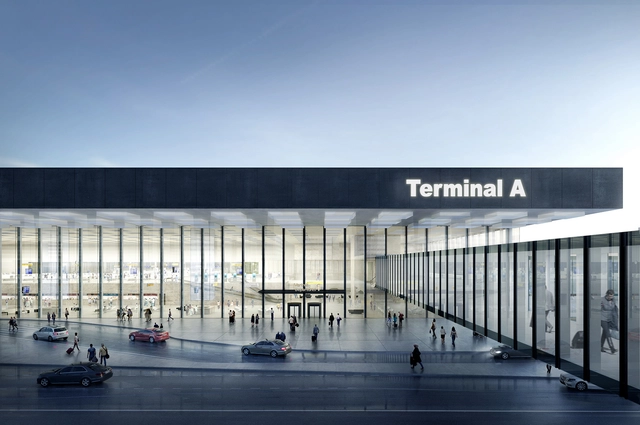
Grimshaw has landed a $950 million expansion project for the Jorge Chávez International Airport in Lima, Peru. As reported by the Architect’s Journal, Grimshaw will work with ARCADIS, CH2MHill and Ramboll to design a seven million square meter scheme that will include a new air traffic control tower and second terminal for the international airport. Designs are set to be revealed in 2015.
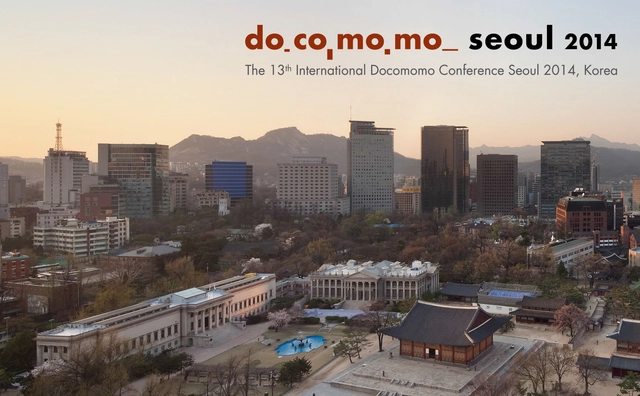
How has the advancement of the Modern Movement design ethos, through geo-political expansion from the Western world, challenged the cultural foundation and aesthetic heritage of Asia?
The 13th International Docomomo Conference, hosted in Asia for the first time, seeks to explore the powerful complexities of expansion and conflict. Examining the effects of the expansion of a Eurocentric design philosophy into distinctly individual, pre-existing yet violently colonized cultures, the organization declares that "conflict is not necessarily a pejorative but…a challenge for the future."
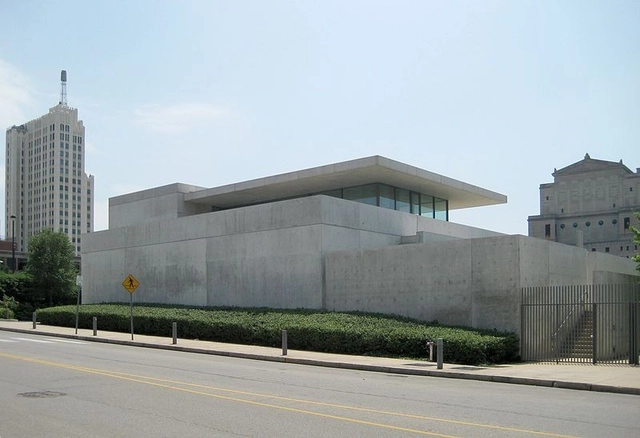
Construction is slated to begin in August (2014) on an expansion project that will transform the lower level of Tadao Ando’s Pulitzer Arts Foundation building in St. Louis into a public space for exhibitions, new programs and artist-driven activities. Previously used as offices and storage, the two new galleries, also designed by Ando, will expand the Pulitzer’s programable space by nearly 50 percent. This will be the building’s first major renovation since opening in 2001.
In January of this year, the latest work by Smiljan Radic, the Chilean architect chosen to design the next Serpentine Pavilion, opened to public acclaim. The Museum of Pre-Columbian Art (Museo de Arte Precolombino), located in Santiago de Chile, is a restoration project that managed to sensitively maintain an original colonial structure - all while increasing the space by about 70%.
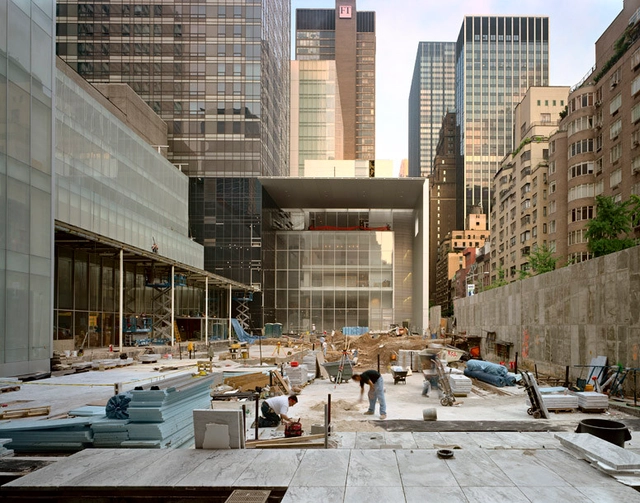
What appears here is not strictly a battle between an institution that wants to reflect the spirit of the time vs a building that is inherently specific to its place. It represents a lost design opportunity. What if the American Folk Art Museum had been considered an untouchable civic space in the city of New York, much like the The Museum of Pre-Columbian Art is for the city for Santiago? Then a whole new strategy for adaptive reuse would have emerged.
UPDATE: The BBC reports that construction on the Kiruna re-location is scheduled to begin next month. For more on this extraordinary project, read the article below.
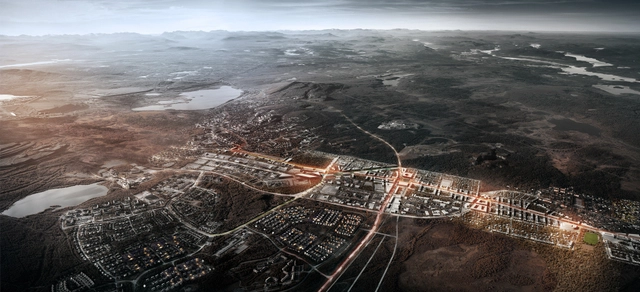
Everyone is familiar with the stresses of moving to a new house, but the residents of Kiruna, a small town of 18,000 in Sweden, face a more daunting task: moving their entire city.
For more than 100 years, residents of Kiruna have developed their city center around the world's largest iron mine, operated by the state-controlled company, Luossavaara-Kiirunavaara AB (LKAB). In 2004, LKAB determined that to continue extracting iron would mean digging deeper, unsettling the ground beneath 3,000 homes as well as the city hall, train station, and century-old church.
https://www.archdaily.com/433499/architects-to-relocate-entire-city-s-downtown-two-miles-overJose Luis Gabriel Cruz