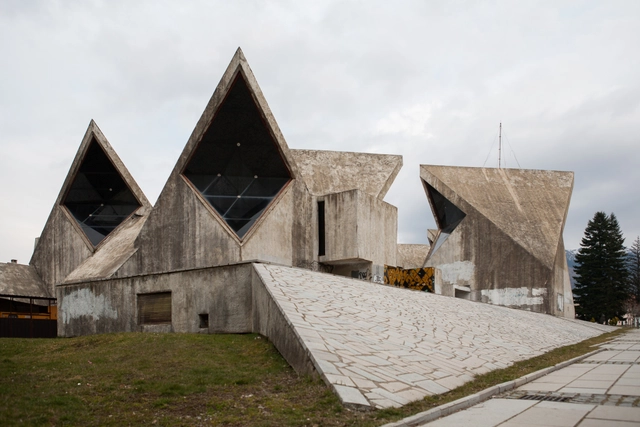
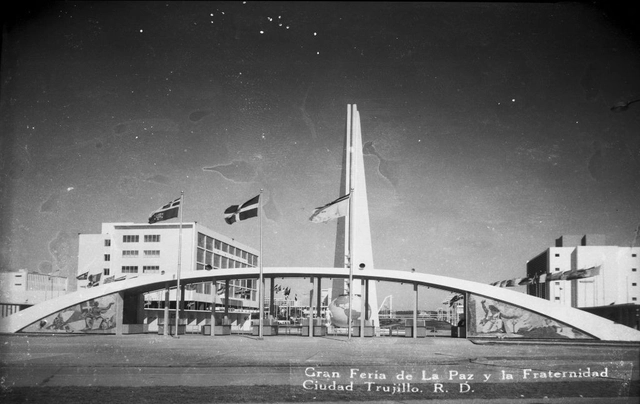
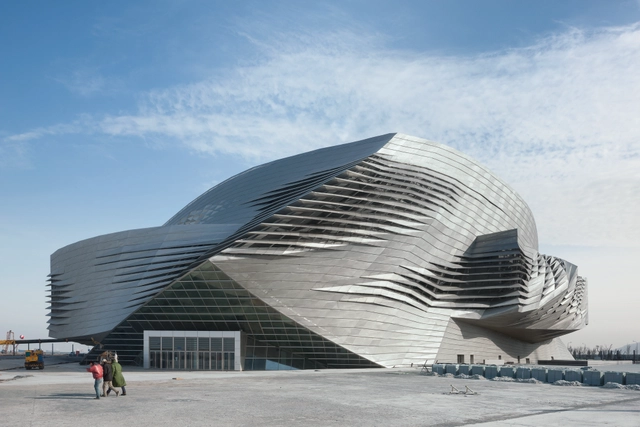
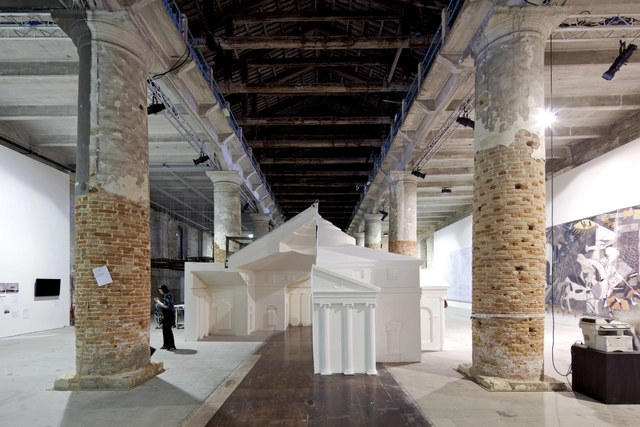
This year at the Venice Architecture Biennale, the Montenegro Pavilion will present four neglected, late-modernist buildings that were originally constructed as a testament to a radiant new society. An effort to spark discourse about urban regeneration in Montenegro and the future of the former Yugoslavia’s architecture, the exhibition seeks to illuminate the uncanny beauty of each structure as they are regarded to be Treasures in Disguise.
More from the curators and a preview of the highlighted buildings, after the break...
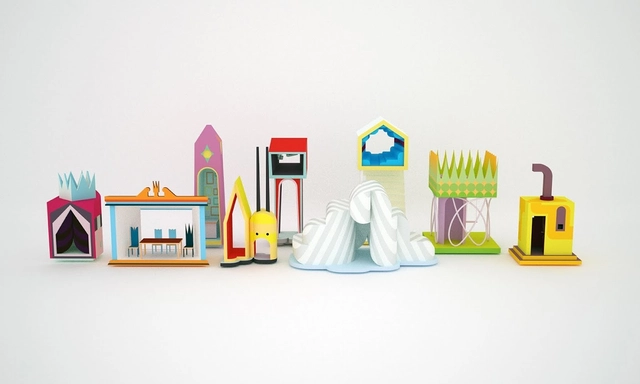
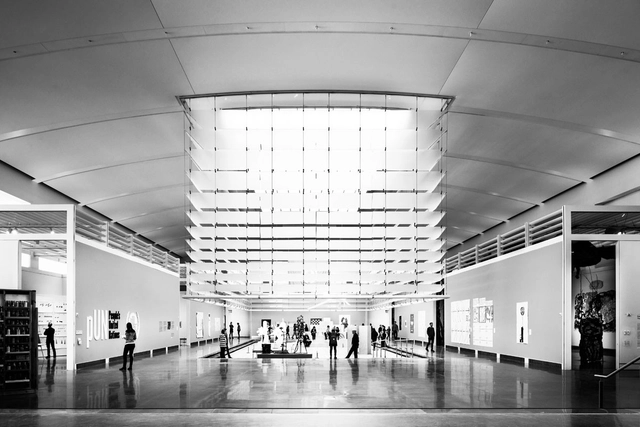
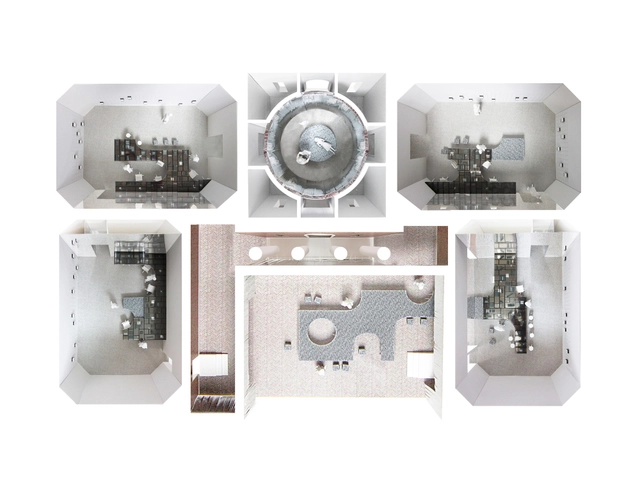
Taiwan-born architect Jimenez Lai’s proposal Township of Domestic Parts: Made in Taiwan has been selected to represent Taiwan in the 2014 Venice Architecture Biennale. Scattered throughout the Palazzo delle Prigioni, the installation will be comprised of nine small house, each with a single program, that will make up an “interior township of misfit parts.”
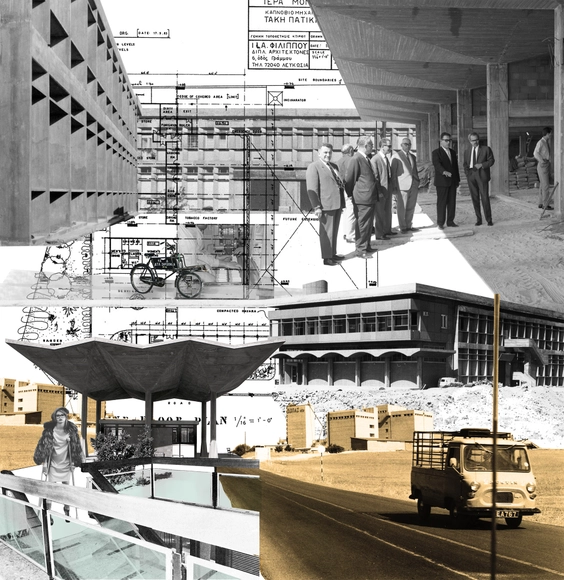
Cyprus has been shaped by a tumultuous history. Power struggles between invaders, conquerors and colonial powers have all left indelible marks on the landscape, much of which can be witnessed in the island’s capital of Nicosia.
Uncovering this history, the curators of Cyprus’ fifth participation at the 2014 Venice Architecture Biennale will expose the island’s layered past and the story of Nicosia in allegory form with the exhibition Anatomy of the Wallpaper.
Learn more and read Cyprus’ full curatorial statement, after the break...
Frederiksberg Urban Spaces, photo by Ulrika Wahlmark (2009), Courtesy of SLA
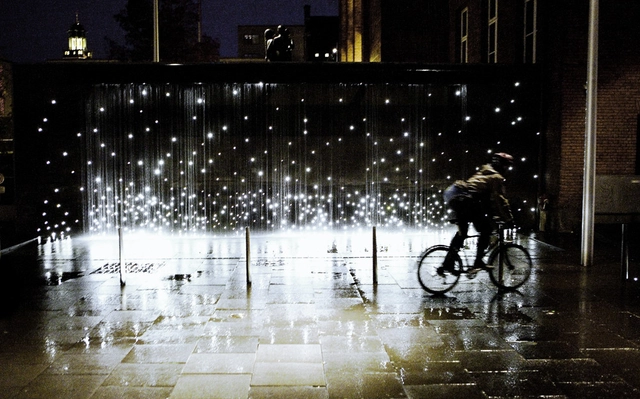
What does butterflies, quantum mechanics, poetry and dirt have to do with architecture? In the Danish pavilion at the 2014 Venice Architecture Biennale, you are invited to sense, wonder, be curious and reflect when you meet the smell of dirt, read Niels Bohr’s letter to Einstein, hear the sound of poetry and burry your toes in pine needles. The pavilion reintroduces the forgotten power of aesthetics as the complementary to the rational. It argues that the two together form the foundation for our future decision making.
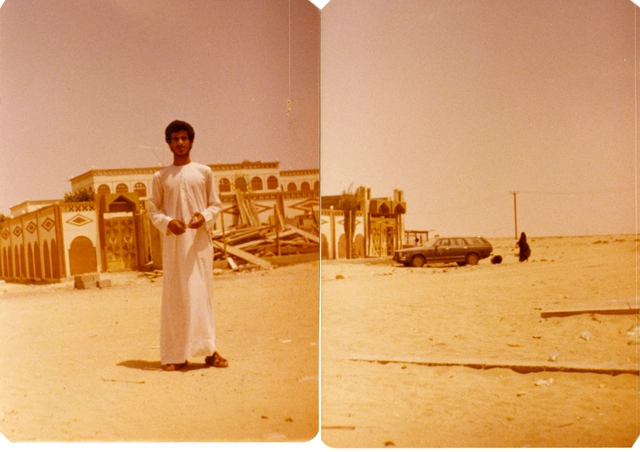
National House - My father’s friend Ahmed Abdulla Al Jassasi, Al Shahama, 1980; Courtesy of Houreya Naser Musabah Khamis Al Kalbani
Within the rapidly changing landscape of the United Arab Emirates, much of the nation’s vernacular and modern architecture is being quickly replaced by “iconic” contemporary structures. Despite this, many of the UAE’s previous landscape remains a vivid memory within the minds and mementos of its people.
Preservation of pre-oil vernacular architecture and a special focus on 1970s and 80s modern architecture will both serve as highlights of the exhibition.
The UAE’s full curatorial statement, after the break...
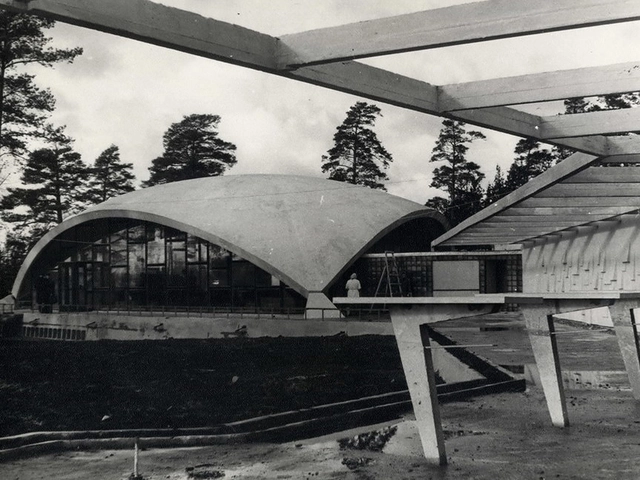
Restaurant “Sēnīte” (1967); Vidzeme highway 37.km / Linards Skuja, Andris Bite, G. Grīnbergs, R. Ozoliņš - Courtesy of The Museum of Architecture of Latvia
The architects of NRJA have been chosen to curate Latvia’s participation at the 2014 Venice Architecture Biennale. Based on the assertion that “there is (no) modernism in Latvia,” the pavilion’s exhibition Unwritten will confront the lack of research and evaluation of Latvian post-war modernist architecture.
Chosen to curate the Brazilian contribution at the 2014 Venice Architecture Biennale, diplomat and architecture critic André Aranha Corrêa do Lago has revealed plans for an exhibition that will chronologically illustrate the evolution of Brazilian architecture.
180 projects will be exhibited, all of which have either played a significant role in the country’s architectural evolution, such as the pre-Colombian (Indian shacks), vernacular constructions and baroque designs, or have displayed a strong international influence, like the Capanema Palace, Pampulha and Brasília. In addition to this, 50 important personalities, including Lucio Costa, Oscar Niemeyer, Lina Bo Bardi, and Paulo Mendes da Rocha, will be highlighted for their assistance in spotlighting the importance of Brazilian architecture.
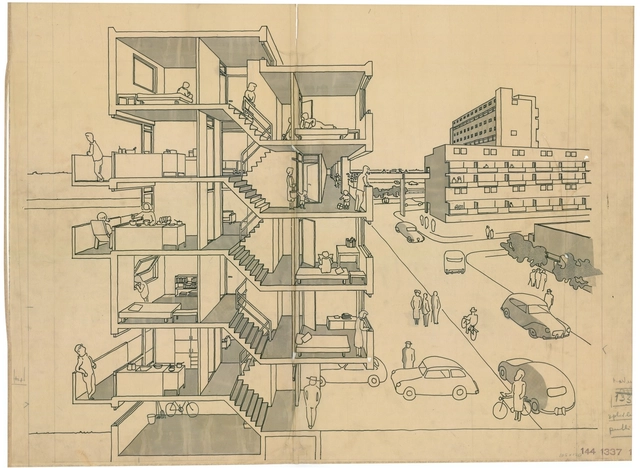
The Dutch architect, identified as a “compelling exponent of the Dutch welfare state,” was a leading voice within the international avant-garde movements CIAM (International Congresses of Modern Architecture) and Team 10. Inspired by the belief that “architecture should accommodate the emancipation of the masses while allowing for the self-realization of the individual citizen,” his portfolio includes some of the Netherlands’ most important postwar projects, such as the Rotterdam shopping street Lijnbaan.
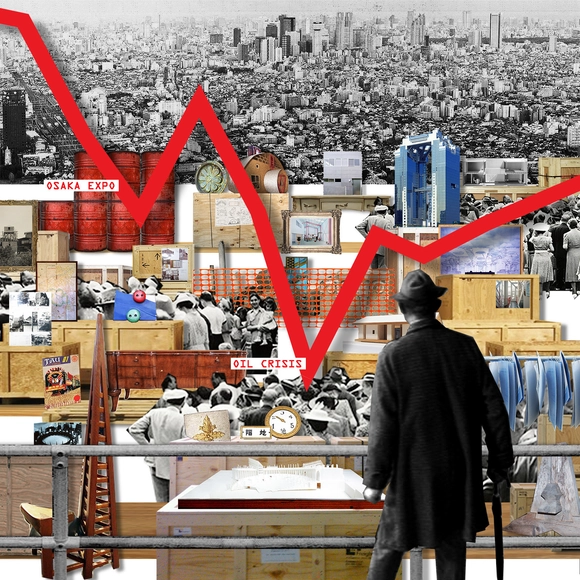
The influence of Western civilization and the birth of modernization following World War II lead Japan to become the world’s second largest economy by 1968. With this came a host of problems, namely environmental pollution and the oil crisis, which triggered the reexamination of modernism in Japanese architecture and a series of radical experiments by young architects that inevitably lead to a new vision of the city.
Highlighting the work of these young architects, as well as historians, urban observers, artists and magazines of the 1970s, Japan’s participation at the 2014 Venice Architecture Biennale will spotlight the “independent, fundamentally innovative responses” that “unfolded a new fertile field of architecture” and revealed the “essential power” our profession has in the real world.
Alvar Aalto: Early cantilevered armchair with stepped base, model no. 31, designed for the Tuberculosis Sanatorium, Paimio, 1929-1933 (Sold for £23,750). Image Courtesy of Phillips
UPDATE: The auction has concluded and more than £5.6 million was made. Find out how much the famous, architect-designed relics went for after the break.
Next week, a rare collection of over 100 relics designed by some of architecture’s most significant practitioners from the last two centuries will be auctioned off at the Phillip’s in London. Ranging from a full-scale paper tea house by this year’s Pritzker laureate Shigeru Ban to the Peacock chair designed by Frank Lloyd Wright for Tokyo’s Imperial Hotel, the items being showcased and sold are an ode to the ideas in which have had a profound impact on our built environment.
An exhibition of the items, appropriately titled “The Architect,” is already underway, prior to the auction on April 29.
Works by Gerrit Rietveld, Le Corbusier and Oscar Niemeyer are all available for purchase. Read on for a preview of the highlighted items...
Grimshaw Architects' dual focus on industrial and architectural design will be celebrated this month in a featured exhibit at Milan Furniture Fair. In this article, originally published by Metropolis under the title "Down to the Details," author Ken Shulman presents the firm's evolution in the context of the exhibit, touching on the projects being presented and more intriguingly — on how they are being presented.
Shortly after he joined Grimshaw Architects, Andrew Whalley was tasked with putting together an exhibition at the Royal Institute of British Architects (RIBA) in London. Titled Product + Process, the 1988 show was decidedly counter-current—a parade of pragmatic, largely industrial structures Grimshaw realized in the UK in the face of surging postmodern fervor. Featured projects included the transparent building the then 15-person firm designed to house the Financial Times’ London printing facilities, and a flexible, easily reconfigurable factory Grimshaw built for Herman Miller in Bath. But it wasn’t the selection of projects that caught the public eye. “We asked our clients to take apart pieces of their buildings, and then rebuild them for the exhibition,” says Whalley, now deputy chairman of Grimshaw. “This wasn’t a typical show of architectural drawings and models.”
The curators of the U.S. Pavilion for the 2014 Venice Architecture Biennale has unveiled OfficeUS, a “radical experiment” that explores the ways in which “space, structures, and protocols of the U.S. architectural office” have influenced the construction of Modernity.
New York based architects Leong Leong, graphic designer Natasha Jen (Pentagram) and technology consultants at CASE have been commissioned to re-design the U.S. Pavilion in Venice’s Giardini as a modern architectural practice. Eight architects will be selected from an international open call to serve as the ad-hoc practice’s acting principles, collaborating with 90 satellite offices from around the world to revisit and re-envision historical projects from an onsite archive of 1,000 buildings so that they may construct an agenda for the future production of architecture.
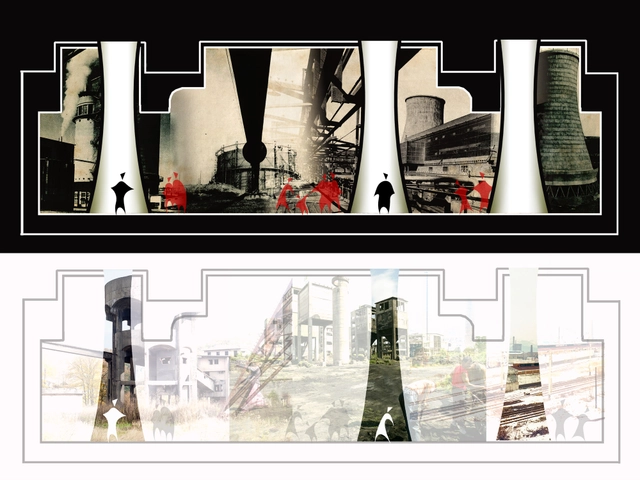
Conceptual Cross Sections. Image Courtesy of the Romanian Pavilion
In Eastern Europe the assimilation of modernism proved a rather divergent process, correlated with tumultuous and contradictory socio-political events. The urban space suffered successive destructuring, caused by massive industrial insertions with direct impact at urban and demographic level.
Thus the Romanian Pavilion's exhibition for the 2014 Venice Biennale, Site Under Construction will bring industrial architecture as generator of modernity into discussion. It suggests creating an initiatory journey from inter-war and socialist industrialization to post-industrial urban voids. Glory and void, past and present are mirrored and laid out to be contemplated, to raise awareness and be re-approached. Once industrial sites were closed down, the remaining locations became modern urban ruins, devoid of content, bare of utility, leaving behind an outer landscape, shattering and desolate.
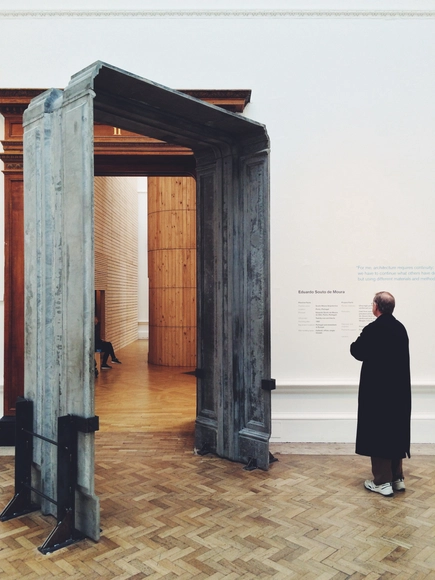
London'sRoyal Academy of Arts (RA) is selling off parts of their blockbuster architectural exhibition, Sensing Spaces. The Great Architecture Fair will see the seven practices behind the enormous installations select objects and materials from the exhibition to be repurposed as beautiful, unique items available to buy. In addition to these, the RA are offering members of the public the chance to experience the spaces out-of-hours "to give you your own exclusive moment in the exhibition."
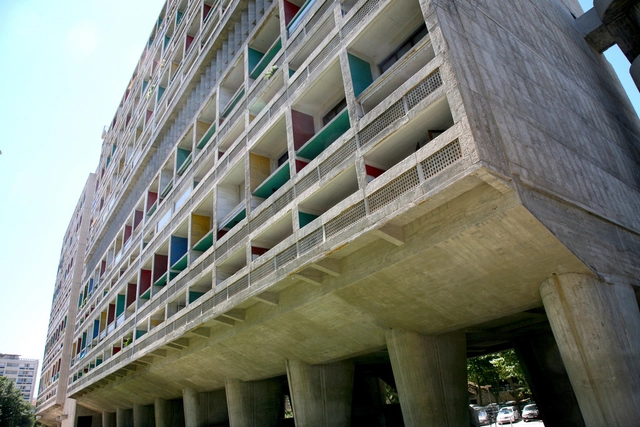
With Le Corbusier casting a long shadow over the last century of France's architectural history, it is not surprising that, faced with Rem Koolhaas's theme of 'absorbing modernity' at the 2014 Venice Biennale, the country might have a unique reaction.
Jean-Louis Cohen's initial proposal for the French Pavilion, titled "Modernity: Promise or Menace?" reflects this history: “since 1914 France has not so much 'absorbed' modernity as it has shaped it with significant contributions made by French architects and engineers in order to meet the requirements of different segments of society. As is the case in many countries, modernity has had to come face to face with social reform and by doing so it has made great dreams such as quality housing and community services for all partially come to fruition. But this encounter has come about in a original way, also generating considerable anxiety.”
Read on after the break for more about the themes explored by the French Pavilion
Parliament, “the place where the power of the people has found its home,” will be the focus of Austria’s contribution to the 2014 Venice Architecture Biennale. With over 200 national parliament buildings from around the world modeled at a scale of 1:500, the exhibition, “Plenum. Places of Power.” will explore how the architecture of parliament connects to the public, influences national identify, and more.
“The idea of democratic legitimation of power is so widespread today that no nation can do without building such a place, at least in name, for a representative popular assembly,” described commissioner Dr. Christian Kühn. “What do these places look like? And how are they connected to a public whose trust in democratic formation of will seems to be dwindling around the globe?”
"A Clockwork Jerusalem will offer the opportunity to explore and rethink fundamental aspects of British modernity, beyond architecture,” described Vicky Richardson, Director of Architecture, Design and Fashion at the British Council. “As the Venice Biennale evolves into a global research project, we are keen to make a significant contribution to the cultural debate around the past, present and future of UK and global architecture.”