In order to help architects and students to get to know the best International Master’s available in the world, BAM’s annual ranking compares and evaluates programs, from the best schools of architecture, through a comparative and objective methodology, developed by 13 international experts. For the 2022 edition, different Master’s Degree Programs from the recent QS Ranking – Architecture / Built Environmenthave been selected to take part in BAM’s Ranking.
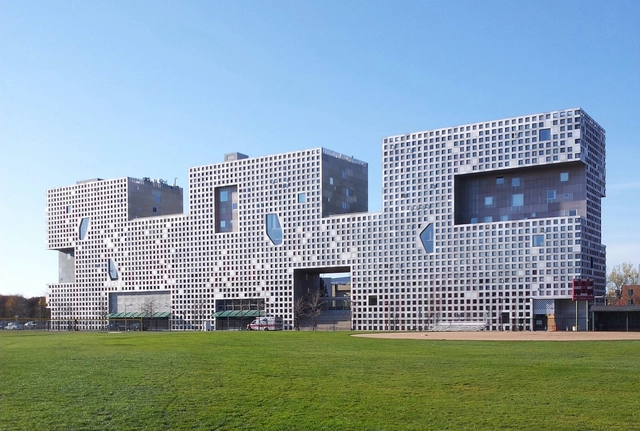
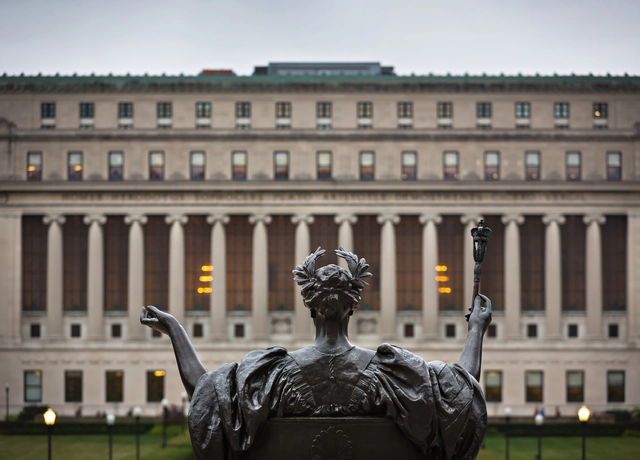
Similar to previous years, in 2022, Harvard and Columbia maintained their leading positions in first and second place. MIT made a comeback to the list with two master's programs, in the fourth position, the Master of Science in Architecture Studies in Urbanism (SMArch Urbanism), and in the sixth position, the Master of Science in Architecture Studies in Design (SMArchS Design). Universidad Politécnica de Madrid and ETH Zurich were both ranked third, offering the best master’s program in Europe. Pontificia Universidad Católica in Chile occupied the 18th position, presenting a top master's degree in South America, followed closely in the 20th position by the Universidade de São Paulo.
DELFT, THE NETHERLANDS - AUGUST 19, 2017: Students at work in the Library of the Technical University Delft, The Netherlands. Image via Shutterstock/ by T.W. van Urk
Delft University of Technology in the Netherlands took the second place while UCL, in the United Kingdom, came third. ETH Zurich, Harvard, and the National University of Singapore (NUS) maintained fourth, fifth, and sixth place. The Manchester School of Architecture was upgraded to seventh position this year, moving the University of California, Berkeley (UCB) to eighth place and the Tsinghua University in Beijing, China to the ninth. Politecnico di Milano, in Italy, remains a non-mover at 10.
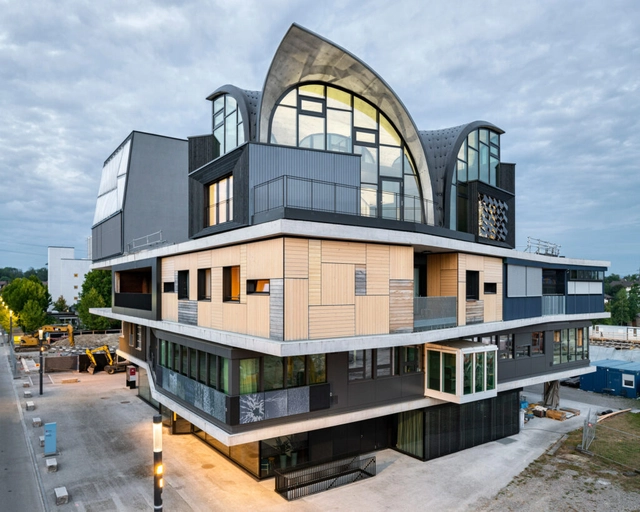
Dübendorf, Switzerland is something of hallowed ground for architectural technologists. There, on the shared academic campus of the Swiss Federal Laboratories for Materials Science and Technology and the Swiss Federal Institute of Aquatic Science and Technology, public university ETH Zurich has conducted nearly a decade of engineering and construction experimentation at the ever-evolving NEST research building. In August, ETH Zürich unveiled its latest extension of the building, HiLo (short for high performance-low emissions)—a two-story modular addition to the chameleon structure that harnesses medieval building principles and contemporary digital methods to raise the bar for more sustainable applications of concrete.
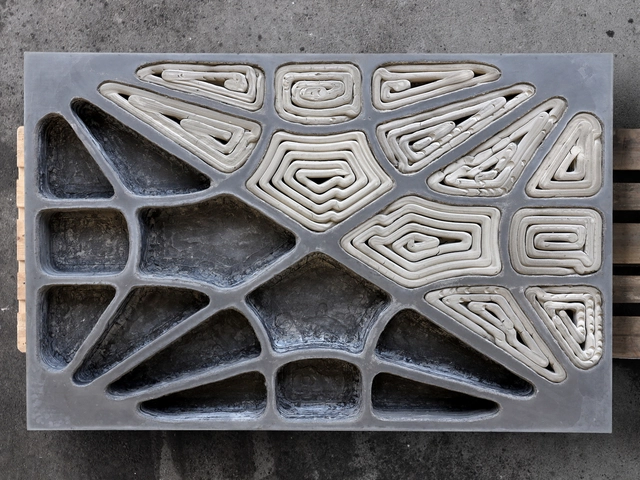
With the aim of generating a significant impact on the responsible and sustainable consumption of resources and energy in the construction industry, ETH Zürich in collaboration with FenX AG is using foam 3D printing (F3DP) to manufacture geometrically complex formwork for the construction of special elements in concrete.
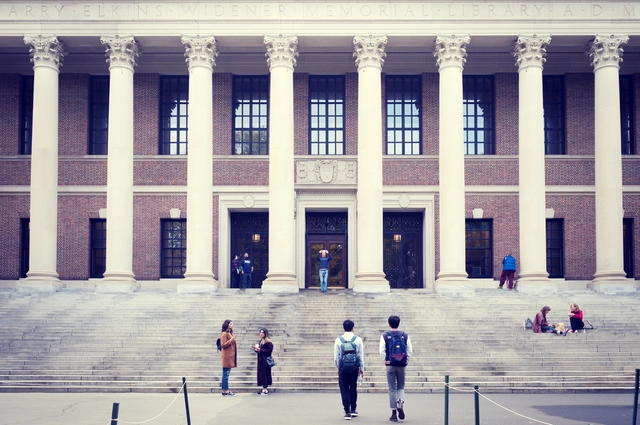
Harvard University in Cambridge, Massachusetts, USA. Image via Shutterstock/ By Marcio Jose Bastos Silva
In order “to help architects and students to get to know the best International Master’s programs available”, the Best Architecture Masters (BAM) has established its annual list of top postgraduate architecture curriculums. Based on the QS Ranking by Subjects – Architecture / Built Environment, for the 2021 edition, 22 Universities were selected to be evaluated, by an Expert Committee, formed by 15 professors from all over the world.
In 2021, the Harvard Master in Architecture II continued to lead the ranking, and Colombia maintained second place with its Master of Science Degree in Advanced Architectural Design. TU Delft in the Netherlands took on the third position, becoming the best in Europe while Tsinghua University in China followed in the fourth position, becoming the best in Asia. The Master in Architecture of the Pontificia Universidad Católica in Chile occupied the 15th position and was named the best program in Latin America.
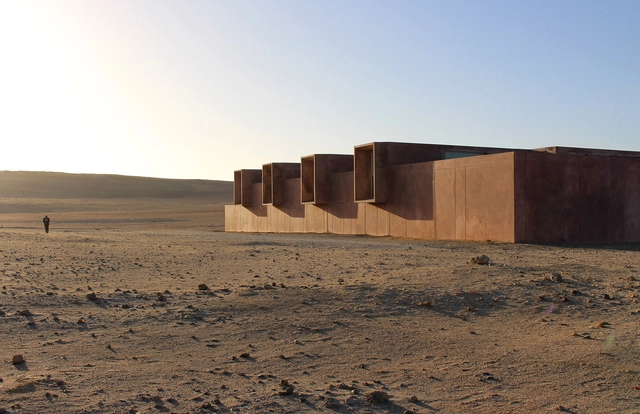
Peru is home to a wide range of new cultural architecture. Strongly tied to the country’s megadiverse geography, Peru’s modern projects reinterpret past building techniques. Taking inspiration from the vernacular and varied landscapes, these contemporary buildings arise from long traditions rooted in ancient cultures and civilizations.
CAMBRIDGE, USA - December 01, 2016: Massachusetts Institute of Technology (MIT) Dome - Cambridge, Massachusetts, USA. Image via Shutterstock/ By Diego Grandi
Every year in March, the QS World University Rankings reveal the top universities to study each profession, covering 51 different subjects. Grading schools based on academic reputation, employer reputation, and research impact, the annual QS- Quacquarelli Symonds has unveiled that for the second year in a row, in the 2021 Architecture/ Built Environment division, the Massachusetts Institute of Technology (MIT) is still in the first position.
Videos
Peter Eisenman, Patrik Schumacher, and Alisa Andrasek among the speakers that participated at Digital Futures. Image Courtesy of Digital Futures
Like most functions in recent months, this year’s Digital FUTURES, which is held annually since 2011 at Tongji University in Shanghai, had to move online due to the pandemic. The organizers took this as an opportunity to give the event a global dimension, turning the festival into what they rightfully call the most significant worldwide event for architectural education ever staged, with a 24/7 display of workshops, lectures and panel discussions involving some of the most prominent architects and educators. Here is an overview of the festival, together with a selection of lectures from Digital FUTURES World.
Digital fabrication is a manufacturing process that uses a machine controlled by computers. This method has sparked the interest of architects and product designers, as it opens the door to new possibilities in terms of solving complex processes and new approaches for mass construction.
A couple of years ago, digital fabrication was making headlines regularly, promising to drastically change the architecture practice. The revolution in architecture might not have arrived yet, but research projects, experiments and the dedication of several architects and universities already opened a new realm of possibilities for architectural expression. Therefore, it seems appropriate to give an overview of the impact the technology had so far within the architecture practice. This article covers the different types of processes within the field and the projects that experiment with them, with the scope of reframing the architectural potential of digital fabrication.
The annual QS- Quacquarelli Symonds ranking for top universities has been unveiled. Based on academic reputation, employer reputation, and research impact, the ranking highlights every year the best universities for each profession. In the 2020 Architecture/ Built Environment division, the list reveals that the Massachusetts Institute of Technology (MIT) is back on top.
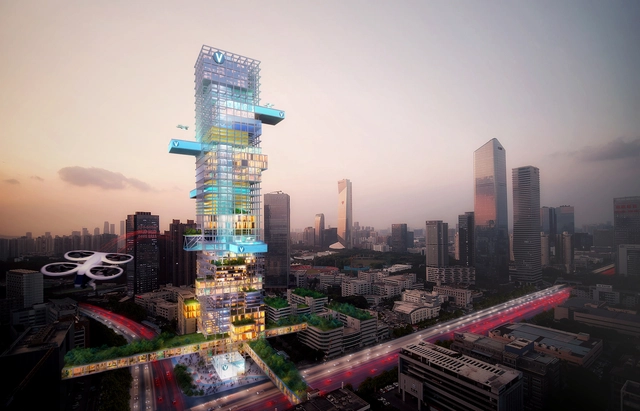
MVRDV in collaboration with Airbus, Bauhaus Luftfahrt, ETH Zurich, and Systra, is developing a plan for the future of Urban Air Mobility (UAM). The investigation tackles the integration of “flying vehicles” into our urban environments and envisions a comprehensive mobility concept.
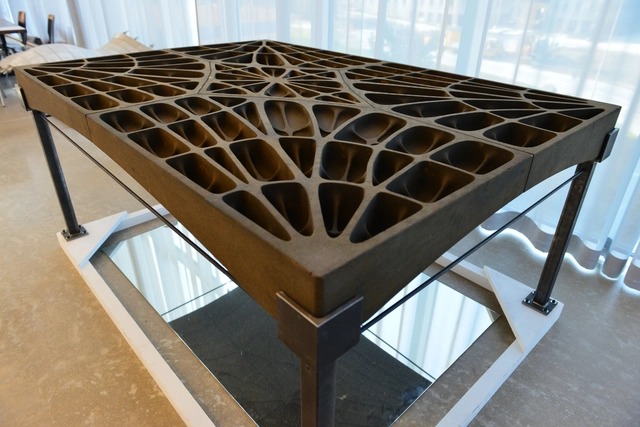
With the intention of maximizing available space and avoiding steep construction costs, researchers from ETH Zurich’s Department of Architecture have devised a concretefloor slab that with a thickness of a mere 2cm, remains load bearing and simultaneously sustainable. Inspired by the construction of Catalan vaults, this new floor system swaps reinforced steel bars for narrow vertical ribs, thus significantly reducing the weight of construction and ensuring stability to counter uneven distributions on its surface.
As opposed to traditional concretefloors that are evidently flat, these slabs are designed to arch to support major loads, reminiscent of the vaulted ceilings found in Gothiccathedrals. Without the need for steel reinforcing and with less concrete, the production of CO2 is minimized and the resulting 2cm floors are 70% lighter than their typical concrete counterparts.
https://www.archdaily.com/869192/gothic-construction-techniques-inspire-eth-zurichs-lightweight-concrete-floor-slabsOsman Bari
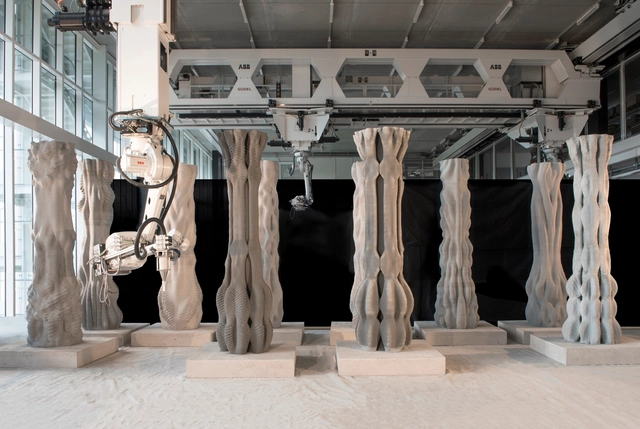
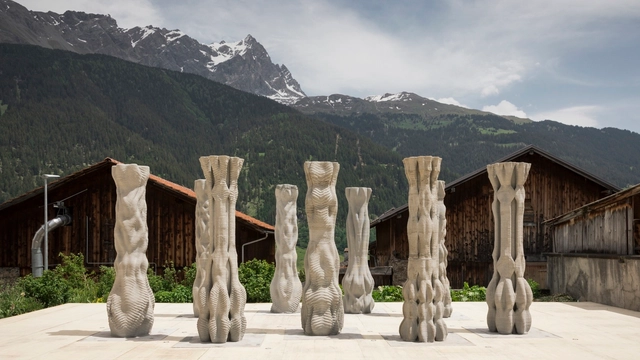
ETH Zurich has unveiled details of “Concrete Choreography,” an installation recently inaugurated in Riom, Switzerland. The installation presents the first robotically 3D printed concrete stage, consisting of columns fabricated without formwork, and printed to their full height in 2.5 hours. The process is expected to greatly improve the efficiency of concrete construction while achieving the fabrication of complex components.
https://www.archdaily.com/921635/eth-zurich-develops-3d-printed-concrete-columnsNiall Patrick Walsh
Global higher education analysis firm Quacquarelli Symonds (QS) has released in 2017 rankings of the world’s top universities for the study of Architecture & Built Environment. This year, for the seventh edition of the survey, QS has expanded the ranking to list the world’s top 200 schools, including institutions across all six inhabited continents.
For the third year in a row, MIT has topped the list, finishing ahead of the Bartlett School of Architecture and the Delft University of Technology (TU Delft). Read on for the full rankings.
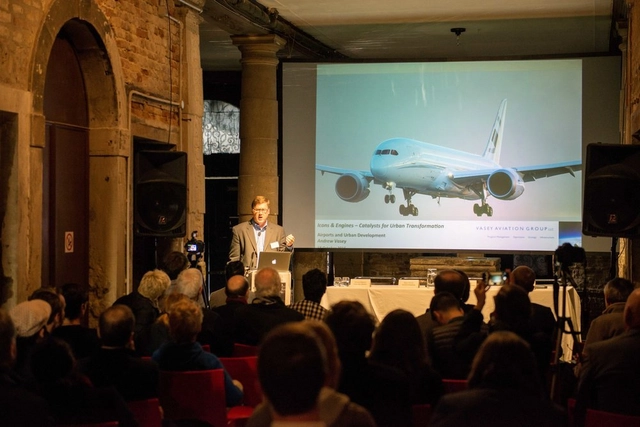
Aerial Futures, Grounded Visions: Shaping the Airport Terminal of Tomorrow was a two-day symposium held in October 2016 as part of the European Cultural Center's collateral event at the 2016 Venice Biennale. It encouraged discussion about the future of air travel from the perspectives of architecture, design, technology, culture and user experience. The event featured presentations and discussions by the likes of airport architect Curtis Fentress, Nelly Ben Yahoun, Donald Albrecht, Director of the Museum of the City of New York; Anna Gasco, post-doctoral researcher at the ETH-Future Cities Laboratory in Singapore; Jonathan Ledgard, co-founder of the Droneport Project; and Ashok Raiji, Principal at Arup New York.
https://www.archdaily.com/803677/aerial-futures-grounded-visions-the-airport-terminal-of-tomorrowAD Editorial Team








.jpg?1598300039&format=webp&width=640&height=580)