1. ArchDaily
  2. Environment

Environment: The Latest Architecture and News

What Is Ecological Urbanism?

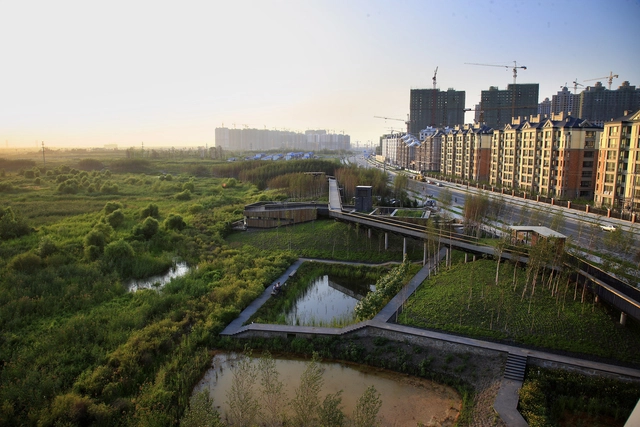
According to the architect and researcher Patrícia Akinaga, ecological urbanism emerged at the end of the 20th century as a strategy to create a paradigm shift with regard to the design of cities. With this, urban projects should be designed from the potential and limitations of existing natural resources. Unlike other previous movements, in ecological urbanism architecture is not the structuring element of the city — the landscape itself is. In other words, green areas should not only exist to beautify spaces, but as true engineering artifacts with the potential to dampen, retain and treat rainwater, for example. With ecological urbanism, urban design becomes defined by the natural elements intrinsic to its fabric.

What Is Ecological Urbanism? - Image 1 of 4What Is Ecological Urbanism? - Image 2 of 4What Is Ecological Urbanism? - Image 3 of 4What Is Ecological Urbanism? - Image 4 of 4What Is Ecological Urbanism? - More Images+ 3

World's Most Liveable Cities in 2021: Auckland in New Zealand Tops the Ranking

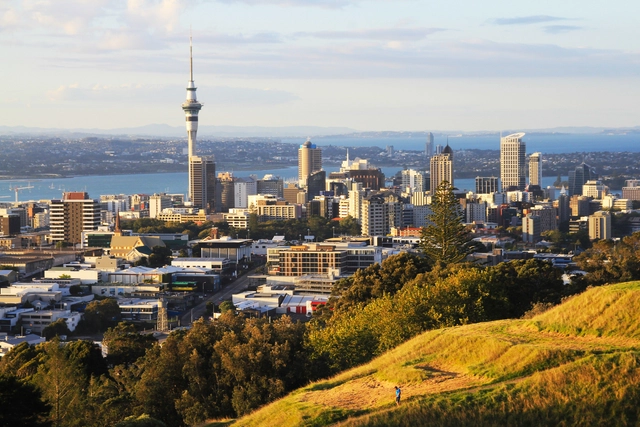
Auckland in New Zealand has topped the ranking in the 2021 EIU's annual world's most liveable city survey. Classifying 140 cities across five categories including stability, healthcare, culture and environment, education, and infrastructure, this year’s edition of the review has been highly affected by the global pandemic. Australia, Japan, and New Zealand took leading positions, while European and Canadian cities fell down the ranking.

World's Most Liveable Cities in 2021: Auckland in New Zealand Tops the Ranking  - Image 1 of 4World's Most Liveable Cities in 2021: Auckland in New Zealand Tops the Ranking  - Image 2 of 4World's Most Liveable Cities in 2021: Auckland in New Zealand Tops the Ranking  - Image 3 of 4World's Most Liveable Cities in 2021: Auckland in New Zealand Tops the Ranking  - Image 4 of 4World's Most Liveable Cities in 2021: Auckland in New Zealand Tops the Ranking  - More Images+ 7

From Past to Future: The Urgency of "Green" in Architecture

The climate crisis has revealed the poor planning of our cities and the spaces we inhabit. Both construction and projects contribute to high carbon gas emissions. Fortunately, there are several ways to intervene to bring change into this scenario, either through materials and techniques adopted in each initiative or through geographical and social impact. In this scenario, the only certainty is that: to think about the future we cannot ignore the "green" in all its recent meanings from nature to sustainability, and ecology.

What 2020 Meant for Climate Change and the Environment

The first lockdown brought most of the world to a standstill, and many were quick to point out the silver lining: the significant drop in carbon emissions. However, this pollution reduction was short-lived, and past crises indicate that we might be standing at a crossroads when it comes to our climate goals. What has this unprecedented year meant for the efforts to curb climate change and protect the environment?

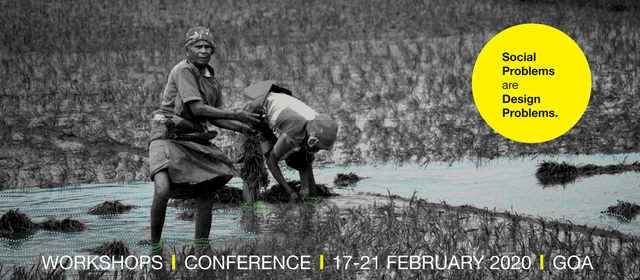
Social Design Festival

A five-day national festival to seed, incubate and showcase socio-environment design successes.
Workshops are three-day hackathons that address design issues in the social realm.
Conference as a forum to understand how design can bridge the deficit in the public domain.

Archisource - Drawing of the Year Competition

Archisource presents ‘Drawing of the Year 2019’. Our first competition celebrating the talent of architecture and design students and young professionals through a single drawing. With four categories to win from, we are celebrating the extensive variety of drawings that are created around the world each year.

Call for Submissions: Dichotomy Issue 25

Soil is the foundation of the Earth in which we all inhabit. We grow from it, prosper from it, build upon it, pollute it, and dichotomize it. Soil is an organic material providing a sustainable base for life. Yet, polarized as degrading and dirty. How is it that soil can unite nations, yet divide people? What power does it have in cultivating the built environment and defining its boundaries?

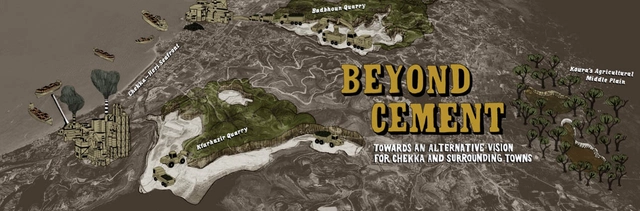
Open Call: "Beyond Cement: Towards an Alternative Vision for Chekka and Surrounding Towns"

Many challenges underline the urgency of reconsidering dominant approaches to development, land use, and the institutional framework that governs them, in addition to the political context, which requires a novel and creative counter-approach in Chekka and Surrounding Towns in North Lebanon.
As such, this competition is an open call for planners, designers, environmental scientists, agricultural engineers, economists and other professionals to draft an intervention framework, which simultaneously answers the concept of sustainable development and the immediate needs of the people, including job opportunities and a local economy, without compromising their health, the environment and local economic resources.

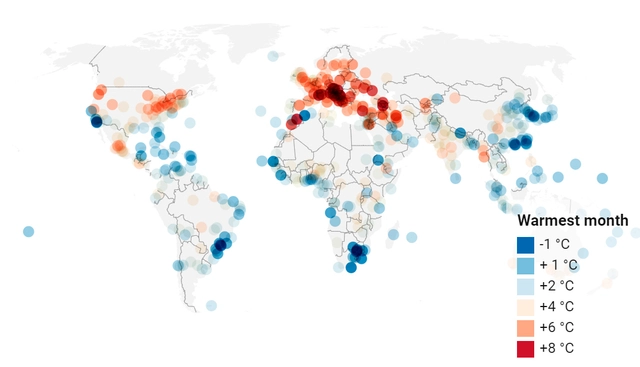
The Temperature Rise of 520 Cities by 2050 (is Grim)

The climate in Madrid in 2050 will look more like the climate in Marrakesh, Morocco today. Stockholm will feel more like Budapest, London like Barcelona, Moscow like Sofia, Seattle like San Francisco, and Tokyo like Changsa in China. 

The research "Understanding Climate Change Starting with an Analysis of Similar Cities" published in the scientific magazine PLOS ONE by The Crowther Lab of ETH Zurich, paints a grim picture of the future for the world's urban centers.

#MATTERS OF FACT - Design and Architecture Summer Workshops at Domaine de Boisbuchet

Fake news, alternative facts, virtual realities... Media that were meant to connect us are taking on a life of their own. They blur borders between the actual world and its image and they answer questions about true or false with the loudest voice or strongest image. Our workshops this year offer a reality-check. They dip your hands into matter, confront ancient knowledge with high-tech, engage you with innovative companies and let you connect to real people - here and now!

Habitat: Vernacular Architecture for a Changing Planet

Climate change is the biggest challenge facing our planet. There has never been a more important time to understand how to make the best use of local natural resources and to produce buildings that connect to ecosystems and livelihoods and do not rely on stripping the environment or transporting materials across the globe.

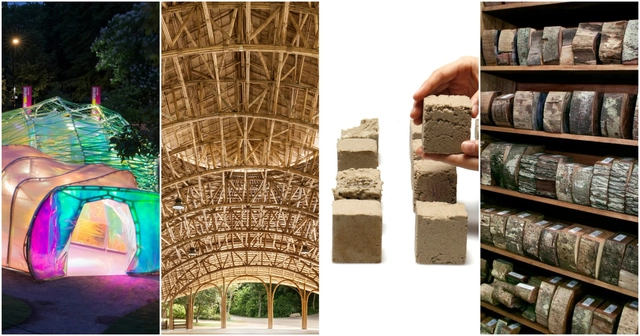
8 Biodegradable Materials the Construction Industry Needs to Know About

Subscriber Access | 

In architecture we are so caught up in creating something new, we often forget about what happens at the end of a building’s life cycle—the unfortunate, inevitable demolition. We may want our buildings to be timeless and live on forever, but the harsh reality is that they do not, so where is all the waste expected to go?

As with most non-recyclable waste, it ends up in the landfill and, as the land required for landfill becomes an increasingly scarce resource, we must find an alternative solution. Each year in the UK alone, 70–105 million tonnes of waste is created from demolishing buildings, and only 20% of that is biodegradable according to a study by Cardiff University. With clever design and a better awareness of the biodegradable materials available in construction, it’s up to us as architects to make the right decisions for the entirety of a building’s lifetime.

The Next Sustainability Crisis: Humans Are Using So Much Sand That We May Actually Run Out

Subscriber Access | 
The Next Sustainability Crisis: Humans Are Using So Much Sand That We May Actually Run Out - Featured Image
Objects made of Finite, a material developed by students from Imperial College London using desert sand. Image © Finite

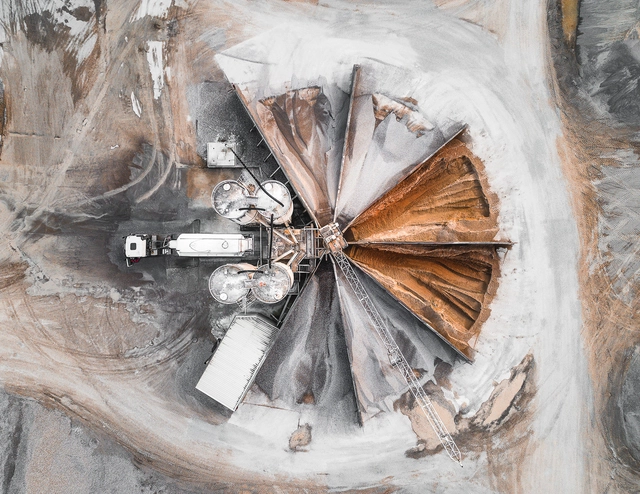
Sand is the most-consumed natural resource in the world after water and air. Modern cities are built out of it. In the construction industry alone, it is estimated that 25 billion tons of sand and gravel are used every year. That may sound a lot, but it’s not a surprising figure when you consider how everything you’re surrounded with is probably made of the stuff.

But it’s running out.

This is a scary fact to think about once you realize that sand is required to make both concrete and asphalt, not to mention every single window on this planet. The United Nations Environment Programme found out that from 2011 to 2013, China alone used more cement than the United States had used in the entire 20th century and in 2012, the world used enough concrete to build a wall around the equator that would be 89 feet high and 89 feet thick (27 by 27 meters).

World's Largest Air Purifier Completes Successful Trial Run in Xi'an, China

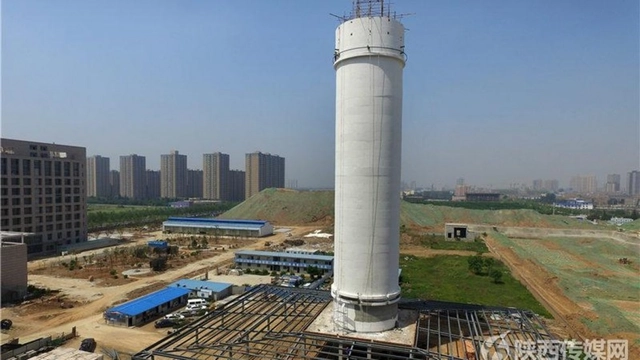
A 100-meter-tall air purification tower in Xi’an, China – believed to be the world’s largest air purifier – has significantly improved city air quality, results from its preliminary run suggest.

According to researchers from the Institute of Earth Environment at the Chinese Academy of Sciences, the tower has managed to produce more than 10 million cubic metres (353 million cubic feet) of clean air per day since it was launched a few months ago. In the 10-square-kilometer (3.86-square-mile) observed area of the city, smog ratings have been reduced to moderate levels even on severely polluted days, an improvement over the city’s previous hazardous conditions.

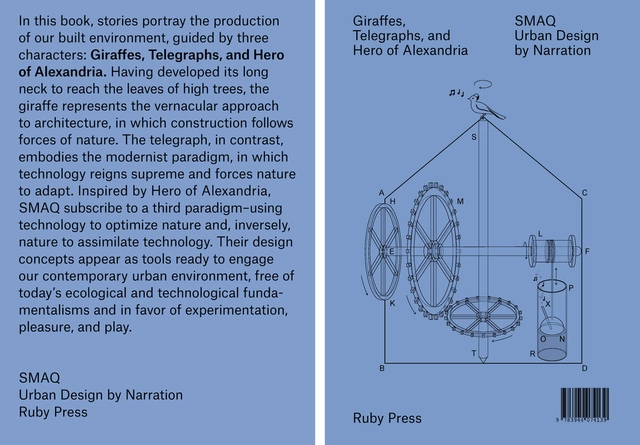
Giraffes, Telegraphs And Hero Of Alexandria - Urban Design By Narration

In this book, stories portray the production of our built environment, guided by three characters: Giraffes, Telegraphs, and Hero of Alexandria. Having developed its long neck to reach the leaves of high trees, the giraffe represents the vernacular approach to architecture, in which construction follows forces of nature. The telegraph, in contrast, embodies the modernist paradigm, in which technology reigns supreme and forces nature to adapt. Inspired by Hero of Alexandria, we subscribe to a third paradigm – using technology to optimize nature and, inversely, nature to assimilate technology.

Agency2017: Australasian Student Architecture Congress in Sydney

The Australasian Student Architecture Congress (ASAC)—titled Agency 2017—will be held in Sydney from the 28th of November to the 2nd of December. It will be the first congress held in Sydney since 1999 and student-led by ASAC Inc., a non-profit student body based in NSW, Australia.

Call for Submissions: International Competition in Architecture 2017

The architect, the engineer, the designer, all of them participate to the development and the construction of an upcoming world at their own level. Together, by looking further, beyond preconceived ideas and well-established concepts, these entrepreneurs, these creators, have the power to make up new rules, propose new directions: innovative facilities and housing bringing new living conditions, making room for new ways of moving, of consuming energy, to counter major environmental challenges of our era and others to come. The prizes of the Jacques Rougerie Foundation support and accompany this approach.

Innovation, architectural disruption, sustainable development and resilience against climate changes are the keywords of this 7th edition of the international competition in architecture of the Jacques Rougerie Foundation – Institut de France.

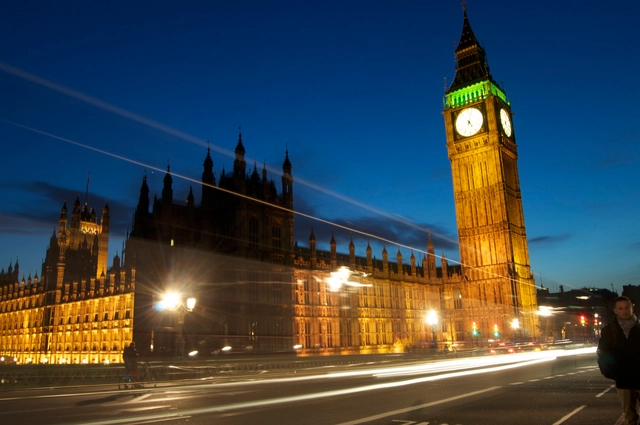
How Rebuilding Britain’s Houses of Parliament Helped Create Clean Air Laws

MIT has published new research revealing how the reconstruction of the British Houses of Parliament paved the way for legislation to tackle air pollution in Victorian London. Through original archival work into the 1840-1870 reconstruction, MIT architectural historian Timothy Hyde has revealed that work on the Parliament building was so hindered by air pollution that the British government ordered an inquiry into the effects of the atmosphere on new buildings.

How Rebuilding Britain’s Houses of Parliament Helped Create Clean Air Laws - Featured ImageHow Rebuilding Britain’s Houses of Parliament Helped Create Clean Air Laws - Image 1 of 4How Rebuilding Britain’s Houses of Parliament Helped Create Clean Air Laws - Image 2 of 4How Rebuilding Britain’s Houses of Parliament Helped Create Clean Air Laws - Image 3 of 4How Rebuilding Britain’s Houses of Parliament Helped Create Clean Air Laws - More Images