Howl's Moving Castle. Image Courtesy of Studio Ghibli
Every evening when we get home, without ceremony, we perform a small rite. We arrive at a door, we open it, and we step through into a space that belongs to us in a way no other space does. It is such a mundane act that we rarely notice it has a structure at all, and yet philosophers and anthropologists have written entire books describing these psychological structures. Interestingly, visual works such as the animated worlds of Studio Ghibli seem to reflect this dynamic to create worlds which contain architecture and layouts that provide a path to escape by tapping into our memories in a legible yet enchanted form.
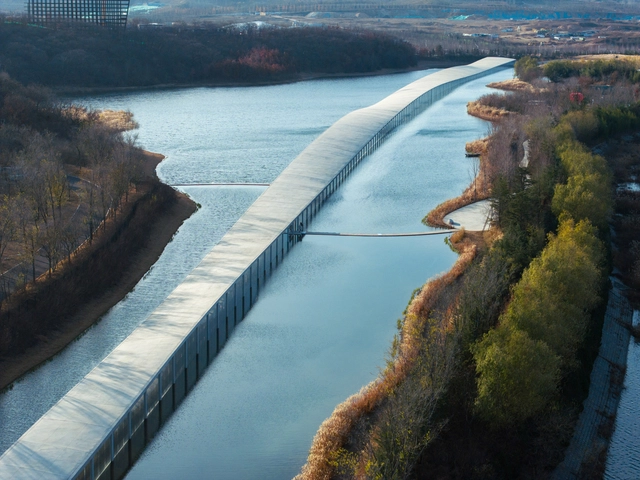
The built environment has historically served humans as a mechanism of environmental control. Through our intellectual capacities and ability to organize, we have used buildings to actively influence and terraform the immediate context in which they are inserted, often treating geography, water, and ecosystems as resources to be extracted and managed. However, more and more, architecture is transitioning from exploiting physical and biological matter to actively collaborating with it. This shift demands that architects explore how buildings and their materials grow, transform, decay, and persist beyond human timelines. This thinking also serves as a starting point for the profession to reflect on how it influences the natural world, as well as the non-human species around it, creating networks and connections between humans, buildings, living organisms, and natural environments.
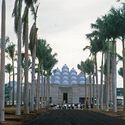
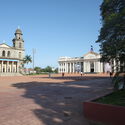
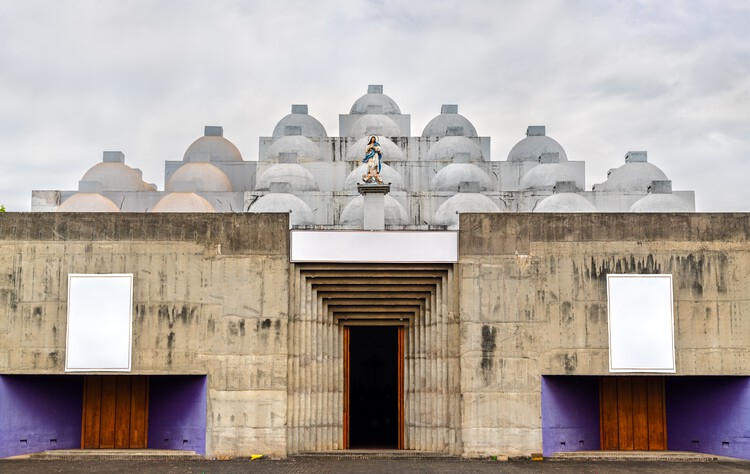
On December 23, 1972, Managua, the capital of Nicaragua, was struck by a 6.3-magnitude earthquake. In a matter of minutes, its urban core, which for decades had functioned as a compact political and economic center, abruptly collapsed. In the reconstruction process that followed, the authorities sought not simply to rebuild but to reorganize. Their objective was to decentralize the city and prevent future paralysis by dispersing functions across multiple zones. Among the most significant architectural outcomes of this shift was the new Metropolitan Cathedral. Its modernist language symbolized both institutional continuity and urban transformation. In doing so, it embodied Managua's transition from a Spanish-style, centralized urban grid to a contemporary, decentralized metropolis.
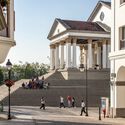
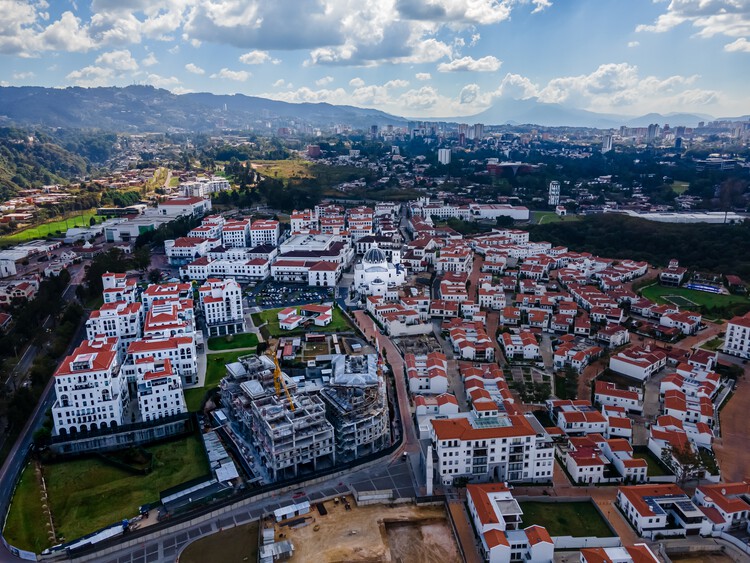
Ciudad Cayalá, a privately developed, mixed-use community on the outskirts of Guatemala City, is often described as a "theme park" of white lime-washed walls, red tiles, and cobbled plazas. A closer examination, however, reveals a more complex urban narrative. Its significance, however, lies in its capacity to create a safe and well-managed public space, proposing a modern reinterpretation of historic urban principles that mark the region's architectural and urban heritage. Behind the Antigua-style façades lies an urban experiment: a modern re-engagement with architectural elements like arcades, courtyards, and open plazas, which propose a privately-managed public space as a solution to urban challenges in the region.
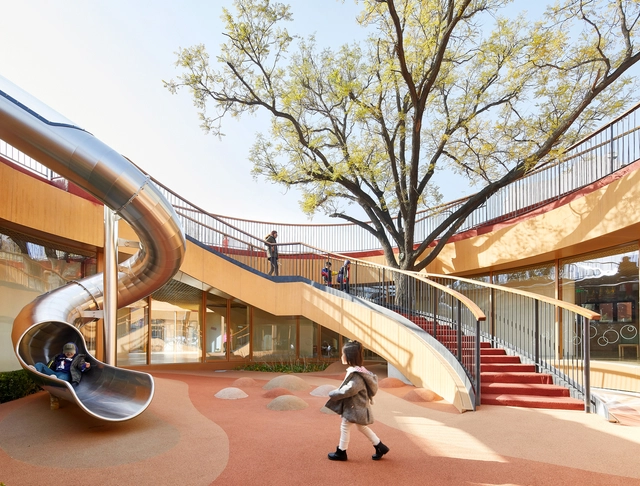
Today, the International Day of Education serves as a reminder of the significant impact that architectural design has on learning environments. From flexible classrooms that adapt to diverse teaching methods to outdoor learning areas that integrate natural elements, the architecture of learning spaces embodies the principles of pedagogy, offering opportunities for exploration, collaboration and creativity, all while maintaining a focus on the safety and comfort of all users. This selection of articles explores the potential of design to enhance learning outcomes through spatial exploration, be it inside the classroom, in outdoor spaces or by encouraging larger communities to part-take in the learning process.
Throughout the year, ArchDaily's team of curators works on expanding and populating our project library. Located all around the world, each curator carefully considers the best works emanating from their respective regions in an effort to have a diverse representation of the most inspiring and innovative built works. The team looks to new rising practices, new technologies, and the vernacular revival of traditional construction techniques. Seeking socially driven initiatives, as well as major works by renowned architects, the overall offers a holistic view of the built world today and is relayed through the yearly project review.
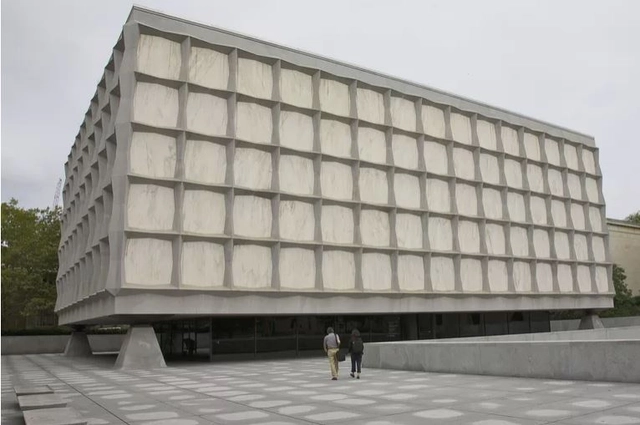
Beinecke Rare Book Library, Yale University, Gordon Bunshaft, 1963.. Image via Barry Winiker / Getty Images
Some years end up being cultural pivot points. 2021 was one such year, with COVID-19 as the first existential threat to our culture since World War II. Architecture will change as a result, and may evolve in public perception to value motivations as a criteria for understanding it, versus valuing outcomes as the validation of any particular aesthetic.
When the 2008 Great Recession destroyed advertising revenue for all of publishing and limited the cash that architects had for PR and photographers, the established way of promoting architects and architecture was brutally compromised. That same moment saw the instant availability of smartphones, with insanely good cameras, huge memory, and soon 5G transmission. Those technological revolutions turned graphic duffers into artists. Anyone can now photo, video, and narrate any perception anywhere, instantly, free - and share universally. The cliché of saying that the internet “everything changed” is true in how the world sees architecture.
This one-two punch of fiscal devastation and technological revolution has realized a New Practice; the Self-Promoting Architect, independent of the Machine of Defining Cool in architecture.
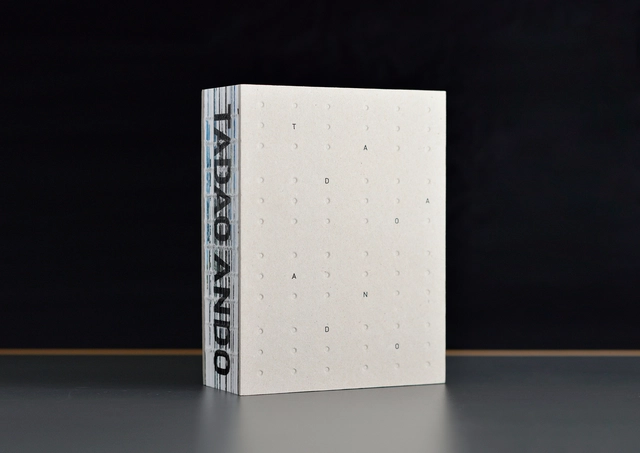
Throughout his distinguished career, Pritzker award winner Tadao Ando managed to trigger every human’s sensations upon entering his structures. It was never just the buildings’ forms that let the architect earn his status, but the manipulation of light and shadow and the impulsive sensation of sanctity that his buildings impose, are what led him to become one of the world’s most renowned architects.
To showcase Ando’s recent works and to honor their ongoing relationship with the architect, Oris House of Architecture have created a monograph titled Transcending Oppositions, celebrating his buildings and their relationship with the contemporary culture of Japan. Judging this book by its cover, readers will have a clear notion of what to expect, as the monograph reflects Tadao Ando’s architecture on fine print.
Like food and clothing, buildings are essential. Every building, even the most rudimentary, needs a design to be constructed. Architecture is as central to building as farming is to food, and in this era of rapidly advancing technological change farming may offer us valuable lessons.
At last census count there were 233,000 architects in the United States; the 113,000 who are currently licensed represent a 3% increase from last year. In addition there’s a record number of designers who qualify for licensure: more than 5,000 this year, almost the same number as graduates with professional degrees. There is now 1-architect-for-every-2,900 people in the US. A bumper crop, right?
Summer. Vacation. Two magic words that will certainly ease all the pain and exhaustion of working/studying full-time. Now that it is that time of year, most people are busy planning their travel itineraries. Whether it’s a city trip to Paris to see the Eiffel Tower and the Louvre, or a journey to walk on China’s Great Wall, the majority of travelers will choose to cross iconic landmarks off their bucket lists. However, there is a lot more to London than the London Bridge and Buckingham Palace, and there is a lot more to Barcelona than Gaudí. There are, in fact, hundreds of underrated, exquisite structures that go unnoticed.
If you are planning a getaway soon, here is a list of hidden architectural gems that are worth the visit.
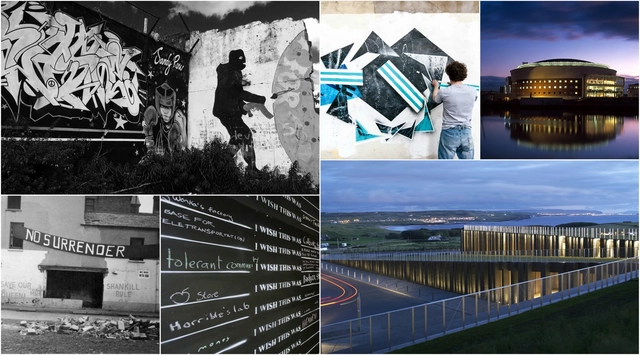
Architecture is often intertwined with political context. This deep connection is especially evident in Northern Ireland, a place of infamously complex politics. The state came into existence as a consequence of war in 1921, when Ireland was partitioned into an independent Irish Free State (now the Republic of Ireland) and Northern Ireland, an industrious region still controlled by Britain. Conflict has since ensued in Northern Ireland between a majority pro-British Unionist population, and a minority, though significant, Irish Nationalist community. The latter half of the twentieth century witnessed a brutal struggle, with over three thousand people killed, thousands more injured, and harrowing images spread across the world.
The turbulence of Northern Ireland’s conflict is played out in the architectural development of Belfast, its capital city. With thirty years of war from the 1960s to 1990s, the architecture of Belfast embodied a city under siege. When the prospect of peace dawned in the 1990s, an architecture of hope, confidence, and defiance emerged. In the present day, with Northern Ireland firmly on a peaceful path, Belfast has played host to a series of bold architectural ideas and landmark public buildings by award-winning architects. With the rich, bitter, emotive history of Northern Ireland viewed through multiple, often conflicting prisms, the architectural development of Belfast offers a tangible narrative of a city which burned, smoldered, and rose from the ashes.
With the rise of computational networks and power, cognitive models developed and debated over in the postwar decades have finally been able to be put to work. Back then, there was a philosophical debate raging alongside the burgeoning field of computer science theory on the nature of consciousness, in which machines of artificial intelligence served as a thought experiment to question humanity. Yet with the proliferation of data and the centralization of its archives, theoretical practice moved from conceptual experiments to empirical tests.
With no casualties, last week's fire at the Glasgow School of Art, which caused significant damage to parts of the building and gutted Charles Rennie Mackintosh's canonical library room, will be remembered as a tragic event that robbed us of one of the best examples of Art Nouveau of its time. The intention of the Glasgow School of Art is to restore the building in the hope that in generations to come, the fire will be all but forgotten, a strategy which has been largely well received by the profession.
However, in the case of other fires things have not gone so smoothly: for millennia, fire has played a big role in determining the course of architectural history - by destroying precious artifacts, but often also by allowing something new to rise from the ashes. Read on after the break as we count down the top 10 fires that changed the course of architectural history.
There are few topics that stir up more controversy on ArchDaily than that of women in architecture. From those of you who vociferously advocate for women in the field to those who steadfastly purport that gender has no place in architecture at all, you, our readers, represent a wide spectrum of viewpoints and opinions on the subject.
And so, in honor of International Women's Day, we've decided to take a look back at some of our past comment-stirring articles (even more after the break):
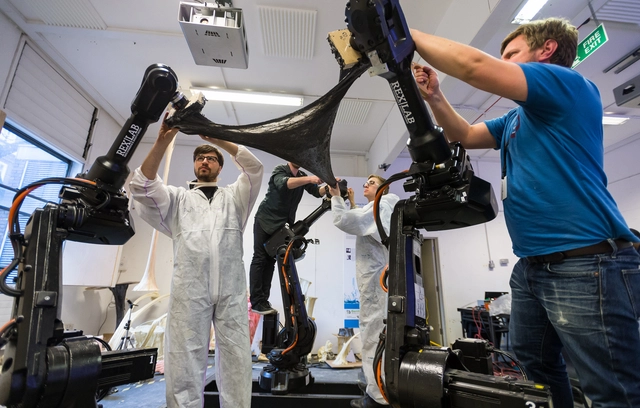
Members of the RoboticFOAMing group release a foam column stretched into shape by three robots. Photo courtesy of Bentley
by: Daniel Davis & David Fano of CASE
This year marks Smartgeometry’s tenth anniversary. For architects it’s been a decade of breathless innovation and listless stagnation. In this article we look back at the success of SmartGeometry and ask why the building industry isn’t keeping up.
The original instigators of Smartgeometry – Lars Hesselgren, J Parrish, and Hugh Whitehead – worked together at YRM (now part of RMJM) in the late 1980s. Together they helped shepherd parametric modeling and associative geometry into the field of architecture, and witnessed how early-stage three-dimensional structural analysis and late-stage clash detection might change practice. Yet in 2003 they found themselves disillusioned and asking, “Why is it that ten years have passed, and we still cannot even get close to the kind of capability that we had then?” [1]. In other words, why is the building industry failing to keep up, or worse, falling behind. It was a question that would inspire the first Smartgeometry conference, and it is a question that still lingers a decade later.
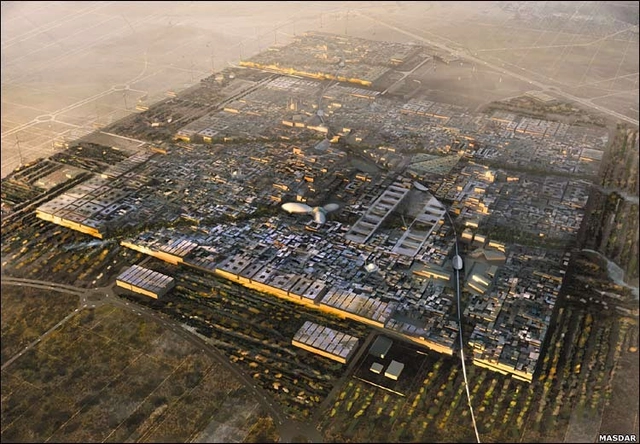
Arguably the biggest buzzword in urbanism right now is the 'Smart City'. The idea, although certainly inclusive of eco-friendly practices, has even replaced “sustainability” as the major intent of cities planning for positive future development. Smart City thinking has been used successfully in countries as diverse as Brazil, the US, the UAE, South Korea, and Scotland (Glasgow just won a £24million grant to pioneer new schemes throughout the city).
But what exactly are Smart Cities? What benefit do they bring us? And, more importantly, how can we best implement them to secure our future?
The answer, in my opinion, lies in the hands of architects.
More on the potential of Smart Cities after the break...
Videos
Courtesy of blog.rhino3d.com - ROB/Arch Workshop, Rotterdam
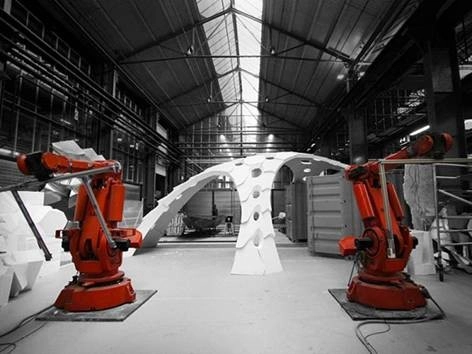
Architecture is quickly adopting the popular technology of robots. Although it is slightly hard to define what “robot” really means, for architecture, it tends to refer to anything from robot arms to CNC mills to 3D printers. Basically, they are programmable, mechanical, and automated instruments that assist in processes of digital fabrication.
So, what might robots mean for architecture? A more precise architecture which could contribute to a more sustainable building life cycle? More innovative design derived from algorithmic processes? A more efficient prefabrication process that could reduce the time and cost of construction?
Probably a mix of all three. But more importantly, what might robots mean for humans? Robotic replacement for the construction worker? Loss of local craftsmanship and construction knowledge? Maybe. But I might reformulate the question. Asking what robots mean for humans implies passivity.
What I ask, then, is what can robots do for humans?
https://www.archdaily.com/347905/architecture-by-robots-for-humanityJonathan C. Molloy