1. ArchDaily
  2. Dystopia

Dystopia: The Latest Architecture and News

Dystopian Disneyland: The Story Behind Turkey’s Castle Ghost Town

Subscriber Access | 

Most of us have probably imagined living in a castle at some point, whether during childhood, enchanted by fairy tales, or as adults studying European monarchies. Considering this fascination, what would you think if you had the chance to buy your castle? In mid-2014, you could make that dream a reality in Turkey for just $370,000. Each luxurious 325-square-meter castle came complete with blue turrets and spiral staircases. The only catch? Your castle would be one of 731 identical ones. But who cares about exclusivity when you have the chance to live in a Disney fairy tale?

Dystopian Disneyland: The Story Behind Turkey’s Castle Ghost Town - Image 1 of 4Dystopian Disneyland: The Story Behind Turkey’s Castle Ghost Town - Image 2 of 4Dystopian Disneyland: The Story Behind Turkey’s Castle Ghost Town - Image 3 of 4Dystopian Disneyland: The Story Behind Turkey’s Castle Ghost Town - Image 4 of 4Dystopian Disneyland: The Story Behind Turkey’s Castle Ghost Town - More Images+ 2

Exploring the Architecture of Star Wars: In a Galaxy Far Away, Using the Tangible for Futuristic Visualizations

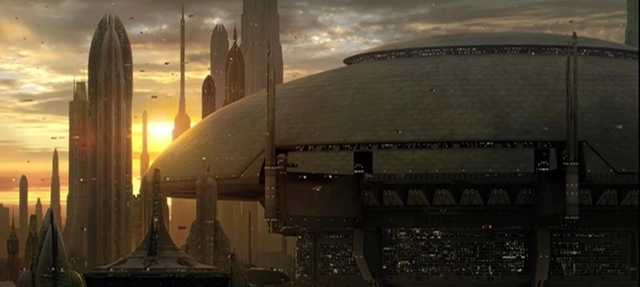
Depicting architectural visualizations of the future is no easy feat, so it makes much sense for designers to use aspects of our existing architecture as a foundation for these fictional worlds. Despite recent advancements in terms of animation technologies and CGI, there is still substantial use of existing architecture to provide tangible structural elements in film.

In terms of recycling architectural aesthetics, elements of the past and future are often integrated to create a hybridized style, an amalgamation of Retro, Dystopian, Modernist and Futuristic themes. From the resurgence of ancient pyramids and temples, to skylines reminiscent of the city of New York, visualizations vary depending on different notions of what our future may look like.

Exploring the Architecture of Star Wars: In a Galaxy Far Away, Using the Tangible for Futuristic Visualizations - Image 1 of 4Exploring the Architecture of Star Wars: In a Galaxy Far Away, Using the Tangible for Futuristic Visualizations - Image 2 of 4Exploring the Architecture of Star Wars: In a Galaxy Far Away, Using the Tangible for Futuristic Visualizations - Image 3 of 4Exploring the Architecture of Star Wars: In a Galaxy Far Away, Using the Tangible for Futuristic Visualizations - Image 4 of 4Exploring the Architecture of Star Wars: In a Galaxy Far Away, Using the Tangible for Futuristic Visualizations - More Images+ 8

Gentrification and Dystopia: The Future of Mexico City in the Aftermath of the Covid-19 Pandemic

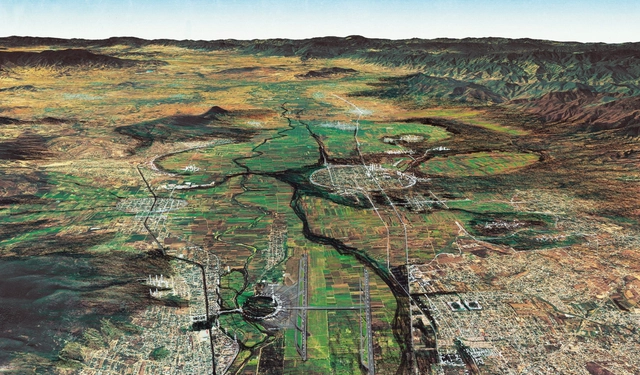
Gentrification and Dystopia: The Future of Mexico City in the Aftermath of the Covid-19 Pandemic - Image 1 of 4Gentrification and Dystopia: The Future of Mexico City in the Aftermath of the Covid-19 Pandemic - Image 2 of 4Gentrification and Dystopia: The Future of Mexico City in the Aftermath of the Covid-19 Pandemic - Image 3 of 4Gentrification and Dystopia: The Future of Mexico City in the Aftermath of the Covid-19 Pandemic - Image 4 of 4Gentrification and Dystopia: The Future of Mexico City in the Aftermath of the Covid-19 Pandemic - More Images

When looking at the population of the world's metropolises, in this case Mexico City, the reality is that the majority of the people living there have migrated from other regions of the country and, sometimes, from other countries as well. Of course, thanks to the Covid-19 pandemic, companies and schools have gone virtual, and, with their work and studies no longer tied to urban centers, people have left in masse for the coast and other less populated areas in search of space and lower living costs.

[TRANS-] topia 2019 :: journal call for submissions

[TRANS-] topia
across, beyond, through :: critique, fantasy, technology

This Video Presents an Abstract Reflection on Our Modern Cities of Glass

Subscriber Access | 

In this visual essay, Greek filmmaker Yiannis Biliris documents the all-pervasive pall of glass that covers the modern city. The three-and-a-half-minute-long film, produced by Visual Suspect and shot entirely in Hong Kong, captures the vivid reflections seen in the facades of the city’s buildings, as Biliris selectively pans and zooms his camera to instill a strong sense of urgency in the viewer’s mind.

The essay, beautifully haunting in its imagery, might be seen as a reflective commentary on the state of our built environment today. Inspired by Albert Einstein’s general theory of relativity, which states that mass causes a distortion in space and time, it seems to subtly ask if our understanding of reality is warped itself. Describing the video as "a visual essay about perception and knowledge as [a] reflection of our reality," Biliris comments that "mass curves space and time, while the observer has his own perspective."