1. ArchDaily
  2. Dogma

Dogma: The Latest Architecture and News

Architectural Authorship in the Age of the Collective Practices

Subscriber Access | 

This article is part of our new Opinion section, a format for argument-driven essays on critical questions shaping our field.

Who designs architecture today? In a professional landscape increasingly defined by collaborative workflows, generative software, and distributed teams, the figure of the architect as a singular creative author feels both anachronistic and inadequate. This article argues that architectural authorship is no longer an individual act, but a collective and distributed condition shaped by institutions, technologies, and shared forms of labor. The transition from individual to collective authorship is not simply a consequence of larger offices or digital tools; it signals a deeper structural shift in how architecture is produced, communicated, and validated.

Architectural Authorship in the Age of the Collective Practices - Image 1 of 4Architectural Authorship in the Age of the Collective Practices - Image 2 of 4Architectural Authorship in the Age of the Collective Practices - Image 3 of 4Architectural Authorship in the Age of the Collective Practices - Image 5 of 4Architectural Authorship in the Age of the Collective Practices - More Images+ 23

The Project as Argument: What is Architectural Thinking?

Architecture is shaped not only by buildings, but by the ideas that make them possible. Before the constraints of capital, regulation, and procurement, there is a moment when architecture is allowed to think aloud. The first confrontation with this fertile moment usually takes place in academia, in the thesis. It is not merely a requirement for graduation, but a space of speculative freedom where architecture formulates hypotheses, builds arguments, and tests positions.

For many, it is also the first opportunity to think beyond the structure of academic programs — a first chance to explore something more personal, unresolved, or even unreasonable. While often seen as an endpoint, the thesis is better understood as a beginning: the first engagement with architecture as a form of reasoning, where the project is not yet a response, but a question.

The Project as Argument: What is Architectural Thinking? - Image 1 of 4The Project as Argument: What is Architectural Thinking? - Image 2 of 4The Project as Argument: What is Architectural Thinking? - Image 3 of 4The Project as Argument: What is Architectural Thinking? - Image 4 of 4The Project as Argument: What is Architectural Thinking? - More Images+ 27

DOGMA Receives 2023 RIBA Charles Jencks Award

The Royal Institute of British Architects (RIBA), in collaboration with The Jencks Foundation at The Cosmic House, has announced that Dogma is the 2023 recipient of the Charles Jencks Award. Previously awarded to Zaha Hadid, Níall McLaughlin, Herzog & de Meuron, and OMA, the award celebrates other forms of thinking and production that can drive architecture beyond design. This year’s recipient, Dogma, is a Brussels-based architecture practice focusing on the interplay between architecture and urban environments.

Sharjah Architecture Triennial Announces Global South-based Participants and Projects for Its Inaugural Edition

Curated by Adrian Lahoud, The Sharjah Architecture Triennial opens this November, self-proclaiming as "the first international platform on architecture and urbanism of the Global South."

Lahoud, who is also Dean of the School of Architecture at the Royal College of Art, has defined the theme for the inaugural edition —Rights of Future Generations— as an instance to "question how inheritance, legacy, and the state of the environment are passed from one generation to the next, how present decisions have long-term intergenerational consequences, and how other expressions of co-existence, including indigenous ones, might challenge dominant western perspectives."

19 Emerging Firms Design Prototype Houses for Living Among Nature

Subscriber Access | 
19 Emerging Firms Design Prototype Houses for Living Among Nature - Image 1 of 4

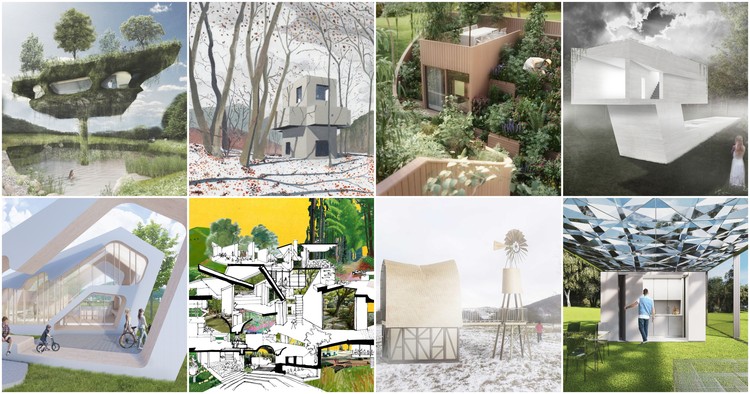
As the boundary that separates work and leisure in the 21st Century continues to be blurred by technology, architects Christoph Hesse and Neeraj Bhatia sought out to uncover a tranquil solution. The pair are co-curating an upcoming exhibition at the Kulturbahnhof Kassel in Germany as part of Experimenta Urbana in a show called “Ways of Life,” which opens July 5th.

This international initiative seeks to discover “a new nomaticism.” A gathering of 19 emerging architecture offices each presents a dwelling encompassed in nature. These buildings are often equal parts project and manifesto. The show’s overarching theme is the delicate balance of naturally induced relaxation and programmatically encouraged productivity. Each firm must additionally consider constraints that include limited square footage, integration of rapidly advancing information technology, and a strictly sustainable design.

19 Emerging Firms Design Prototype Houses for Living Among Nature - Image 13 of 419 Emerging Firms Design Prototype Houses for Living Among Nature - Image 22 of 419 Emerging Firms Design Prototype Houses for Living Among Nature - Image 50 of 419 Emerging Firms Design Prototype Houses for Living Among Nature - Image 70 of 419 Emerging Firms Design Prototype Houses for Living Among Nature - More Images+ 74

Chicago Architecture Biennial Announces List of 2017 Participants

The Chicago Architecture Biennial has announced the list of participants invited to contribute to the event’s second edition, which will be held from September 16 to January 7, 2018 in Chicago. More than 100 architecture firms and artists have been selected by 2017 artistic directors Sharon Johnston and Mark Lee, founders of Los Angeles–based Johnston Marklee, to design exhibitions that will be displayed at the Chicago Cultural Center and throughout the city.

“Our goal for the 2017 Chicago Architecture Biennial is to continue to build on the themes and ideas presented in the first edition,” explained Johnston and Lee. “We hope to examine, through the work of the chosen participants, the continuous engagement with questions of history and architecture as an evolutionary practice.”

Pier Vittorio Aureli to Exhibit 30 'Non-Compositional' Drawings in London

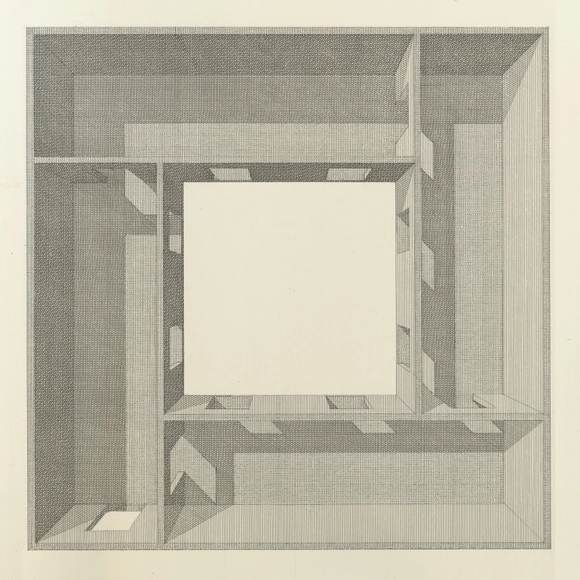
Pier Vittorio Aureli's collection of thirty 'non-compositional' drawings, exhibited as part of a series entitled The Marriage of Reason and Squalor, will open at London's Betts Project architecture gallery tomorrow (8th October 2014). The drawings, in development since 2001, are part of an ongoing investigation into "what, in the absence of a better definition, Aureli has described as ‘non-compositional architecture’." This term, referring to the work of art historian Yve-Alain Bois who was himself prompted by the ambitions of the constructivist artist Alexander Rodchenko, is used to describe works that "aspire to the abandonment of composition and even the self of the artist." This will be Aureli's second recent exhibition in London following Dogma: 11 Projects, which was presented at London's Architectural Association in 2013.

Pier Vittorio Aureli to Exhibit 30 'Non-Compositional' Drawings in London - Image 1 of 4Pier Vittorio Aureli to Exhibit 30 'Non-Compositional' Drawings in London - Image 2 of 4Pier Vittorio Aureli to Exhibit 30 'Non-Compositional' Drawings in London - Image 3 of 4Pier Vittorio Aureli to Exhibit 30 'Non-Compositional' Drawings in London - Image 4 of 4Pier Vittorio Aureli to Exhibit 30 'Non-Compositional' Drawings in London - More Images+ 1

Venice Biennale 2012: The Piranesi Variations / Peter Eisenman

Subscriber Access | 
Venice Biennale 2012: The Piranesi Variations / Peter Eisenman - Image 14 of 4
Field of Dreams / Ohio State University Knowlton School of Architecture © Nico Saieh

Inspired by the 13th International Architecture Exhibition‘s theme Common Ground, Peter Eisenman has formed a team to revisit, examine and reimagine Giovanni Battista Piranesi’s 1762 folio collection of etchings, Campo Marzio dell’antica Roma. Derived from years of fieldwork spent measuring the remains of ancient Roman buildings, these six etchings depict Piranesi’s fantastical vision of what ancient Rome might have looked like and represent a landmark in the shift from a traditionalist, antiquarian view of history to the scientific, archaeological view.

Eisenman’s team consists of Eisenman Architects, students from Yale University, Jeffrey Kipnis with his colleagues and students of the Ohio State University, and Belgian architecture practice, Dogma. Each group has contributed a response to Piranesi’s work through models and drawings that stimulate discourse on contemporary architecture. In particular, they explore architecture’s relationship to the ground and the political, social, and philosophical consequences that develop from that relationship.

Venice Biennale 2012: The Piranesi Variations / Peter Eisenman - Image 15 of 4
The Project of Campo Marzio / Yale University School of Architecture © Nico Saieh

Described as “precise, specific, yet impossible”, Piranesi’s images have been a source of speculation, inspiration, research and contention for architects, urban designers and scholars since their publication 250 years ago. Continue after the break to learn more.