1. ArchDaily
  2. Design for assembly

Design for assembly: The Latest Architecture and News

Building at Scale: How Long-Span Steel Expands Architectural Possibilities

 | In Collaboration
Audio available

What happens when architecture is asked to create a room without boundaries? Convention halls, stadiums, factories, and logistics centers all begin with the same architectural challenge: creating large, uninterrupted interiors that can accommodate movement, visibility, and changing uses. The larger the span, the greater the structural demands, and the greater the architectural possibilities.

Long-span architecture is not a recent ambition. For centuries, architects have sought ways to enclose large public spaces, from the monumental dome of the Pantheon to the iron-and-glass halls of London's Crystal Palace. Each breakthrough expanded the possibilities of architecture, replacing thicker walls and denser structural systems with lighter, more efficient ways of spanning distance. Today, steel continues that evolution, making it possible to span distances that would be difficult to achieve with conventional structural systems while keeping large public spaces open, flexible, and adaptable. Steel's high strength-to-weight ratio makes longer spans possible with fewer columns and lighter structural systems, while prefabricated components simplify construction and reduce on-site work.
Industrialized Steel Construction: Lessons From a Naval Foundry in Thailand

 | In Collaboration
Audio available

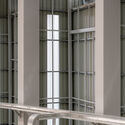
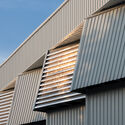
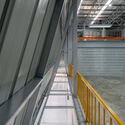
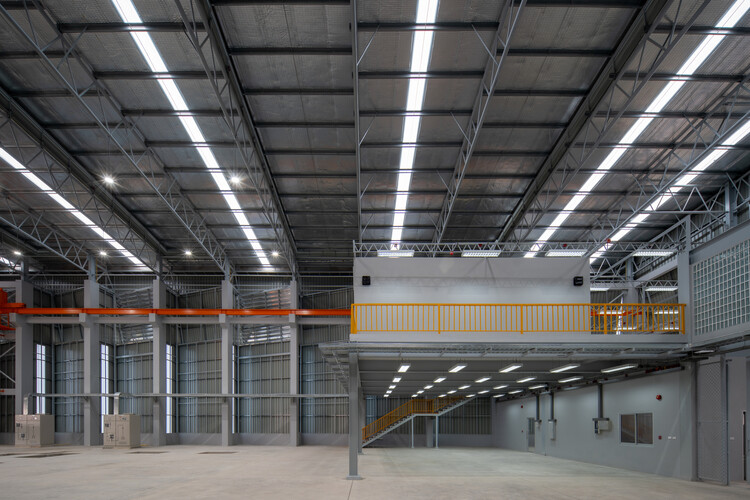
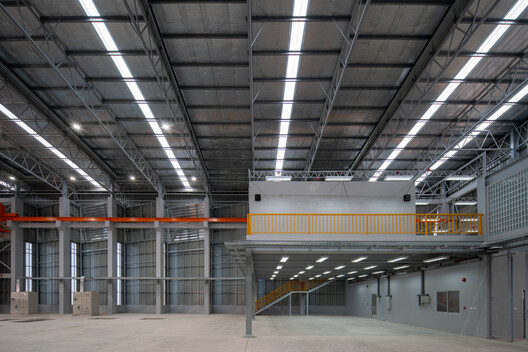
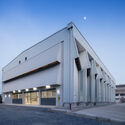
Industrial buildings are often expected to prioritize efficiency, production, and technical performance above all else. As a result, architectural quality is frequently treated as secondary to functional requirements. Advances in material systems, however, allow industrial facilities to balance both, creating buildings that respond to climate, improve working conditions, and establish a distinctive architectural identity.

Industrialized Steel Construction: Lessons From a Naval Foundry in Thailand - Imagen 1 de 4Industrialized Steel Construction: Lessons From a Naval Foundry in Thailand - Imagen 2 de 4Industrialized Steel Construction: Lessons From a Naval Foundry in Thailand - Imagen 3 de 4Industrialized Steel Construction: Lessons From a Naval Foundry in Thailand - Imagen 4 de 4Industrialized Steel Construction: Lessons From a Naval Foundry in Thailand - More Images+ 14

DAM Launches Interactive Exhibition of 100 Years of Architectural Construction Kits in Frankfurt, Germany

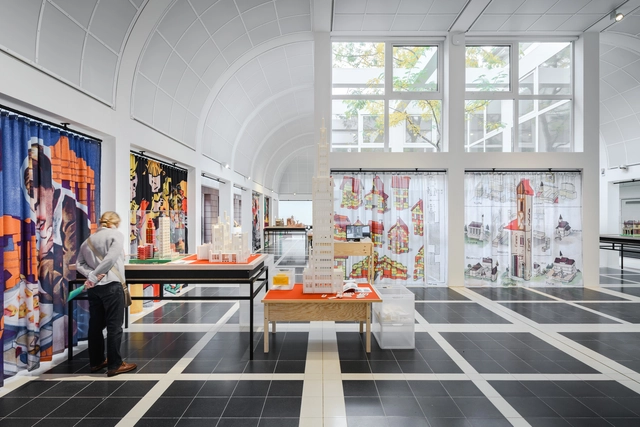
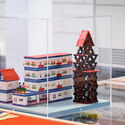
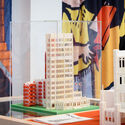
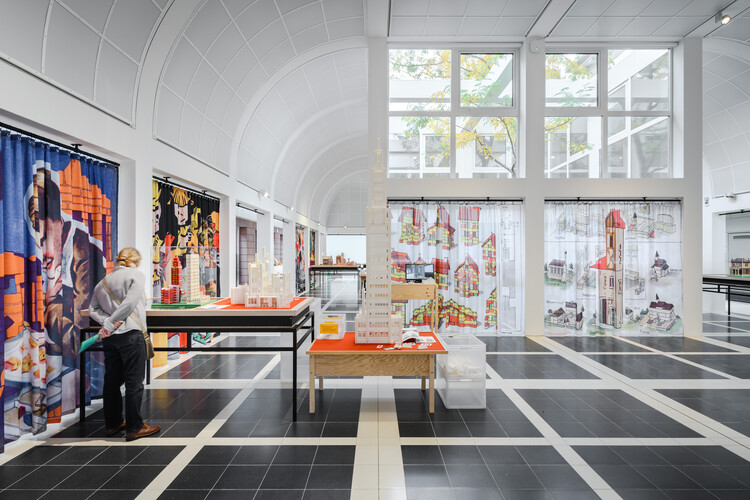
The Deutsches Architekturmuseum (DAM) in Frankfurt, Germany, has opened a new interactive exhibition, on view from October 25, 2025, to February 8, 2026, presenting 100 years of architectural construction kits. Developed in collaboration with graphic designer Claus Krieger, Professors Andreas Kretzer and Philipp Reinfeld from the Stuttgart University of Applied Sciences (HFT), their students, and the wider DAM team, the exhibition brings together around 80 construction kits produced between 1890 and 1990. Many of these systems have been recreated at an enlarged scale so visitors can test their assemblies at eight central play stations. Additional digital features include VR model worlds programmed by HFT students. Dozens of completed models illustrate the range of architectural ideas represented across the kits, and the full collection is documented in an accompanying catalogue. The exhibition is accompanied by a public competition titled How Small Can Architecture Be?, which invites participants to submit miniature architectural models for display.

DAM Launches Interactive Exhibition of 100 Years of Architectural Construction Kits in Frankfurt, Germany - Imagem 1 de 4DAM Launches Interactive Exhibition of 100 Years of Architectural Construction Kits in Frankfurt, Germany - Imagem 2 de 4DAM Launches Interactive Exhibition of 100 Years of Architectural Construction Kits in Frankfurt, Germany - Imagem 3 de 4DAM Launches Interactive Exhibition of 100 Years of Architectural Construction Kits in Frankfurt, Germany - Imagem 4 de 4DAM Launches Interactive Exhibition of 100 Years of Architectural Construction Kits in Frankfurt, Germany - More Images+ 26

From Saudi Arabia to Uzbekistan: AlMusalla Pavilion Reinstalled for the Inaugural Bukhara Biennial 2025

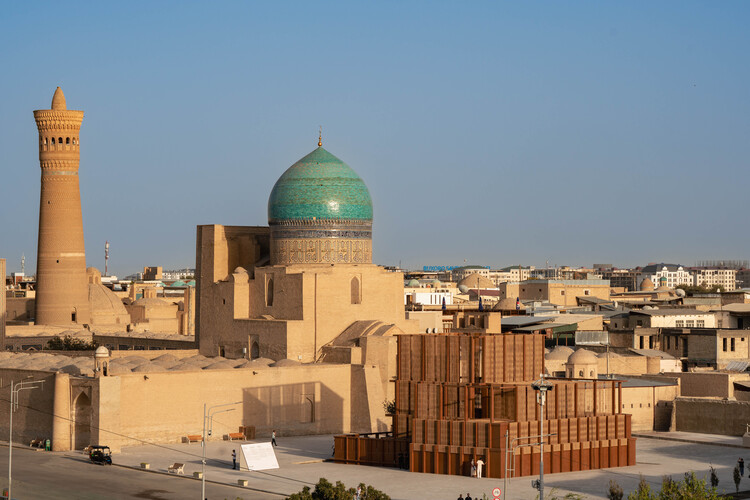
In April 2024, the Diriyah Biennale Foundation announced the AlMusalla Prize, an international architecture competition focused on designing a musalla: a flexible space for prayer and reflection accessible to people of all faiths. The winning project, designed by EAST Architecture Studio in collaboration with artist Rayyane Tabet and engineering firm AKT II, is a modular structure built with materials derived from local date palm waste, including fronds and fibers, and inspired by regional weaving traditions. Installed in the Western Hajj Terminal of King Abdulaziz International Airport in Jeddah, Saudi Arabia, the musalla served for four months during the Islamic Arts Biennale as a space for prayer, welcoming both Muslim and non-Muslim visitors. Conceived to be dismantled and reassembled, the structure was recently relocated to Uzbekistan for the inaugural Bukhara Biennial 2025.

From Saudi Arabia to Uzbekistan: AlMusalla Pavilion Reinstalled for the Inaugural Bukhara Biennial 2025 - Image 1 of 4From Saudi Arabia to Uzbekistan: AlMusalla Pavilion Reinstalled for the Inaugural Bukhara Biennial 2025 - Image 2 of 4From Saudi Arabia to Uzbekistan: AlMusalla Pavilion Reinstalled for the Inaugural Bukhara Biennial 2025 - Image 3 of 4From Saudi Arabia to Uzbekistan: AlMusalla Pavilion Reinstalled for the Inaugural Bukhara Biennial 2025 - Image 4 of 4From Saudi Arabia to Uzbekistan: AlMusalla Pavilion Reinstalled for the Inaugural Bukhara Biennial 2025 - More Images+ 58

Is the Future of Furniture Flat-packed?

Subscriber Access | 

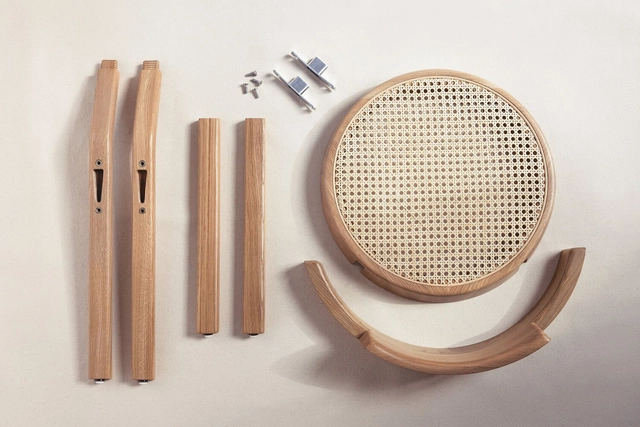
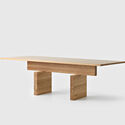
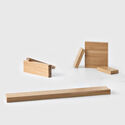
Design for assembly (DFA) is hardly new. Thonet’s 1859 No. 14 chair, when disassembled, could be shipped in batches of 36 per 40-square-inch box.

Those cost savings tied to DFA are still valuable. And as it helped revolutionize shipping in the industrial era, it now carries prestige as a powerful carbon-reduction tool. In fact, DFA is currently the distinguishing feature of at least six highly visible product launches among commercial furniture manufacturers in just the past year.

Is the Future of Furniture Flat-packed? - Image 1 of 4Is the Future of Furniture Flat-packed? - Image 2 of 4Is the Future of Furniture Flat-packed? - Image 3 of 4Is the Future of Furniture Flat-packed? - Image 4 of 4Is the Future of Furniture Flat-packed? - More Images+ 1