1. ArchDaily
  2. Cultural Identity

Cultural Identity: The Latest Architecture and News

How the Christo and Jeanne-Claude Center is Breathing New Life into Gabrovo’s Cultural Identity

 | In Collaboration

Large factories are being transformed into museums, former administrative buildings are becoming co-working spaces, and even churches are being converted into homes. In this century, the rise of adaptive reuse in cities reflects a growing interest in preserving the memory and identity of historic structures. At the same time, it introduces a contemporary perspective that responds to the urgent needs of today's urban landscape.

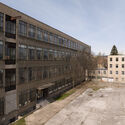
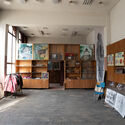
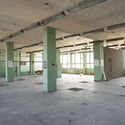
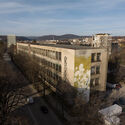
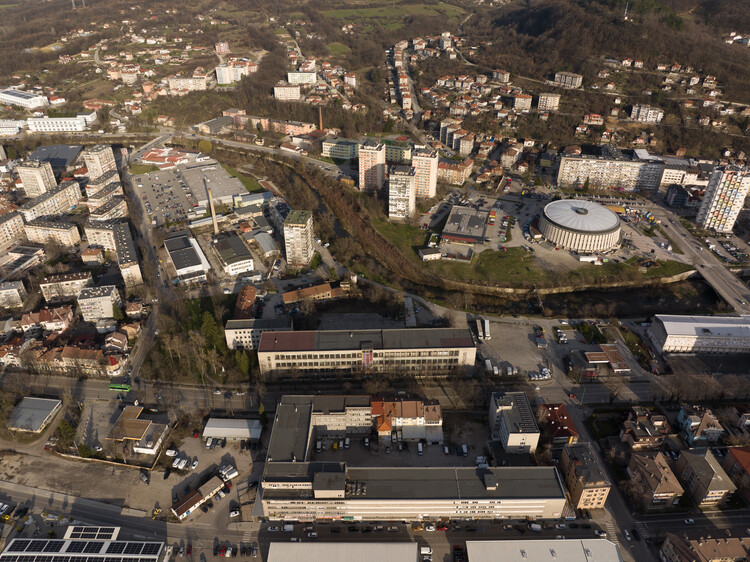
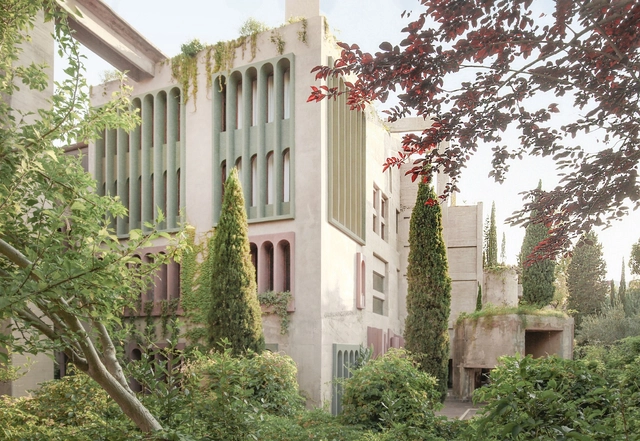
In Gabrovo, Bulgaria, the Municipality invites architects to design the Christo and Jeanne-Claude Center for Contemporary Art by transforming, adapting, and upgrading the former Textile Technical School and its adjacent site. EU co-financing, a disclosed budget, a designated jury, and a two-phase structure frame this competition, reflecting the spirit of Christo and Jeanne-Claude's artistic practice: bold, accessible artistic creation. More than a commission for a cultural building, it calls for a design response that understands the specific character of their work, adding a curatorial dimension to what might otherwise be a straightforward adaptive reuse project.

How the Christo and Jeanne-Claude Center is Breathing New Life into Gabrovo’s Cultural Identity - Image 1 of 4How the Christo and Jeanne-Claude Center is Breathing New Life into Gabrovo’s Cultural Identity - Image 2 of 4How the Christo and Jeanne-Claude Center is Breathing New Life into Gabrovo’s Cultural Identity - Image 3 of 4How the Christo and Jeanne-Claude Center is Breathing New Life into Gabrovo’s Cultural Identity - Image 4 of 4How the Christo and Jeanne-Claude Center is Breathing New Life into Gabrovo’s Cultural Identity - More Images+ 6

Architecture and Ideology: How Political Systems Shaped 20th-Century Design

Architecture is often presented as the visible expression of its time, its desires, its faith in progress, its idea of order. Yet this reading tends to flatten the conditions under which buildings are produced. It suggests that architecture follows history when, in many cases, it actively participates in it. Few periods make this more evident than the twentieth century, when architecture became deeply entangled with political programs, economic systems, and competing visions of how collective life should be organized.

What is commonly grouped under the label of Modernism is often described as a coherent project, defined by formal clarity, technological optimism, and a break with historical styles. But this apparent coherence dissolves when we look beyond its canonical centres. The same spatial principles (standardization, functional zoning, industrial production) were adopted in political and economic contexts that differed significantly in their structures and objectives. A static movement unfolded as a flexible system continuously reoriented according to the priorities of each regime. What appeared as a shared language was, in practice, a set of tools applied to distinct agendas.

How Spanish Ceramics Bridge Culture, Memory and Identity at Milan Design Week 2026

 | In Collaboration

How does an architectural installation express the identity of a region? How can a building material connect with the essence of a nation? Throughout its history, Spain has been shaped by a wide range of cultures and civilizations, including Muslim, Phoenician, Roman, Greek, Carthaginian, and Visigothic influences. From flamenco to ceramic tiles adorning façades and historic monuments, each region of Spain embraces its own customs and traditions, reflected in its architecture, history, art, and design. During Milan Design Week 2026, Tile of Spain presents Spanish Design as a Souvenir at the Fuorisalone—an installation that transforms ceramic tile into a narrative medium through a series of sculptural objects reinterpreting everyday icons of Spanish life.

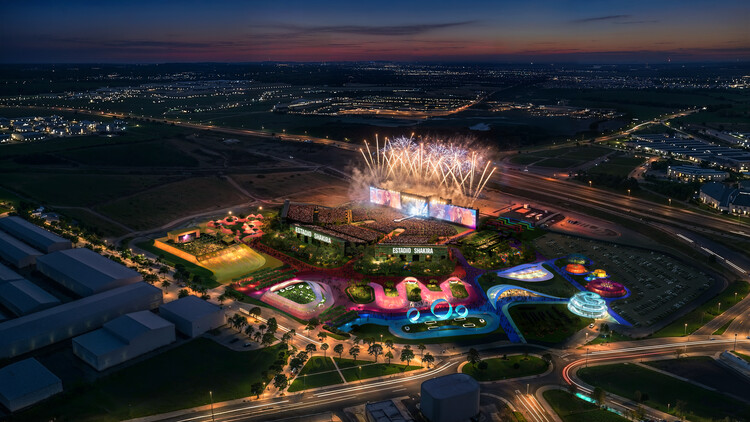
Pop Star Architecture: BIG Designs Multi-Use Stadium for Shakira’s World Tour in Madrid, Spain

Kanye West turning a Tadao Ando Malibu beach house into a ruin, Ellen DeGeneres and Portia de Rossi purchasing and re-selling the 1955 Richard Neutra-designed Brown-Sidney House, and fashion designer Marc Jacobs renovating a Frank Lloyd Wright-designed house near New York City are just a few examples of pop stars' affair with historically significant architecture. Celebrities, like soccer players, form an elite group characterized by a high concentration of wealth and significant social status. They are not only buyers of high-end architecture as authored property and cultural capital, but also agents of its preservation and promotion. This year, we are seeing new examples of this agency at work from a more abstract yet also more popular perspective: from the stage design for Bad Bunny's Super Bowl performance to a newly designed stadium for Shakira by BIG-Bjarke Ingels Group, architecture is used as a vehicle for promoting Latin American identity.

Pop Star Architecture: BIG Designs Multi-Use Stadium for Shakira’s World Tour in Madrid, Spain - Image 1 of 4Pop Star Architecture: BIG Designs Multi-Use Stadium for Shakira’s World Tour in Madrid, Spain - Image 2 of 4Pop Star Architecture: BIG Designs Multi-Use Stadium for Shakira’s World Tour in Madrid, Spain - Image 3 of 4Pop Star Architecture: BIG Designs Multi-Use Stadium for Shakira’s World Tour in Madrid, Spain - Image 4 of 4Pop Star Architecture: BIG Designs Multi-Use Stadium for Shakira’s World Tour in Madrid, Spain - More Images+ 8

Shifting Sediments: Rivers as an Architectural and Cultural Catalyst

Subscriber Access | 

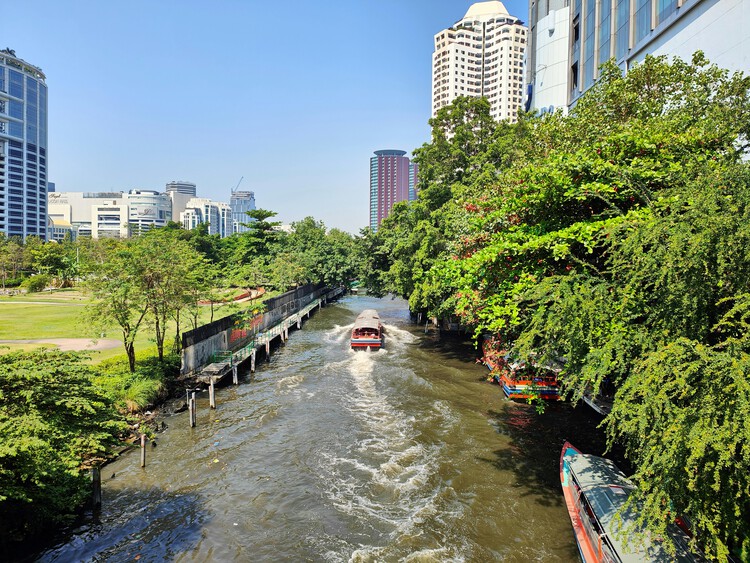
Rivers generate a distinct typology of architecture bound by design threads of material practice, environmental adaptation, cultural symbolism, and imagination. Each river system produces a unique ecosystem where water, soil, vegetation, and settlement converge to form a living network. Designing within this environment requires a capacity to read movement rather than resist it, to build on uncertain ground, and to understand permanence as a balance in motion. Unlike the fixed horizon of the sea, the river is never still. It teaches architects to think in gradients rather than boundaries, and to design as part of an evolving landscape.

Shifting Sediments: Rivers as an Architectural and Cultural Catalyst - Image 1 of 4Shifting Sediments: Rivers as an Architectural and Cultural Catalyst - Image 2 of 4Shifting Sediments: Rivers as an Architectural and Cultural Catalyst - Image 3 of 4Shifting Sediments: Rivers as an Architectural and Cultural Catalyst - Image 4 of 4Shifting Sediments: Rivers as an Architectural and Cultural Catalyst - More Images+ 8

Guesthouses and Lessons in Generosity: Spaces of Hospitality in Rural America

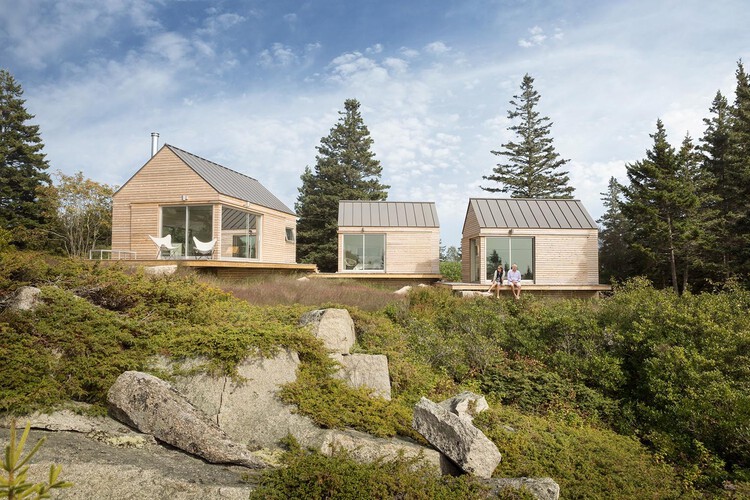
Spaces of hospitality are a mirror to how different cultures articulate generosity, care, belonging, and identity. In busy city settings, this is reflected in hotels, service systems, and curated amenities that directly shape the visitor experience. These spaces translate care into measurable forms, where success is correlated with efficiency, luxury, and brand identity.

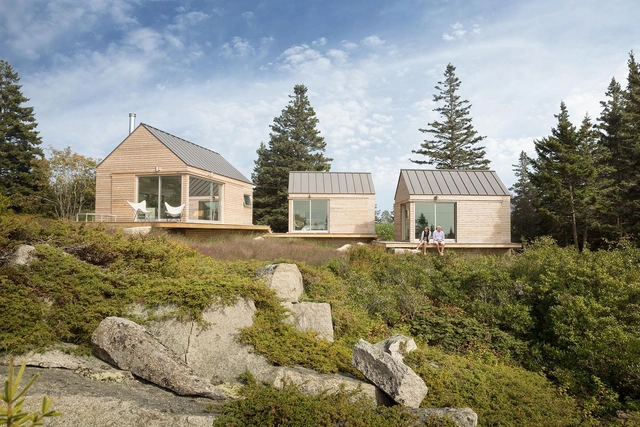
In rural America, hospitality operates with a different logic. In these environments, care is grounded in labor and community, while directly responding to the specific ecological and cultural geographies. Distance, limited infrastructure, and close social networks demand forms of architecture that are flexible and self-sufficient. Designs respond to shifting weather, local materials, and a culture where support often begins with neighbors. In this landscape, architectural thresholds of hospitality emerge in responsive, yet unexpected, ways.

Guesthouses and Lessons in Generosity: Spaces of Hospitality in Rural America - Image 1 of 4Guesthouses and Lessons in Generosity: Spaces of Hospitality in Rural America - Image 3 of 4Guesthouses and Lessons in Generosity: Spaces of Hospitality in Rural America - Image 2 of 4Guesthouses and Lessons in Generosity: Spaces of Hospitality in Rural America - Image 4 of 4Guesthouses and Lessons in Generosity: Spaces of Hospitality in Rural America - More Images+ 39

Architectural Rebuilding as Cultural Memory: The Paradox of Ever-Fresh Heritage

Architecture—one of the few cultural artifacts made to be publicly lived with, preserved, and often capable of standing for centuries—contributes significantly to the cultural identity of places and people. Historically, buildings have expressed institutional attitudes, influence, and power; they are clear demonstrations of culture. Yet longevity complicates preservation: when a structure is rebuilt, repaired, or entirely reassembled, in what sense is it still the same building?
There's the classic Ship of Theseus puzzle from Plutarch. if a ship's planks are replaced one by one over time, is it still the same ship? Thomas Hobbes adds a twist—if the original planks are reassembled elsewhere, which ship is "the original"? The paradox tests what grounds identity: material fabric, continuous use and history, or shared recognition. In architecture and conservation, it reframes preservation as a choice among keeping matter, maintaining form and function, or sustaining the stories and practices that give a place meaning.

Architectural Rebuilding as Cultural Memory: The Paradox of Ever-Fresh Heritage - Image 1 of 4Architectural Rebuilding as Cultural Memory: The Paradox of Ever-Fresh Heritage - Image 2 of 4Architectural Rebuilding as Cultural Memory: The Paradox of Ever-Fresh Heritage - Image 3 of 4Architectural Rebuilding as Cultural Memory: The Paradox of Ever-Fresh Heritage - Image 4 of 4Architectural Rebuilding as Cultural Memory: The Paradox of Ever-Fresh Heritage - More Images+ 17

Mauro Marinelli Wins 2025 Wheelwright Prize for Research on Mountain Architecture Across the Alps, Andes, and Himalayas

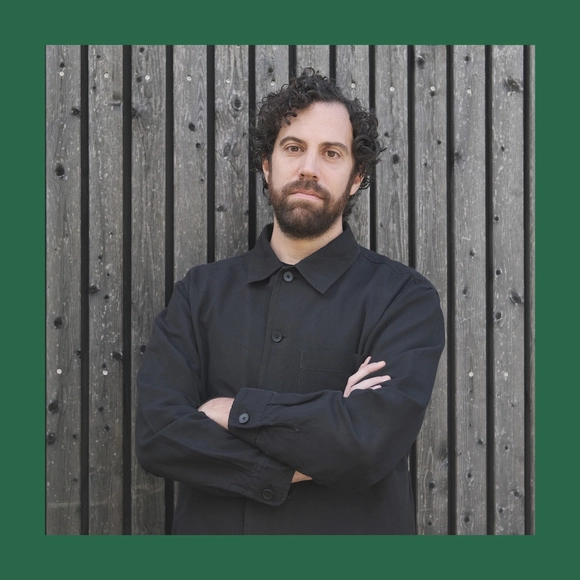
Harvard University Graduate School of Design (GSD) has announced Maura Marinelli, co-founder of franzosomarinelli, as the winner of the 2025 Wheelwright Prize. The annual $100,000 grant supports emerging architects in pursuing investigative research that addresses contemporary architectural challenges with a global perspective. Marinelli's winning proposal, "Topographies of Resistance: Architecture and the Survival of Cultures," explores how architecture can sustain and revitalize rural, mountainous regions that confront climate change, infrastructure limitations, and cultural erosion. His research aims to develop design strategies that promote autonomy, sustainability, and local identity by comparing contexts in the Alps, Andes, and Himalayas. Through fieldwork and analysis, the project seeks to propose architectural approaches that empower communities and challenge urban-centric perspectives.

Gyumri’s Revival: Rebuilding Armenia’s Cultural Heritage After the 1988 Earthquake

Subscriber Access | 

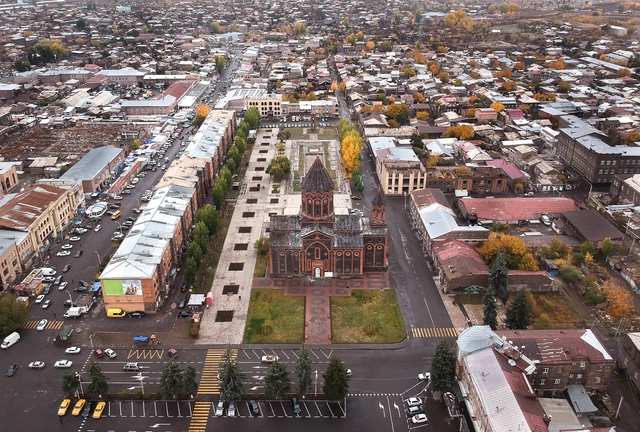
Gyumri, the capital of Armenia's Shirak region and the country's second-largest city, was historically known for its culture and architectural heritage. While it was part of the Soviet Union, the city hosted many factories that turned it into a primary industrial center in the region, reaching a population of approximately 225,000 people. However, during the past decades, Gyumri has seen a considerable population decline as a consequence of a devastating earthquake that destroyed the city in 1988 and killed thousands of people. More than 30 years later, Gyumri's regeneration process is still unfolding. The city's ongoing efforts to restore its built environment and boost economic development offer valuable insights into how urban regeneration can be navigated in the aftermath of disaster.

Gyumri’s Revival: Rebuilding Armenia’s Cultural Heritage After the 1988 Earthquake - Image 1 of 4Gyumri’s Revival: Rebuilding Armenia’s Cultural Heritage After the 1988 Earthquake - Image 2 of 4Gyumri’s Revival: Rebuilding Armenia’s Cultural Heritage After the 1988 Earthquake - Image 3 of 4Gyumri’s Revival: Rebuilding Armenia’s Cultural Heritage After the 1988 Earthquake - Image 4 of 4Gyumri’s Revival: Rebuilding Armenia’s Cultural Heritage After the 1988 Earthquake - More Images+ 5

On Designing National Pavilions: Power and Identity at Universal Exhibitions

Subscriber Access | 

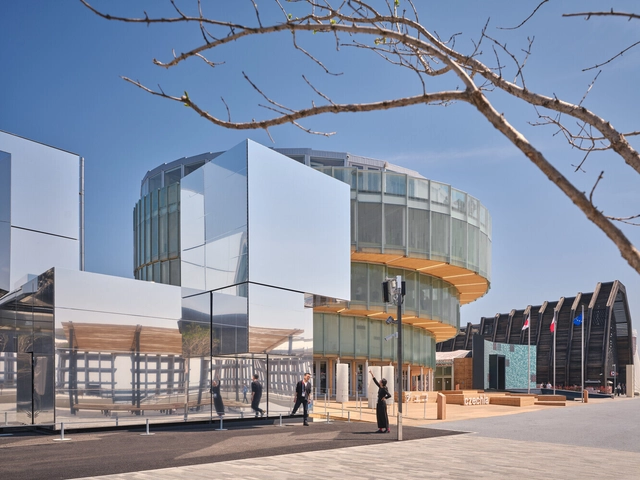
What can a pavilion’s architecture reveal about its country? At major World Expos, national pavilions are designed to answer this question, transforming into spaces laden with symbolism. Though temporary, these structures are rich in meaning, functioning as architectural expressions of political identity. Their forms and materials encapsulate national ambitions. Expo Osaka 2025, the latest chapter in this ongoing narrative, showcases how nations increasingly use built space to construct global images of themselves—sustainable, technological, culturally distinct, and geopolitically relevant.

On Designing National Pavilions: Power and Identity at Universal Exhibitions - Image 1 of 4On Designing National Pavilions: Power and Identity at Universal Exhibitions - Image 2 of 4On Designing National Pavilions: Power and Identity at Universal Exhibitions - Image 3 of 4On Designing National Pavilions: Power and Identity at Universal Exhibitions - Image 4 of 4On Designing National Pavilions: Power and Identity at Universal Exhibitions - More Images+ 10

How to Save a Building from Demolition: Emerging Procedures to Uncover the Potential of Existing Structures

The twentieth century marked a definitive shift in the realm of architecture, as the Modernist movement broke from traditional building styles and encouraged experimentation and innovation. With the help of new materials and technologies, these times represent a crucial moment in the history of architecture as both cities and building styles evolved at an unprecedented rate. The structures that stand testament to this day are, however, nearing the age of a hundred years old. Their stark design features are not always embraced by the public, while the functionalist principles often hinder the adaptability of their interior spaces. Given that they also often occupy central positions within the city, there is increasing pressure to demolish these structures and redevelop the area in its entirety.

How to Save a Building from Demolition: Emerging Procedures to Uncover the Potential of Existing Structures - Image 1 of 4How to Save a Building from Demolition: Emerging Procedures to Uncover the Potential of Existing Structures - Image 2 of 4How to Save a Building from Demolition: Emerging Procedures to Uncover the Potential of Existing Structures - Image 3 of 4How to Save a Building from Demolition: Emerging Procedures to Uncover the Potential of Existing Structures - Image 4 of 4How to Save a Building from Demolition: Emerging Procedures to Uncover the Potential of Existing Structures - More Images+ 8

Archi/Tree/tecture: Lithuania’s Pavilion at the 2025 Venice Biennale Explores the Relationship Between Identity and Urban Nature

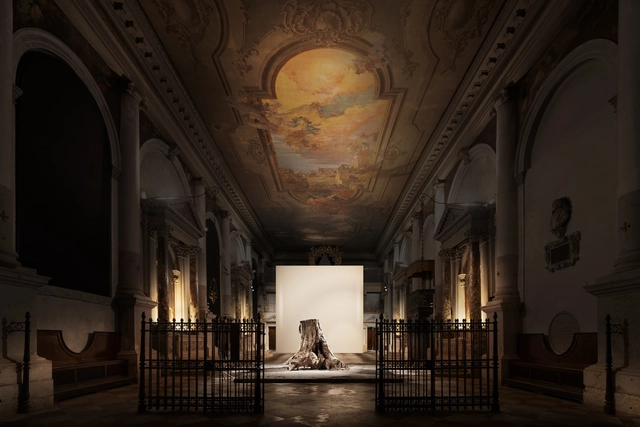
The Lithuanian Pavilion at the 2025 Venice Architecture Biennale presents Archi / Tree / tecture, a project by the National Architects Association. Commissioned by Juratė Tutlyte and curated by architect Gintaras Balčytis, the exhibition invites architects, students, communities, and visitors to reflect on the deep connections between architecture and urban nature. It positions the discipline as an interpretive medium that reveals the layered relationships shaping our cities, which in turn reflect these dynamic interactions. The proposal evokes an urban memory rooted in landscapes where fields and trees once stood, introducing the dimension of time into discussions on city ecosystems, sustainability, and resilience. The exhibition, an indoor installation designed by architects Paulius Vaitiekūnas, Andrius Pukis, and Vika Pranaitytė, will be set within the Church of Santa Maria dei Derelitti. The audiovisual and light installation in the pavilion was designed by the interdisciplinary art duo Lina Pranaitytė and Urtė Pakers, while the sculptural component of the installation was created by Kęstutis Lanauskas.

Archi/Tree/tecture: Lithuania’s Pavilion at the 2025 Venice Biennale Explores the Relationship Between Identity and Urban Nature - Image 1 of 4Archi/Tree/tecture: Lithuania’s Pavilion at the 2025 Venice Biennale Explores the Relationship Between Identity and Urban Nature - Image 2 of 4Archi/Tree/tecture: Lithuania’s Pavilion at the 2025 Venice Biennale Explores the Relationship Between Identity and Urban Nature - Image 3 of 4Archi/Tree/tecture: Lithuania’s Pavilion at the 2025 Venice Biennale Explores the Relationship Between Identity and Urban Nature - Image 4 of 4Archi/Tree/tecture: Lithuania’s Pavilion at the 2025 Venice Biennale Explores the Relationship Between Identity and Urban Nature - More Images+ 2

Tosin Oshinowo: Redefining African Architecture Through Context and Collaboration

Architecture is a discipline where theory and practice meet, transforming abstract ideas into spaces that shape and respond to human lives and identity. For Nigerian architect and curator Tosin Oshinowo, this dynamic is at the core of her work. As the founder of Oshinowo Studio and curator of the 2023 Sharjah Architecture Triennial, she has carved a unique path in contemporary architecture by blending cultural specificity, climate consciousness, and global relevance.

In the documentary Women in Architecture, released November 12, 2024, Tosin Oshinowo is featured alongside Dorte Mandrup, exploring diverse perspectives within architecture, with Oshinowo's work taking center stage as an example of how architecture can respond meaningfully to cultural and environmental contexts. Produced by Sky-Frame in collaboration with ArchDaily and directed by Boris Noir, the film builds upon the first episode, highlighting Toshiko Mori, Gabriela Carrillo, and Johanna Meyer-Grohbrügge.

Tosin Oshinowo: Redefining African Architecture Through Context and Collaboration - Image 1 of 4Tosin Oshinowo: Redefining African Architecture Through Context and Collaboration - Image 2 of 4Tosin Oshinowo: Redefining African Architecture Through Context and Collaboration - Image 3 of 4Tosin Oshinowo: Redefining African Architecture Through Context and Collaboration - Image 4 of 4Tosin Oshinowo: Redefining African Architecture Through Context and Collaboration - More Images+ 19

A Narrative of Cultural Resilience: The Evolution of the Estonian Academy of Sciences

Subscriber Access | 

In the heart of Tallinn, where history weaves through cobblestone streets and ancient towers, stands the Ungern-Sternberg Palace — a monument that bridges the opulent past of Estonia's aristocracy with the vibrant world of contemporary academia. Now home to the Estonian Academy of Sciences, this historic building embodies Estonia's enduring dedication to knowledge and cultural preservation. Through Open House Tallinn, which highlights the city's architectural heritage, the palace's significant history, and remarkable architectural details are brought to a wider audience, offering unique insight into Estonia's cultural resilience.

Constructed in the 19th century as a symbol of aristocratic power, the palace has transformed from a private residence into a national hub of intellectual life. Its grand halls, once the scene of lavish gatherings, now foster scientific and academic pursuits, illustrating how heritage architecture can evolve alongside societal change.

A Narrative of Cultural Resilience: The Evolution of the Estonian Academy of Sciences - Image 1 of 4A Narrative of Cultural Resilience: The Evolution of the Estonian Academy of Sciences - Image 2 of 4A Narrative of Cultural Resilience: The Evolution of the Estonian Academy of Sciences - Image 3 of 4A Narrative of Cultural Resilience: The Evolution of the Estonian Academy of Sciences - Image 4 of 4A Narrative of Cultural Resilience: The Evolution of the Estonian Academy of Sciences - More Images+ 17

The Beaten Path: Connecting Towns and Identity through Appalachian Trail Networks

Subscriber Access | 

Every year, over a thousand people complete the 2,192-mile (3528-kilometer) Appalachian Trail between Springer Mountain in Georgia and Mount Katahdin in Maine. Millions more follow the trail for a shorter stretch by spending time at the countless overlooks, walking along the wooded ridges, or meandering through the small town centers, making this network one of the world's most visited and widely recognized trail corridors. However, the proposal for this expansive trail corridor, originally entered in a 1921 Journal of the American Institute of Architects article by Benton MacKaye, was far from a mere recreational outdoor amenity. This "project in regional planning" was a radical critique of the industrializing modernity that sharpened the divide between expanding cities of the Eastern coast and waning towns of the Appalachian mountains.

The Beaten Path: Connecting Towns and Identity through Appalachian Trail Networks - Image 1 of 4The Beaten Path: Connecting Towns and Identity through Appalachian Trail Networks - Image 2 of 4The Beaten Path: Connecting Towns and Identity through Appalachian Trail Networks - Image 3 of 4The Beaten Path: Connecting Towns and Identity through Appalachian Trail Networks - Image 4 of 4The Beaten Path: Connecting Towns and Identity through Appalachian Trail Networks - More Images+ 26

Lessons from Roberto Burle Marx: Designing Resilient and Evolving Urban Landscapes

Roberto Burle Marx is often celebrated as a pioneering figure in landscape architecture, particularly for his innovative approach to integrating nature within urban environments. His work, characterized by a deep respect for native flora and a commitment to ecological balance, offers valuable lessons for contemporary landscape architects. At a time when climate change and biodiversity loss are pressing global concerns, revisiting Burle Marx's principles provides insight into creating urban spaces that are not only functional and aesthetically pleasing but also resilient and sustainable.

From the 1930s to the 1990s, Burle Marx's work anticipated many of today's concerns about sustainability and urban well-being. Long before terms like "sustainable design" or "green infrastructure" became commonplace, Burle Marx was already advocating for the use of native plants, recognizing their role in creating self-sustaining ecosystems that required minimal intervention. His projects often transformed neglected urban areas into vibrant, ecologically balanced spaces that not only improved the environment but also enhanced the quality of life for city dwellers.

Lessons from Roberto Burle Marx: Designing Resilient and Evolving Urban Landscapes - Image 26 of 4Lessons from Roberto Burle Marx: Designing Resilient and Evolving Urban Landscapes - Image 1 of 4Lessons from Roberto Burle Marx: Designing Resilient and Evolving Urban Landscapes - Image 3 of 4Lessons from Roberto Burle Marx: Designing Resilient and Evolving Urban Landscapes - Image 7 of 4Lessons from Roberto Burle Marx: Designing Resilient and Evolving Urban Landscapes - More Images+ 23

Edmund Sumner Explores Memory and Emotional Spaces with Architectural Photography Exhibition in London

Starting on June 30th, 2024, Edmund Sumner presents the “Traces” exhibition, a solo show at Rodic Davidson Architects in London featuring architectural photography that explores cultural identity and historical significance across diverse landscapes. The show offers a profound exploration of architecture and design across diverse landscapes, including Europe, India, and Mexico, presenting a compelling intersection between photography and the built environment. Additionally, the photographer is expected to release his fifth book with Thames & Hudson in 2025.

Edmund Sumner Explores Memory and Emotional Spaces with Architectural Photography Exhibition in London - Image 1 of 4Edmund Sumner Explores Memory and Emotional Spaces with Architectural Photography Exhibition in London - Image 2 of 4Edmund Sumner Explores Memory and Emotional Spaces with Architectural Photography Exhibition in London - Image 3 of 4Edmund Sumner Explores Memory and Emotional Spaces with Architectural Photography Exhibition in London - Image 4 of 4Edmund Sumner Explores Memory and Emotional Spaces with Architectural Photography Exhibition in London - More Images+ 4

Restoring a Symbol of Collective Memory: Holcim Award Winner Xu Tiantian Discusses the Impact of Adaptive Reuse

In the mountain valleys of China’s Fujian Province, thousands of large, rammed earth fortresses lay abandoned. Once used for both defense and collective housing, the tulou typology is an integral part of the region’s cultural heritage, with 46 of them being recognized by UNESCO as World Heritage Sites. Despite this, the rural communities surrounding them have struggled to find new roles and purposes for these buildings. Going beyond the need for conservation, architect Xu Tiantian of DnA_Design and Architecture set out to develop and adapt this heritage to reintroduce it into community life. The Fujian Tulou | Adaptive Reuse project recently won the Gold Prize of Holcim Awards 2023 for Asia-Pacific, recognized for creating “an exemplary model for building conservation initiatives.” In a video interview for ArchDaily, Xu Tiantian discusses the principles that underpin this initiative and the potential outcomes of adaptive reuse in rural communities.

Restoring a Symbol of Collective Memory: Holcim Award Winner Xu Tiantian Discusses the Impact of Adaptive Reuse - Image 1 of 4Restoring a Symbol of Collective Memory: Holcim Award Winner Xu Tiantian Discusses the Impact of Adaptive Reuse - Image 2 of 4Restoring a Symbol of Collective Memory: Holcim Award Winner Xu Tiantian Discusses the Impact of Adaptive Reuse - Image 3 of 4Restoring a Symbol of Collective Memory: Holcim Award Winner Xu Tiantian Discusses the Impact of Adaptive Reuse - Image 4 of 4Restoring a Symbol of Collective Memory: Holcim Award Winner Xu Tiantian Discusses the Impact of Adaptive Reuse - More Images+ 4