Courtesy of K-12 Education team at Perkins and Will
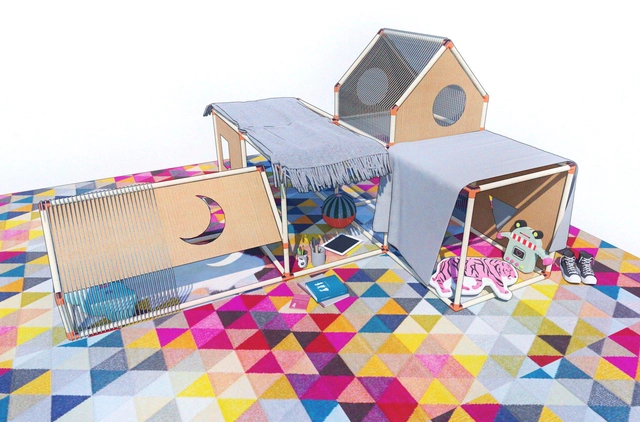
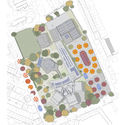
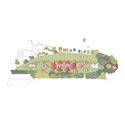
The K-12 Education team at Perkins and Will designed a blanket fort to help family members tune each other out during COVID-19. Easy to reproduce, the architects released a series of rendered images and plans to assist people at home in creating this space.
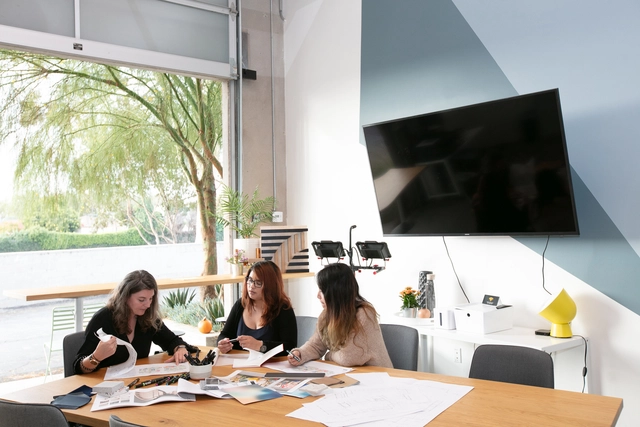
Perkins and Will have generated a set of strategies, grounded in public health guidance, to help offices resume their work during COVID-19. Focusing on the transition phase, the guideline helps employers draw a road map for safe return.
The World Health Organisation (WHO) supports that even if vaccines are found, COVID-19may never go away. ‘Post-virus’ recovery mechanisms suddenly become out-of-place and obsolete. If we wait for the coronavirus crisis to be over to tackle climate change, then many of us may be swimming in deep waters. Coordinated and immediate actions, coupled with planetary-scale cooperation, to tackle both crises in parallel is now needed. For cities, this means adopting mechanisms that enable both economic recovery and sustainable transitions.
https://www.archdaily.com/939930/a-call-for-global-cooperation-for-sustainable-urban-transitionsZaheer Allam, Gaetan Siew and Felix Fokoua
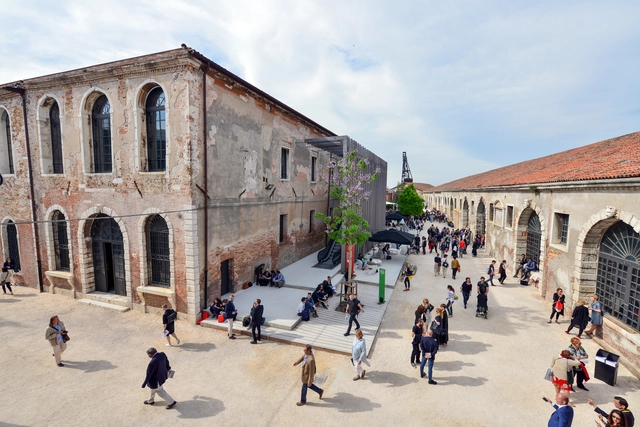
La Biennale di Venezia has just announced that the International Architecture Exhibition – How will we live together? — curated by Hashim Sarkis, will be postponed once more, and will be held from May 22 to November 21, 2021.
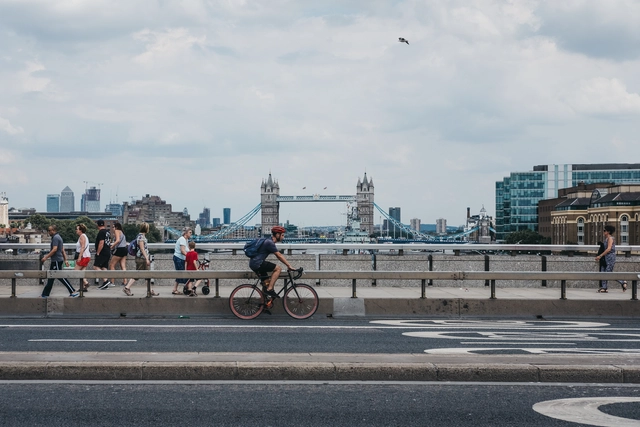
Cyclist and pedestrians on London Bridge, London, UK, River Thames and Tower Bridge on the background. Image via Shutterstock/ By Alena Veasey
After Milan and Paris, London has announced its plans to transform large areas in the city, converting streets to car-free zones, as the coronavirus lockdown loosens up. Repurposing the city for people, London aims to emerge differently from the pandemic, supporting a low-carbon and sustainable recovery. Works have already started and are expected to be completed within six weeks.
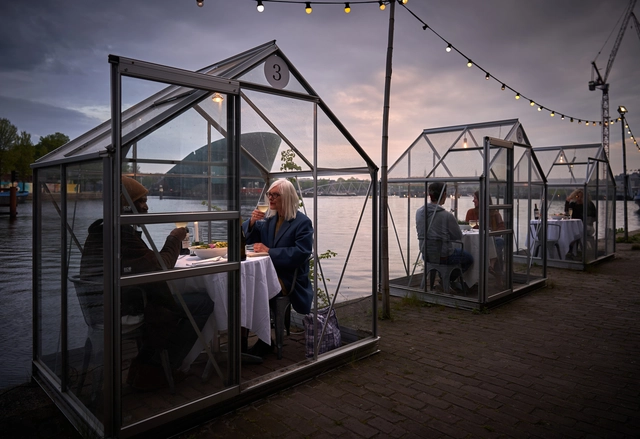
Renovated recently, Mediamatic ETEN, the restaurant of the Art Center Mediamatic in Amsterdam, has created a new safe dining experience entitled Serres Séparées, taking into account required social distancing measures. Putting in place private and intimate “quarantine” greenhouses, or chambres séparées, people can reconnect and dine outside in a safe environment.
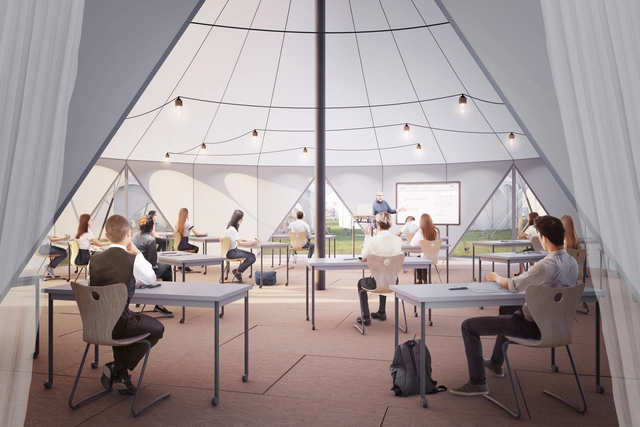
Curl la Tourelle Head Architecture (CLTH) has imagined a new design approach for classrooms when schools reopen as the lockdown eases in the UK. The architecture practice based in London has released an innovative concept “to help mitigate restricted circulation routes within schools and maintain the necessary social distancing among pupils and staff”.
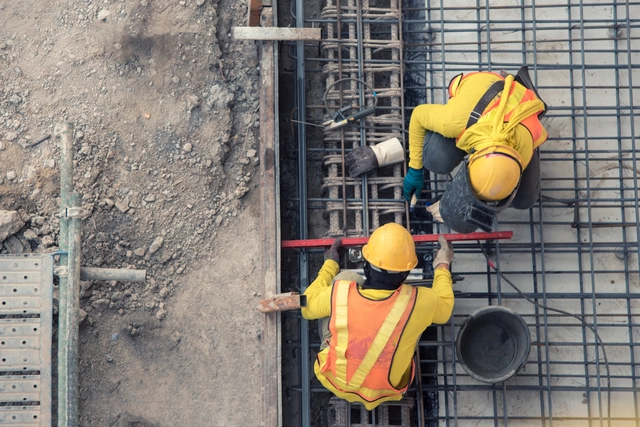
The Construction Industry Coronavirus Forum (CICV) has launched posters to urge people to stop their abuse against key workers carrying out essential construction tasks, during the COVID-19 pandemic. The protective signage reading “Key Worker: Carrying out Essential Work”, has been distributed to be posted on construction sites and vans.
New realismo - inventory of human experience is a catalogue of gestures in PNG to make people reflect on and perceive the city and the social spaces from a new point of view.
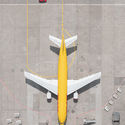
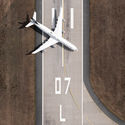
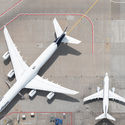
The COVID-19 pandemic has transformed how we travel and come together. As streets and buildings became empty and people practice social distancing, so too have airports experienced a tremendous decline in passengers and flights. As the aviation industry shaped globalization, it has also contributed to how quickly the disease spread. In a new aerial series, photographer Tom Hegen explores the pandemic's impact on aviation from above.
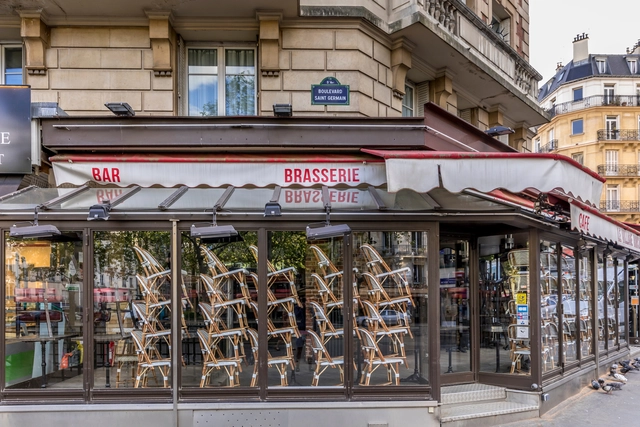
Paris, France - April 17, 2020: Restaurant brasserie on Boulevard Saint Germain is closed due to epidemic of coronavirus COVID19 in Paris.. Image via Shutterstock/ By Jerome LABOUYRIE
MASS Design Group has released a guideline for restaurants in response to the coronavirus pandemic, to help these business reopen safely, viably, and vibrantly. Based on world health recommendations, the drafted protocols aim to keep both staff and customers safe, as well as facilitate operations.
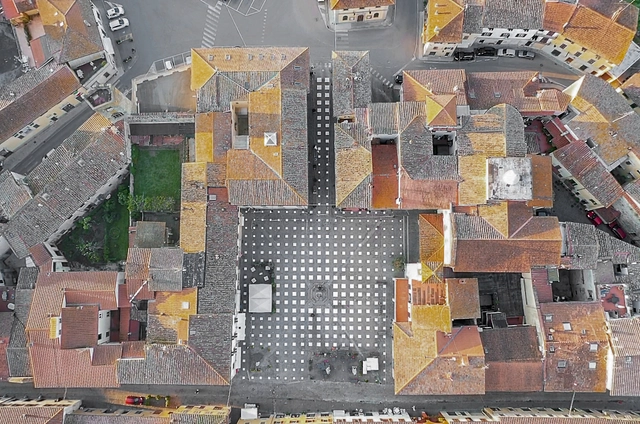
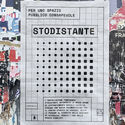
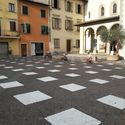
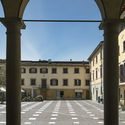
As architects around the world reimagine public spaces in the midst of the coronavirus, Italian architecture firm Caret Studio has envisioned the “StoDistante” installation. Searching to reconcile people with the outdoors, and allowing theses spaces to reopen safely while respecting the social distancing measures, Caret Studio created a temporary installation that reflects our current situation.
With the current economic volatility and a looming recession, this conference brings together the brightest business minds in our profession to provide you with insights, guidance and tactics to not only survive the next few months, but thrive. AIA Houston invites you to participate in an exciting two days of virtual learning. The conference will educate and inform architects on tools and strategies to navigate the current global crisis and anticipate the new normal beyond.
Courtesy of the coronavirus, universities are closed around the world, and classrooms are now entertained over video conferencing. This is not overly dramatic as this temporary arrangement will eclipse after cases are contained, and classes will resume soon after. However, the impacts on the university ecosystem and on the urban fabric will require immediate renovations in higher education that will shape the architectural syllabus for years to come.
https://www.archdaily.com/939423/how-covid-19-will-shape-architectural-educationZaheer Allam, Gaetan Siew and Felix Fokoua
As the Great Philosopher, Mike Tyson said, “Everybody has a plan until they get punched in the mouth”.
The COVID-19 pandemic will deeply impact the world of aesthetics. For the first time since League of Nations was founded, a future of universal aesthetics may cease to be the academically sanctioned Architectural Canon. As Markus Breitschmid defines it, in his article “In Defense of the Validity of the 'Canon' in Architecture,” the Canon in Architecture is a way to divorce architecture from the rest of the world:
In February of this year, I gave a short talk to our Yale students about the economy and their employment prospects, suggesting that while all indicators remained strong and jobs were plentiful, it had been quite some time since our last downturn. Having seen several during my career I suggested that they would likely see a recession sometime in theirs, but cast doubt on whether we’d ever see anything as serious as 2008. If only…
It’s too early to be making nuanced arguments about the future, as we face down what is undoubtedly going to be a much more serious situation in the second half of 2020. So, here are ten first thoughts about how our profession may be impacted, and potentially transformed, as a result. Choose two or three as prompts to consider the future once the crisis has passed.
Stores in Santiago, Chile, ran out of yeast in mid-March, such as it happened after the beginning of the social crisis in 2019. Given that Chile has the second-highest bread consumption per capita in the world, it would seem that Chileans handle uncertainty stocking up ingredients for bread making. Everybody wants to make bread, including myself.
The 2020 coronavirus pandemic is already creating change in every part of society. Harnessing this change should be the impetus for a long-overdue overhaul of the educational system and, in particular, the way we teach architecture.
Each day during the pandemic, we are suddenly finding what was once impossible is now suddenly possible. As Thomas Friedman said of online learning back in 2012, "Big breakthroughs happen when what is suddenly possible meets what is desperately necessary."
We now find ourselves in a position where we have to re-think everything to fight this virus. This pandemic will cause us to re-think learning as entire educational systems are forced to move online. In general, most formal education institutions are not producing the creative thinkers the world urgently needs. Solutions to the coronavirus pandemic require creative thinking, and how we currently teach in institutions today produces groupthink. Our path-dependent education does not get the best from individuals.