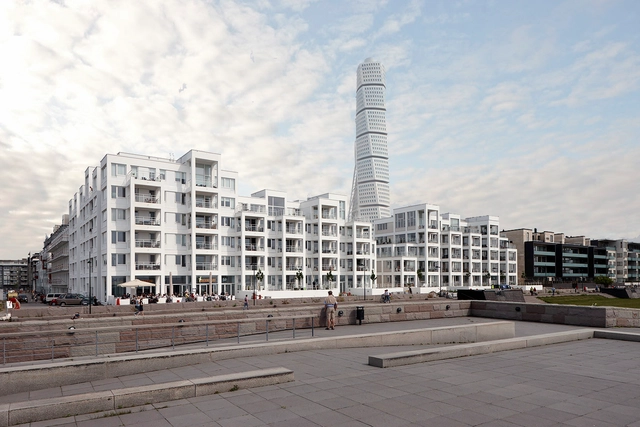
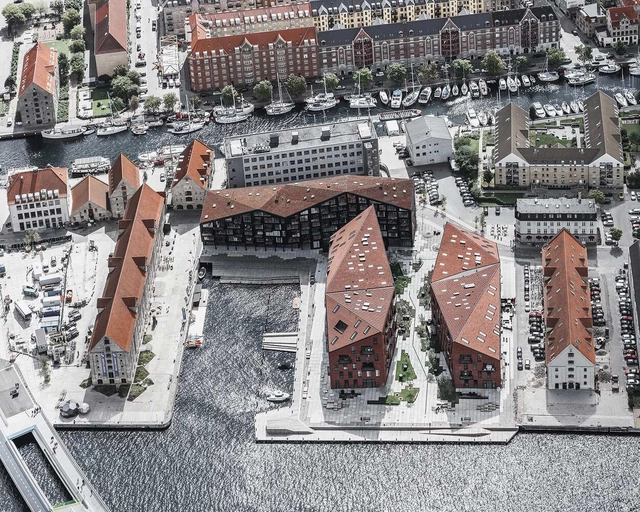
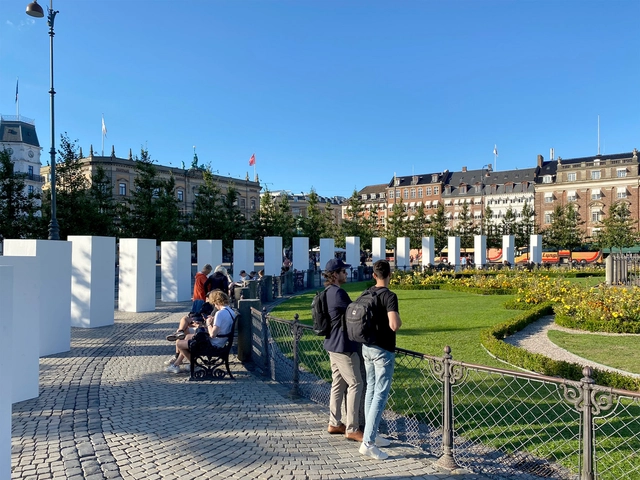
When we google 'housing in Copenhagen', the first thing that pops up are the most common questions asked by users: how much does it cost to live in Copenhagen? Is it difficult to find housing in Copenhagen? It's true, living here is significantly more expensive than the European average, especially in its most central district: Indre By. Although the housing prices are adapted to the salaries of its citizens –and the quality of life index is consistent with this high cost–, it's still complex for a foreigner to settle permanently in the city.
However, there is a serious commitment from the authorities and stakeholders to kindly open the city to new inhabitants, offering affordable housing designed by its best architects –both in suburbs and in refurbished downtown areas. In 2023, Copenhagen will be the UNESCO-UIA World Capital of Architecture and the host of the UIA World Congress of Architects, so a large number of people will be able to see firsthand what it's like to inhabit the city in projects of great architectural quality, which not only integrate wisely into its vibrant urban life, but also propose innovative ways of living.
Denmark has continually topped the survey for the happiest countries, according to the World Happiness Report. For urban designers, Copenhagen, the capital of Denmark, has become one of the most cited case studies regarding carbon-neutral infrastructure, pedestrian and bike-friendliness, and the outstanding qualities of its public realm. According to the Dansk Arkitektur Center, over 10,000 architects are expected to visit Copenhagen in the following year, to join the guided tours, exhibitions, debates, and cultural events that put design and architecture in the spotlight.
Cities evolve over countless years, each moment of change building up to larger societal and architectural shifts. Metropolises across the world are constantly subject to social, political, economic, or environmental forces that alter their fundamental identity - a character that is meant to be dynamic. As cities develop in size and impact, advancements in the understanding of cities and urbanism grow more complex.
Cities are formed from a sequence of narratives, characteristics, relations, and socio-spatial values that reflect the identity of the place. The livelihood of the city also depends on its people and a mutual relationship with them. Along with their communities and their circumstances, cities morph to reflect their residents' needs and values.
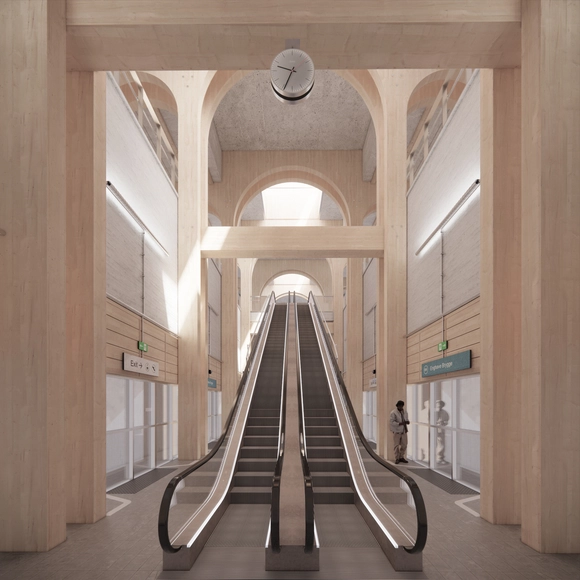
JAJA Architects won the competition organized by Metroselskabet, Denmark, to develop resource-efficient and climate-friendly metro stations. The winning team takes a comprehensive and holistic approach, looking at both material-optimized and sustainable design solutions and the character of the journey that passengers take to reach their destination. The proposal is centered around three core elements: Materials, Mobility Hub and Climate Campaign. While aiming to reduce CO2 emissions, the team also seeks to create an enjoyable and easy-to-navigate space for the many daily passengers. Snøhetta, 3XN/GXN, and Effekt also participated in the competition.
Ambitious technologists have claimed for decades that self-driving cars are the future. Yet, looking at recent years, the biggest revolution has come from vehicles on two wheels, not four. Fueled by the pandemic, increased oil prices, climate change and the desire for healthier lifestyles, we are now living in the midst of a bicycle renaissance. But to understand how we got here, it is crucial to look back. When the automobile became more widespread in the early 1900s, it quickly became a symbol of progress along with all it entailed: speed, privatisation and segregation. Adopting a car-centric approach, urban planners had to reorganise entire cities to separate traffic. Cars took over public spaces that used to host dynamic city life and parking lots, highways and gas stations became common landscapes. Pedestrians that once ruled the streets were herded into sidewalks and children relegated to fenced playgrounds. Ironically, cities were being designed for cars (not humans).
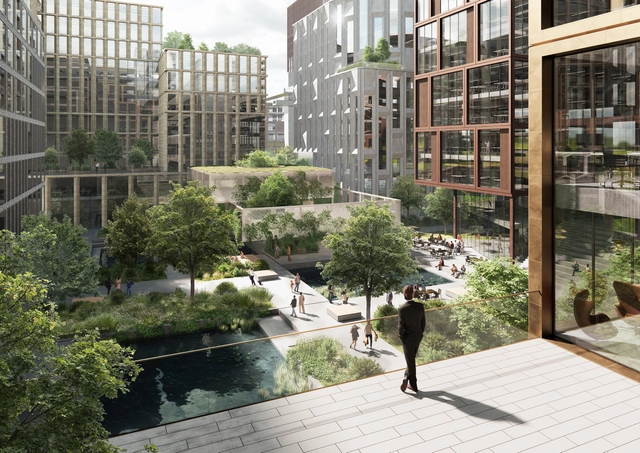
Danish design studio CEBRA won the planning competition to develop the business district at Hannemanns Allé, in Ørestad Syd, Copenhagen, Denmark. With a project emphasizing urban quality, urban life, and area identity, the 150,000 square meters plan will define the framework for future design and completion of the area between the Royal Arena and the Øresund motorway. Expected for completion in 2024, the project is commissioned by Copenhagen Municipality and By&Havn, an organization tasked with developing Ørestad and the city's port.
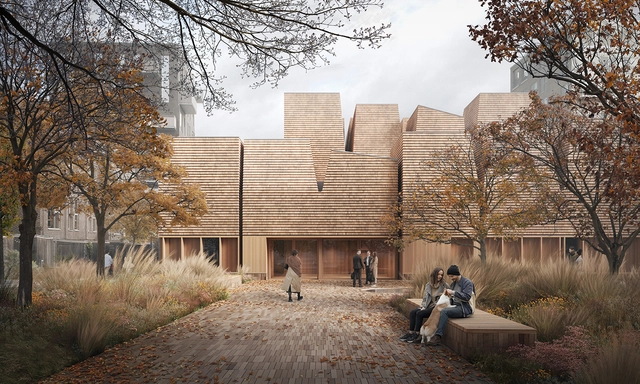
Henning Larsen has revealed the first images of the Ørestad Church, the first church to be built in Copenhagen in the last 30 years. The modern monument is built in wood and wood shingle, reflecting Ørestad’s open natural landscape and embracing the identity of the local community. The intention was to create a serene space, detached from the bustle of the city, where the calmness and simplicity of interior spaces can offer residents solace from their everyday life. Construction is expected to start in 2024, and the church will be consecrated in 2026.
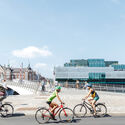
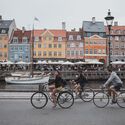
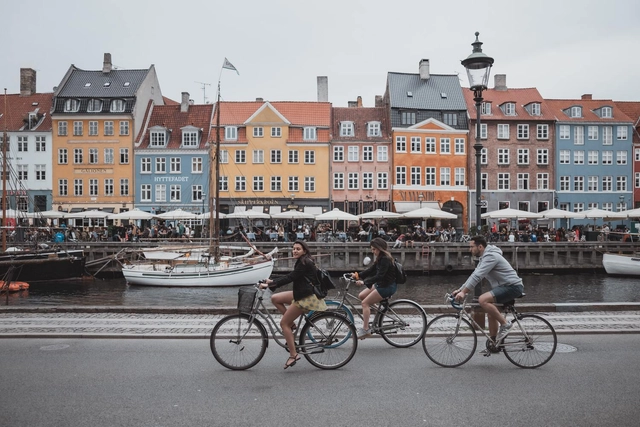
According to the World Happiness Report, Denmark has continually topped the survey of happiest countries for years. Copenhagen, the capital of Denmark, is known for its brightly colored waterfront buildings and radical contemporary architecture, both reflecting the joyful ethos of the city. The maritime metropolis is an urban designer’s favorite case study with its carbon-neutral infrastructure, pedestrian and bike-friendliness, and thriving public realm.Danish designers have cracked the code to build happier cities, leaving plenty of models to learn from.
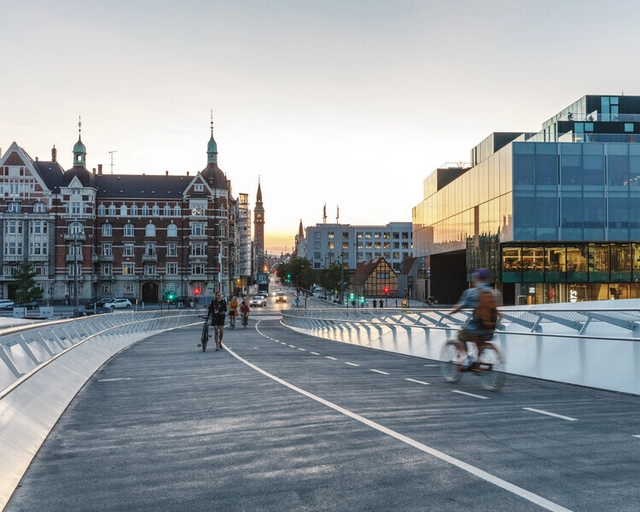
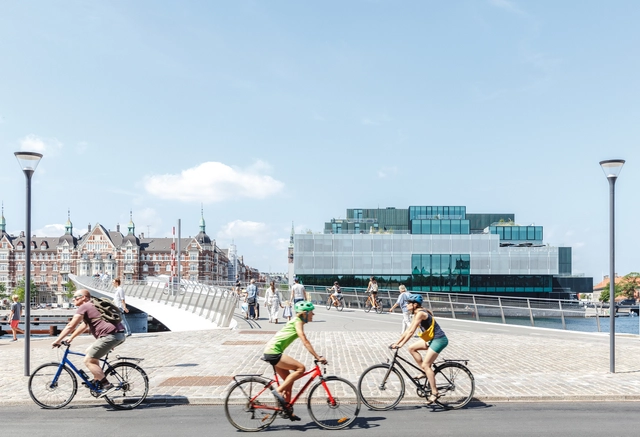
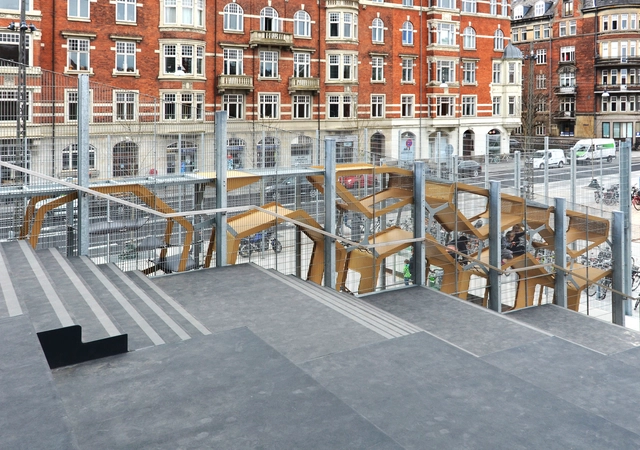
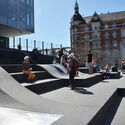
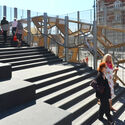
Trampoline Bridge / AZC Architects. Image Courtesy of AZC Architects
Humane cities center around the relationships between people and places. Communities thrive on shared resources, public spaces, and a collective vision for their locality. To nurture happy and healthy cities, designers and the public apply methods of placemaking to the urban setting. Placemaking—the creation of meaningful places—strongly relies on community-based participation to effectively produce magnetic public spaces.
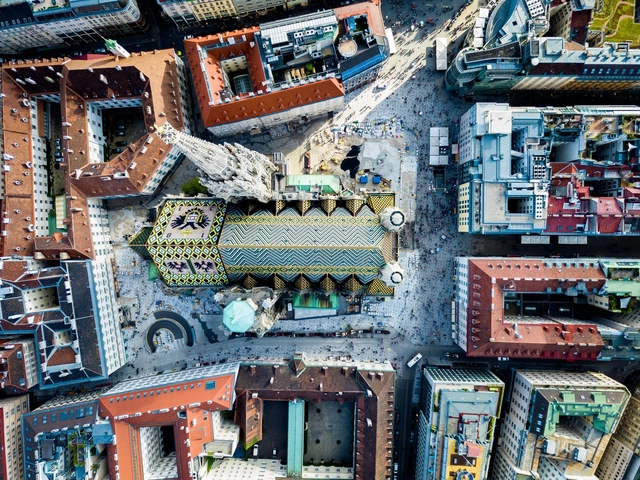
Vienna in Austria has topped the rankings of The Economist Intelligence Unit (EIU) 2022 Global Liveability Index, gaining back its previous position from 2019 and 2018, mostly for its stability and good infrastructure, supported by good healthcare and plenty of opportunities for culture and entertainment. Western European and Canadian cities dominated the top positions with Copenhagen, Denmark in second place and Zurich, Switzerland, and Calgary, Canada in third place. Adding 33 new cities to the survey, one-third of which are in China, bringing the total up to 172 cities, the classification excluded this year the city of Kyiv, due to Russia’s invasion of Ukraine.
Classified across 5 categories, stability, healthcare, education, culture and the environment, and infrastructure, the index was largely driven by the covid-19 pandemic. While covid-19 restrictions have eased in big parts of the world, liveability rankings started resembling “those seen before the pandemic”, however, the global average score remained below the pre-pandemic time. Although covid-19 has receded, a new threat to liveability emerged when Russia invaded Ukraine this year.