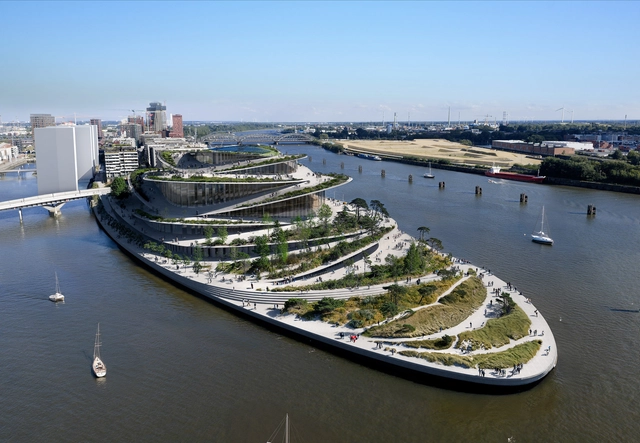
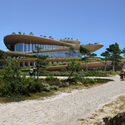
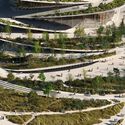
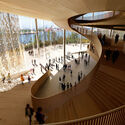
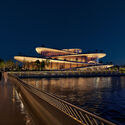
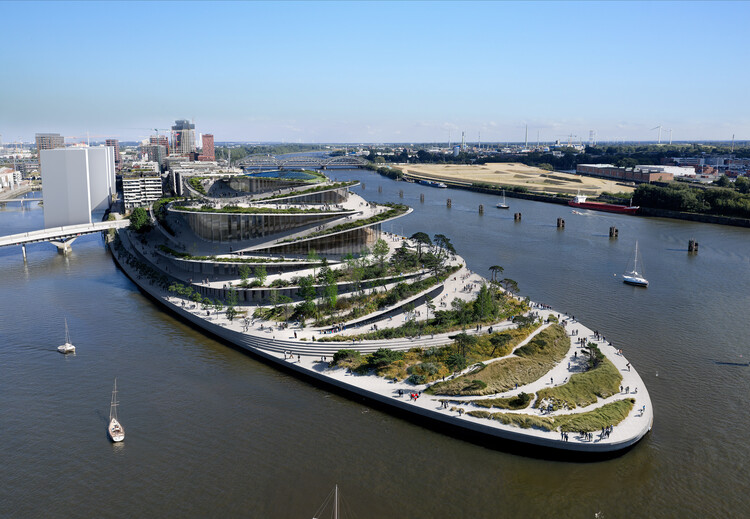
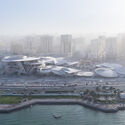
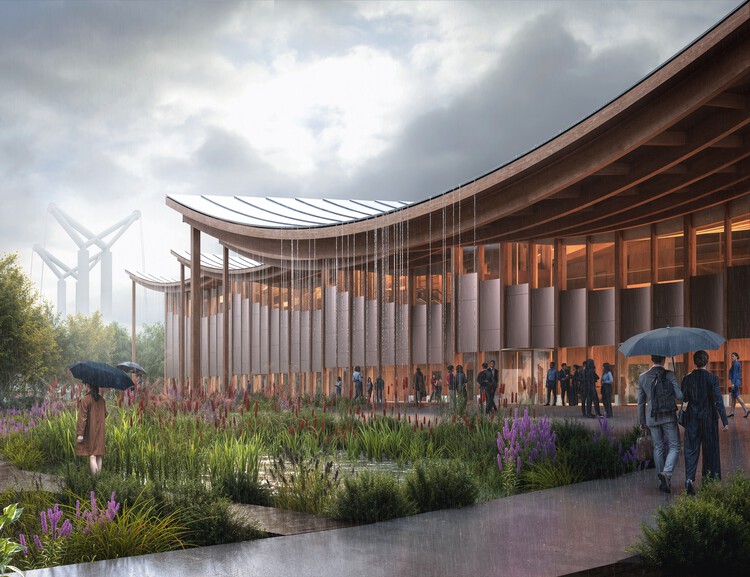
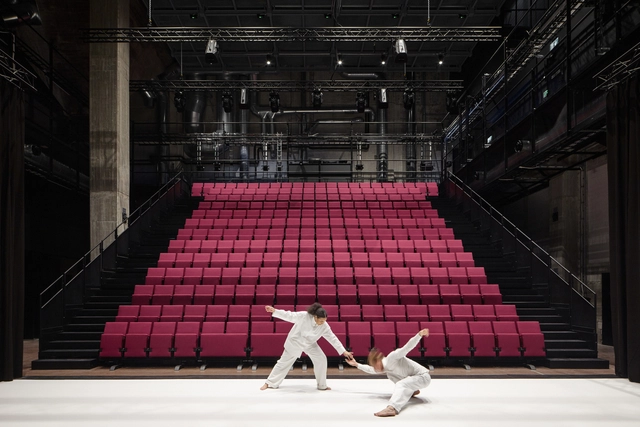
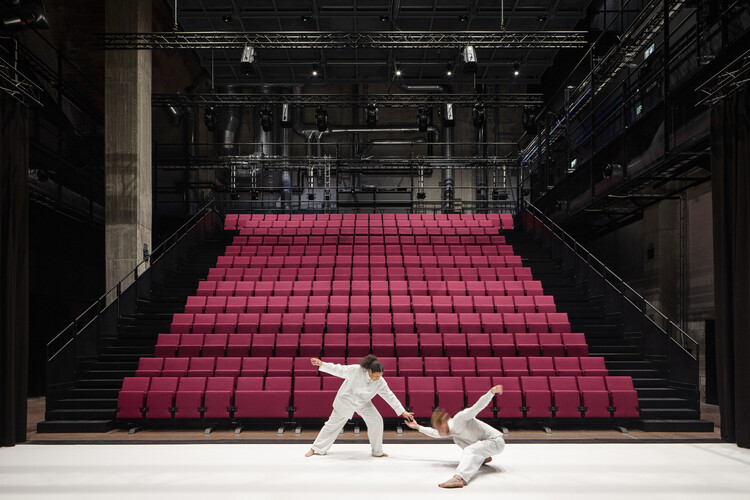
BIG – Bjarke Ingels Group has been selected as the winner of the international competition to design the new Hamburg State Opera, a major cultural project planned for the Baakenhöft peninsula in HafenCity, Hamburg, Germany. The building will consolidate the city's opera and ballet companies under one roof, introducing new performance spaces, production facilities, and public amenities along the Elbe. The project replaces the mid-20th-century opera house on Dammtorstraße, responding to the city's call for a venue that reflects contemporary standards in acoustics, stagecraft, and audience experience.
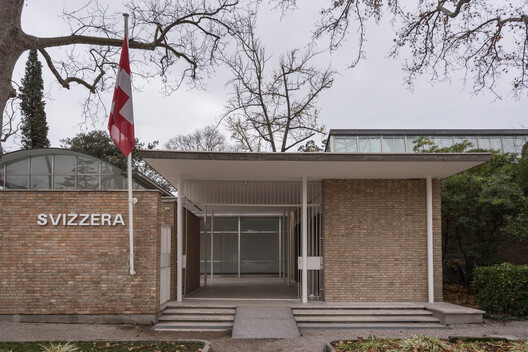
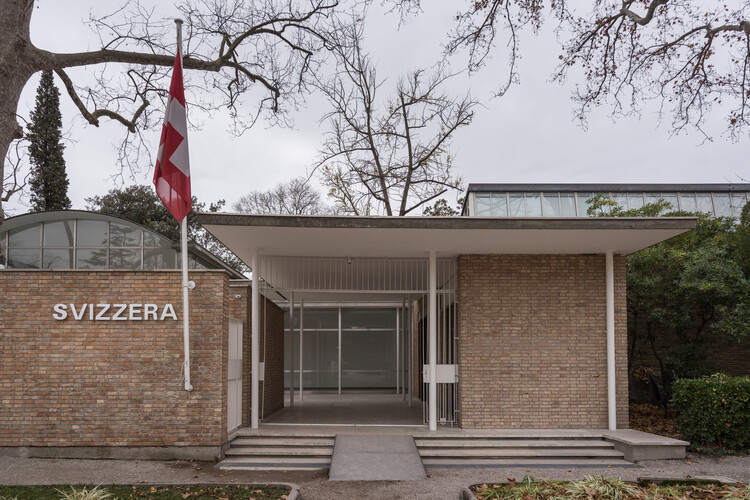
Amid the orderly grid of the Giardini della Biennale, the Swiss Pavilion appears almost reticent. Its low white volumes, completed in 1952 by Bruno Giacometti, seem to withdraw from the surrounding display of national pride. The building embodies a form of modernism that resists monumentality, where precision and restraint replace spectacle, and architecture becomes less an object than a framework for encounter.
Emerging from a Europe rebuilding itself, the pavilion reflects a time when nations were reimagining how to appear in the world. For Switzerland, neutrality had long been both a political stance and a cultural condition, and Giacometti translated this identity into a sequence of measured rooms arranged around an open courtyard, defined not by what they contain but by how they hold light, movement, and pause. The result is an architecture that does not speak loudly of belonging but invites attention through balance and care.
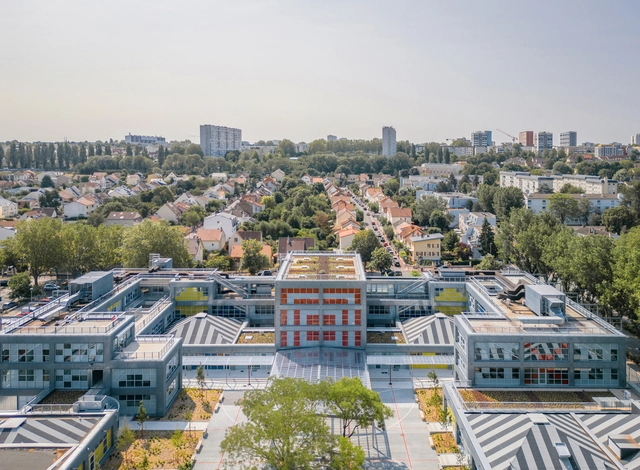
The EUmies Awards are organized annually by the Fundació Mies van der Rohe and the European Commission, with the support of the European Union's Creative Europe Programme. Based on the principle that "architecture is not merely a technical or aesthetic matter, but a cultural, environmental, and democratic issue," this 19th cycle of the Prize brings together 410 works from 40 countries and 143 regions across Europe. Beyond recognizing contemporary architecture projects, the Awards also aim to reflect European values such as cultural diversity, sustainability, democracy, and solidarity. This year, most nominated works (23%) are residential projects, including both collective and single-family housing, followed by cultural (13%) and educational (12%) programs. The selection shows a balance between transformations of existing buildings (44%) and new construction (56%), while 12% of the nominees are transnational works and 33% of the studios are 10 years old or younger, underscoring the growing visibility of emerging practices.
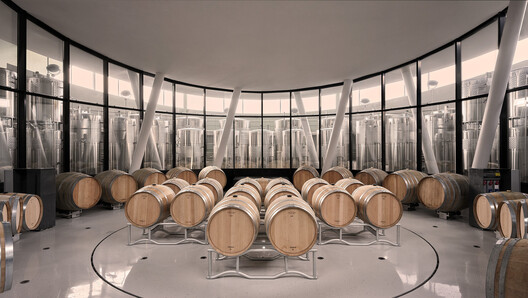
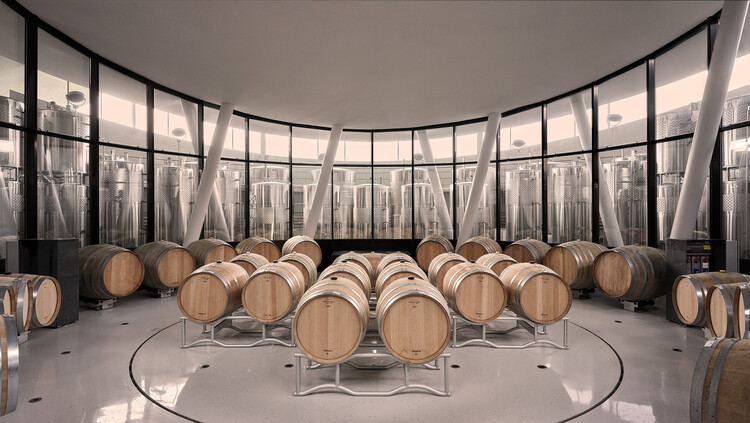
Wine production has long been tied to place, climate, and culture, and in recent decades, architecture has become a central part of this relationship. Wineries are no longer understood only as functional facilities for fermentation, storage, and distribution, but also as spaces where landscape, materiality, and visitor experience intersect. From subterranean cellars hidden beneath fields to sculptural landmarks rising in rural territories, these buildings shape the identity of winemaking regions while offering visitors a carefully choreographed encounter with the process of production.
At the intersection of agriculture, tourism, and culture, wineries present architects with unique opportunities to merge technical requirements with a spatial narrative. They must respond to environmental conditions, manage temperature and humidity with precision, and integrate with delicate ecosystems, while also providing spaces for tasting, gathering, and celebration. As a result, the typology has given rise to a wide range of architectural solutions. Some are rooted in tradition and local craft, others are exploring advanced technologies and contemporary forms.
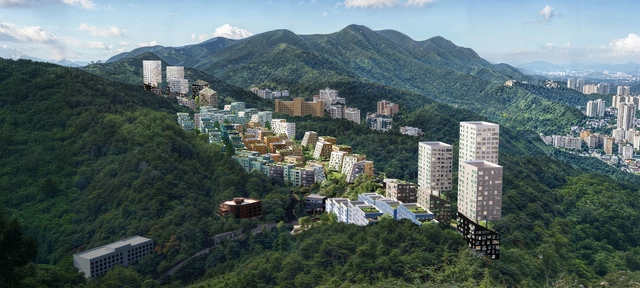
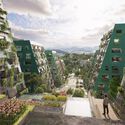
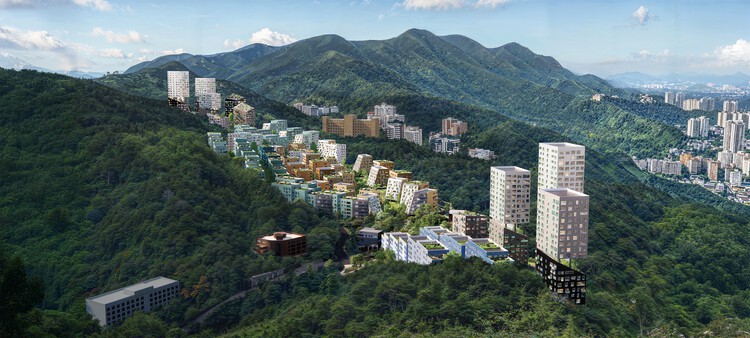
The Busan Slope Housing project by OMA addresses urban redevelopment on the steep hillsides of Busan, South Korea, drawing on the city's topographical complexity and historical settlement patterns. Developed in collaboration with the BusanArchitecture Festival and the Department of Housing and Architecture, the project explores strategies to rethink hillside neighborhoods while responding to both contemporaryhousing needs and the social and spatial legacies of these areas. Rather than replacing these areas with conventional high-rise estates, OMA envisions a flexible, context-responsive framework that integrates contemporaryhousing typologies with the site's inherited structure.
It's no exaggeration to say that Renzo Piano is one of the most unanimously respected architects in the world of architecture. With an oeuvre that blends respect for context, lightness and technology to create environmentally conscious and aesthetically pleasing structures, his approach combines advanced materials with traditional techniques. In projects of various scales, the Genoese architect maintains an essential thread: the implementation of passive architectural strategies, highlighting the importance of these methods for sustainability and energy efficiency. This is often made explicit in his sketches, as an initial concern, and clearly comes through in the finished works. Here are some examples of iconic projects developed by his office in recent decades.
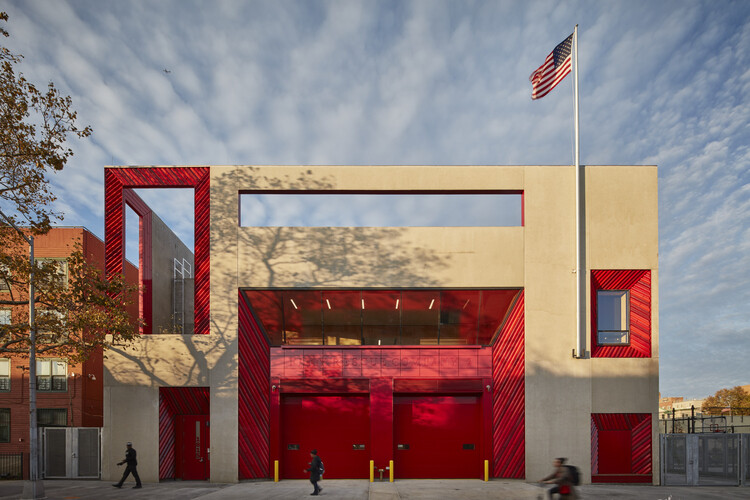
What should be taken into account when designing a fire station? The answer may seem obvious: functionality and efficiency. After all, every second counts in an emergency. But can a building designed for urgent operations also be aesthetically compelling, welcoming, and connected to its community? In recent decades, architects such as Zaha Hadid and Álvaro Siza have demonstrated that it can. By rethinking this building type, they have created spaces that go beyond emergency response—spaces that strengthen social ties, support the well-being of firefighters, and become urban landmarks.
Cultural diplomacy refers to the use of cultural expression and creative exchange to foster understanding and build relationships between nations. In this context, architecture has long played a distinctive role. Beyond its functional and aesthetic dimensions, it serves as a medium of communication, a language through which countries express identity, values, and ambition on the global stage.
Architecture operates as a form of soft power — persuasive rather than coercive — enabling nations to project influence through material presence. From modernist embassies in the post-war era to monumental pavilions at world expositions, governments and institutions have recognized the built environment's potential to shape perception. By commissioning prominent architects and adopting specific design languages, countries have used architecture to signal modernity, tradition, innovation, or stability.
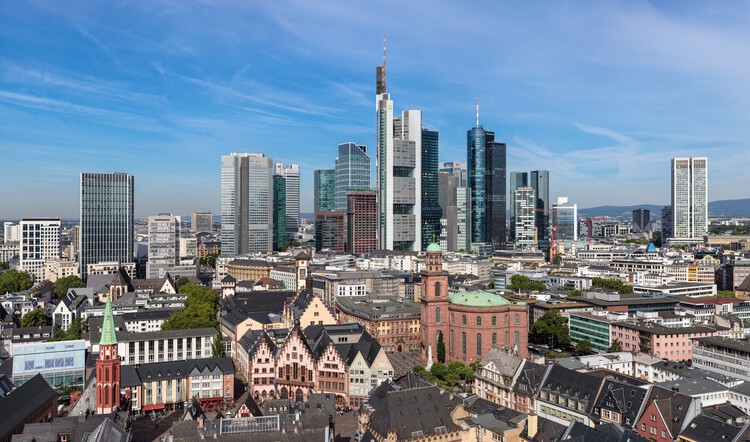
Frankfurt is often recognised for its distinctive skyline, a rare feature in European cities. Towering glass skyscrapers mark its role as a global financial hub, yet beneath this vertical image lies a city layered with centuries of history, destruction, and reconstruction. From medieval timber-framed houses to post-war modernism and contemporary high-rises, Frankfurt has consistently reinvented itself through architecture, producing a built environment where different periods coexist in dialogue.
The city's transformation accelerated after World War II, when much of its historic core was destroyed and planners sought to balance rapid economic growth with the need for cultural reconstruction. Landmarks such as the Römerberg square were meticulously rebuilt, while modernist interventions and infrastructural projects introduced new scales and languages. More recently, projects by internationally renowned offices have reshaped the riverfront and business districts, adding architectural icons that express Frankfurt's global role.
Architecture is shaped not only by buildings, but by the ideas that make them possible. Before the constraints of capital, regulation, and procurement, there is a moment when architecture is allowed to think aloud. The first confrontation with this fertile moment usually takes place in academia, in the thesis. It is not merely a requirement for graduation, but a space of speculative freedom where architecture formulates hypotheses, builds arguments, and tests positions.
For many, it is also the first opportunity to think beyond the structure of academic programs — a first chance to explore something more personal, unresolved, or even unreasonable. While often seen as an endpoint, the thesis is better understood as a beginning: the first engagement with architecture as a form of reasoning, where the project is not yet a response, but a question.
Series 8670 Casement Window. Image Courtesy of Western Window Systems
Windows have long held an ambivalent role in architecture, as they both define and enclose interiors while simultaneously creating a link to the outdoors. This dual function goes beyond simply meeting construction needs or providing daylight, directly influencing how occupants experience and engage with the views. The 20th century saw the introduction of materials such as steel, aluminum, and glass, which enabled different types of windows with thinner frames and expansive panes, enhancing transparency and reinforcing the visual connection with the surrounding setting.
American architects such as Frank Lloyd Wright and Philip Johnson explored these possibilities to harmonize architecture with landscape. In Fallingwater House, windows and terraces seamlessly connect the house to the waterfall and surrounding forest, whereas the Glass House's minimal framing nearly dissolves the boundary between interior and exterior, bringing the natural environment to life inside the house. Through its evolution, windows have become an element that unites space, materials, and perception, opening new pathways for exploring the relationship between architecture and its environment.
https://www.archdaily.com/1034016/framing-interiors-and-landscapes-in-aluminum-and-glass-to-master-the-viewEnrique Tovar
Blending vernacular techniques with contemporary experimentation, Mexico's architectural landscape is shaped by a continuous dialogue between tradition, materiality, and modernity. As the fifth most biodiverse country in the world, Mexican architecture seeks to respond to its vast range of natural environments, climates, and cultural traditions, all within a territory marked by striking contrasts. Reflecting a visible duality, it can embody both exclusivity and act as a catalyst for social transformation.
"Dance, dance… otherwise we are lost." This oft-cited phrase by Pina Bausch encapsulates not only the urgency of movement, but its capacity to reveal space itself. In her choreographies, space is never a neutral backdrop, it becomes a partner, an obstacle, a memory. Floors tilt, chairs accumulate, walls oppress or liberate. These are architectural conditions, staged and contested through the body. What Bausch exposes — and what architecture often forgets — is that space is not simply built, it is performed. Her work invites architects to think not only in terms of materials and forms, but of gestures, relations, and rhythms. It suggests that architecture, like dance, is ultimately about how we inhabit, structure, and emotionally charge the spaces we move through.
Historically, architecture and dance have operated in parallel, shaping human experience through the body's orientation in space and time. From the choreographed rituals of classical temples to the axial logics of Baroque palaces, built space has always implied movement. The Bauhaus took this further, as Oskar Schlemmer's Triadic Ballet visualized space as a geometric extension of the body. This was not scenery, but spatial thinking made kinetic. In the 20th century, choreographers like William Forsythe and Anne Teresa De Keersmaeker integrated architectural constraints into their scores, while architects such as Steven Holl, Diller Scofidio + Renfro, and Toyo Ito designed buildings that unfold as spatial sequences, inviting movement, drift, and delay.