1. ArchDaily
  2. construction material

construction material: The Latest Architecture and News

Sustainable Policy: How Deconstruction Plans Are Revolutionizing Construction Waste Management in the United States

Subscriber Access | 

For a long time, the construction industry has followed a linear process - extract raw materials, build structures, demolish them, and then dispose of the garbage in landfills. This approach has serious negative effects on the environment and society and is inherently unsustainable. Reconsidering traditional methods and workflows requires support from all stakeholders and a sense of urgency proclaimed by authorities. In the United States, city organizations have begun to implement new policies to keep construction waste out of landfills and support circular practices. Several cities like Seattle and Pittsburgh, have started implementing deconstruction ordinances that require older buildings to be carefully deconstructed rather than demolished. How might their key provisions influence circular practices in the country?

Sustainable Policy: How Deconstruction Plans Are Revolutionizing Construction Waste Management in the United States - Image 1 of 4Sustainable Policy: How Deconstruction Plans Are Revolutionizing Construction Waste Management in the United States - Image 2 of 4Sustainable Policy: How Deconstruction Plans Are Revolutionizing Construction Waste Management in the United States - Image 3 of 4Sustainable Policy: How Deconstruction Plans Are Revolutionizing Construction Waste Management in the United States - Image 4 of 4Sustainable Policy: How Deconstruction Plans Are Revolutionizing Construction Waste Management in the United States - More Images+ 1

The Future of Energy: Can Buildings Become Reservoirs of Power?

Subscriber Access | 

Environmental degradation has shed light on the need for new sources of energy. A shift in energy sources calls for innovative means of storing energy. For centuries, buildings have proven able to store people, objects, and systems, inviting a conversation about their untapped potential to efficiently store large amounts of energy. In this new era, can buildings go beyond being structures of function to potential reservoirs of power?

The Future of Energy: Can Buildings Become Reservoirs of Power?  - Image 1 of 4The Future of Energy: Can Buildings Become Reservoirs of Power?  - Image 2 of 4The Future of Energy: Can Buildings Become Reservoirs of Power?  - Image 3 of 4The Future of Energy: Can Buildings Become Reservoirs of Power?  - Image 4 of 4The Future of Energy: Can Buildings Become Reservoirs of Power?  - More Images

Mapping the Future of Hemp Architecture and Construction Materials: Revolutionizing the Industry

Subscriber Access | 

In recent years, the spotlight on sustainable, eco-friendly, and low-carbon materials has intensified across the architecture industry. Amid this interest, a renaissance of hemp architecture is gradually gaining momentum on a global scale. Hemp-based materials have emerged as a favorable alternative to traditional industrialized materials, presenting a multitude of benefits that could revolutionize the construction industry. Despite its vast promise, several hurdles obstruct the widespread adoption of hemp, inhibiting its transformative potential in the construction industry.

Mapping the Future of Hemp Architecture and Construction Materials: Revolutionizing the Industry  - Image 1 of 4Mapping the Future of Hemp Architecture and Construction Materials: Revolutionizing the Industry  - Image 2 of 4Mapping the Future of Hemp Architecture and Construction Materials: Revolutionizing the Industry  - Image 3 of 4Mapping the Future of Hemp Architecture and Construction Materials: Revolutionizing the Industry  - Image 4 of 4Mapping the Future of Hemp Architecture and Construction Materials: Revolutionizing the Industry  - More Images

Environmentally Friendly Materials: 8 New Products To Reduce Carbon Emission

The construction industry's future will undoubtedly include "carbon reduction" as a mandatory task. Aside from locally sourced, virgin materials, an increasing number of new materials are becoming available. New materials can be developed in several ways, including low-carbon substitution, recycling, performance enhancement, and 3D printing. New materials will not only be more environmentally friendly and enable new construction methods, but they will also influence the starting point and direction of design concepts, resulting in new buildings with new perceptions and spaces.


Environmentally Friendly Materials: 8 New Products To Reduce Carbon Emission - Image 1 of 4Environmentally Friendly Materials: 8 New Products To Reduce Carbon Emission - Image 2 of 4Environmentally Friendly Materials: 8 New Products To Reduce Carbon Emission - Image 3 of 4Environmentally Friendly Materials: 8 New Products To Reduce Carbon Emission - Image 4 of 4Environmentally Friendly Materials: 8 New Products To Reduce Carbon Emission - More Images+ 15

Architecture and Experimentation: 7 Small Scale Projects with Unusual Building Materials

Using unconventional materials in architecture requires a lot of creativity and experimentation in order to create new possibilities that are both efficient and innovative. Small-scale projects, in particular, offer great opportunities to explore these unusual materials because, among other factors, they provide fewer loads on the structures and, sometimes, also have a temporary nature. Nevertheless, using unconventional materials in small-scale architecture can help encourage its use in other projects, including larger constructions.

Architecture and Experimentation: 7 Small Scale Projects with Unusual Building Materials - Image 1 of 4Architecture and Experimentation: 7 Small Scale Projects with Unusual Building Materials - Image 2 of 4Architecture and Experimentation: 7 Small Scale Projects with Unusual Building Materials - Image 6 of 4Architecture and Experimentation: 7 Small Scale Projects with Unusual Building Materials - Image 7 of 4Architecture and Experimentation: 7 Small Scale Projects with Unusual Building Materials - More Images+ 3

Are All Plastics Recyclable? Spotlight on a New Technology that Reclaims Rejects of Plastics and Glass

While not all plastics are being recycled, even the ones that display the recycling sign, the global plastic waste problem is nowhere close to being resolved. Recycling, generally determined by factors like demand, legislations, and economy, takes on arguably around 20% of the annual production of plastics, leaving a large quantity unattended, doomed to last forever in our environment. In addition, competing with newly-produced materials, recycled plastics need to meet standards of quality and price, and undergo a sustainable, efficient, and economically viable transformation.

ROGP or Rejects of Glass & Plastics Technology is an innovative approach that repurposes plastics, once labeled as non-recyclable materials due to technical complexity or economy-related issues.

Are All Plastics Recyclable? Spotlight on a New Technology that Reclaims Rejects of Plastics and Glass - Image 1 of 4Are All Plastics Recyclable? Spotlight on a New Technology that Reclaims Rejects of Plastics and Glass - Image 2 of 4Are All Plastics Recyclable? Spotlight on a New Technology that Reclaims Rejects of Plastics and Glass - Image 3 of 4Are All Plastics Recyclable? Spotlight on a New Technology that Reclaims Rejects of Plastics and Glass - Image 4 of 4Are All Plastics Recyclable? Spotlight on a New Technology that Reclaims Rejects of Plastics and Glass - More Images+ 8

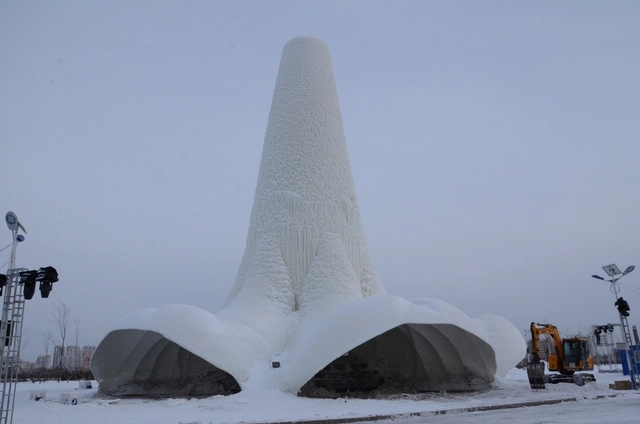
The Record Breaking 31 Meter Tall "Flamenco Ice Tower" Opens in Harbin, China

Beyonds igloos, sculptures, and Sweden’s ICEHOTEL, ice is not often seen as building material. An international team of Dutch-end Chinese students and professors from Eindhoven University of Technology (TU/e), Summa College, and the Harbin Institute of Technology (HIT) have used the freezing material to construct “Flamenco Ice Tower” in Harbin, China - the home of the International Ice and Snow Sculpture Festival.

The Record Breaking 31 Meter Tall "Flamenco Ice Tower" Opens in Harbin, China - Image 1 of 4The Record Breaking 31 Meter Tall "Flamenco Ice Tower" Opens in Harbin, China - Image 2 of 4The Record Breaking 31 Meter Tall "Flamenco Ice Tower" Opens in Harbin, China - Image 3 of 4The Record Breaking 31 Meter Tall "Flamenco Ice Tower" Opens in Harbin, China - Image 4 of 4The Record Breaking 31 Meter Tall Flamenco Ice Tower Opens in Harbin, China - More Images+ 15