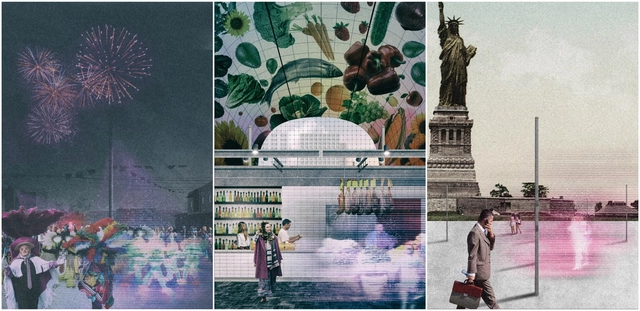
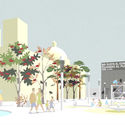
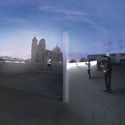
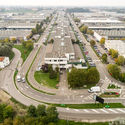
The National Infrastructure Commission and Malcolm Reading Consultants have revealed an online gallery of the four final design concepts for The Cambridge to Oxford Connection: Ideas Competition.
The competition, which launched in June, focuses on the 130-mile corridor connecting Cambridge, Milton Keyes, Northampton, and Oxford. It acknowledges the presence of world-leading universities, highly skilled workers and tech firms, but also the corridor’s failure to function as a connected economic zone.
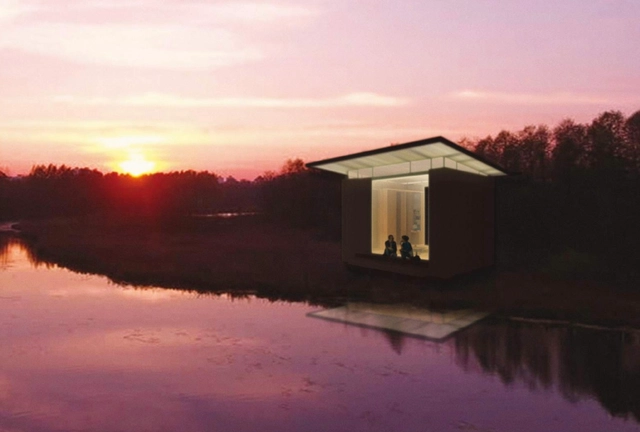
A design for a portable, sustainable 250 square foot house is no tall order. But back in June, online design magazine, Volzero, put $3200 USD on the line for designers to honor this request through their Tiny House Design Competition.
Interior program requirements included: Living Area | Sleeping Area for 2 | Cooking and Dining Area | Toilet | Workspace.
Around the world, creatives worked to conquer the puzzle of maximum usable space with a minimum footprint. Tiny houses were born. The jury consisted of five principals of different design firms: Abraham Cota Parades, Andrew Patterson, Didier Ryan, Md.Rafiq Azam and Sameep Padora. In addition to filling the basic needs of the competition, winning projects display a strong concept, and unique personality.
Dark and forgotten attic spaces, full of useless items, are due to the present fashion in interior design and architecture for living under a roof. The enormous arrangement potential of attic interiors results from their unusual shape, which is dictated by the diversified construction of roof structures. Benefits arising in connection with this fact can be achieved exclusively through an individual approach to each project. However, the most important element of this puzzle is light. Indeed, light is the main interior designer, creating the space and contributing to arranging a cozy room on a small area such as the attic.
Bee Breeders announced the winners of the Adelaide Creative Community Hubcompetition, challenging designers to propose an innovative, vibrant public space for the city of Adelaide, Australia. Participants were required to design either a temporarypavilion or fixed landmark within the frequented public park. Competition submissions seemed to focus on one of three things: a flexible open program, half building/half landscape, or a temporary pavilion. Judges looked for a clear concept. Winning projects have the potential to do more than merely bring people together; they go a step further sparking innovation in creative communities.
C. F. Møller’s design to interconnect and root the campus within the city wins VIA University College in Horsens, Denmark. The proposed 30,000 square meters proposal and 5,000 square meters Innovation House was selected amongst three strong projects, according to the adjudicators’ report in a forward-thinking scheme that develops a strong dialogue between the academic and urban spaces.
Four public space challenges, four ways to win $5,000
The NXT City Prize is a celebration of bold, visionary ideas for public space. This year, we’ve shaken things up with four site-specific public space challenges to make your mark on our city’s public realm.
Submit your idea and show leading civic players what you would do if you were given a blank slate to make Toronto even better – with $20,000 in cash prizes to be won!
No technical drawings, no budgets needed. This is an ideas competition.
Wayne McGregor CBE, Elizabeth Diller, Joshua Bolchover
The Royal Institute of British Architects (RIBA) is delighted to announce the second edition of the RIBA International Prize, the highly prestigious award for the world’s best new building.
If you ask someone to define “fine jewelry” you’ll usually hear something about gold, platinum, diamonds, and other traditionally “precious” materials. But go to any high-end jewelry trade show today, and you’ll find that the term “fine jewelry” rarely matches this limiting definition. Designers no longer hesitate to mix non-traditional materials. The lines between “fine” jewelry and “fashion” jewelry are now blurred. The new generation of buyers doesn’t want to conform to traditional boundaries anymore. For them, “precious” and “non-precious” don’t matter as much as one thing: MAKING A PERSONAL STATEMENT.
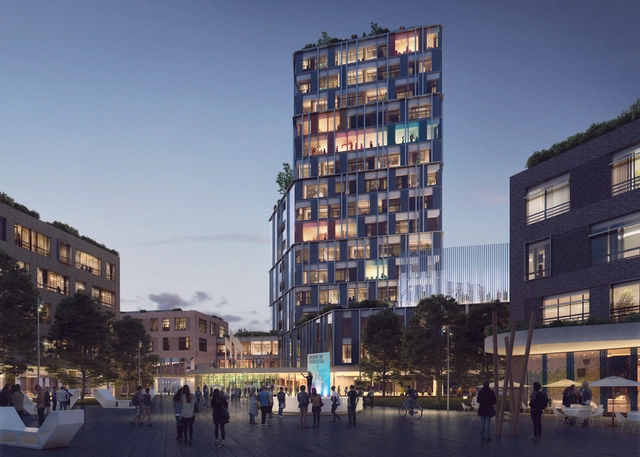
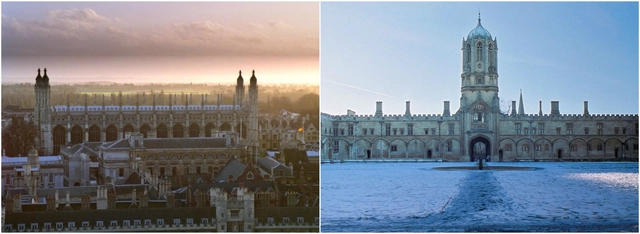
The National Infrastructure Commission and Malcolm Reading Consultants have announced the shortlist for The Cambridge to Oxford Connection: Ideas Competition. The free-to-enter competition focuses on integrating placemaking with infrastructure in one of the UK’s leading growth regions: 130-mile Cambridge-Milton Keynes-Oxford corridor. The region is home to 3.3 million people and hosts some of the country’s most successful cities, as well as the world-leading Oxbridge universities. Launched in June 2017, the first stage encouraged entries from teams with a range of backgrounds - made up of urban designers; architects; landscape designers, planners and community specialists (to name a few).
The municipality of Madrid´s Area of Sustainable Urban Development, in collaboration with the Official College of Architects of Madrid, has announced a design competition to remodel eleven public plazas in the outskirts of the Spanish capital city as an urban regeneration strategy for the city´s periphery.
As part of the strategic plan, Regenerate Madrid, the competition, “Plaz-er”, seeks to “contribute to the creation of an upgrading program for the civic plazas located on the city´s periphery, understood as representative spaces with a singular and identifying character for the local areas population that should be reinforced through the new project."
https://www.archdaily.com/876179/madrid-announces-design-competition-to-remodel-11-of-the-citys-public-squaresArchDaily Team
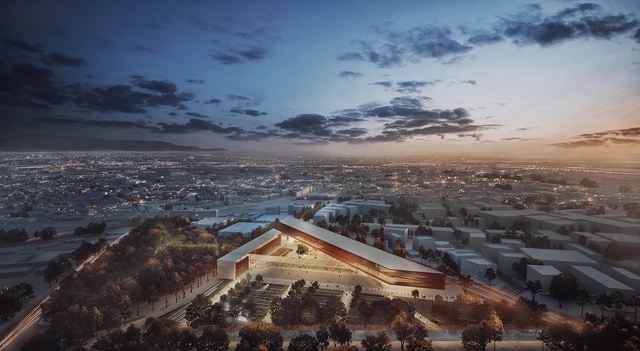
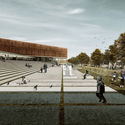
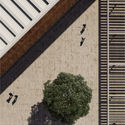
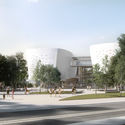
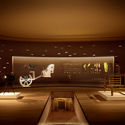
Responding to a competition brief for a new archaeological museum in Nicosia, the divided capital of Cyprus, a proposal submitted by Greek architects Alkiviadis Pyliotis and Evangelos Fokialis uses the traditional elements of the line, atrium and stoa to inform the composition of the envisioned landmark. Titled "Trigonica Simplicitas," the design of the museum is intended to form a new central hub, celebrating Cypriot history and culture through the synthesis of indoor and outdoor spaces on various levels to rethink the function of a museum.
Theoni Xanthi of XZA Architects has been selected as the winner in the competition to design the new archaeological museum in Cyprus. Composed of three layers corresponding to Memory, the City, and the River, Xanthi's proposal took first place in a competition that sought a new urban space to celebrate Nicosia’s history and archaeology. The project is situated in close proximity to the medieval city walls, enabling it to play a key role in altering and upgrading the existing urban and green spaces that surround it.
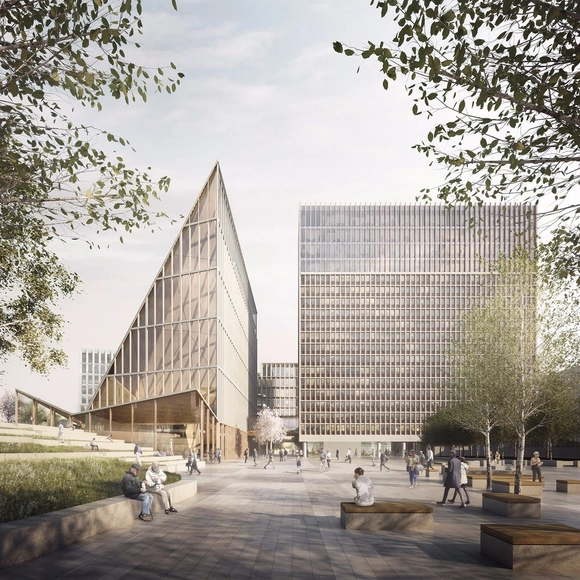
Two teams have been announced as the finalists of a competition to rebuild Norway’s government headquarters after it was bombed in 2011 during the country’s worst terrorist attack in modern history. The state building agency Statsbygg selected G8+, comprised of A-Lab and LPO Architects, and Team Urbis, which includes the firms Haptic and Nordic, out of a group of seven teams to create a safe, inviting hub of ministry buildings for central Oslo.
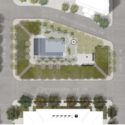
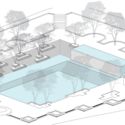
The National Capital Planning Commission (NCPC) has reviewed the revised concept for the National Washington WWI Memorial as part of several major commemoration and transport projects taking place in the capital city. Designed by architect Joseph Weishaar and sculptor Sabin Howard, the proposal won the memorial’s competition last year, beating out 4 other finalists with its multilevel design and use of relief sculpture.
This open international competition aims to collect design works of public space for hutongs in Baitasi neighbourhood. Shortlisted works will be implemented in a simulated way during Beijing Design Week, and the winning designs will be selected by professional Jury and residents in the neighbourhood and will be made available as reference of the revitalization development in Baitasi neighbourhood, in a broader old-town area of Beijing and even in old towns throughout China.
https://www.archdaily.com/875510/call-for-entries-baitasi-2017-international-design-competitionJoanna Wong
Architectural research initiative Arch Out Loud has released the winners of the Tenancingo Square Mediascape international open-ideas competition aimed to engage architects with the topic of human trafficking. The competition challenged participants to reimagine the town square of Tenancingo, Mexico in response to the prevalent issues of sex trafficking existing in the area. “With proposals from both regional designers and designers from other parts of the world, the competition brought forth a large variety of approaches to an extremely sensitive, but immediate, societal problem” Arch Out Loud said in a statement. “Being the first architectural competition to address human and sex trafficking, Arch Out Loud hopes that the culmination of this exploration is only the beginning of the field’s examination of its’ role in the matter.”






_Shortlisted_Teams_and_Malcolm_Reading_Consultants.jpg?1507914687&format=webp&width=640&height=580)
_Barton_Willmore_and_Malcolm_Reading_Consultants.jpg?1507914709 "© Barton Willmore and Malcolm Reading Consultants")
_Tibbalds_Planning_and_Urban_Design_and_Malcolm_Reading_Consultants.jpg?1507914645 "© Tibbalds Planning & Urban Design, Mikhail Riches, Featherstone Young, Marko and Placemakers, Expedition Engineering & Khaa and Malcolm Reading Consultants")
_Mae_and_Malcolm_Reading_Consultants.jpg?1507914636 "© Mae and Malcolm Reading Consultants")
_Fletcher_Priest_Architects_and_Malcolm_Reading_Consultants.jpg?1507914594 "© Fletcher Priest Architects and Malcolm Reading Consultants")
_Shortlisted_Teams_and_Malcolm_Reading_Consultants.jpg?1507914687)

.jpg?1507695443&format=webp&width=640&height=580)







.jpg?1501737244&format=webp&width=640&height=580)


.jpg?1501737244)




.jpg?1500848248&format=webp&width=640&height=580)
.jpg?1500848248 "Courtesy of National Capital Planning Commission")

.jpg?1500848248)