Over the last 5 years, the Fairy Talescompetition has captured the imagination of thousands of participants from around the world - from students and aspiring architects, to multi-national firms and Pritzker prize winners.
Here is why, if you enjoy design and storytelling, you should give it a shot this year.
https://www.archdaily.com/884948/five-reasons-why-you-should-enter-the-fairy-tales-competitionBlank Space Project
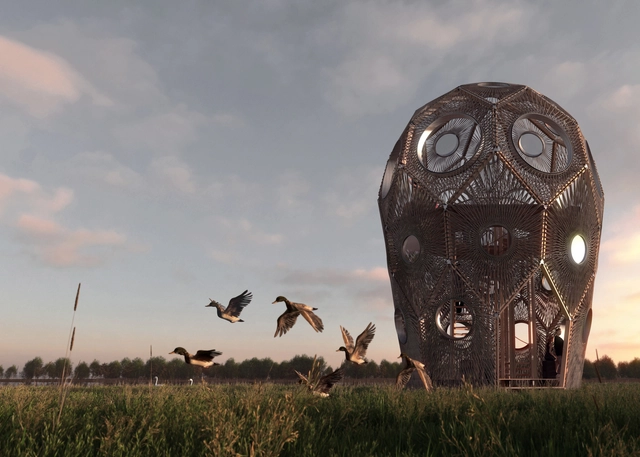
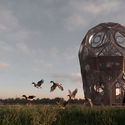
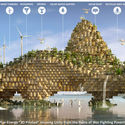
Bee Breeders have selected the winners for the Pape Bird Observation Tower competition, which saw participants submitting designs for a new bird observation station located in the Nica and Rucava Municipalities in the South Western region of Latvia. The competition is the first in a series organized by Bee Breeders in collaboration with Pasaules Dabas Fonds, Latvia's leading nature conservation fund. The competition asked for proposals for a tower that would replace a previous tower that was struck by lightening.
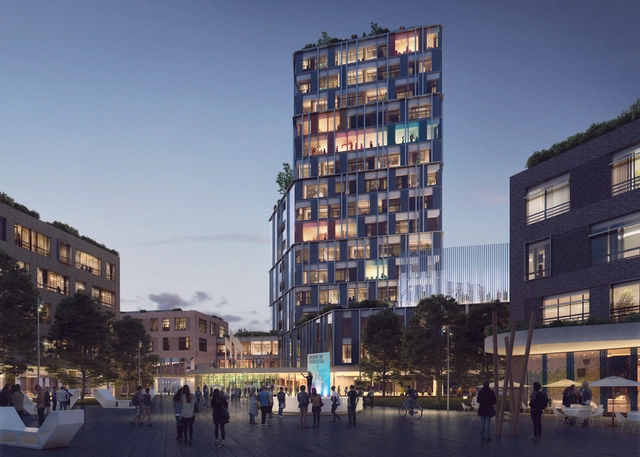
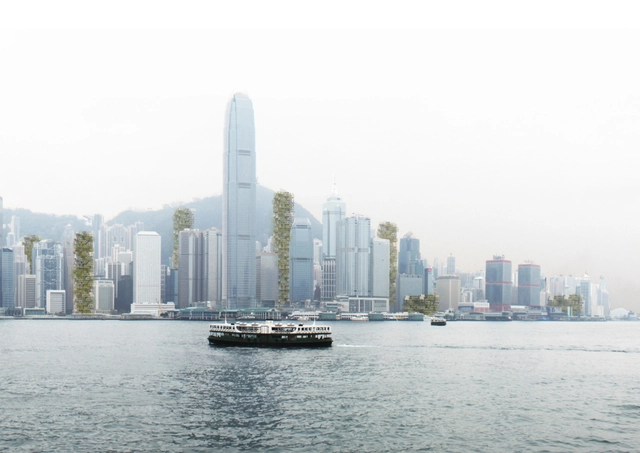
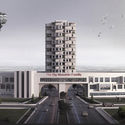
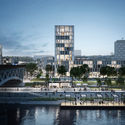
The mayor of Strasbourg, Roland Ries, has announced the winner of the architectural design competition for a residential tower. The site is located near the Rhine, within the ‘Strasbourg, Presqu’ile--Citadelle’ neighborhood -- dense with low-rises, not exceeding five levels. The winning design by KCAP Architects & Planners and OSLO Architectes is commended for its contextual sensitivity and formal relationship with Germany which sits just on the other side of the Rhine river.
Bee Breeders announced the winners of the Modern Collective Living Challenge, one part of their Global Housing Crisiscompetition series. Participants conceived new types of accessible housing for rural China’s relocated farmers. China’s fast-paced urbanization is causing millions of rural folk to move to cities. With no designated site, successful projects need to be versatile enough to work in a variety of sites and even be adopted as a standard for addressing relocation. Winning projects were held to a high standard in their answering of the question: how can we create modern community living situations where relocated individuals are not forced into changing their way of life? Common themes in winning projects are modularity and green space.
The fourth annual Flatiron Public Plaza Holiday Design Competition winner has been announced--Flatiron Reflection by Future Expansion. In June 2017 non-profit groups Flatiron/23rd Street Partnership and Van Alen Institute invited ten design and architecture firms to submit proposals. “The initiative has become a valuable platform for launching new practices, a visible celebration of inventive, temporary designs that enliven public space during a chillier season, and an opportunity to understand how these spaces impact our minds and bodies” states David van der Leer, Executive Director of Van Alen Institute.
In Iraq, as an estimated 900,000 people return home to the city of Mosul after liberation, many of the returnees will only find desolation. The Tamayouz Excellence Award, Rifat Chadirji Prize focuses on bringing global awareness as well as global talent toward addressing the social issues Iraq faces through design.
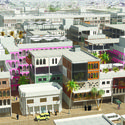
This year’s theme, “Rebuilding Iraq’s Liberated Areas: Mosul’s Housing Competition” asked applicants design prototypes for affordable housing. The winning housing proposals selected by the jury are practical, inspiring, and scalable, while adding capacity and density. The competition received 223 submissions from 42 countries. The Top 20 entries will be featured in a traveling exhibition that will visit Amman, Baghdad, Boston, Beirut, Milan, and London. Read on to learn about the three winning proposals and seven honorable mentions.
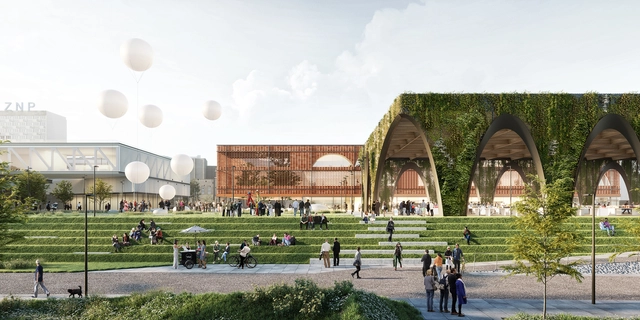
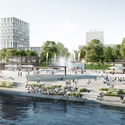
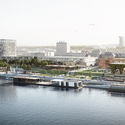
In Warsaw, Poland architecture firm WXCA wins the masterplan proposal for a stretch of riverfront along the Vistula River. The Vistula River Boulevards are among the most frequented public spaces in the city, and gaining popularity as entertainment and cultural offerings become available. WXCA’s winning design for Kahla Square aims to resolve the disconnect between the river banks and to provide amenities to support waterfront activities.
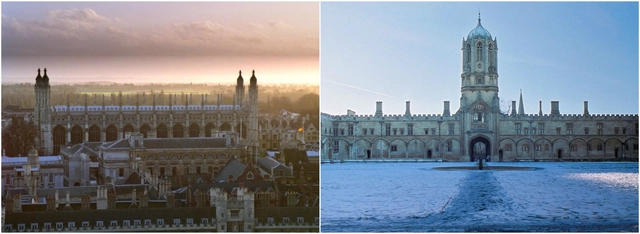
The National Infrastructure Commission and Malcolm Reading Consultants have revealed an online gallery of the four final design concepts for The Cambridge to Oxford Connection: Ideas Competition.
The competition, which launched in June, focuses on the 130-mile corridor connecting Cambridge, Milton Keyes, Northampton, and Oxford. It acknowledges the presence of world-leading universities, highly skilled workers and tech firms, but also the corridor’s failure to function as a connected economic zone.
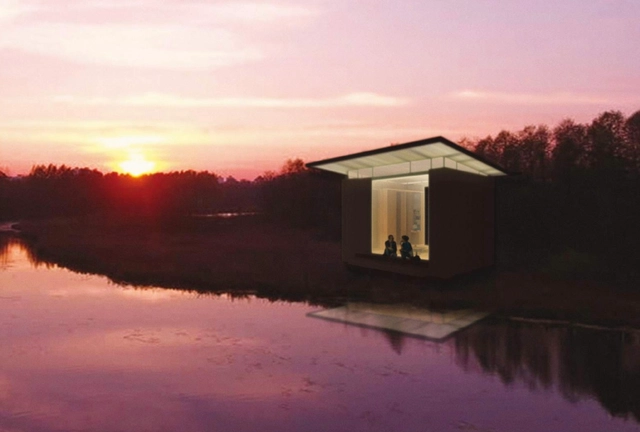
A design for a portable, sustainable 250 square foot house is no tall order. But back in June, online design magazine, Volzero, put $3200 USD on the line for designers to honor this request through their Tiny House Design Competition.
Interior program requirements included: Living Area | Sleeping Area for 2 | Cooking and Dining Area | Toilet | Workspace.
Around the world, creatives worked to conquer the puzzle of maximum usable space with a minimum footprint. Tiny houses were born. The jury consisted of five principals of different design firms: Abraham Cota Parades, Andrew Patterson, Didier Ryan, Md.Rafiq Azam and Sameep Padora. In addition to filling the basic needs of the competition, winning projects display a strong concept, and unique personality.
Dark and forgotten attic spaces, full of useless items, are due to the present fashion in interior design and architecture for living under a roof. The enormous arrangement potential of attic interiors results from their unusual shape, which is dictated by the diversified construction of roof structures. Benefits arising in connection with this fact can be achieved exclusively through an individual approach to each project. However, the most important element of this puzzle is light. Indeed, light is the main interior designer, creating the space and contributing to arranging a cozy room on a small area such as the attic.
Bee Breeders announced the winners of the Adelaide Creative Community Hubcompetition, challenging designers to propose an innovative, vibrant public space for the city of Adelaide, Australia. Participants were required to design either a temporarypavilion or fixed landmark within the frequented public park. Competition submissions seemed to focus on one of three things: a flexible open program, half building/half landscape, or a temporary pavilion. Judges looked for a clear concept. Winning projects have the potential to do more than merely bring people together; they go a step further sparking innovation in creative communities.
C. F. Møller’s design to interconnect and root the campus within the city wins VIA University College in Horsens, Denmark. The proposed 30,000 square meters proposal and 5,000 square meters Innovation House was selected amongst three strong projects, according to the adjudicators’ report in a forward-thinking scheme that develops a strong dialogue between the academic and urban spaces.
Four public space challenges, four ways to win $5,000
The NXT City Prize is a celebration of bold, visionary ideas for public space. This year, we’ve shaken things up with four site-specific public space challenges to make your mark on our city’s public realm.
Submit your idea and show leading civic players what you would do if you were given a blank slate to make Toronto even better – with $20,000 in cash prizes to be won!
No technical drawings, no budgets needed. This is an ideas competition.
Wayne McGregor CBE, Elizabeth Diller, Joshua Bolchover
The Royal Institute of British Architects (RIBA) is delighted to announce the second edition of the RIBA International Prize, the highly prestigious award for the world’s best new building.
If you ask someone to define “fine jewelry” you’ll usually hear something about gold, platinum, diamonds, and other traditionally “precious” materials. But go to any high-end jewelry trade show today, and you’ll find that the term “fine jewelry” rarely matches this limiting definition. Designers no longer hesitate to mix non-traditional materials. The lines between “fine” jewelry and “fashion” jewelry are now blurred. The new generation of buyers doesn’t want to conform to traditional boundaries anymore. For them, “precious” and “non-precious” don’t matter as much as one thing: MAKING A PERSONAL STATEMENT.
The National Infrastructure Commission and Malcolm Reading Consultants have announced the shortlist for The Cambridge to Oxford Connection: Ideas Competition. The free-to-enter competition focuses on integrating placemaking with infrastructure in one of the UK’s leading growth regions: 130-mile Cambridge-Milton Keynes-Oxford corridor. The region is home to 3.3 million people and hosts some of the country’s most successful cities, as well as the world-leading Oxbridge universities. Launched in June 2017, the first stage encouraged entries from teams with a range of backgrounds - made up of urban designers; architects; landscape designers, planners and community specialists (to name a few).





_Yam_Studio_for_KCAP-OSLO-SAS-3B_place.jpg?1510362904)










_Shortlisted_Teams_and_Malcolm_Reading_Consultants.jpg?1507914687&format=webp&width=640&height=580)
_Barton_Willmore_and_Malcolm_Reading_Consultants.jpg?1507914709 "© Barton Willmore and Malcolm Reading Consultants")
_Tibbalds_Planning_and_Urban_Design_and_Malcolm_Reading_Consultants.jpg?1507914645 "© Tibbalds Planning & Urban Design, Mikhail Riches, Featherstone Young, Marko and Placemakers, Expedition Engineering & Khaa and Malcolm Reading Consultants")
_Mae_and_Malcolm_Reading_Consultants.jpg?1507914636 "© Mae and Malcolm Reading Consultants")
_Fletcher_Priest_Architects_and_Malcolm_Reading_Consultants.jpg?1507914594 "© Fletcher Priest Architects and Malcolm Reading Consultants")
_Shortlisted_Teams_and_Malcolm_Reading_Consultants.jpg?1507914687)

.jpg?1507695443&format=webp&width=640&height=580)