Buildner has announced the results of its competition, the Last Nuclear Bomb Memorial No.6. This competition is held each year to support the universal ban on nuclear weapons. In 2017, on the 75th anniversary of the 1945 bombings of Nagasaki and Hiroshima, which claimed the lives of over 100,000 people, the United Nations adopted the Treaty on the Prohibition of Nuclear Weapons.
First Prize Winner: A Thread Through Time. Image Courtesy of Buildner
Buildner has announced the results of the Dubai Urban Elements Challenge, a landmark international design competition organized in strategic collaboration with Dubai's Roads and Transport Authority (RTA). With a total prize fund of 2,000,000 AED (approximately €500,000), the initiative represents one of the most significant publicly funded global design competitions focused on urban transformation.
The competition was conceived as a forward-looking procurement and innovation platform for one of the world's fastest-evolving metropolitan environments. Participants were invited to propose modular, climate-responsive urban elements—seating systems, shading devices, lighting infrastructure, wayfinding components, rest areas, and micro-retail structures—designed to enhance pedestrian life and strengthen Dubai's public realm identity.
Second Prize Winner + Buildner Student Award: Silent Equilibrium
Buildner is pleased to announce the results of its Architect's Chair Competition Edition 4, an annual international competition that invites architects and designers worldwide to submit designs for a signature chair. Following in the footsteps of iconic figures like Charles and Ray Eames, Ludwig Mies van der Rohe, Marcel Breuer, and Arne Jacobsen, participants are tasked with creating custom chairs that reflect their unique design philosophies and visions.
This international competition invited architects to design a boutique wellness retreat along the serene banks of the Vez River in northern Portugal. The project challenged participants to propose a space of tranquility and renewal that would harmonize with its extraordinary natural setting and complement a restored historic watermill already on site. The project partner, the site landowner, plans to construct one of the winning entries.
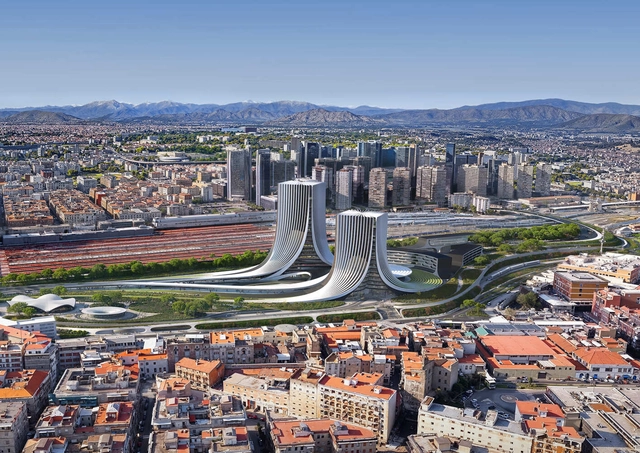
Zaha Hadid Architects (ZHA) has been announced as the winner of the international design competition for the Napoli Porta Est masterplan, a large-scale urban regeneration project in Naples, Italy. The project, which includes the new Campania Region headquarters, aims to reconnect fragmented urban areas and revitalize a district that has long been considered isolated and unsafe due to inadequate public spaces and physical barriers.
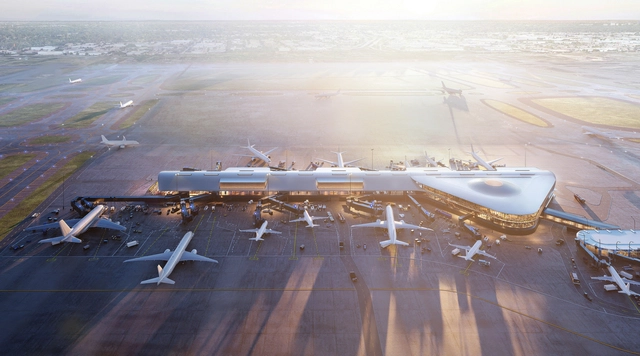
The City of Chicago has just unveiled the design for the first phase of the transformation of O’Hare International Airport. Designed by Skidmore, Ownings & Merrill (SOM), the terminal represents the largest concourse area expansion and revitalization in the airport’s 68-year history. Designed in collaboration with Ross Barney Architects, Juan Gabriel Moreno Architects, and Arup, “Satellite One” seeks to become a landmark in the state.
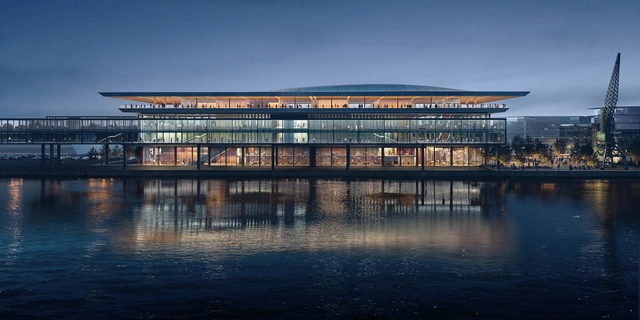
Zaha Hadid Architects (ZHA) has been announced as the winner of the international competition for the design of the Riga Ropax Terminal in Latvia. Collaborating with Latvian practices Sarma Norde Architects and Alps Landscape Architects, as well as Sweco Finland, ZHA’s proposal includes the repurposing of an existing shipping warehouse, to be transformed into a key multi-modal transport hub for the city, located along the Daugava River. The competition was open to anyone who qualified. Out of the ten registered entries, the third prize was awarded to US-based Berenblum Busch Architects, the second prize went to R-Konsult from Estonia.
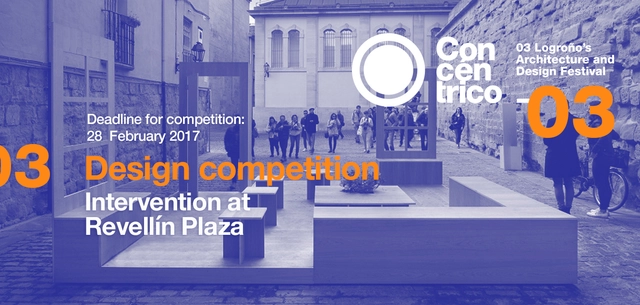
Concéntrico is Logroño’s Architecture and Design Festival. It is open to residents of the city and visitors from elsewhere, and it aims to discover and rediscover spaces of interest in the city’s Historic Center. The Festival invites attendees to tour these spaces through installations that create a connection between inner courtyards, tucked-away spaces and small plazas that, in the day-to-day, tend to go unnoticed.