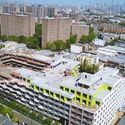
ODA New York’s design for Bushwick II, a high-end residential complex on the former site of Brooklyn’s Rheingold Brewery, is coming to life in the fast-growing neighborhood of Bushwick, New York. Developed by All Year Management, 123 Melrose is already being clad. Meanwhile, Rabksy Group’s development, 10 Montieth, recently topped out.
Together, the projects will cover three full city blocks, totaling 1.35 million gross square feet. Bushwick II will be the largest housing increase this neighborhood of Brooklyn has ever seen.
Architects play a crucial role in addressing both the causes and effects of climate change through the design of the built environment. Innovative design thinking is key to producing architecture that meets human needs for both function and delight, adapts to climate change projections, continues to support the health and well being of inhabitants despite natural and human-caused disasters, and minimizes contributions to further climate change through greenhouse gas emissions. Preparing today’s architecture students to envision and create a climate adaptive, resilient, and carbon-neutral future must be an essential component and driving force for design discourse.
This year’s collaboration with Architecture 2030 – INNOVATION 2030 – is a design-and-ideas competition focused on addressing and designing for the future impacts of climate change.
The Australasian Student Architecture Congress (ASAC)—titled Agency 2017—will be held in Sydney from the 28th of November to the 2nd of December. It will be the first congress held in Sydney since 1999 and student-led by ASAC Inc., a non-profit student body based in NSW, Australia.
Generating new models for participatory development for Ulleung island in South Korea.
The SHINBISUM workshop aims to open an alternative way of thinking about rural development in Ulleung-do and beyond. In a world where participatory practices are becoming the norm, how can the local and international community contribute to shape the future of JangHeung? The residents of Ulleung island, the Korea rural community corporation, Yangji Co., and urbz invite you to imagine with them the future of one of Korea’s most iconic locality. The workshop will produce strategic ideas and design interventions for JangHeung village. If you like to create, ideate, design and build - join us for a 5-day participatory immersion in a place which embodies the struggle of many localities around the world. Like so many other places, Ulleungdo is torn in between urban development and the preservation of their natural environment.
A design by C-re-a.i.d. for a Maasai village in northern Tanzania, is a morphological response to the imposed need to settle, using sustainable, local and accessible materials to redefine its construction culture.
The project is built by a series of earthbags and glass bottles that in addition to generating private and comfortable spaces, allow a quick and easy construction.
The City of Detroit is launching a design competition in the Morningside neighborhood that aims to design and build a new central park for that community, replacing a decommissioned park that will be sold to adjoining residents.
Give a Park, Get a Park will accept qualifications from interested designers between June 19 and July 31. The city is particularly interested in receiving Qualifications from Detroit- and Michigan-based emerging design professionals and design students. Applicants can register and learn more at gapgapdetroit.org.
Imagine that London becomes the world’s first National Park City. This large-scale and long-term vision has the potential to transform how Londoners live and how the city works. But what would London look like?
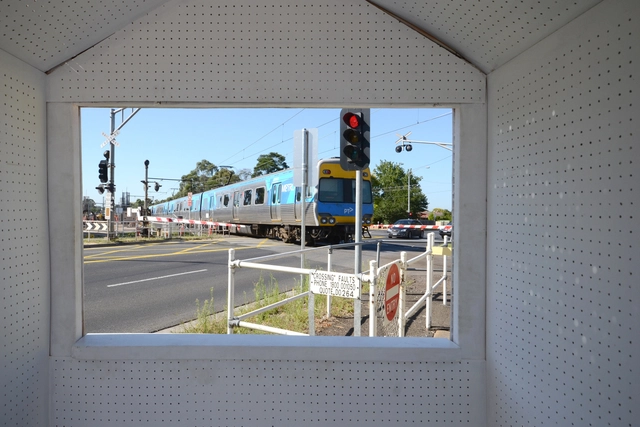
With Melbourne’s contentious elevated rail project starting construction, an independent group has taken the opportunity to critique the way that this key piece of infrastructure is engaging with the public. The project, leftunder, is a platform for alternate, community driven proposals for the public space being made available adjacent to this new infrastructure, that which might normally be overlooked and undermaintained. Run by not-for-profit OFFICE, the project has recently culminated in an exhibition at The National Gallery of Victoria's Design Week.
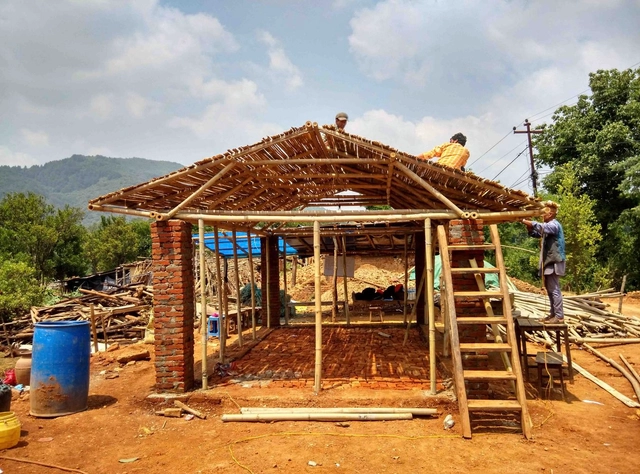
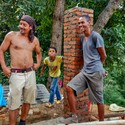
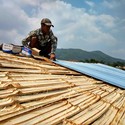
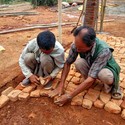
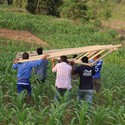
In 2015, after the catastrophic earthquake in Nepal, Maria da Paz invited Joao Boto Caeiro from RootStudio to design and build a model house in Nepal. Using local and accessible materials, they built two prototype houses out of bamboo and partitions, via a collaboration between locals and volunteers that came to the region.
The prototypes respond to the need for housing that is able to be built quickly with the goal of providing independence and immediate shelter, while at the same time introducing basic building techniques using bamboo and bricks. In doing so, they're able to create a set of tools that allow for future construction that the community can make themselves.
After recently organizing an artist residency, Paesaggi Migranti / Migrant Landscapes is hosting an international workshop taking place later in May in Pennabilli, a small town of an Italian dreamscape.
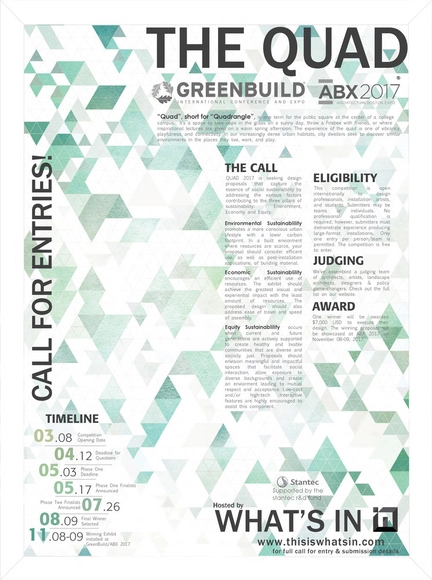
QUAD 2017 is seeking design proposals that capture the essence of social sustainability by addressing the various factors contributing to the three pillars of sustainability: Environment, Economy and Equity.
Videos
The 2nd National Architecture Jamboree (by Archinet)
The University of Santo Tomas’ Architecture Network (ARCHINET), a recognized student organization, is hosting the 2nd National Architecture Jamboree in the Philippines in order to connect students and professionals from around the country to those around the globe. The National Architecture Jamboree is a four-day event, with the Dynamic Solutions: 9th National Architecture Symposium as its main event to be held on April 21, 2017 at the SMX Convention Center, Pasay City, Philippines.
"Within humanitarian responses, programmatically, children often become invisible." (Marc Sommers)
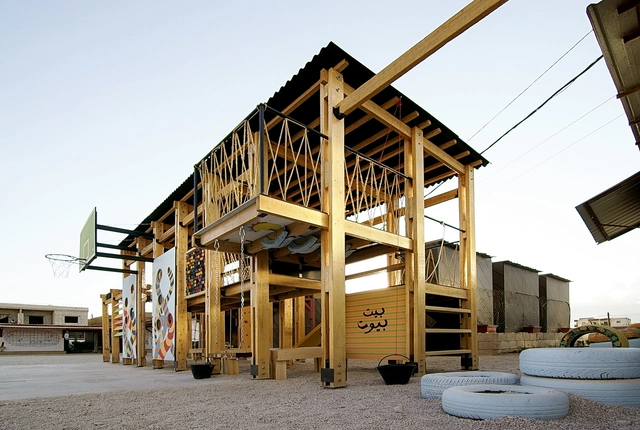
The Syrian crisis has forced thousands of families to leave their homes in search of safe places to continue with their lives. Many families have moved to Lebanon, where the UN has raised a series of informal settlements. While effective in providing shelter, they don't provide specific solutions for children, many of whom have had their studies interrupted and don't have public spaces equipped to play sports and interact with other kids.
In response to this situation, the architects of CatalyticAction have designed and built a playground in one of the schools developed by The Kayany Foundation and American University of Beirut's Center for Civic Engagement and Community Service, involving children throughout the entire process and allowing the structure to be easily disassembled, transported and either reassembled or repurposed.
Held annually, the International Festival of Art and Construction (IFAC) is a 10-day event that brings together 300 students from all over the world, joined by architects, scientists, musicians, artists and craftsmen. Together they carry out 30 workshops across different disciplines that “are bound together by the architecture through which they are expressed,” according to the website. In an article originally written in Spanish for ArchDaily en Español, Ana Asensio Rodríguez shares her experience at the 2015 edition of IFAC, reflecting on the powerful intersection of art and architecture, and the collective nature of the event.
Sometimes you get to meet people who fill you with energy and electricity -- fleeting, intense crossroads full of shared views and beautiful ideas. Spontaneous connections, which however tiny, will remain with you for a very long time.
Sometimes, these crossroads are not between people, but between arts, crafts, talents and experiences. Among these intersections is the inevitable attraction between art and architecture: explosive collages, a romance drunk with imagination. And, on very few occasions these two types of crossroads occur at the same time. And in those moments you can only hope that it will happen again.
It's called IFAC, the International Festival of Art and Construction. It is a 10-day long celebration that brings together more than 300 people from all over the world - creatively restless individuals, who meet somewhere in the European countryside. I felt immeasurably lucky to be one of those 300 people, and so I wanted to share how fascinating IFAC is from the inside.
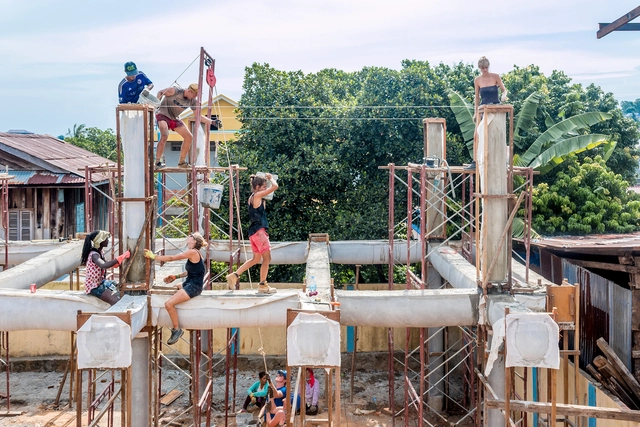
Using an innovative method of casting concrete in lightweight fabric molds, the architects of Orkidstudio -- along with StructureMode -- teamed up with a group of Khmer women in Sihanoukville, Cambodia to rebuild a community centre in the city’s urban heart.
The construction technique was developed and tested by engineers from StructureMode using a combination of physical testing and computer analysis software, Oasys GSA Suite, to predict the stretch of a particular fabric when concrete is poured inside. Through three-dimensional sketches the seamstresses and building teamcould understand the construction sequence of the form, completing the entire project in just eight weeks.
By the year 2025, the urban population in Sub-Saharan Africa is predicated to increase by almost 70% -- a rapid urbanization that will inevitably affect the construction sector.
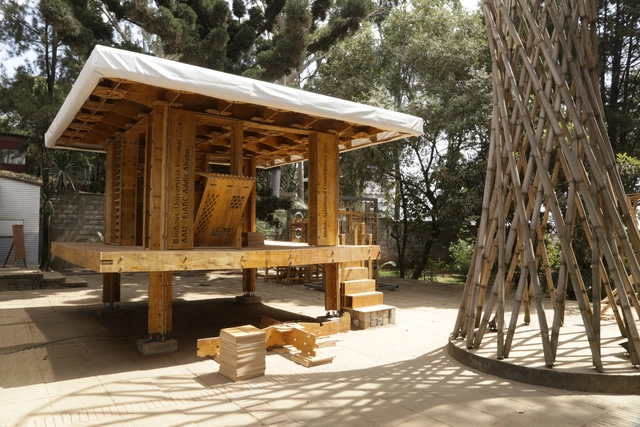
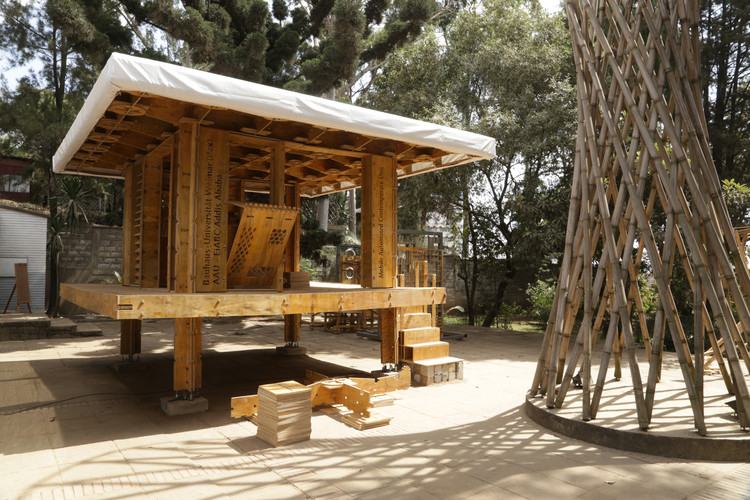
To address this expected growth and to help lay the foundations for a sustainable urban and social development, students from the Institute of Experimental Architecture at Bauhaus-Universität Weimar and EiABC (Ethiopian Institute of Architecture Building Construction and City Development) worked together to build three residential prototypes at a 1:1 scale for Addis Ababa: the capital of Ethiopia and the heart of hyper-urbanization. See all of the project details, below.
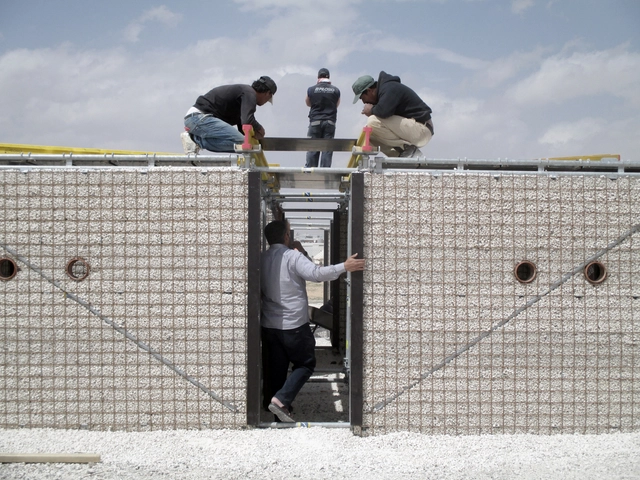
Za'atari Refugee Camp, Jordan. Image Courtesy of Pilosio Building Peace
Using the ground “beneath your feet,” the Pilosio Building Peace organization, along with architects Pouya Khazaeli and Cameron Sinclair, have developed RE:BUILD, an incredible constructive system for building safe and comfortable structures in refugee camps. The system allows for the construction of temporary buildings of high quality through the use of wall panels formed with scaffolding and grids, which are then assembled and filled with gravel, sand or earth, creating well insulated interiors at a low cost.
Although the structures can be used for hospitals, housing, and other functions on this occasion we present two schools constructed using this system in Jordan.
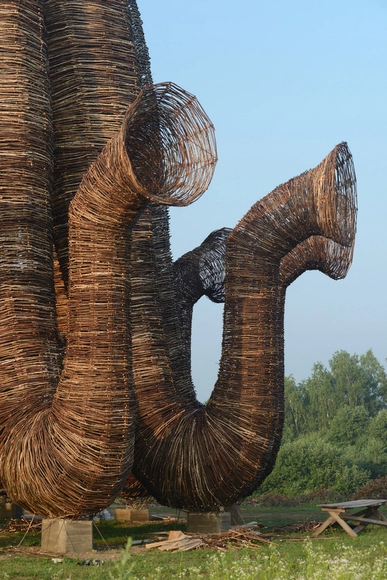
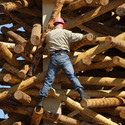
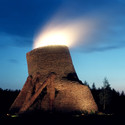
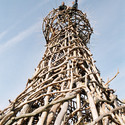
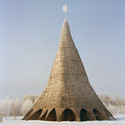
Born in 1957 in Moscow, artist Nikolay Polissky creates impressive, handcrafted structures in the middle of Russia's vast landscapes. Mostly carried out in the town of Nikola Lenivets -- located 200 km from the Russian capital -- his works are built entirely by the area's residents, using local materials, such as branches, trunks and wooden tables. Traditional construction techniques are used as a starting point for the projects.
His work is inspiring not only because of its imposing form, but also because he managed to re-activate a semi-abandoned village through art and architecture, involving residents in the creative process and transforming the region into a sort of open cultural center. Since 2003, his work has been part of Archstoyanie, the largest Land-Art festival in Russia.


_Bloomimages_7.jpg?1505315925 "Courtesy of ODA New York")
_Bloomimages_8.jpg?1505315959 "Courtesy of ODA New York")
_Bloomimages_1.jpg?1505315031 "Courtesy of ODA New York")


.jpg?1503515565&format=webp&width=640&height=580)








cop.jpg?1444858664&format=webp&width=640&height=580)