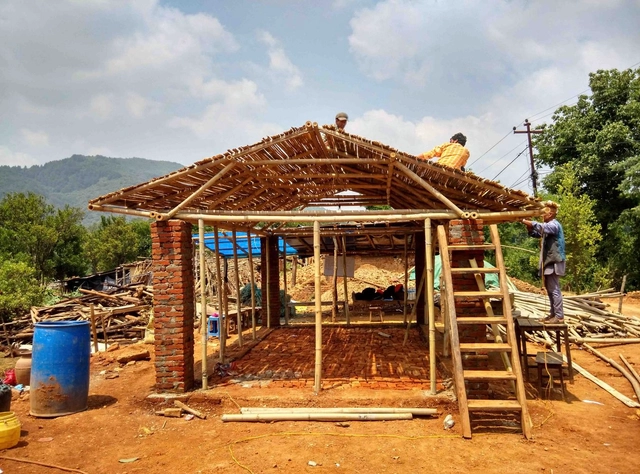
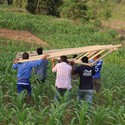
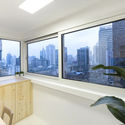
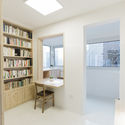
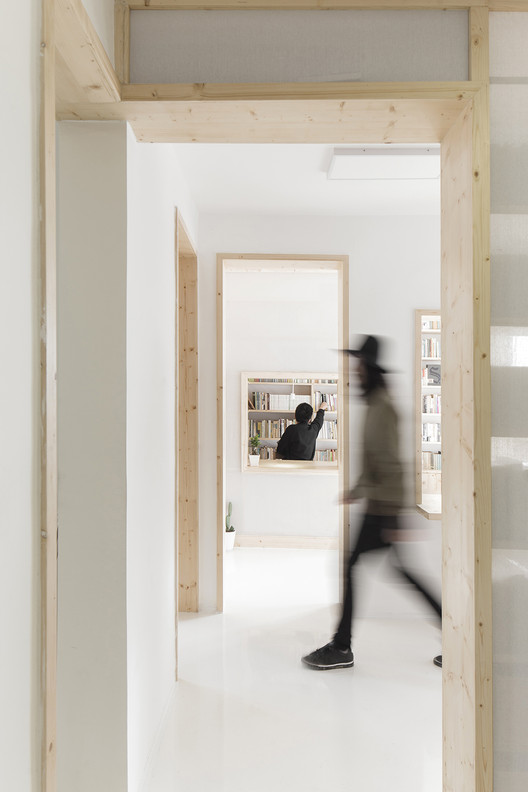
In 2015, after the catastrophic earthquake in Nepal, Maria da Paz invited Joao Boto Caeiro from RootStudio to design and build a model house in Nepal. Using local and accessible materials, they built two prototype houses out of bamboo and partitions, via a collaboration between locals and volunteers that came to the region.
The prototypes respond to the need for housing that is able to be built quickly with the goal of providing independence and immediate shelter, while at the same time introducing basic building techniques using bamboo and bricks. In doing so, they're able to create a set of tools that allow for future construction that the community can make themselves.
After recently organizing an artist residency, Paesaggi Migranti / Migrant Landscapes is hosting an international workshop taking place later in May in Pennabilli, a small town of an Italian dreamscape.
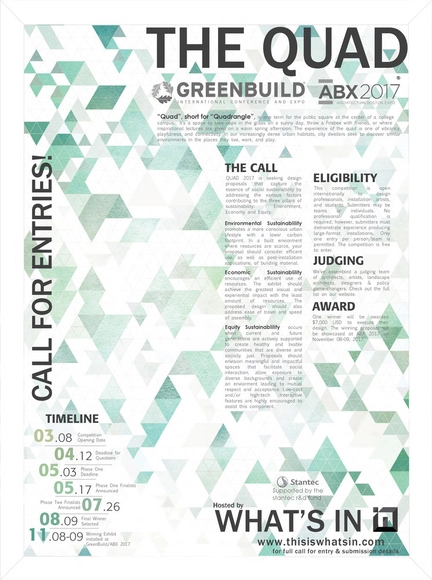
QUAD 2017 is seeking design proposals that capture the essence of social sustainability by addressing the various factors contributing to the three pillars of sustainability: Environment, Economy and Equity.
Videos
The 2nd National Architecture Jamboree (by Archinet)
The University of Santo Tomas’ Architecture Network (ARCHINET), a recognized student organization, is hosting the 2nd National Architecture Jamboree in the Philippines in order to connect students and professionals from around the country to those around the globe. The National Architecture Jamboree is a four-day event, with the Dynamic Solutions: 9th National Architecture Symposium as its main event to be held on April 21, 2017 at the SMX Convention Center, Pasay City, Philippines.
Assemble. Award winning housing artist-architects - Keynote speakers
Keynote Speakers:
Art and Architecture Collective (Turner Prize Winners), Assemble | David Waterhouse, Commission of Architecture and the Built Environment | Andy von Bradsky, Royal Institute of British | Steve Cole, National Housing Federation | Mayor of Liverpool, Liverpool City | Charlotte Harrison, Northern Housing Consortium
The role of government in ensuring social and affordable housing is complex. With budget cuts and shifts in political priorities changing the terrain constantly what the governments of our cities need are new long term ideas
Join the Mattapan Cultural Arts Development (MCAD), Powerful Pathways Consulting, and the BSA Foundation for an interactive community conversation on arts, design, and placemaking. Through presentations, breakout discussions, and a mini-charrette, attendees will explore how design thinking can be applied in making inclusive communities and demonstrate how one of MCAD’s current projects engages the neighborhood in creative civic activity and advocacy.
Common Boston is teaming up with the BSA Foundation to produce a re-imagined and reinvigorated festival. Based in part on “open house” weekends in cities like New York and Chicago, the 2016 Common Boston festival will offer you unique access to dozens of architecturally and culturally significant spaces and places—many not open to the public, and all for free!
In the past eight years the world has seen important changes – stemming from natural catastrophes, global warming, war, diseases, political and economic crisis among other things – all of which have a direct impact on the way we inhabit our planet and therefore how architects and planners are managing context-related designs for community living.
The importance of socially engaged architecture was highlighted by this year's Pritzker Prize winner Alejandro Aravena, whose work appeals to the idea of an active, committed architect who seeks for a democratic urban environment. This development also resonates strongly with ArchDaily's mission statement "to improve the quality of life of the next 3 billion people that will move into cities in the next 40 years, by providing inspiration, knowledge and tools to the architects who will have the challenge to design for them."
Therefore, in celebration of ArchDaily's 8th birthday, our Projects Team curated a selection of 24 exemplary projects divided into 3 categories. Each of these projects published over the past 8 years dedicate their design to find greater social, community, civil and humanitarian needs.
https://www.archdaily.com/783459/a-look-back-8-years-of-social-and-urban-projectsAD Editorial Team
Inspired by the idea of creating something from ‘nothing’ and starting from scratch, RIBA presents a special evening exploring big urban thinking on a blank canvas. Selected from an open call, the Make No Small Plans program features fast-paced and dynamic selection of screenings (including a ‘Bring Your Own Beamer’ event), talks, active installations, readings and workshops, all from a wide range of professional and student architects, artists and curators. With special guest Alexander Eisenschmidt via Periscope video feed delivering a unique talk LIVE from Chicago, USA.
As a profession with the power to alter people's cities and neighborhoods - and indeed therefore their lives - architecture is often a controversial business to be involved in; many members of the public have learned to be suspicious of any plans for development in places they care about, often turning architecture into a villain to be fought. One proposed solution to this conundrum is to include public participation as much as possible, but many architects are skeptical of such an approach. At a time when the responsibilities of architects are being eroded by engineers and project managers, what would be left to architects if the public is allowed control over the design? Seeking to understand this challenge, in this interview from MONU Magazine's latest issue on "Participatory Urbanism," Bernd Upmeyer speaks to Jeremy Till, a British Architect, writer and educator who has written extensively about the need to for architects to relinquish control and involve local communities in their design process.
Bernd Upmeyer, on behalf of MONU, spoke with the British architect, writer, and educator Jeremy Till. He is the head of Central Saint Martins and Pro Vice-Chancellor of the University of the Arts, London. Previously he was Dean of Architecture and the Built Environment at the University of Westminster, and Professor of Architecture and Head of School of Architecture at the University of Sheffield. Till’s research and writing concentrate on the social and political aspects of architecture and the built environment. His written work includes "Flexible Housing," "Architecture Depends" and "Spatial Agency." In 2005 he was one of the editors of the publication “Architecture and Participation” to which he contributed a piece entitled "The Negotiation of Hope." The interview took place on September 3, 2015.
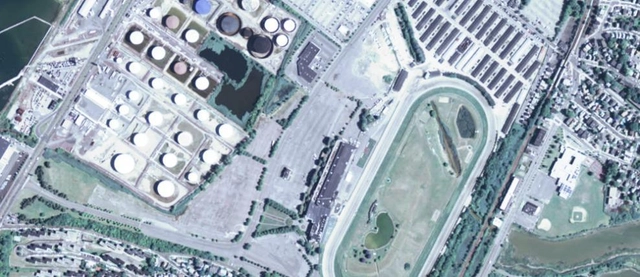
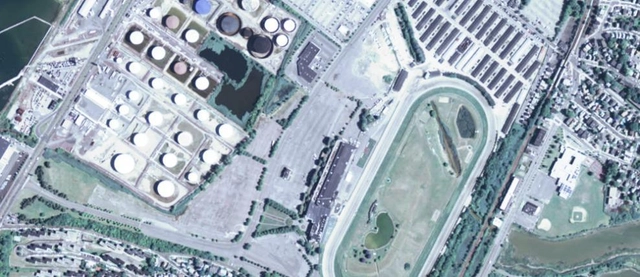
The Suffolk Downs Urban Design Workshop is the third in an ongoing series of Urban Design Workshops organized by the BSA Foundation. The workshops’ overall goal is to open up dialogue and stimulate thinking about the design potential of places with particularly significant and compelling opportunities.
The Suffolk Downs Urban Design Workshop is the third in an ongoing series of Urban Design Workshops organized by the BSA Foundation. The workshops’ overall goal is to open up dialogue and stimulate thinking about the design potential of places with particularly significant and compelling opportunities.
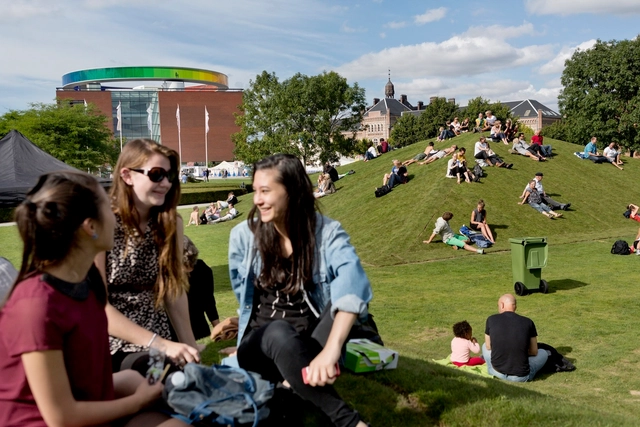
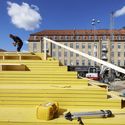
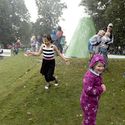
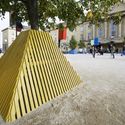
Since 2010, the Danish architects from Schønherrhave been developing a series of large-scale urban interventions for the Aarhus Festival, the largest cultural festival in Denmark. These temporary projects have transformed the streets and parks into extraordinary public spaces, changing the natural topography of the city to attract citizens and bring them together.
We present their last four projects: "The Forest" (2010), "The City Park" (2012), "The Plaza" (2014) and "Bishops Square" (to be completed this 2016).
The University of Oregon John Yeon Center for Architecture and the Landscape and Design Week Portland invite proposals to define, design, and bring to life Portland’s proposed “green loop”—a six-mile pedestrian/bike urban promenade linking the city’s east and west sides.
"Within humanitarian responses, programmatically, children often become invisible." (Marc Sommers)
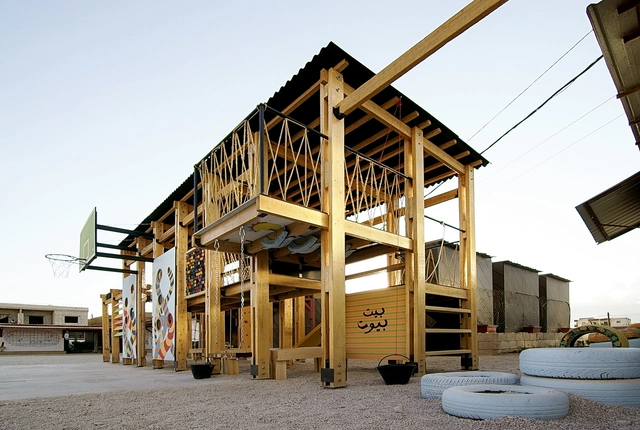
The Syrian crisis has forced thousands of families to leave their homes in search of safe places to continue with their lives. Many families have moved to Lebanon, where the UN has raised a series of informal settlements. While effective in providing shelter, they don't provide specific solutions for children, many of whom have had their studies interrupted and don't have public spaces equipped to play sports and interact with other kids.
In response to this situation, the architects of CatalyticAction have designed and built a playground in one of the schools developed by The Kayany Foundation and American University of Beirut's Center for Civic Engagement and Community Service, involving children throughout the entire process and allowing the structure to be easily disassembled, transported and either reassembled or repurposed.
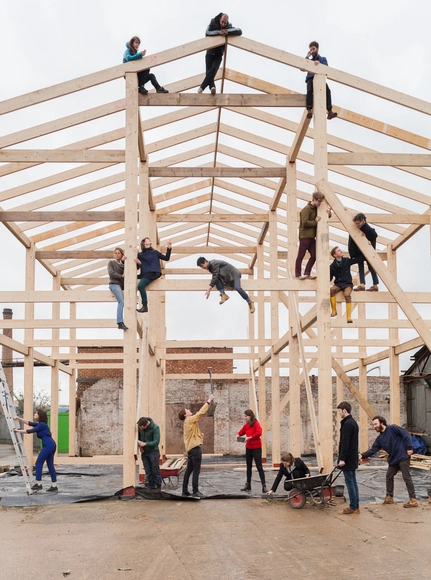
Held annually, the International Festival of Art and Construction (IFAC) is a 10-day event that brings together 300 students from all over the world, joined by architects, scientists, musicians, artists and craftsmen. Together they carry out 30 workshops across different disciplines that “are bound together by the architecture through which they are expressed,” according to the website. In an article originally written in Spanish for ArchDaily en Español, Ana Asensio Rodríguez shares her experience at the 2015 edition of IFAC, reflecting on the powerful intersection of art and architecture, and the collective nature of the event.
Sometimes you get to meet people who fill you with energy and electricity -- fleeting, intense crossroads full of shared views and beautiful ideas. Spontaneous connections, which however tiny, will remain with you for a very long time.
Sometimes, these crossroads are not between people, but between arts, crafts, talents and experiences. Among these intersections is the inevitable attraction between art and architecture: explosive collages, a romance drunk with imagination. And, on very few occasions these two types of crossroads occur at the same time. And in those moments you can only hope that it will happen again.
It's called IFAC, the International Festival of Art and Construction. It is a 10-day long celebration that brings together more than 300 people from all over the world - creatively restless individuals, who meet somewhere in the European countryside. I felt immeasurably lucky to be one of those 300 people, and so I wanted to share how fascinating IFAC is from the inside.













cop.jpg?1444858664&format=webp&width=640&height=580)