1. ArchDaily
  2. Collaboration

Collaboration: The Latest Architecture and News

Women in Architecture: Progress, Gaps, and the Work Still Ahead

Each year, International Women's Day brings renewed attention to questions of gender within many professional fields, architecture among them. Public conversations often center on celebrating prominent figures or highlighting notable projects, moments that briefly illuminate the contributions of women within the discipline. Yet the visibility produced by these occasions sits within a longer and more complex trajectory. Over the past several decades, the architectural profession has undergone gradual shifts that have expanded opportunities and broadened participation, even as longstanding structures continue to shape how careers develop and how architectural work becomes visible.

Women in Architecture: Progress, Gaps, and the Work Still Ahead - Image 1 of 4Women in Architecture: Progress, Gaps, and the Work Still Ahead - Image 2 of 4Women in Architecture: Progress, Gaps, and the Work Still Ahead - Image 3 of 4Women in Architecture: Progress, Gaps, and the Work Still Ahead - Image 4 of 4Women in Architecture: Progress, Gaps, and the Work Still Ahead - More Images+ 13

Who Owns Public Space? Three Active Models of Shared Management Shaping Urban Commons in Europe and New York

Public space is often understood as belonging to no one in particular, collectively accessible yet institutionally maintained, yet a growing number of initiatives are challenging this assumption by testing shared management and distributed ownership models. In Paris, Adoptez un banc introduces a sponsorship-based approach, allowing individuals and groups to support temporarily and symbolically claim responsibility for historic public furniture without compromising its collective use. Elsewhere in the city, community gardens operating under the Main Verte framework demonstrate a self-managed model, in which public and private landowners retain ownership while delegating day-to-day control to citizen associations for food production and shared use. In New York, Common Corner represents a third pathway, based on institutional collaboration and participatory design, where public agencies, nonprofits, designers, and residents co-produce public space within a public housing context. Taken together, these three cases suggest that care, authorship, and responsibility can be distributed across citizens and institutions, producing more resilient, locally grounded urban environments.

How Top Firms See AI Shaping Architecture’s Workflows

 | Sponsored Content

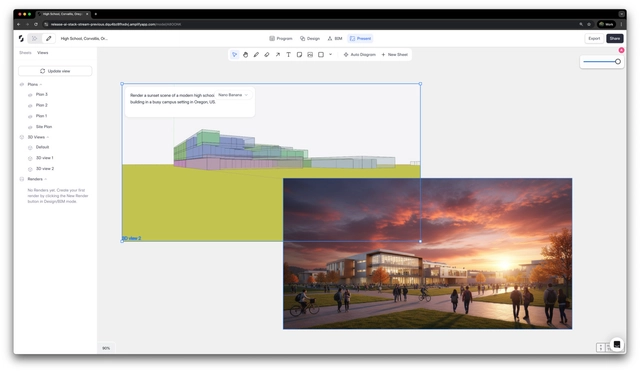
As artificial intelligence tools sweep through creative industries, architecture stands at a pivotal moment: how to adopt systems that amplify design thinking without eroding authorship or craft. To understand how the profession is responding, AIRI Lab surveyed designers and leaders from practices including LWK+P, MVRDV, Gensler, Büro Ole Scheeren, CUBE, HUAYI, and others. Their responses reveal a nuanced, pragmatic view: AI is a collaborator rather than a substitute.

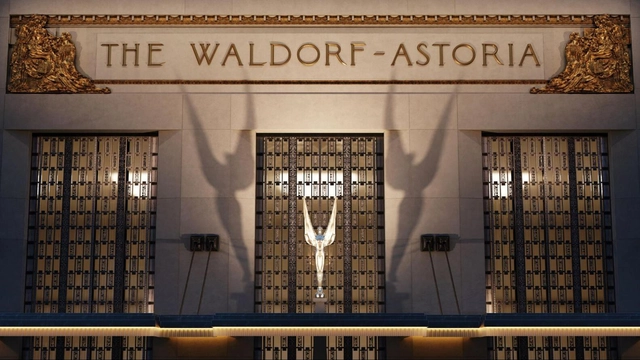
Visualizing an Art Deco Icon: The Reimagined Waldorf Astoria

 | Sponsored Content

The quintessential symbol of Manhattan, Waldorf Astoria New York officially reopened for the public this year after an extensive renovation. Over its long history, the property has undergone numerous transformations, from its 19th-century beginnings to the modern landmark that stands between Park Avenue and Lexington Avenue.

Reimagining a building that pioneered modern hospitality—a jewel in New York's skyline—posed a challenge that required close collaboration between preservationists, 3D visualizers, architects, and designers. Together, they worked to preserve its protected architectural heritage while meeting contemporary expectations for craftsmanship and comfort.

Snaptrude Launches Free Student Plan to Equip the Next Generation of Architects

 | Sponsored Content

Snaptrude announced the launch of the Snaptrude Student Plan, a free offering that gives architecture students worldwide full access to Snaptrude's professional platform and intelligent AI workflows. The initiative reflects Snaptrude's commitment to strengthening architectural education and ensuring that emerging designers can build real-world skills while still in school. Full access to the professional platform and AI tools empowers students to design faster and build portfolio-ready work.

How Will BIM 2.0, AI Assistance, and Integrated Workflows Shape the Architect’s Design Experience?

 | Sponsored Content

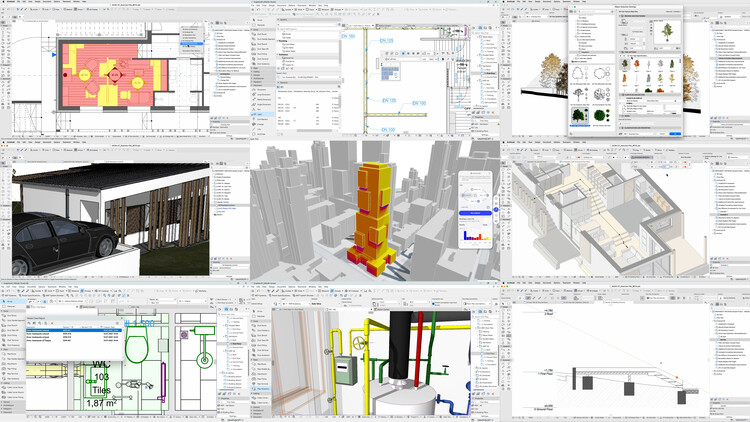
When architects are still students, a moment often marks a turning point: their first encounter with software. It's not just about learning a tool but discovering a space where ideas transcend physical models, taking shape in a digital environment and beginning a relationship many will carry throughout their careers. What happens next? Software keeps evolving, and with it, the design experience. In recent years, this evolution has accelerated—machine learning, AI, prompts, and integrated workflows have moved from the periphery to the core of design practice, becoming part of the shared language between software and users. As these tools take hold, a key question emerges: How will this reshape our experience of designing architecture in the future?

How Will BIM 2.0, AI Assistance, and Integrated Workflows Shape the Architect’s Design Experience? - Image 1 of 4How Will BIM 2.0, AI Assistance, and Integrated Workflows Shape the Architect’s Design Experience? - Image 2 of 4How Will BIM 2.0, AI Assistance, and Integrated Workflows Shape the Architect’s Design Experience? - Image 3 of 4How Will BIM 2.0, AI Assistance, and Integrated Workflows Shape the Architect’s Design Experience? - Image 4 of 4How Will BIM 2.0, AI Assistance, and Integrated Workflows Shape the Architect’s Design Experience? - More Images+ 13

Beyond Manufactured Landscapes: Quarries as Sites for Interdisciplinary Collaboration

Quarries can be seen as indelible abandoned scars of human resource extraction. Man-made spaces, perceived as voids, and material gain, have fundamentally shaped our accelerating built environment. All the while, the earth stands still as a silent witness. For decades, these open-pit mines have been viewed as a necessary consequence of consumerism and urban growth, their raw, imposing forms a testament to the large-scale extraction of materials essential for building our cities. However, a global architectural movement is now emerging to engage with these existing forms, transforming these subtractive spaces into sites of innovation, collaboration, and renewed purpose.

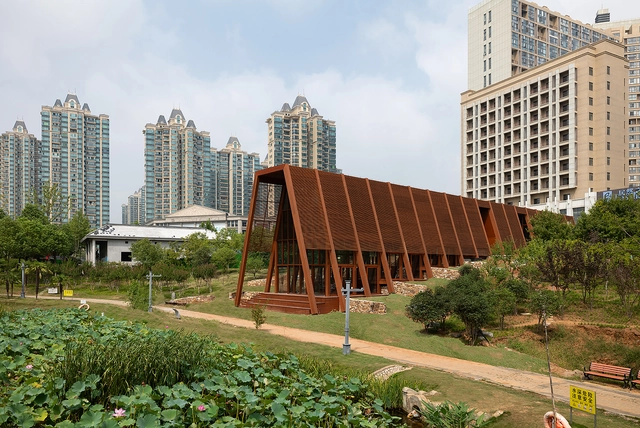
Beyond Manufactured Landscapes: Quarries as Sites for Interdisciplinary Collaboration - Image 1 of 4Beyond Manufactured Landscapes: Quarries as Sites for Interdisciplinary Collaboration - Image 2 of 4Beyond Manufactured Landscapes: Quarries as Sites for Interdisciplinary Collaboration - Image 3 of 4Beyond Manufactured Landscapes: Quarries as Sites for Interdisciplinary Collaboration - Image 4 of 4Beyond Manufactured Landscapes: Quarries as Sites for Interdisciplinary Collaboration - More Images+ 25

"Architecture Is Cooperation": Collective Projects that Build with Communities and Professionals

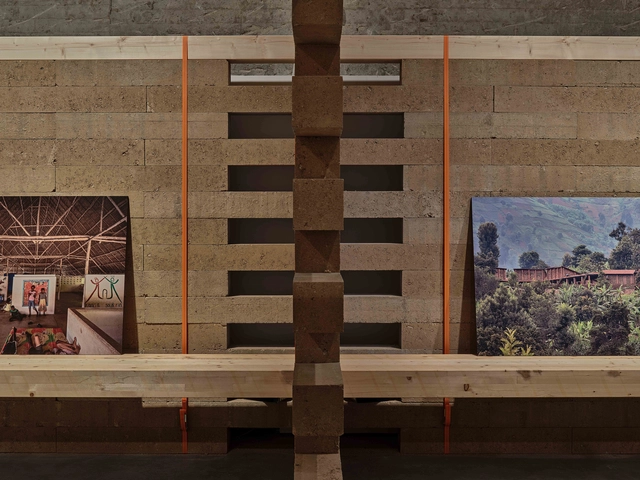
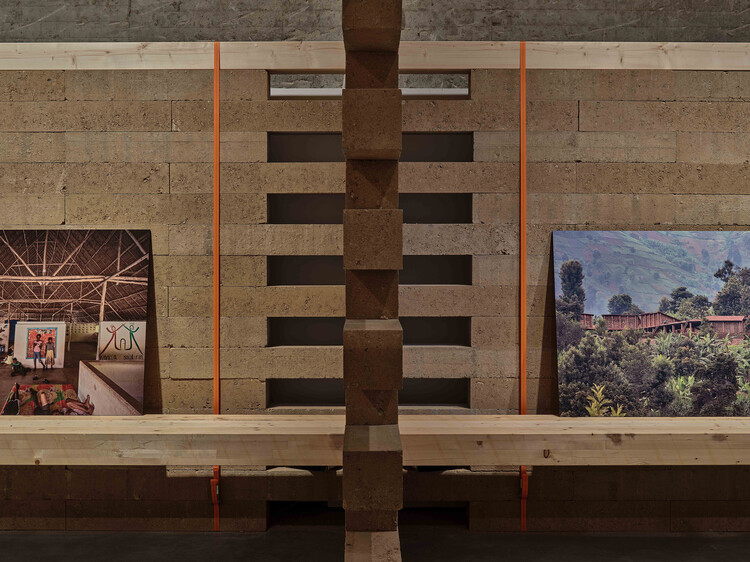
Working with the site instead of against it, the exhibition "Architecture is Cooperation," curated by Josep Ferrando, emphasizes the value of cooperation at the essence of architecture. Showcasing the work of professionals, organizations, and communities in cooperation projects driven from Spain, the installation takes shape through an exhibition design in earth and wood. The choice of these materials is understood not only from their aesthetic or symbolic qualities but also from their functionality and commitment to the principles of the circular economy. Until September 30, 2025, the exhibition will be on view at the Casa de la Arquitectura in Madrid, highlighting the necessary attention of architecture to the demands of the most vulnerable societies and communities by aligning the constructive language with the content of the exhibition.

"Architecture Is Cooperation": Collective Projects that Build with Communities and Professionals - Image 1 of 4"Architecture Is Cooperation": Collective Projects that Build with Communities and Professionals - Image 2 of 4"Architecture Is Cooperation": Collective Projects that Build with Communities and Professionals - Image 3 of 4"Architecture Is Cooperation": Collective Projects that Build with Communities and Professionals - Image 4 of 4Architecture Is Cooperation: Collective Projects that Build with Communities and Professionals - More Images+ 27

Architectural Vision, Upgraded: 2025’s Tools Just Got Smarter

 | Sponsored Content

SketchUp 2025 introduces new tools and enhancements aimed at improving how architects and designers visualize, collaborate, and communicate their work.

This release brings more realistic materials and immersive environments, making it easier to create compelling visual representations of architectural models. These visualization updates are available across SketchUp for Desktop, Web, and iPad, as well as in LayOut and 3D Warehouse, allowing for a consistent experience across platforms.

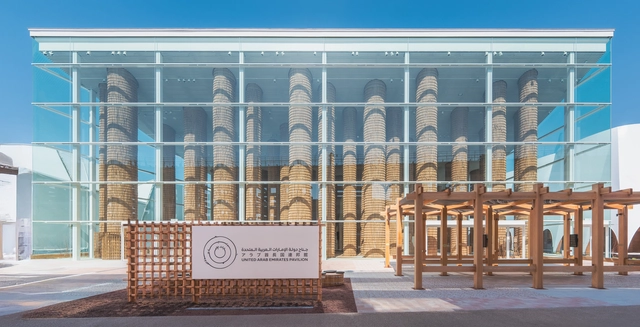
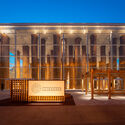
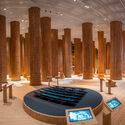
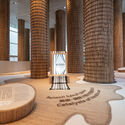
UAE Pavilion Explores Conservation and Heritage for Future Applications in Expo 2025 Osaka

The UAE Pavilion at Expo 2025 Osaka, titled "Earth to Ether," presents an immersive, multisensory experience that narrates the story of the United Arab Emirates, from its cultural heritage and core values to its forward-looking innovations. Inspired by the symbolic date palm, the pavilion reimagines areesh, a traditional form of Emirati vernacular architecture, by combining agricultural byproducts from date palms with refined Japanese woodworking techniques. Opened in April 2025, under the theme "Designing Future Society for Our Lives," the pavilion is located in the "Empowering Lives" zone. Designed to work under the broader theme, the UAE Pavilion offers diverse programming and interactive exhibits and serves as a collaborative platform for co-creating solutions that "drive collective progress."

UAE Pavilion Explores Conservation and Heritage for Future Applications in Expo 2025 Osaka - Image 1 of 4UAE Pavilion Explores Conservation and Heritage for Future Applications in Expo 2025 Osaka - Image 2 of 4UAE Pavilion Explores Conservation and Heritage for Future Applications in Expo 2025 Osaka - Image 3 of 4UAE Pavilion Explores Conservation and Heritage for Future Applications in Expo 2025 Osaka - Image 4 of 4UAE Pavilion Explores Conservation and Heritage for Future Applications in Expo 2025 Osaka - More Images+ 6

Designing Office Spaces for Focus in the Hybrid Work Era

 | Sponsored Content

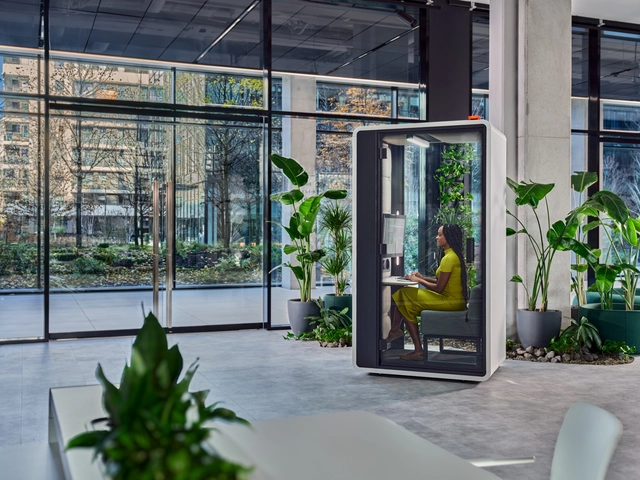
Without dedicated spaces for private focus — a crucial element of effective collaboration — even the brightest idea dims. The office must indeed balance connectivity with personal space most brilliantly, letting employees move between tasks without friction. Booths like hushFree.XS, hushFree.S.Hybrid, and hushFree.S are part of this, together forming a trio of single-person booths that meet the majority of the office's need for individual workspaces.

HushFree.XS, hushFree.S.Hybrid, and hushFree.S work as a complete system, ensuring employees have the right conditions for productive solo work throughout the day, proving to be invaluable tools for architects in designing spaces that completely address varied employees needs. Booths like these make premium refuges for focused calls, impressively immersive video conference spaces, and deep-focus bubbles.

Rural Rebellion : Exploring the Works of Christoph Hesse Architects Through the Lens of Time

Subscriber Access | 

The Aedes Architectural Forum in Berlin presents over the next two months the trajectory and works of Christoph Hesse Architects. The exhibition, titled "Rural Rebellion," focuses on the studio's architectural projects that address the challenges of working in rural areas, particularly in Korbach—Hesse's hometown—and other villages across Germany. It highlights how the practice reimagines and reinterprets traditional building methods, translating them into contemporary contexts while emphasizing a collective and collaborative approach to architecture.

Rural Rebellion : Exploring the Works of Christoph Hesse Architects Through the Lens of Time - Image 1 of 4Rural Rebellion : Exploring the Works of Christoph Hesse Architects Through the Lens of Time - Image 2 of 4Rural Rebellion : Exploring the Works of Christoph Hesse Architects Through the Lens of Time - Image 3 of 4Rural Rebellion : Exploring the Works of Christoph Hesse Architects Through the Lens of Time - Image 4 of 4Rural Rebellion : Exploring the Works of Christoph Hesse Architects Through the Lens of Time - More Images+ 26

BIG and Kansas School of Architecture & Design Reveal Mass Timber "Makers' KUbe" University Campus

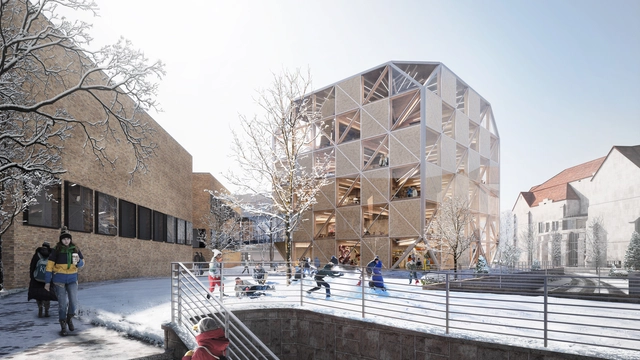
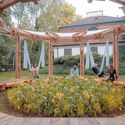
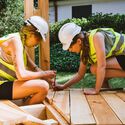
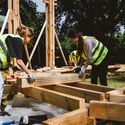
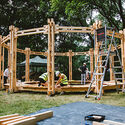
BIG, in collaboration with BNIM and the University of Kansas School of Architecture & Design, has revealed a mass timber structure named the “Makers’ KUbe.” Designed for collaborative learning, the structure features a timber diagrid frame. The scheme was developed with students, faculty, and the university's board of directors to serve as a studio space and an educational showcase for sustainable practices.

BIG and Kansas School of Architecture & Design Reveal Mass Timber "Makers' KUbe" University Campus - Image 1 of 4BIG and Kansas School of Architecture & Design Reveal Mass Timber "Makers' KUbe" University Campus - Image 2 of 4BIG and Kansas School of Architecture & Design Reveal Mass Timber "Makers' KUbe" University Campus - Image 3 of 4BIG and Kansas School of Architecture & Design Reveal Mass Timber "Makers' KUbe" University Campus - Image 4 of 4BIG and Kansas School of Architecture & Design Reveal Mass Timber Makers' KUbe University Campus - More Images+ 1

16 Multi-Colored Office Spaces That Use Chromaticism to Organize and Inspire Their Workforce

Subscriber Access | 

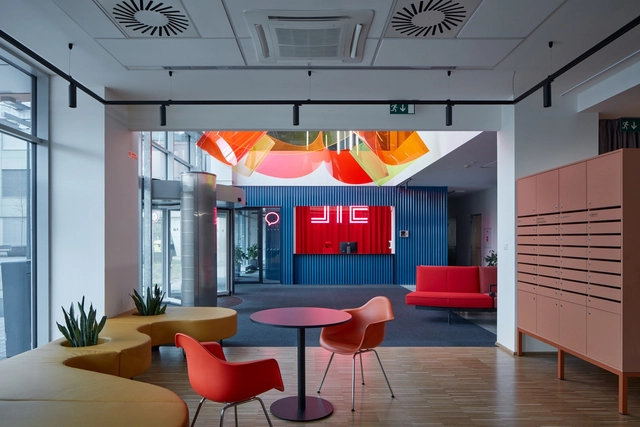
When a brief to design a new office space asks for something fresh, energetic, and modern – a space where employees enjoy being and, crucially, enjoy working in, which helps them to focus on individual tasks but also to relax, collaborate, and create – there are few better places to begin than a color wheel. As the world of work and the varied environments it takes place in become less formal and restricted in their design, architects, designers, and, more importantly, their clients are handing the boring, monotone office its redundancy papers and looking outside the establishment at more expressive colorful options.

While blue’s ability to improve concentration, stimulate thinking, and provide mental clarity helps to increase productivity, the human body needs regular periods of rest and relaxation, too. For this, warm colors like yellows provide relaxation through warmth and comfort – perfect for break-out areas. Meanwhile, reds and oranges promote creativity and expression, meaning they can be useful for areas designated for social collaboration, whilst green encourages a calmer, more balanced approach, for a different kind of meeting.

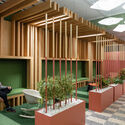
16 Multi-Colored Office Spaces That Use Chromaticism to Organize and Inspire Their Workforce - Image 1 of 416 Multi-Colored Office Spaces That Use Chromaticism to Organize and Inspire Their Workforce - Image 2 of 416 Multi-Colored Office Spaces That Use Chromaticism to Organize and Inspire Their Workforce - Image 3 of 416 Multi-Colored Office Spaces That Use Chromaticism to Organize and Inspire Their Workforce - Image 4 of 416 Multi-Colored Office Spaces That Use Chromaticism to Organize and Inspire Their Workforce - More Images+ 12

Reviving Collaboration: Seeking a Place for Artistry in Mass-Produced Building Elements

Subscriber Access | 

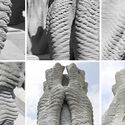
Historically, architecture has served as a canvas for artistic expression. Building elements have been adorned with relief-carved garlands, inscriptions, fresco murals, portrait busts, and classicizing figurative sculptures, all of which emphasize the unique and intentional nature of each component. However, the industrialization of the 19th century brought about a shift in ideals, that stripped architectural components of their decorative elements. Instead, it preferenced the search for beauty in standardization and the economic accessibility provided by mass-produced building elements.
But is there room for artistry within mass production? Can artists be involved in the industrial-making processes of building elements? And how can new technology facilitate artistic mass customization of building components? These questions prompt us to consider the potential for expression, communication, and reflection in the craft of building elements in both interior and exterior spaces.

Reviving Collaboration: Seeking a Place for Artistry in Mass-Produced Building Elements - Image 5 of 4Reviving Collaboration: Seeking a Place for Artistry in Mass-Produced Building Elements - Image 1 of 4Reviving Collaboration: Seeking a Place for Artistry in Mass-Produced Building Elements - Image 2 of 4Reviving Collaboration: Seeking a Place for Artistry in Mass-Produced Building Elements - Image 3 of 4Reviving Collaboration: Seeking a Place for Artistry in Mass-Produced Building Elements - More Images+ 8

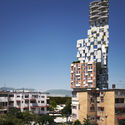
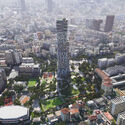
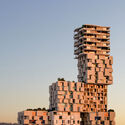
OODA Reveals Design for Mixed-Use Vertical Village in Tirana, Albania

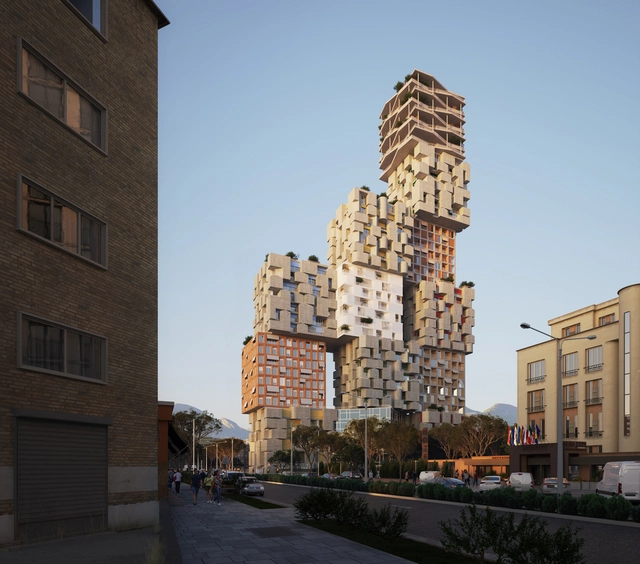
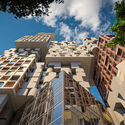
OODA has released images of Hora Vertikale, a new project planned for the Albanian capital city incorporating residential units arranged vertically surrounded by a new park and featuring a diverse range of amenities. The design stacks seven types of cubes, each measuring seven stories in height and defined by a distinct visual identity inspired by both urban and rural elements. The project, developed in collaboration with local architects Artech, has received planning permission, and construction is expected to begin in early spring.
OODA Reveals Design for Mixed-Use Vertical Village in Tirana, Albania - Image 1 of 4OODA Reveals Design for Mixed-Use Vertical Village in Tirana, Albania - Image 2 of 4OODA Reveals Design for Mixed-Use Vertical Village in Tirana, Albania - Image 3 of 4OODA Reveals Design for Mixed-Use Vertical Village in Tirana, Albania - Image 4 of 4OODA Reveals Design for Mixed-Use Vertical Village in Tirana, Albania - More Images+ 8

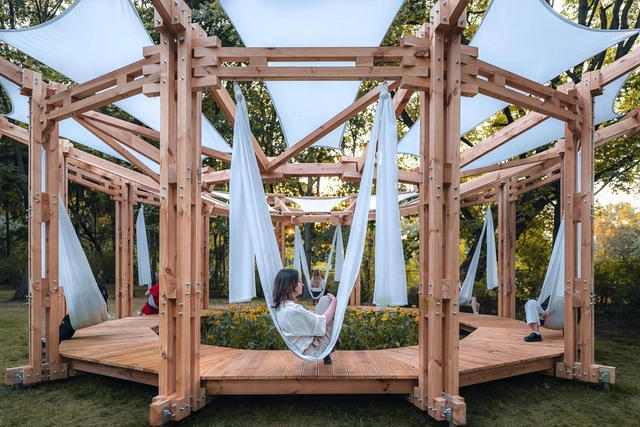
In Warsaw, a Student-Designed Architectural Response to Dark Times

This article was originally published on Common Edge.

As this bloody year draws to a close, at a moment when the message “Peace on Earth” seems altogether mute, one might well ask: What power does architecture have? How can it address violence against innocent people, whose lives have been turned upside down? How does architecture respond to staggering cruelty? What can it say? Can it raise consciousness?

In Warsaw, a Student-Designed Architectural Response to Dark Times - Image 1 of 4In Warsaw, a Student-Designed Architectural Response to Dark Times - Image 2 of 4In Warsaw, a Student-Designed Architectural Response to Dark Times - Image 3 of 4In Warsaw, a Student-Designed Architectural Response to Dark Times - Image 4 of 4In Warsaw, a Student-Designed Architectural Response to Dark Times - More Images

Top Stories of the Year Exploring the Architectural Identity of Local Communities

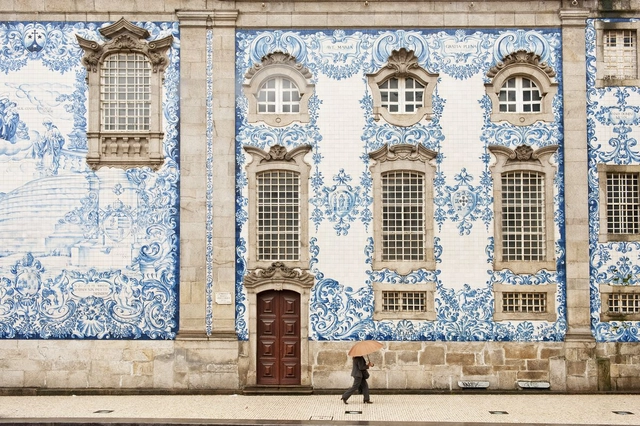
Local communities are more than just a collection of buildings and infrastructure. They possess a distinctive architectural character that mirrors their history, culture, and values. As part of our year in review, we take a deep dive into the top narratives that examine the architectural identity of different local communities.
These stories explore a wide range of topics, including unique geographic territories, cultural tribes, iconic landmarks, communal collaboration, and socio-ecological urban planning. Through these narratives, we uncover the captivating tales behind the buildings and public spaces that shape certain cities and towns.

Top Stories of the Year Exploring the Architectural Identity of Local Communities - Image 1 of 4Top Stories of the Year Exploring the Architectural Identity of Local Communities - Featured ImageTop Stories of the Year Exploring the Architectural Identity of Local Communities - Image 2 of 4Top Stories of the Year Exploring the Architectural Identity of Local Communities - Image 3 of 4Top Stories of the Year Exploring the Architectural Identity of Local Communities - More Images+ 5