1. ArchDaily
  2. Cloud

Cloud: The Latest Architecture and News

Error 404: Architectural Memory in the Age of Algorithms

Before the digital turn, architecture's memory was largely tangible. It lived in the weight of drawings, the patina of models, and the thickness of books. To preserve architecture meant to preserve its traces, the documents, sketches, and photographs through which buildings could be remembered long after their material form had changed or disappeared. The modern architectural archive, as it developed in the 20th century, was both a refuge and a device of legitimacy. Institutions such as the Canadian Centre for Architecture, Casa da Arquitectura, or the Deutsches Architekturmuseum were built upon the conviction that to preserve architecture was to preserve its documents.

However, these archives didn't merely store knowledge. They determined what counted as architecture, who belonged to its canon, and how history would be told. To archive is to edit the past — to decide what enters, what is omitted, and how it will be interpreted. The archive, as theorised by Michel Foucault and later by Jacques Derrida, is never neutral; it is an instrument of power, a space that selects and excludes. In architecture, these dynamics are especially evident as they record the visible while silencing what falls outside their categories. The act of collecting has always been, implicitly, an act of judgment.

Error 404: Architectural Memory in the Age of Algorithms - Image 1 of 4Error 404: Architectural Memory in the Age of Algorithms - Image 2 of 4Error 404: Architectural Memory in the Age of Algorithms - Image 3 of 4Error 404: Architectural Memory in the Age of Algorithms - Image 4 of 4Error 404: Architectural Memory in the Age of Algorithms - More Images+ 15

The Technosphere: ArchDaily’s March Editorial Focus

How heavy is a house? In his 1965 essay A Home Is Not a House, Reyner Banham observed that modern American dwellings were becoming structurally lighter while growing heavier in mechanical services, such as plumbing, wiring, heating, and cooling. The true weight of architecture, he argued, was no longer in walls and roofs, but in the energy-intensive systems that sustained comfort.

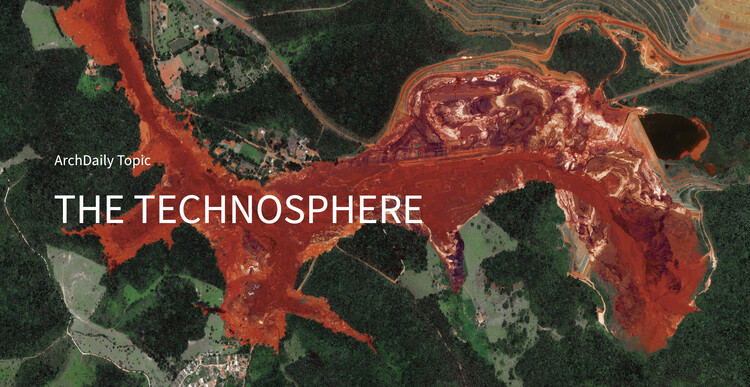
Decades later, the question was updated at the 7th Lisbon Architecture Triennale. Curators Ann-Sofi Rönnskog and John Palmesino asked: How heavy is a city? The scale shifted from the domestic interior to the territory. The technosphere, materialized in the estimated 30 trillion tons of human-made matter on Earth, reframes the discussion entirely. Cities, data centers, oil fields, logistics hubs, satellites, cables, and waste streams form a planetary system in which architecture is neither object nor backdrop, but participant.

The Technosphere: ArchDaily’s March Editorial Focus - Image 1 of 4The Technosphere: ArchDaily’s March Editorial Focus - Image 2 of 4The Technosphere: ArchDaily’s March Editorial Focus - Image 3 of 4The Technosphere: ArchDaily’s March Editorial Focus - Image 4 of 4The Technosphere: ArchDaily’s March Editorial Focus - More Images+ 7

Open Call: NAVER DATACENTER FOR CLOUD DESIGN COMPETITION

NAVER Corp. is South Korea’s largest web search engine, as well as a global ICT brand that provides services including LINE messenger, currently with over 200 million users from around the world, the SNOW video app, and the digital comics platform NAVER WEBTOON, the result of which NAVER stores and manages a wide array of user data. Since the advent of the internet, advances in telecommunication and smartphone technology, and other new technological developments in the IT industry have triggered explosive levels of data production and direct consumption, all of which has led to an increase in NAVER’s IT infrastructure as well.

How Architecture Firms Can Safely Make the Switch to Cloud Storage

Subscriber Access | 

As an architect, whether you’re storing large design files, sharing them with colleagues, syncing files to your tablet to show clients in meetings, or filing away confidential patent documentation, the benefits of the cloud are increasingly on your side. Because the architecture industry relies so heavily on collaboration throughout the course of a project, it seems like a natural fit for using the cloud but nonetheless, many architecture firms generally dissuade cloud adoption, largely due to concerns about security and the necessity of protecting intellectual property.

To be fair, these concerns are not entirely unfounded: After all, nearly a quarter of cybercriminals are intellectual property spies, hoping to sell your designs to a competitor or release confidential plans to the public. So when you work in an industry where intellectual property is your bread and butter, it’s essential to regularly address security concerns and maintain strong contingency plans.

VIDEO: Inside A Data Center, The Architecture Of The Cloud

Subscriber Access | 

Have you ever wondered where your information goes when you save it to "The Cloud"? The answer is within giant data centers. According to reports, Facebook and Google's data centers resemble something from Science Fiction, while some could come straight from a Bond flick. In a new short film named Internet Machine, Filmmaker and Visual artist Timo Arnall takes us where few have been granted access, showing the world what "The Cloud" really is - a massive architectural space with extreme energy demands. To experience the power surging and hear the deafening hum of a data center, check out the trailer above.