There’s nothing green about your back-up generator. Manufacturing it released tons of CO2 into the atmosphere; so did shipping it from the factory to the dealership to your backyard. There it will sit, idle, waiting to be deployed only when the much cleaner—but underfunded—public infrastructure fails. At that point, it will fill the air with additional pollutants. There may be perfectly good reasons to buy an emergency generator but being green—that is, protecting the environment—isn’t one of them.
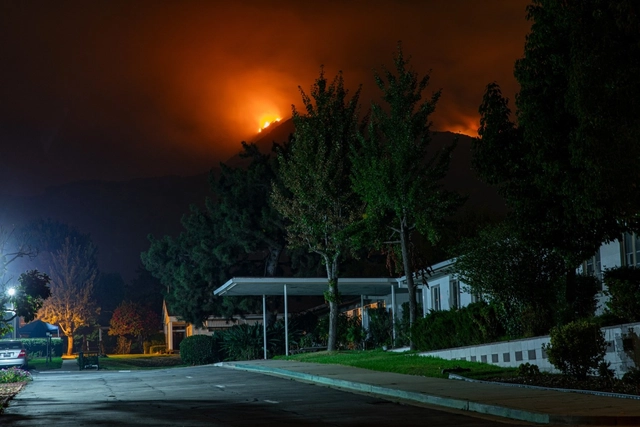
This August, as hundreds of wildfires darkened the sky above my home in Corte Madera, California, thousands of miles away in Florida, my family braced for wind and flooding as two hurricanes barreled towards the Gulf of Mexico. We all hunkered down, anxiously, as climate change-fueled disasters wreaked havoc. For weeks, the air quality in California was too hazardous for us to open our windows or go outside. In Pensacola, the Gulf storm surge was several feet deep around my family’s home and the powerful winds downed mature oak trees in their yard.
Resilience seems to be the topic of much discussion within circles of urbanism today. Though, there is a slight problem. We can’t quite agree on what the term means.
Two definitions seem to be floating about. The first rooted in material science. The second, in ecology.
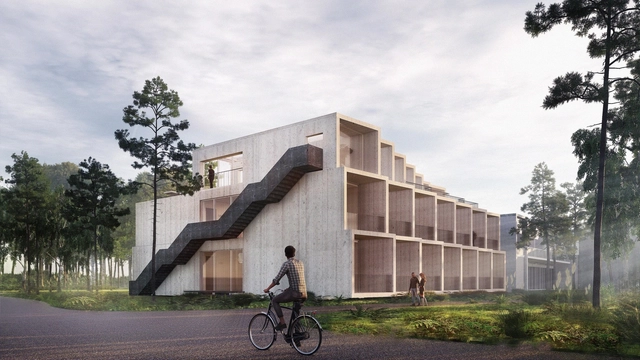
3XN/GXN have revealed their design for a new CO2 neutral and climate positive addition to the Hotel Green Solution House (Hotel GSH), in Rønne on the Danish island of Bornholm. Scheduled for 2021, the new wing including 24 rooms, a conference room, and a roof spa, is expected to provide a positive climate footprint when built, a novelty in Danish commercial buildings.
Over the past week, I’ve seen at least two largemainstream press articles on climate migration, and as more people seem to be tossing around their next move locale—something between North Dakota and anywhere else with the word “north” it. Often, in a simplified, single-issue flattening of the full-range of shifts happening around us.
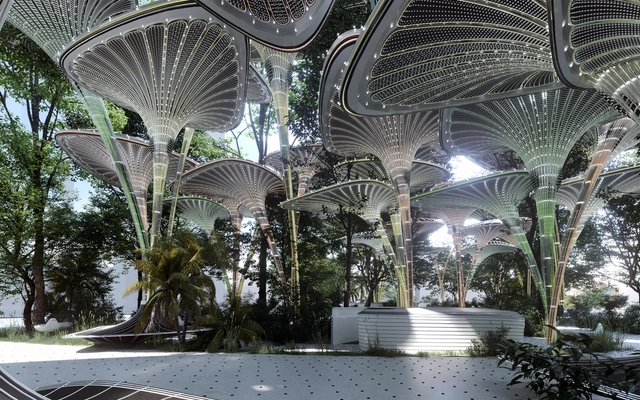
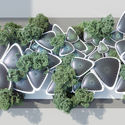
Mask Architects has been named one of ten winning teams in the Cool Abu Dhabi a global design competition. Their proposal, The Oasys, is a system where residents of Abu Dhabi can relax and enjoy outdoor spaces without feeling the heat. Selected from more than 1,570 participants across 67 countries, the project aims to tackle the effects of climate change through a localized solution for the urban heat island effect.
Surface Ex-Tension by Jonathan Craig, Luis Arjona, Marco Nieto & Philip Elmore. Image Courtesy of Arch Out Loud
Since its installation in the late 1990s, a large clock in New York City’s Union Square has been counting up to 24 hours in each day with the number of hours, minutes, seconds, and milliseconds on display. However, the digital screen was recently repurposed as a Climate Clock and now projects the amount of time the world has left to take large-scale action on climate change- and the alarming truth, based on an IPCC Special Report on Global Warming counts down to only a little over seven years left until we reach the point of no return.
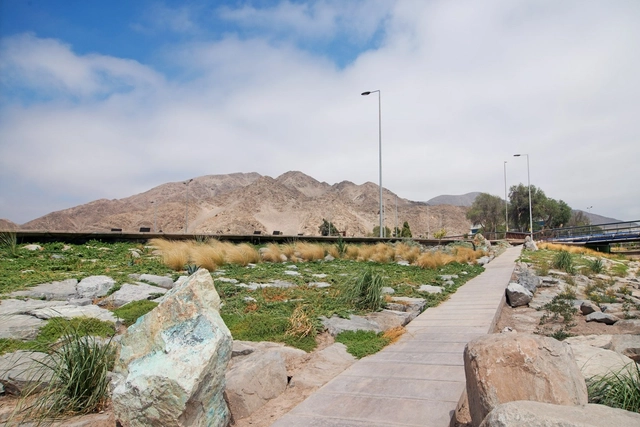
Does it make sense to design green parks in desert cities such as Casablanca, Dubai, or Lima? Ostensibly it does because they contribute freshness and greenness to the urban environment. In exchange, however, they disrupt native local ecosystems, incur high maintenance bills, and begin a constant struggle to ensure water availability.
World Architecture Day, celebrated on the first Monday of every October, was set up by the Union International des Architects (UIA) back in 2005 to “remind the world of its collective responsibility for the future of the human habitat”, coinciding with UN-Habitat's World Habitat Day.
https://www.archdaily.com/277569/happy-world-architecture-dayArchDaily Team
There is nothing like a crisis to bring people together. After Hurricane Katrina, more than 9,000 citizens participated in the development of the Unified New Orleans Plan that our firm Concordia coordinated in collaboration with 12 other planning teams. Now we’re working with another stellar group on a project called LA Safe, with the goal of creating a plan for residents of south Louisiana who will be among the first to experience the devastating impacts of sea-level rise.
Architects and designers of the built environment are often conceptualized in popular culture as progressive change agents whose canvas of steel and glass brings light to the public realm. At least one global survey of the public’s trust in various professions places architects in a top-ranked cohort that includes medical professionals and first responders. But in the United States, the architecture profession is surprisingly older and much less progressive than one might imagine.
https://www.archdaily.com/945591/the-drawdown-review-suggests-that-architects-move-toward-scalable-climate-solutionsJesse M. Keenan
The news about real action on climate change tends to track toward the gloomy. It is easy to despair, given the severity of the problem and the time left to properly address it. But there is progress being made in the built environment—just not nearly fast enough to offset emissions elsewhere. In recent years the sector has added billions of square feet of new buildings, but seen energy consumption for the entire sector actually decline. A good chunk of the credit for that accomplishment can go to architect Edward Mazria and his dogged advocacy organization, Architecture2030. Mazria and his team, along with collaborators all over the world, keep doing the unglamorous work of revising building codes, working with mayors, governors, elected officials in Washington (and officials in China), forging new alliances, all while deftly working around the climate obstructionists currently occupying the White House. Recently I talked to Mazria, who spoke from his home in New Mexico, about his take on where we stand. Some of the news, alas, is pretty good.
Architecture is grounded in optimism and a belief in what lies ahead. Building a body of work around this idea, architect and author Lance Hosey serves as a Design Principal and Chief Impact Officer at HMC Architects. A Fellow of both the American Institute of Architects and the US Green Building Council, Hosey is working to champion more sustainable design strategies and reconsider how architecture is practiced.
The concept of “decarbonization” has been in vogue recently in political speeches and global environmental events, but it has not yet gained enough attention in the field of architecture to profoundly change the way we design and construct the world of tomorrow. Buildings are currently responsible for 33% of global energy consumption and 39% of greenhouse gas emissions, indicating that architects must play a significant role if we are to stop or reverse climate change. With carbon acting as a universally agreed upon metric with which the greenhouse gas emissions of a building can be tracked [1], one of the most important ways through which this goal can be achieved is therefore the decarbonization of buildings.
https://www.archdaily.com/938866/urgent-issue-10-strategies-to-decarbonize-architectureLilly Cao
Dr. Strangelove or: How I Learned to Stop Worrying and Love the Bomb is one of those rare movies that not only gets better with time but also presents a new layer of meaning with each viewing. Recently I’ve come to believe that it’s the most important movie about environmentalism ever made, not only because of its warning about nuclear annihilation, which is obvious, but because of its sly critique of the idea of professionalism and the nature of work.
https://www.archdaily.com/944214/dr-strangeloves-strange-environmental-lesson-for-architectsChristopher L. Cosper
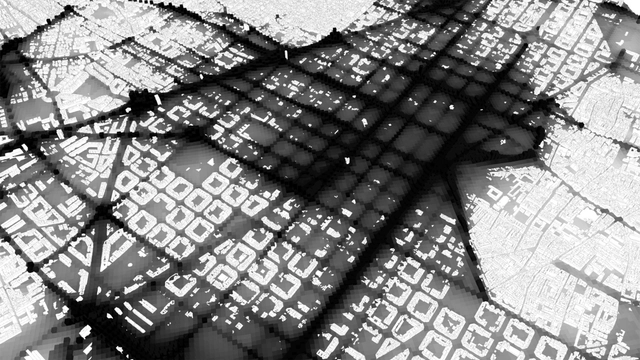
Cartography of Barcelona redrawn by air pollution. Image Courtesy of 300.000 Km/s
Catalonia in Venice - air/aria/aire, part of the Collateral Event of the Biennale Architettura 2021, is an exhibition curated by architect Olga Subirós, commissioned by the Institut Ramon Llull, with the participation of 300.000 Km/s, an urbanism studio in macro data-based strategic planning. Reflecting on the central theme of the Biennale “How will we live together?” the project investigates the role of architecture and urbanism within the context of the climate emergency and the public health crisis.
Architecture has an inherent role to the play in the global climate crisis. Buildings and their construction together account for 36 percent of global energy use and 39 percent of energy-related carbon dioxide emissions annually. Brad Jacobson is a principal at EHDD and a leader working to implement climate responsive design. Designing for the future, Brad synthesizes diverse perspectives to craft high performance solutions.
How does architecture contribute to the current climate crisis?
We invited our readers to weigh in on this issue and were overwhelmed by the number of responses that we got. After reading through and compiling the replies from industry professionals, architectural students, and architecture aficionados, we were struck by a common theme: there are few resources when it comes to researching howmaterials and products used in construction are sourced and produced.








.jpg?1603161566&format=webp&width=640&height=580)



.jpg?1603161566)