1. ArchDaily
  2. Climate Crisis

Climate Crisis: The Latest Architecture and News

Strategies to Reduce Embodied Carbon in the Built Environment

The growing consumer demand for transparency—especially around sustainability and environmental practices—has implications for industries from apparel to healthcare products. Mars Inc. recently released a cocoa sourcing map to tackle deforestation and increase accountability, and the Fashion Transparency Index pushes apparel companies to be more forthcoming about their social and environmental efforts.

Now it’s time for the building industry, characterized by a lack of information around the materials and practices used in construction and throughout a building’s lifecycle, to catch up. The cost of inaction is too high to ignore. That’s because buildings account for 39 percent of total global carbon emissions. Traditionally, most carbon reduction efforts in the building sector focus on operational carbon—a building’s everyday energy use, which accounts for roughly 28 percent of emissions. The remaining 11 percent comes from what is often ignored: embodied carbon.

Cities Address Environmental Issues with Digital Twins, Climate Research and Bee Bricks Mandates

Cities Address Environmental Issues with Digital Twins, Climate Research and Bee Bricks Mandates - Featured Image
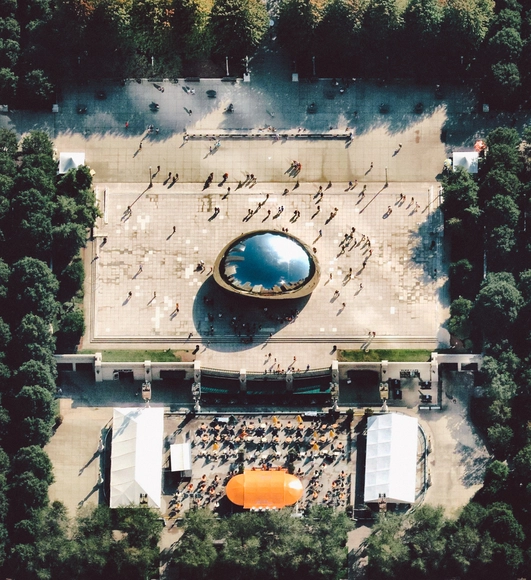
Photo by Jermaine Ee on Unsplash . ImageCentral Park

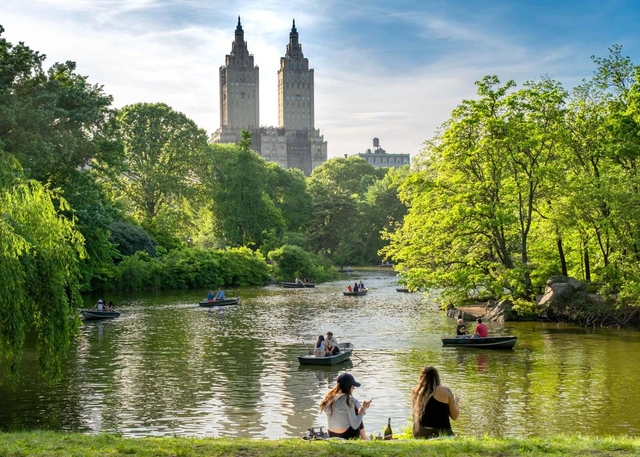
Earlier this month, a series of cities worldwide have revealed various initiatives that would help them better understand the effects of climate change and shape a more environmentally conscious environment. From several American cities creating digital twins to help curb carbon emissions to the city of Brighton mandating bee bricks to foster biodiversity and Central Park becoming a laboratory for studying climate change adaptation in urban parks, cities take on a multidisciplinary and multi-scalar approach to environmental issues.

Cities Address Environmental Issues with Digital Twins, Climate Research and Bee Bricks Mandates - Image 1 of 4Cities Address Environmental Issues with Digital Twins, Climate Research and Bee Bricks Mandates - Image 2 of 4Cities Address Environmental Issues with Digital Twins, Climate Research and Bee Bricks Mandates - Image 3 of 4Cities Address Environmental Issues with Digital Twins, Climate Research and Bee Bricks Mandates - Image 4 of 4Cities Address Environmental Issues with Digital Twins, Climate Research and Bee Bricks Mandates - More Images

Central Park Will Become a Hub for Climate Research

As temperatures rise across the globe with no sign of slowing down, the parks of the future will be subjected to droughts, flooding, punishing heat, and more abundant snowfall as warmer air is capable of holding more moisture than colder air. (It’s often said the world of the future will be wetter and wilder for that exact reason.)

So how can urban parks harden themselves for the coming decades? The Central Park Conservancy, the Yale School of the Environment, and the Natural Areas Conservancy have teamed up to turn New York City’s most iconic park into a hub for studying climate change adaptation and potential mitigation strategies. The Central Park Climate Lab was announced on January 12 by the conservancy, and the insights gleaned from the program will expand to other parks across New York city and eventually, other parks across the country.

Biodiversity in Urban Environments

Subscriber Access | 
Biodiversity in Urban Environments - Featured Image
Shenzhen Bao'an Waterfront Cultural Park by SWA GROUP +AUBE CONCEPTION. Image © Tianpei Zeng

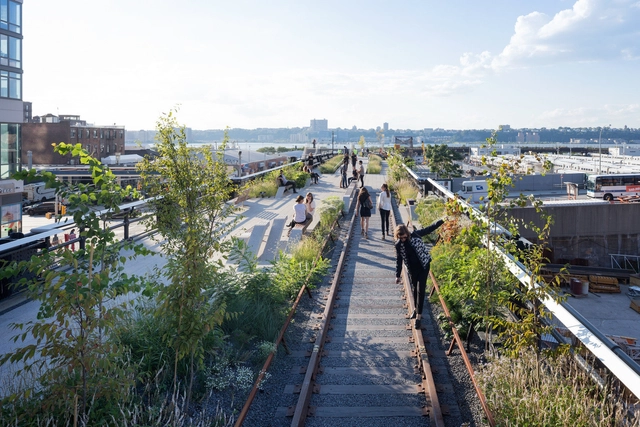
Biodiversity has become ubiquitous in project descriptions as yet another mark of the design's environmental accomplishments. The increasing focus on sustainability, the standard inspired by the UN Sustainable Development Goals, prompts a deeper understanding of what biodiversity in urban environments means and how can architecture and urban design actively contribute to it. With species extinction rates soaring and urbanization over natural land continuing, cities become an essential factor in sustaining biodiversity, and the following explores how the built environment can foster multi-species habitats.

Biodiversity in Urban Environments - Image 1 of 4Biodiversity in Urban Environments - Image 2 of 4Biodiversity in Urban Environments - Image 3 of 4Biodiversity in Urban Environments - Image 4 of 4Biodiversity in Urban Environments - More Images

Design Ethics: Rethinking Practice in 2021

Ethical practice spans all parts of architecture. From intersectionality and labor to the climate crisis, a designer must work with a range of conditions and contexts that inform the built environment and the process of its creation. Across cultures, policies and climates, architecture is as much functional and aesthetic as it is political, social, economic, and ecological. By addressing the ethics of practice, designers can reimagine the discipline's impact and who it serves. 

Design Ethics: Rethinking Practice in 2021 - Image 1 of 4Design Ethics: Rethinking Practice in 2021 - Image 2 of 4Design Ethics: Rethinking Practice in 2021 - Image 3 of 4Design Ethics: Rethinking Practice in 2021 - Image 4 of 4Design Ethics: Rethinking Practice in 2021 - More Images+ 8

Steps Taken in 2021 Towards Decarbonizing the AEC Sector

Steps Taken in 2021 Towards Decarbonizing the AEC Sector - Featured Image
Photo by Danist Soh on Unsplash

The climate crisis has been one of the focal points of 2021, both within political discourse and the architectural field, accompanied by a newfound acknowledgement of the issue's severity. Over the past year, the IPCC report revealed the severe consequences of inaction, while COP26 and G7 summit resulted in an insufficient commitment to immediate and palpable measures. The AEC sector, responsible for a staggering 39% of global greenhouse gases, can bring a significant contribution to curbing climate change and the following looks at the decarbonization efforts of 2021 that target this industry.

Steps Taken in 2021 Towards Decarbonizing the AEC Sector - Image 1 of 4Steps Taken in 2021 Towards Decarbonizing the AEC Sector - Image 2 of 4Steps Taken in 2021 Towards Decarbonizing the AEC Sector - Image 3 of 4Steps Taken in 2021 Towards Decarbonizing the AEC Sector - Image 4 of 4Steps Taken in 2021 Towards Decarbonizing the AEC Sector - More Images+ 2

Net-Zero Energy & Net-Zero Carbon: Design Strategies to Reach Performance Goals

 | Sponsored Content
Net-Zero Energy & Net-Zero Carbon: Design Strategies to Reach Performance Goals - Featured Image
Courtesy of cove.tool

As the effects of climate change intensify across the world, the AEC industry is shifting toward green building to effectively address the climate crisis. In 2020, members of The American Institute of Architects (AIA) overwhelmingly approved a resolution making environmental stewardship the organization’s top priority. Since then, steady progress has been achieved to develop a Climate Action Plan, evolve the Framework for Design Excellence, and increase participation in the 2030 Commitment. The building and construction sector is responsible for 36% of energy consumption, 38% of energy related carbon emissions, and 50% of resource consumption globally. These percentages are expected to double in total footprint by 2060, exacerbating the negative effects of climate change on the environment. The Intergovernmental Panel on Climate Change (IPCC) 2021 Report warns of increasingly extreme heatwaves, droughts and flooding, and a key temperature limit being broken in just over a decade. The world must act fast to avoid these catastrophic events, and decarbonizing the built environment is a major step in the right direction.

Edward Mazria, from Architecture 2030, on What’s Next After COP26

This article was originally published on Common Edge.

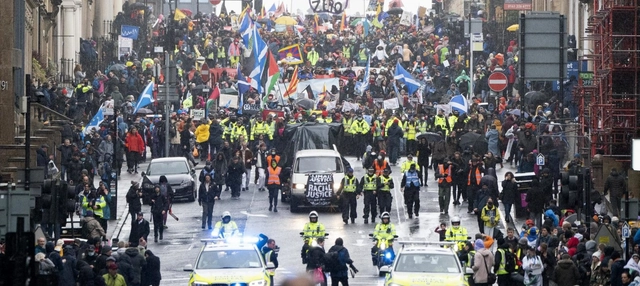
Most of the news coming out of the recently completed climate summit in Glasgow was disappointing. Previous summits had ended in similarly dispiriting ways, and COP26 was no exception. It acknowledged the severity of the problem and the urgency of the moment—the need to keep warming to under 1.5 degrees Celsius (some scientists believe it’s already too late to prevent this)—but put off making the hard commitments necessary to actually solve the problem. At the same time, this summit did feel different. There was a sense of urgency in the Glasgow streets, and the world’s attention was undeniably focused on climate change. How this focus eventually translates into action on the political front remains an open question.

But architect Edward Mazria, executive director of Architecture 2030, believes that despite the immense obstacles facing climate activists, the building sector is on the cusp of helping change the course of the planet. He sees genuine reasons for hope and renewed effort. In the wake of the seemingly grim news out of Glasgow, I spoke with him last week about the way forward, how we’ve reached an important inflection point, why energy use tied to buildings has begun to decline globally, and the steps required to fully decarbonize the built environment.

Ithaca, New York Will Decarbonize All 6,000 of the City’s Buildings

Last week, the Common Council of Ithaca, New York, voted to approve a first-in-the-nation decarbonization plan in which the roughly 6,000 homes and buildings located within the notably “enlightened” lakeside college town will be electrified to meet goals established by the city’s impressively aggressive Green New Deal (GND) plan. That carbon-neutral-by-2030 GND plan was adopted unanimously by the Common Council in June 2019 to “address climate change, economic inequality, and racial injustice,” per the city.

SOM Proposes to Transform the Built Environment into a "Forest" of Absorbing Carbon at COP26

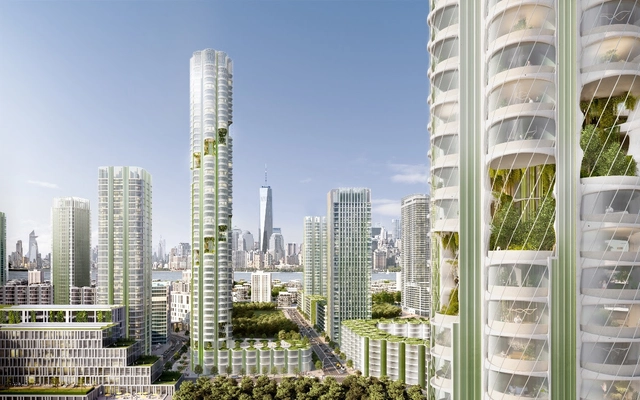
"What if the built environment could be a solution to the climate crisis, rather than part of the problem? What if buildings could act like trees – capturing carbon, purifying the air, and regenerating the environment?" Responding to these questions, Skidmore, Owings & Merrill (SOM) has proposed Urban Sequoia, an architectural concept inspired by the ecosystem at the 2021 UN Climate Change Conference in Glasgow - COP26. The design features “forests of buildings" that isolate carbon and produce biomaterials that create a new ecological and resilient urban environment.

SOM Proposes to Transform the Built Environment into a "Forest" of Absorbing Carbon at COP26 - Image 1 of 4SOM Proposes to Transform the Built Environment into a "Forest" of Absorbing Carbon at COP26 - Image 2 of 4SOM Proposes to Transform the Built Environment into a "Forest" of Absorbing Carbon at COP26 - Image 3 of 4SOM Proposes to Transform the Built Environment into a "Forest" of Absorbing Carbon at COP26 - Image 4 of 4SOM Proposes to Transform the Built Environment into a Forest of Absorbing Carbon at COP26 - More Images

Contested Territory: The Climate Crisis and Land Ownership

Subscriber Access | 

Architecture, by its very definition, involves the construction of structures. Structures that are meant to serve as spaces for work, living, religious devotion, amongst many other purposes. Architectural projects and interventions, however, need land – and it is this intrinsic relationship, between land and architecture, that has massive ramifications not only regarding reducing carbon emissions but more importantly in forming an equitable future rooted in climate justice.

Climate Change is Teaching Designers to Expand Their Horizons—or at Least It Should

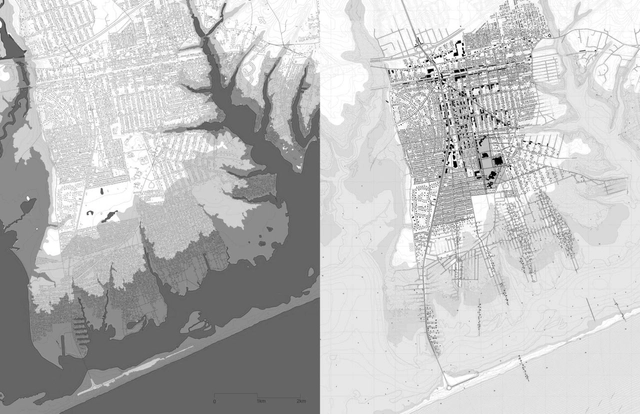
A lot can happen in the space between a book’s title and subtitle, as A Blueprint for Coastal Adaptation: Uniting Design, Economics, and Policy (Island Press, 2021) demonstrates. Here, in a reversal from the norm, the subtitle assumes the more evocative bent by elevating design to the same status as economics and policy. To some, this might seem a spurious move, but the volume lives its creed: Its editors include two design academics and a business school professor, to say nothing about the myriad backgrounds of its contributors.

Blueprint goes deep into the policy decisions that have shaped the brittle condition of coastal infrastructure. It coalesces into a convincing picture of the wider context in which design operates, with the aim of making the built environment more equitable for those caught on the front lines of certain climate change cataclysm.

C40 and Arup Showcase Climate Action Initiatives from 11 Global Cities Within a Virtual Exhibition at COP26

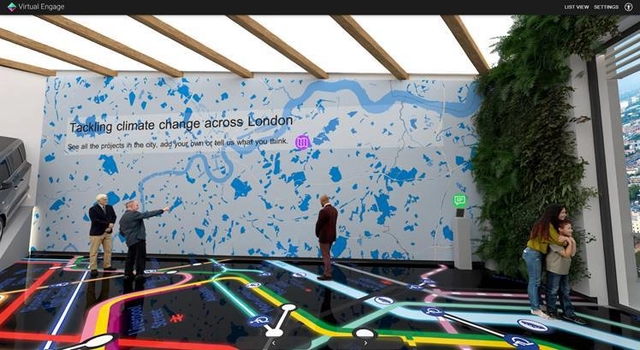
This week, the C40 global network of cities and engineering and sustainability firm Arup launched a virtual exhibition showcasing examples of climate initiatives and resiliency strategies from 11 cities committed to addressing climate change. Given that cities account for more than 70% of global carbon emissions, the Global Cities Climate Action Exhibition aims to highlight the role of cities in reaching climate targets through local policies and urban development plans, achieving tangible emission reductions and increasing social equity.

C40 and Arup Showcase Climate Action Initiatives from 11 Global Cities Within a Virtual Exhibition at COP26 - Image 1 of 4C40 and Arup Showcase Climate Action Initiatives from 11 Global Cities Within a Virtual Exhibition at COP26 - Image 2 of 4C40 and Arup Showcase Climate Action Initiatives from 11 Global Cities Within a Virtual Exhibition at COP26 - Image 3 of 4C40 and Arup Showcase Climate Action Initiatives from 11 Global Cities Within a Virtual Exhibition at COP26 - Image 4 of 4C40 and Arup Showcase Climate Action Initiatives from 11 Global Cities Within a Virtual Exhibition at COP26 - More Images

The Build Better Now Virtual Pavilion at COP26 Showcases Pioneering Sustainable Designs

The Build Better Now virtual pavilion opened to the public during COP26, showcasing seventeen sustainable projects that demonstrate the built environment's opportunities for addressing the climate crisis. The initiative, run by UK Green Building Council, comes as a global call for climate action, highlighting the AEC's industry's commitment to sustainable practice on a worldwide stage, particularly since this year the COP26 dedicated a day to buildings and cities.

The Build Better Now Virtual Pavilion at COP26 Showcases Pioneering Sustainable Designs - Image 1 of 4The Build Better Now Virtual Pavilion at COP26 Showcases Pioneering Sustainable Designs - Image 2 of 4The Build Better Now Virtual Pavilion at COP26 Showcases Pioneering Sustainable Designs - Image 3 of 4The Build Better Now Virtual Pavilion at COP26 Showcases Pioneering Sustainable Designs - Image 4 of 4The Build Better Now Virtual Pavilion at COP26 Showcases Pioneering Sustainable Designs - More Images+ 10

World’s Cities Day 2021: Resilience, Climate Crisis and Sustainable Urbanization

Subscriber Access | 

As cities grow in scale, dimensions, and amplitude, taking in 60% of the world population, the United Nations has designated the 31st of October as “World Cities Day”, an opportunity to talk furthermore about global urbanization, addressing challenges, encouraging opportunities across borders and highlighting responses. Focusing this edition on the theme of “Adapting Cities for Climate Resilience”, this day, part of Urban October, seeks to raise awareness about the climate crisis and its repercussions on the built environment.

Cities, at the center of the global challenges, are hubs for institutions, society, economy, commerce, and transportation. Understanding the importance of “Thinking the City”, we have compiled in this roundup, articles published by ArchDaily’s editors that offer planning tools and guidelines, tackle the different components of the urban realm and highlight worldwide as well as contextual questions and responses.

At COP26 Architects Plan on Urging Decision Makers to Establish Tangible Action Against Climate Change

At COP26 Architects Plan on Urging Decision Makers to Establish Tangible Action Against Climate Change - Featured Image
Photo by Danist Soh on Unsplash

The 26th UN Climate Change Conference of the Parties (COP 26) debuted yesterday in Glasgow, bringing together more than 190 world leaders, with the aim of accelerating action to reach the goals of the Paris Agreement and UN's Convention on Climate Change. Leading architecture organizations and figures are attending the two-week summit to show the AEC's industry's commitment to reduce carbon emissions and urge decision-makers to implement clear targets to achieve global climate goals.

At COP26 Architects Plan on Urging Decision Makers to Establish Tangible Action Against Climate Change - Image 1 of 4At COP26 Architects Plan on Urging Decision Makers to Establish Tangible Action Against Climate Change - Image 2 of 4At COP26 Architects Plan on Urging Decision Makers to Establish Tangible Action Against Climate Change - Image 3 of 4At COP26 Architects Plan on Urging Decision Makers to Establish Tangible Action Against Climate Change - Image 4 of 4At COP26 Architects Plan on Urging Decision Makers to Establish Tangible Action Against Climate Change - More Images

“Soft Infrastructure” Is Crucial for a Post-Carbon World

This article was originally published on Common Edge.

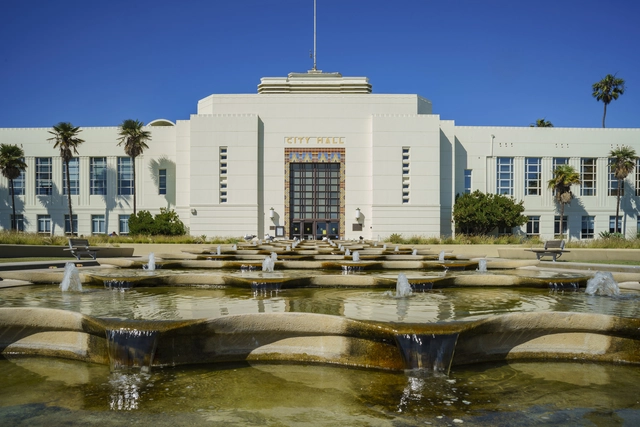
On a recent day in Santa Monica, California, visitors sat in the shaded courtyard outside City Hall East waiting for appointments. One of them ate a slice of the orange she’d picked from the tree above her and contemplated the paintings, photographs, and assemblages on the other side of the glass. The exhibit, Lives that Bind, featured local artists’ expressions of erasure and underrepresentation in Santa Monica’s past. It’s part of an effort by the city government to use the new soon-to-be certified Living Building (designed by Frederick Fisher and Partners) as a catalyst for building a community that is environmentally, socially, and economically self-sustaining.

Cities and Conflict: Exploring Urban Adaptive Reuse

COP26, The United Nations Climate Change Conference, is scheduled to be held in Scotland soon, in the last week of October 2021. Against the backdrop of this conference is a heightened global awareness of climate change, as discussions take place on how a sustainable, more equal future can be achieved. The present and future state of architecture is a key component of this conversation, as criticism is levelled at architecture firms that “greenwash” and questions are raised on if the term “sustainability” is increasingly merely being used as today’s buzzword.

Cities and Conflict: Exploring Urban Adaptive Reuse - Image 1 of 4Cities and Conflict: Exploring Urban Adaptive Reuse - Image 2 of 4Cities and Conflict: Exploring Urban Adaptive Reuse - Image 3 of 4Cities and Conflict: Exploring Urban Adaptive Reuse - Image 4 of 4Cities and Conflict: Exploring Urban Adaptive Reuse - More Images+ 9