1. ArchDaily
  2. Cities Without Ground

Cities Without Ground: The Latest Architecture and News

Beyond the Street: Climate, Commerce, and the Evolution of Hong Kong’s Elevated Networks

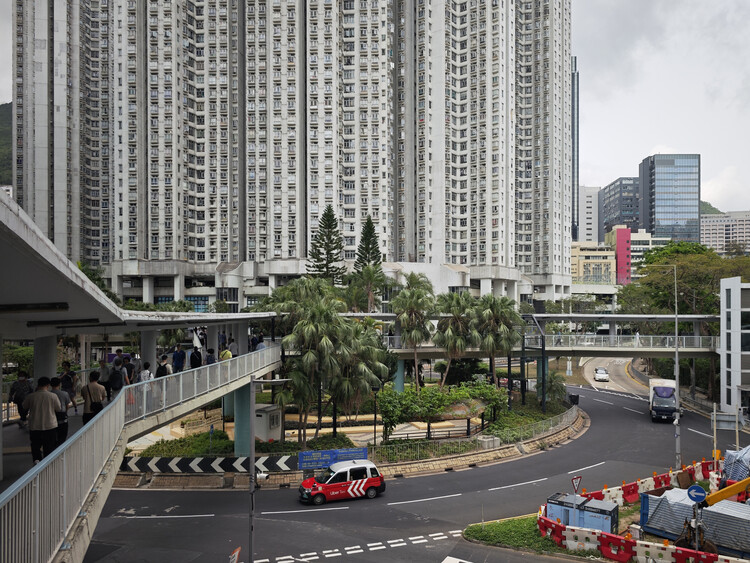
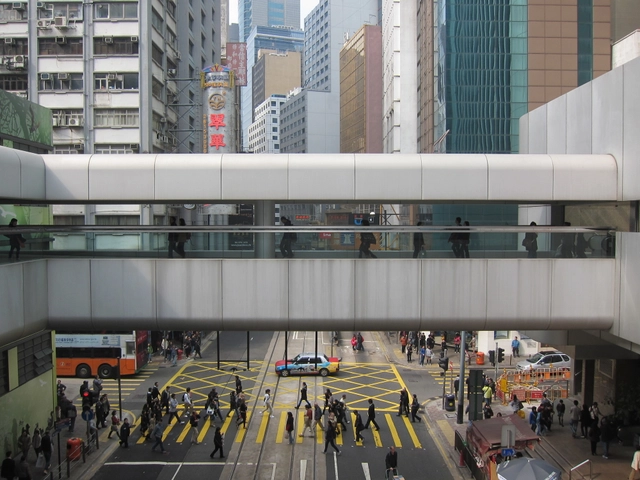
In 2012, Cities Without Ground: A Hong Kong Guidebook offered one of the clearest documentations of a condition that many residents experience intuitively but rarely name: Hong Kong's dependence on elevated, second-storey urbanism. Through drawings and careful mapping, the book captured how the city's pedestrian networks are routinely lifted above the street—separating people from traffic, extending commercial frontage beyond ground level, and negotiating a hilly topography where "flat" circulation is often an engineered achievement. Since its publication, these systems have only grown in prominence—not only for their sheer spatial complexity, but for the way they recast public space as something continuous yet selective, connective yet curated.

This fascination, however, has always carried a parallel unease. Elevated passages can be generous and effective, offering sheltered movement and reliable connectivity. Yet they also raise persistent questions: where do these routes lead, who gets to connect, and what kinds of programs are invited—or excluded—by this "privileged" level of circulation? The second-storey city does not simply bypass vehicles; it can also bypass the street as a civic stage. Over time, it risks shifting architectural attention away from ground-level public life, relieving designers from having to negotiate pedestrian scale, frontage, and the messy reciprocity of the street. In its worst moments, the result is a landscape of podium clusters and sealed megastructures—buildings that perform connectivity at Level 2 while remaining indifferent to the neighborhood at Level 0.


Beyond the Street: Climate, Commerce, and the Evolution of Hong Kong’s Elevated Networks - Image 1 of 4Beyond the Street: Climate, Commerce, and the Evolution of Hong Kong’s Elevated Networks - Image 2 of 4Beyond the Street: Climate, Commerce, and the Evolution of Hong Kong’s Elevated Networks - Image 3 of 4Beyond the Street: Climate, Commerce, and the Evolution of Hong Kong’s Elevated Networks - Image 4 of 4Beyond the Street: Climate, Commerce, and the Evolution of Hong Kong’s Elevated Networks - More Images+ 17

Crafting Urban Life in Three Dimensions: An Interview with Adam Snow Frampton by James Schrader

Subscriber Access | 

The following are excerpts from one of 41 interviews that student researchers at the Strelka Institute are publishing as part of the Future Urbanism Project. In this interview, James Schrader speaks with Adam Snow Frampton, the co-author of Cities Without Ground and the Principal of Only If, a New York City-based practice for architecture and urbanism. They discuss his work with OMA, the difference between Western and Asian cities, his experiences opening a new firm in New York, and the future of design on an urban scale.

James Schrader: Before we get to future urbanism, I thought it would be interesting to look a bit into your past. Could you tell me about where your interest in cities came from? Were there any formative moments that led to your fascination with cities?

Adam Snow Frampton: I was always interested in cities, but not necessarily exposed to much planning at school. When I went to work at OMA Rotterdam, I was engaged in a lot of large-scale projects, mostly in the Middle East and increasingly in Asia, where there was an opportunity to plan cities at a bigger scale. In the Netherlands, there’s not necessarily more construction than in the US, but there is a tradition of thinking big and a tendency to plan. For instance, many Dutch design offices like OMA, West 8, and MVRDV have done master plans for the whole country.