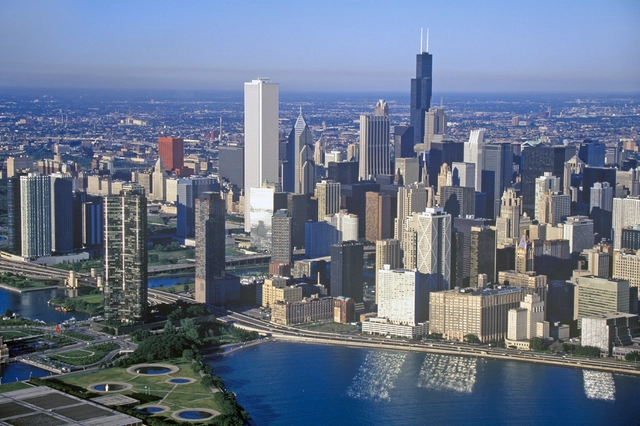
Chicago has long been known for distinctive architecture, and this year’s inaugural Chicago Architecture Biennial has only furthered that reputation. Although it is nearly impossible to narrow down the countless iconic structures, in celebration of the Biennial, we have compiled five Chicago buildings that highlight the many phases of the city’s architectural history.
At the Chicago Architecture Biennial, the theme selected by directors Joseph Grima and Sarah Herda was deliberately wide in scope, with the expectation that more than one hundred exhibitors would each bring their own perspective on what is “The State of the Art of Architecture.” But where does that leave one of architecture's most widely adopted missions of the 21st century: sustainability? In this article, originally published on her blog Architectstasy as “Chicago Architecture Biennial: The State of the Art of Sustainability,” Jessica A S Letaw delves into five projects that take on sustainability in the context of Chicago's biennial.
https://www.archdaily.com/777081/5-projects-at-the-chicago-biennial-that-demonstrate-the-state-of-the-art-of-sustainabilityJessica A S Letaw
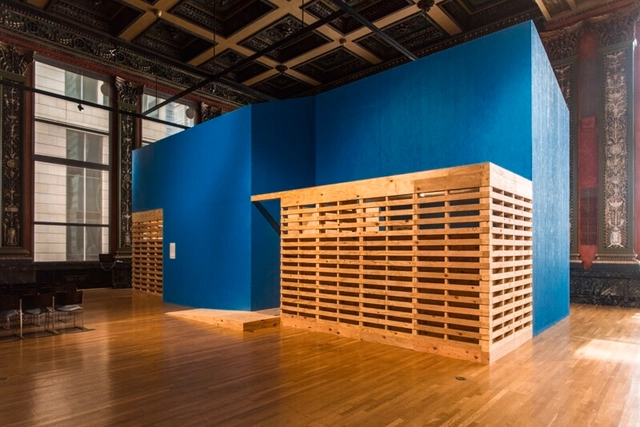
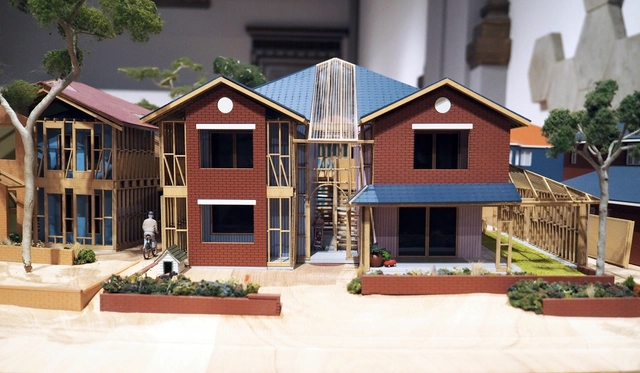
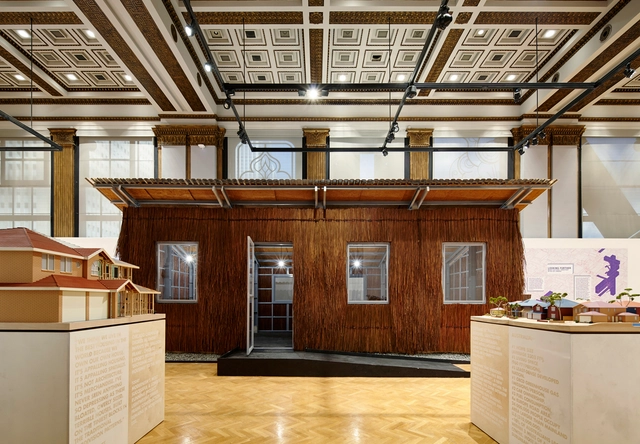
In the classic film The Wizard of Oz, Dorothy and friends manage to obtain a visit with the great and powerful wizard, who appears to them as an enormous, grotesque head, surrounded by smoke and flames, with a booming voice and a hostile demeanor. But when Toto pulls back the curtain, the wizard’s true nature is revealed, and it is only then that he is able to help the gang get the help for which they journeyed many miles down the yellow brick road. In architecture today, suburban houses share many of the characteristics of the wizard’s illusion: large, stand-offish and intimidating. But what if there is a more benevolent architecture hidden behind the smoke and flames? This is the thesis of Australian firm Otherothers' Offset House, on display now at the Chicago Architecture Biennale.
In an effort to spark new ideas for "zero value landscapes," Amanda Williams has been painting abandoned houses in Chicago's South Side with a "palette of culturally coded, monochromatic colors" to "explore how academic and theoretical definitions of color map across veiled language used in American media/popular culture to describe racially charged city spaces... Think a female Gordon Matta-Clark parading around as a Black Josef Albers," says the artist.
The city of Chicago is an intersection of multiple systems – the organizational orders of its modernist buildings; the presence of the federal government; the negotiations and orders of the lives of its marginalized communities. “We Know How to Order”, conceived by Bryony Roberts, choreographed by Asher Waldron and performed by the South Shore Drill Team, brings these intersections to life in a vibrant street performance for the first ever Chicago Architecture Biennial. A series of drill routines with influences from street choreography, the project explicitly "super-imposes" its system of movement onto the organization of Mies van der Rohe’s Federal Center, calling "attention to the accessibility of public space in the US" and "how architectural systems alongside social expectations influence the occupation of common space," according to the Chicago Architecture Biennial guidebook.
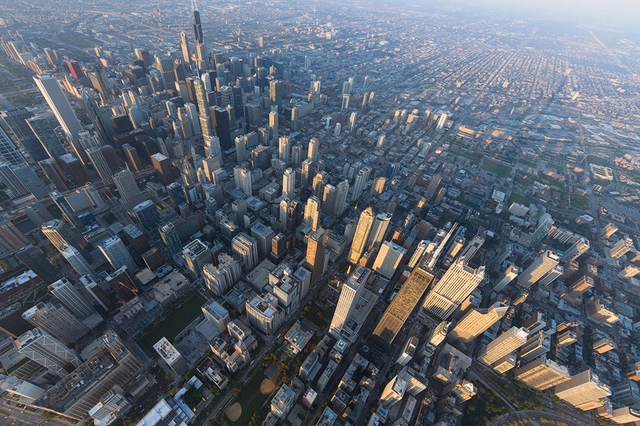
Iwan Baan was twelve years old when he received his first camera and, "within a week, [he] had traded it in for a better one." He is one of the most well-known and highly sought after architectural photographers in the world, recognised for shooting cities from above and for always highlighting people (occupation) in his images. In a short interview with Jonathan Glancey Baan is the first to state that he "doesn't know much about architecture" — something which has not inhibited his ability to produce some of the most successful photographs of the built world, and how we design, construct and occupy it.
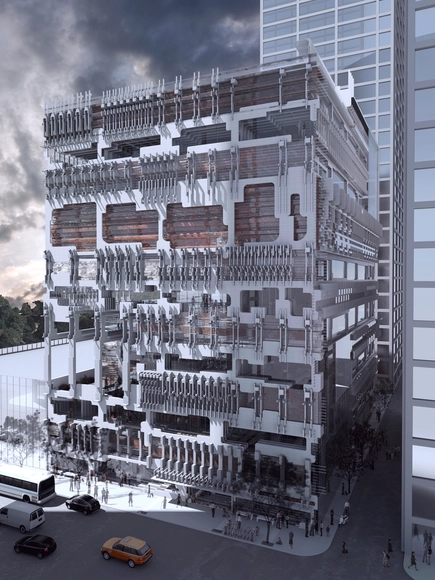
Exterior Rendered View. Image Courtesy of mcdowellespinosa
The Chicago Architecture Foundation (CAF) has announced the three winners of its ChiDesign ideas competition to design the Chicago Centre for Architecture, Design and Education (CADE). The competition was in conjunction with the first ever Chicago Architecture Biennial, following the spirit of Robert McCormick’s international competition for the Chicago Tribune Tower in 1922 which opened discourse on the importance of design to the public. Similar to McCormick’s competition, but tackling a more modern, mixed-use typology, the Chicago CADE is envisioned as a facility to house the Chicago Architecture Foundation; the Council on Tall Buildings and Urban Habitat; a design and allied arts high school; and learning spaces for an extra-curricular youth program. Read about one of the winners, "Layered Intelligence" after the break, and see another winner, "Unveiled" here.
Videos
Sou Fujimoto. Courtesy of the Chicago Architecture Biennial
Sou Fujimoto Architects' "Architecture is Everywhere" was among the ArchDaily editors' favorite exhibitions in the Chicago Architecture Biennial. The thought-provoking, entertaining collection of mundane objects truly embraced the idea that the public—not solely architects—should be included in the Biennial's celebration of architecture.
A few weeks ago, during the opening of the Chicago Architecture Biennial, we eagerly awaited our opportunity to speak with Joseph Grima, the co-artistic director of the first Chicago Architecture Biennial. In an exhibition with such an open theme, we wanted to understand the driving forces behind the assembly of the participants, in addition to how the city of Chicago itself influenced decisions in the planning of this largest gathering of architecture in North America. Watch the video above and read a transcript of Grima's answers below.
https://www.archdaily.com/775633/ad-interviews-joseph-grima-chicago-architecture-biennialAD Editorial Team
Stanley Tigerman will discuss his 2015 New Titanic along with the opening of a special exhibit that includes a selection of past and recent work featuring the 1978 “Titanic” photomontage.
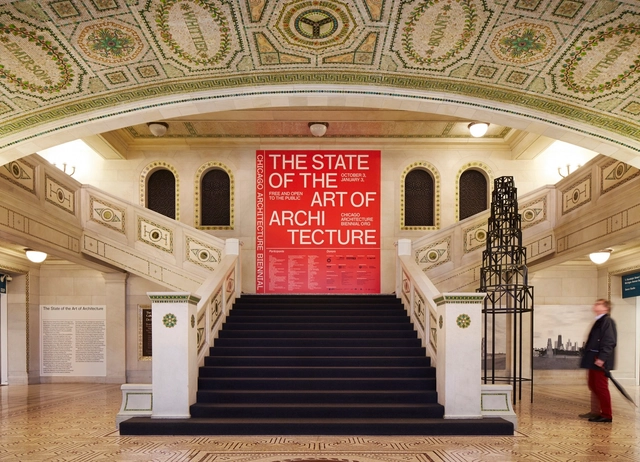
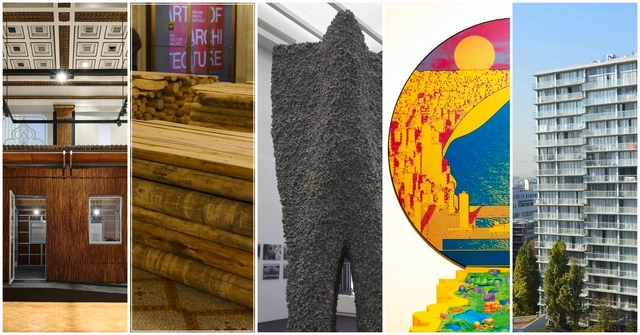
Centered on the theme “The State of the Art of Architecture,” the Chicago Architecture Biennial offers a look at the issues surrounding contemporary architecture around the globe. Featuring interventions from over 100 different architects from more than 30 different countries, the Biennial seeks to “demonstrate that architecture matters at any scale.”
Videos
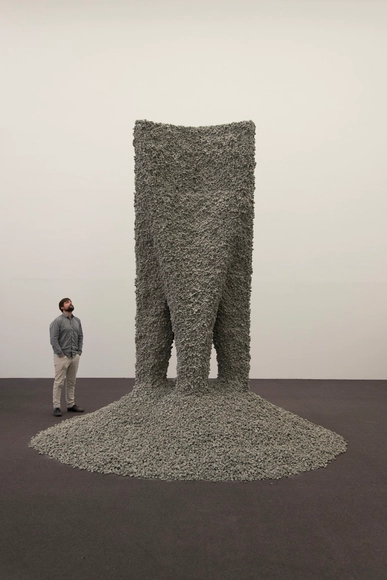
Courtesy of Gramazio Kohler Research, ETH Zurich
As everyone knows, if you stack layer upon layer of small stones atop one another, what you eventually get is a pile of stones. It's among the least dramatic phenomena in the whole of nature; add string though, and the whole process is transformed. That's the idea behind Rock Print, an installation at the Chicago Architecture Biennial created by Gramazio Kohler Research of ETH Zurich and Skylar Tibbits of MIT's Self-Assembly Lab, which uses just these two elements to create a dramatic four-legged column that is self-supporting and can be quite literally unraveled into its constituent parts after use.
Last week, the Chicago Architecture Biennial opened to over 31,000 visitors and much fanfare, and for good reason - it is the largest architecture event on the continent since the 1893 World's Columbian Exposition, featuring over one hundred exhibitors from over thirty countries. With a theme as ambiguous as "The State of the Art of Architecture," and with the hope of making the biennial, according to directors Joseph Grima and Sarah Herda, "a space for debate, dialog and the production of new ideas," the event was sure to generate equally wide-ranging opinions. Read on to find out what the critics had to say about the Biennial.
What is the state of architecture today? What motivates different architects from around the world to improve the conditions of the planet's inhabitants? If you find yourself in the City of Chicago in the next few months, you will be submerged in a discussion of what architecture is, and what it can and should be in the future.
The ArchDaily team spent the end of last week at the opening of the Chicago Architecture Biennial, an anticipated celebration of architecture at a scale previously unseen in North America. Supported in large part by the city of Chicago itself, Mayor Rahm Emanuel expressed that he wanted his city "to be dead center" in a conversation about how architecture can positively impact cities around the world. In response, curators Joseph Grima and Sarah Herda reviewed the work of over 500 architects worldwide and selected over 100 architects from more than 30 countries to "demonstrate that architecture matters at any scale."
https://www.archdaily.com/774876/15-must-see-installations-at-the-chicago-architecture-biennialAD Editorial Team
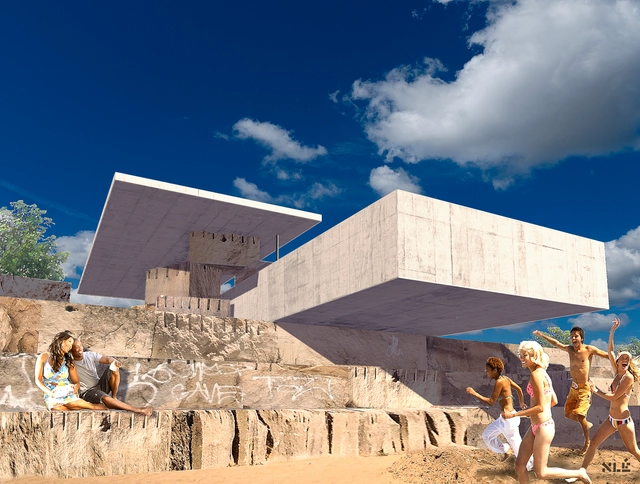
With its Lakefront Kiosk competition, the Chicago Architecture Biennial is hoping to leave a long-lasting impact and legacy for its city. The ROCK, a submission from NLÉ Architects in collaboration with School of the Art Institute of Chicago, is giving the public the opportunity to shape that legacy. Throughout the course of the event, which opened on October 3rd, eventgoers are invited to Millennium Park to add value to the 1930s limestone rocks that will create the pavilion through carving, painting, performances and other unimagined processes.






.jpg?1445283064&format=webp&width=640&height=580)