1. ArchDaily
  2. CatalyticAction

CatalyticAction: The Latest Architecture and News

Designing With, Not For: CatalyticAction’s Participatory Practice

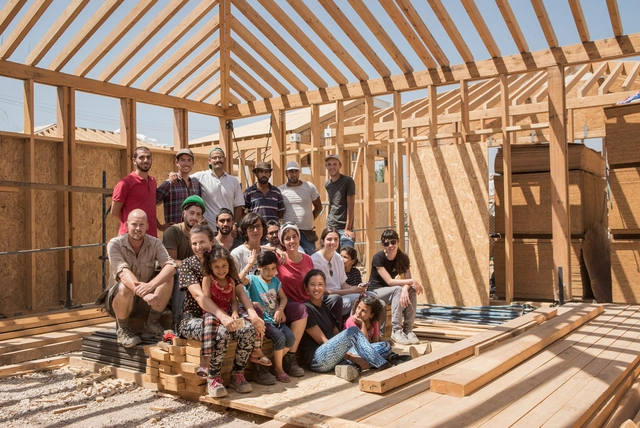
Architecture is often evaluated through finished forms, yet some practices operate in a different register, one where design unfolds through relationships, time, and use rather than through a single outcome. For CatalyticAction, participation is not a parallel social activity, but the means through which spaces are conceived, constructed, and sustained over time.

Based between Beirut and London, the practice has worked across the Middle East and Europe, developing public spaces, schools, playgrounds, and everyday urban infrastructures through long-term collaboration with local communities. Grounded in participatory research and collective decision-making, this approach was recognized through ArchDaily's 2025 Next Practices Awards, highlighting a mode of practice where architecture is understood as a shared, evolving process rather than a fixed object. In this context, architectural value is measured through continuity, use, and collective ownership, rather than through form alone.

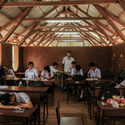
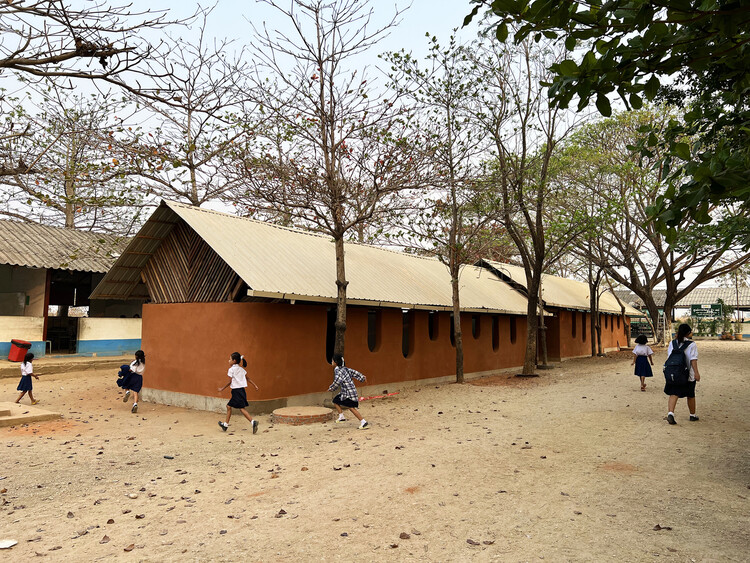
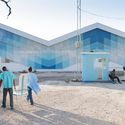
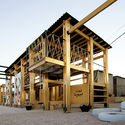
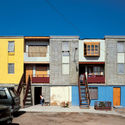
Designing With, Not For: CatalyticAction’s Participatory Practice - Image 1 of 4Designing With, Not For: CatalyticAction’s Participatory Practice - Image 2 of 4Designing With, Not For: CatalyticAction’s Participatory Practice - Image 3 of 4Designing With, Not For: CatalyticAction’s Participatory Practice - Image 4 of 4Designing With, Not For: CatalyticAction’s Participatory Practice - More Images+ 21

20 Practices Shaping the Future of Architecture: Winners of the ArchDaily 2025 Next Practices Awards

ArchDaily is proud to reveal the winners of the 5th edition of Next Practices, recognizing 20 groundbreaking architectural practices from around the globe. These firms embody the creativity, innovation, interdisciplinary approach and social responsibility that are shaping the future of architecture and expanding its horizons.

Empowering Children Through Public Spaces in Lebanon: In Conversation with CatalyticAction

Subscriber Access | 

Public spaces are not always shaped by planning but by the practices they host. Their existence stems from our inherent need for connection with others. As spaces of encounter, these urban, open, and accessible areas reflect how we interact with our surroundings and each other while offering places for exercise, play, socializing, and recreation.

Recognizing that public spaces are more than just physical environments, CatalyticAction is dedicated to fostering a sense of community, safety, and belonging, especially for children, who are among the most vulnerable in society. Their mission is not only to create spaces where children can play and grow but also to empower them, ensuring they have a voice in shaping their surroundings. To learn more about their work, Christele Harrouk, ArchDaily's Editor-in-Chief, spoke with Joana Dabaj, Co-founder and Director of Programmes at CatalyticAction.

Empowering Children Through Public Spaces in Lebanon: In Conversation with CatalyticAction - Image 1 of 4Empowering Children Through Public Spaces in Lebanon: In Conversation with CatalyticAction - Image 2 of 4Empowering Children Through Public Spaces in Lebanon: In Conversation with CatalyticAction - Image 3 of 4Empowering Children Through Public Spaces in Lebanon: In Conversation with CatalyticAction - Image 4 of 4Empowering Children Through Public Spaces in Lebanon: In Conversation with CatalyticAction - More Images+ 41

Social Impact: Architecture Building Space for Empathy

Subscriber Access | 

Architecture shapes how we live and come together. Amidst a pandemic and protests around the world, architects and designers are speaking out to condemn injustice and build space for empathy and understanding. In listening, they are looking to how we live together, and in turn, how we can create a more equitable and just world.

Social Impact: Architecture Building Space for Empathy - Image 1 of 4Social Impact: Architecture Building Space for Empathy - Image 2 of 4Social Impact: Architecture Building Space for Empathy - Image 3 of 4Social Impact: Architecture Building Space for Empathy - Image 4 of 4Social Impact: Architecture Building Space for Empathy - More Images+ 4

The Times Architects Stepped Up in Crises

For the past few months, the architecture community has been trying to bring its contribution to the fight against the pandemic. The global spread of this crisis might have triggered a coordinated, and thus a more visible effort, but this isn’t the first time professionals step up in crises. Over the years, natural disasters and emergencies have determined several architects to get involved in disaster relief initiatives, as well as a wide range of humanitarian actions. In this article, we take a look at different occasions various architects and practices made a significant contribution to, helping affected communities overcome hardship.

The Times Architects Stepped Up in Crises - Films & ArchitectureThe Times Architects Stepped Up in Crises - Films & ArchitectureThe Times Architects Stepped Up in Crises - Films & ArchitectureThe Times Architects Stepped Up in Crises - Films & ArchitectureThe Times Architects Stepped Up in Crises - More Images+ 8

Beyond Refugee Housing: 5 Examples of Social Infrastructure for Displaced People

Beyond Refugee Housing: 5 Examples of Social Infrastructure for Displaced People - Image 1 of 4Beyond Refugee Housing: 5 Examples of Social Infrastructure for Displaced People - Image 2 of 4Beyond Refugee Housing: 5 Examples of Social Infrastructure for Displaced People - Image 3 of 4Beyond Refugee Housing: 5 Examples of Social Infrastructure for Displaced People - Image 4 of 4Beyond Refugee Housing: 5 Examples of Social Infrastructure for Displaced People - More Images+ 1

Throughout human history, the movement of populations–in search of food, shelter, or better economic opportunities–has been the norm rather than the exception. Today, however, the world is witnessing unprecedented levels of displacement. The United Nations reports that 68.5 million people are currently displaced from their homes; this includes nearly 25.4 million refugees, over half of whom are under the age of eighteen. With conflicts raging on in countries like Syria and Myanmar, and climate change set to lead to increased sea levels and crop failures, the crisis is increasingly being recognised as one of the foundational challenges of the twenty-first century.

While emergency housing has dominated the discourse surrounding displacement in the architecture industry, it is critical for architects and planners to study and respond to the socio-cultural ramifications of population movements. How do we build cities that are adaptive to the holistic needs of fluid populations? How do we ensure that our communities absorb refugees and migrants into their local social fabric?

This World Refugee Day, let’s take a look at 5 shining examples of social infrastructure from around the world–schools, hospitals, and community spaces–that are specifically directed at serving displaced populations.

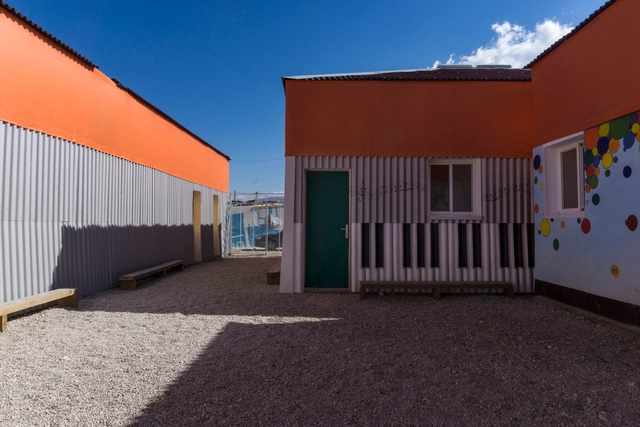
With the Jarahieh Refugee School, CatalyticAction Demonstrates the True Potential Of Temporary Structures

The 2015 Milan Expo required the input of more than 145 countries and 50 international organizations resulting in over 70 temporary pavilions; a combined effort totaling more than €13 billion. Norman Foster’s rippling pavilion for the United Arab Emirates ended up at €60 million. The massive slab of concrete, laid out over the previously green agricultural land to act as the Expo’s foundation cost a whopping €224 million. Even Vietnam’s “low cost” pavilion came in at $2.09 million.

Compare that with, for example, IKEA’s proposal for a temporary refugee shelter that can house 5, costing just $1000, and one can see the absurdity of spending gargantuan sums on buildings that will perhaps be sold to be used later as a clubhouse, or to a museum as another temporary cultural center. Where is the architectural action behind an architectural event that boasts “Energy for Life” or “Better City, Better Life” - the slogan of the Shanghai 2010 Expo - yet spends extraordinary amounts of resources on structures that provide little sustainable development to parts of the world that are actually in dire need of it?

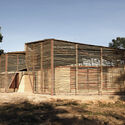
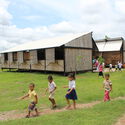
With the Jarahieh Refugee School, CatalyticAction Demonstrates the True Potential Of Temporary Structures - Image 1 of 4With the Jarahieh Refugee School, CatalyticAction Demonstrates the True Potential Of Temporary Structures - Image 2 of 4With the Jarahieh Refugee School, CatalyticAction Demonstrates the True Potential Of Temporary Structures - Image 3 of 4With the Jarahieh Refugee School, CatalyticAction Demonstrates the True Potential Of Temporary Structures - Image 4 of 4With the Jarahieh Refugee School, CatalyticAction Demonstrates the True Potential Of Temporary Structures - More Images+ 32

CatalyticAction Designs Playgrounds for Refugee Children in Bar Elias, Lebanon

Subscriber Access | 

"Within humanitarian responses, programmatically, children often become invisible." (Marc Sommers)

The Syrian crisis has forced thousands of families to leave their homes in search of safe places to continue with their lives. Many families have moved to Lebanon, where the UN has raised a series of informal settlements. While effective in providing shelter, they don't provide specific solutions for children, many of whom have had their studies interrupted and don't have public spaces equipped to play sports and interact with other kids.

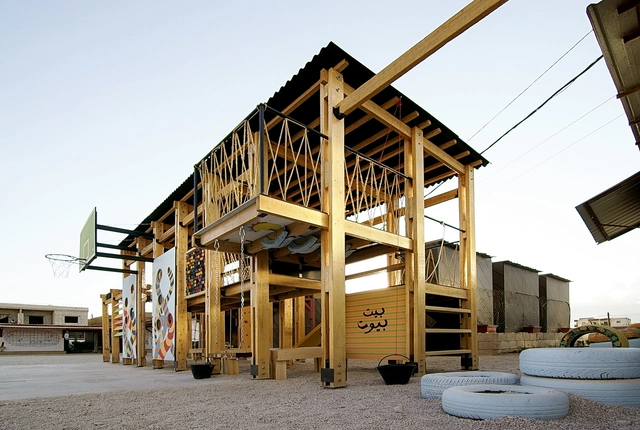
In response to this situation, the architects of CatalyticAction have designed and built a playground in one of the schools developed by The Kayany Foundation and American University of Beirut's Center for Civic Engagement and Community Service, involving children throughout the entire process and allowing the structure to be easily disassembled, transported and either reassembled or repurposed.

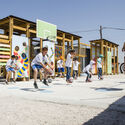
CatalyticAction Designs Playgrounds for Refugee Children in Bar Elias, Lebanon - SustainabilityCatalyticAction Designs Playgrounds for Refugee Children in Bar Elias, Lebanon - SustainabilityCatalyticAction Designs Playgrounds for Refugee Children in Bar Elias, Lebanon - SustainabilityCatalyticAction Designs Playgrounds for Refugee Children in Bar Elias, Lebanon - SustainabilityCatalyticAction Designs Playgrounds for Refugee Children in Bar Elias, Lebanon - More Images+ 18