1. ArchDaily
  2. Castle

Castle: The Latest Architecture and News

Dystopian Disneyland: The Story Behind Turkey’s Castle Ghost Town

Subscriber Access | 

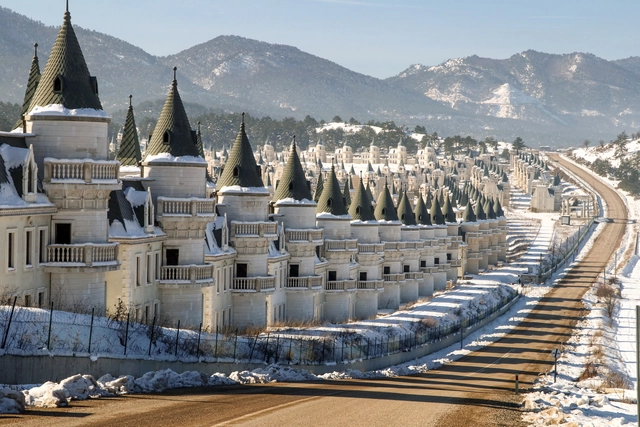
Most of us have probably imagined living in a castle at some point, whether during childhood, enchanted by fairy tales, or as adults studying European monarchies. Considering this fascination, what would you think if you had the chance to buy your castle? In mid-2014, you could make that dream a reality in Turkey for just $370,000. Each luxurious 325-square-meter castle came complete with blue turrets and spiral staircases. The only catch? Your castle would be one of 731 identical ones. But who cares about exclusivity when you have the chance to live in a Disney fairy tale?

Dystopian Disneyland: The Story Behind Turkey’s Castle Ghost Town - Image 1 of 4Dystopian Disneyland: The Story Behind Turkey’s Castle Ghost Town - Image 2 of 4Dystopian Disneyland: The Story Behind Turkey’s Castle Ghost Town - Image 3 of 4Dystopian Disneyland: The Story Behind Turkey’s Castle Ghost Town - Image 4 of 4Dystopian Disneyland: The Story Behind Turkey’s Castle Ghost Town - More Images+ 2

Beautiful, Functional, and Romantic: Spiral Staircases in Paris

Subscriber Access | 

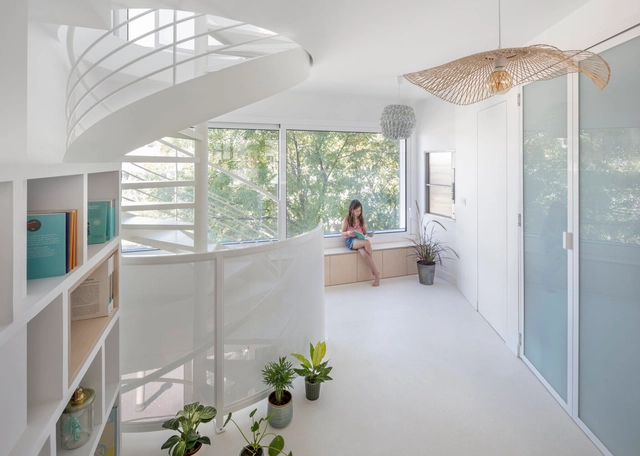
Whether rising to the highest room of the tallest tower in a Disney-esque castle, giving an admirer the chance to confess their love on an apartment building fire escape, or connecting a basement or attic room with a decorative period feature, there’s something unavoidably romantic about spiral staircases. But there’s more function behind these coiling forms than just their good looks.

One common-held theory is that spiral staircases were first installed in historic castles as vertical baffles, tiring out enemy infiltrators before they could make it to the top. This is why – it is said – many are set to turn clockwise on the ascent, so attackers have a smaller arc for swinging weapons (mostly held in right hands) than defenders making their descent.

Beautiful, Functional, and Romantic: Spiral Staircases in Paris - Image 1 of 4Beautiful, Functional, and Romantic: Spiral Staircases in Paris - Image 2 of 4Beautiful, Functional, and Romantic: Spiral Staircases in Paris - Image 3 of 4Beautiful, Functional, and Romantic: Spiral Staircases in Paris - Image 4 of 4Beautiful, Functional, and Romantic: Spiral Staircases in Paris - More Images+ 11

The Tragedies of Chateau Laurens Captured by Romain Veillon

Subscriber Access | 

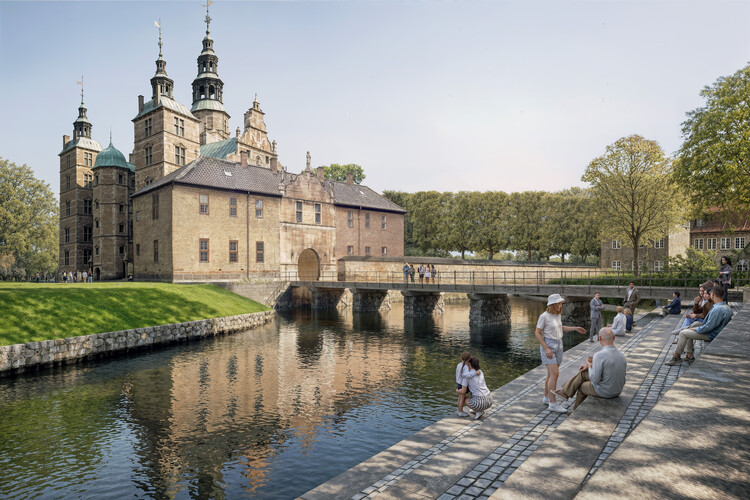
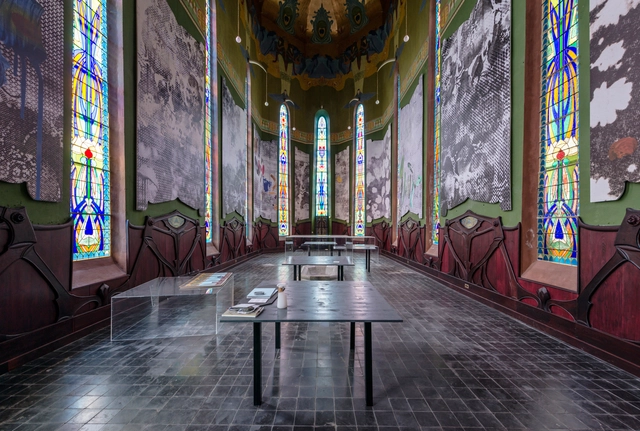
Situated on the Mediterranean port of Agde, France, the eclectic Laurens castle holds a history as rich as its architecture. Emmanuel Laurens, owner and architect of the villa, gathered inspiration from countries all over the world to create his masterpiece. Photographer Romain Veillon visited the castle ahead of its renovation and captured the architectural collages present inside it.

Casa Fundamental Kindergarten / Gabriel Castro + Marcos Franchini (BIRI) + Pedro Haruf

Casa Fundamental Kindergarten / Gabriel Castro + Marcos Franchini (BIRI) + Pedro Haruf - Interior Photography, Elementary & Middle SchoolCasa Fundamental Kindergarten / Gabriel Castro + Marcos Franchini (BIRI) + Pedro Haruf - Interior Photography, Elementary & Middle School, Stairs, HandrailCasa Fundamental Kindergarten / Gabriel Castro + Marcos Franchini (BIRI) + Pedro Haruf - Interior Photography, Elementary & Middle School, StairsCasa Fundamental Kindergarten / Gabriel Castro + Marcos Franchini (BIRI) + Pedro Haruf - Interior Photography, Elementary & Middle School, Table, ChairCasa Fundamental Kindergarten / Gabriel Castro + Marcos Franchini (BIRI) + Pedro Haruf - More Images+ 28

  • Area Area of this architecture project Area:  865
  • Year Completion year of this architecture project Year:  2017
  • Manufacturers Brands with products used in this architecture project
    Manufacturers:  Deca, Eternit, Formica, Knauf, Madepal, +4

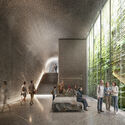
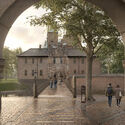
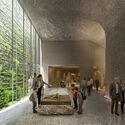
Turin's Castello di Rivoli Tells a Story of the Region's History through Its Architecture

Subscriber Access | 
Turin's Castello di Rivoli Tells a Story of the Region's History through Its Architecture - Featured Image
Castello di Rivoli / Andrea Bruno (Refurbishment). Image © Laurian Ghinitoiu

Given the sheer magnitude and influence of its recorded history, Italy as we know it is a surprisingly young country. For centuries, the region was divided between powerful (and sometimes warring) city-states, each with their own identity, culture, and, fortunes, and influence. Some are eternally famous. Rome is a cradle of history and heart of religion; cool Milan is a hub of contemporary fashion and design; Florence is synonymous with the Renaissance and all the epoch’s relationship to the arts.

Turin’s history is arguably less romantic. The small city in Savoy, a north-Italian region bordering France, has established an identity as an industrial powerhouse. It is home to FIAT and some of Italy’s finest universities; the streets are dotted with works by Nervi, Botta, and Rossi. But despite the design pedigree, perhaps nothing better illustrates the region’s faceted history better than Castello di Rivoli.

Turin's Castello di Rivoli Tells a Story of the Region's History through Its Architecture - Image 1 of 4Turin's Castello di Rivoli Tells a Story of the Region's History through Its Architecture - Image 2 of 4Turin's Castello di Rivoli Tells a Story of the Region's History through Its Architecture - Image 3 of 4Turin's Castello di Rivoli Tells a Story of the Region's History through Its Architecture - Image 4 of 4Turin's Castello di Rivoli Tells a Story of the Region's History through Its Architecture - More Images+ 16

AD Classics: Himeji Castle / Ikeda Terumasa

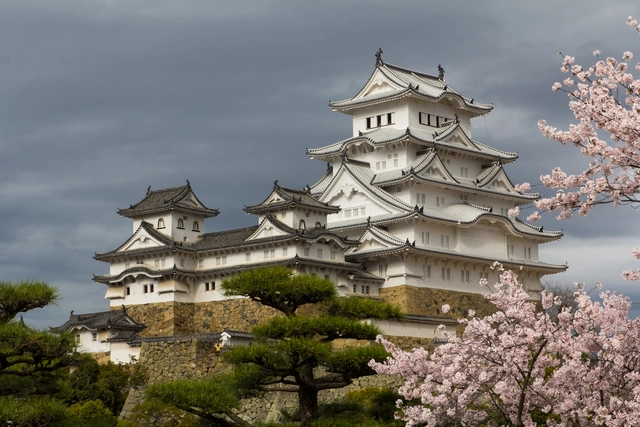
With its gleaming white walls and elegantly terraced roofs, it is easy to forget that Himeji Castle was built as a fortress . Standing on two hilltops in the city of Himeji, the old fortress, also known as Himeji-jo, is the greatest surviving example of Japanese castle architecture from the early years of the Shogunate, which governed the island nation from the late 1500s to the 19th Century. Although never tested in battle, the castle’s elaborate defensive measures represent the best strategic design the period produced. While these measures have since been rendered obsolete, the same cannot be said for the castle’s soaring, pristine aesthetic, which earned it the nickname Shirasagi-jo – “Castle of the White Heron.”

AD Classics: Himeji Castle / Ikeda Terumasa - Landmarks & Monuments, Facade, StairsAD Classics: Himeji Castle / Ikeda Terumasa - Landmarks & Monuments, Beam, DoorAD Classics: Himeji Castle / Ikeda Terumasa - Landmarks & MonumentsAD Classics: Himeji Castle / Ikeda Terumasa - Landmarks & MonumentsAD Classics: Himeji Castle / Ikeda Terumasa - More Images+ 9

Luxury Living Through the Ages, From the Castle to the Villa

Although societies have transformed through the ages, wealth never truly seems to go out of style. That said, the manner in which it is expressed continually adapts to each successive cultural epoch. As a consequence of evolving social mores and emerging technologies, the ideal of “luxury” and “splendour” sees priorities shift from opulence to subtlety, from tradition to innovation, and from visual ornamentation to physical comfort.

AD Classics are ArchDaily's continually updated collection of longer-form building studies of the world's most significant architectural projects. In these ten examples of "high-end" residences, which represent centuries of history across three separate continents, the ever-changing nature of status, power and fine living is revealed.

Luxury Living Through the Ages, From the Castle to the Villa - Image 1 of 4Luxury Living Through the Ages, From the Castle to the Villa - Image 2 of 4Luxury Living Through the Ages, From the Castle to the Villa - Image 3 of 4Luxury Living Through the Ages, From the Castle to the Villa - Image 4 of 4Luxury Living Through the Ages, From the Castle to the Villa - More Images+ 5

AD Classics: Neuschwanstein Castle / Eduard Riedel

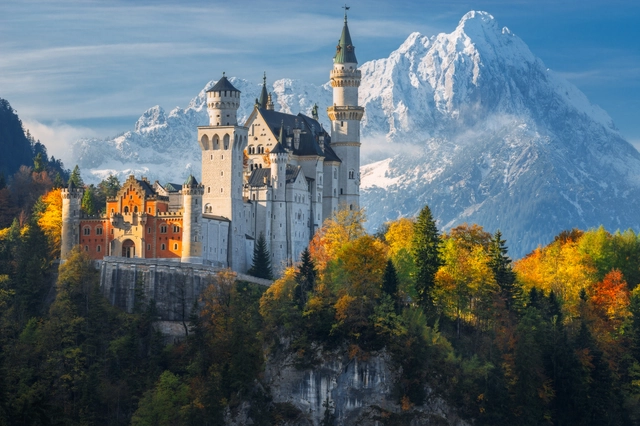
Looming over the small Bavarian town of Hohenschwangau are the turrets and towers of one of the world’s most famous “fairytale” castles. Schloß Neuschwanstein, or “New Swan Stone Castle,” was the fantastical creation of King Ludwig II – a monarch who dreamed of creating for himself an ideal medieval palace, nestled in the Alps. Though designed to represent a 13th-century Romanesque castle[1], Neuschwanstein was a thoroughly 19th-century project, constructed using industrial methods and filled with modern comforts and conveniences; indeed, without the technological advancements of the time, Ludwig could never have escaped into his medieval fantasy.[2]

AD Classics: Neuschwanstein Castle / Eduard Riedel - Other, FacadeAD Classics: Neuschwanstein Castle / Eduard Riedel - Other, Facade, Arch, ArcadeAD Classics: Neuschwanstein Castle / Eduard Riedel - Other, Facade, Arcade, Arch, ColumnAD Classics: Neuschwanstein Castle / Eduard Riedel - Other, Arcade, Arch, ColumnAD Classics: Neuschwanstein Castle / Eduard Riedel - More Images+ 8