

What happens when the sensor-imbued city acquires the ability to see – almost as if it had eyes? Ahead of the 2019 Shenzhen Biennale of Urbanism\Architecture (UABB), titled "Urban Interactions," ArchDaily is working with the curators of the "Eyes of the City" section at the Biennial to stimulate a discussion on how new technologies – and Artificial Intelligence in particular – might impact architecture and urban life. Here you can read the “Eyes of the City” curatorial statement by Carlo Ratti, the Politecnico di Torino and SCUT. If you are interested in taking part in the exhibition at UABB 2019, submit your proposal to the “Eyes of the City” Open Call by May 31st, 2019: www.eyesofthecity.net
Carlo Ratti Associati: The Latest Architecture and News
Seoul City Machine / Liam Young for the Shenzhen Biennale (UABB) 2019
https://www.archdaily.com/917723/seoul-city-machine-liam-young-for-the-shenzhen-biennale-uabb-2019Liam Young
Is the Internet Bringing Us to the Middle Ages? / Deyan Sudjic's Response to the Curatorial Statement of the Shenzhen Biennale(UABB) 2019

What happens when the sensor-imbued city acquires the ability to see – almost as if it had eyes? Ahead of the 2019 Shenzhen Biennale of Urbanism\Architecture (UABB), titled "Urban Interactions," ArchDaily is working with the curators of the "Eyes of the City" section at the Biennial to stimulate a discussion on how new technologies – and Artificial Intelligence in particular – might impact architecture and urban life. Here you can read the “Eyes of the City” curatorial statement by Carlo Ratti, the Politecnico di Torino and SCUT. If you are interested in taking part in the exhibition at UABB 2019, submit your proposal to the “Eyes of the City” Open Call by May 31st, 2019: www.eyesofthecity.net
Without the city, modernity could never have been invented. What we are in the midst of discovering now is whether modernity can survive in a city transformed by the digital revolution. The village may offer security and community, but what it does not allow its inhabitants is the possibility of being different, a phenomenon that is as true now as it was during the witch-burning era.
https://www.archdaily.com/917019/is-the-internet-bringing-us-to-the-middle-ages-deyan-sudjics-response-to-the-curatorial-statement-of-the-shenzhen-biennale-uabb-2019Deyan Sudjic
Steven Holl and Carlo Ratti Among Final Teams for Sydney's Powerhouse Precinct at Parramatta
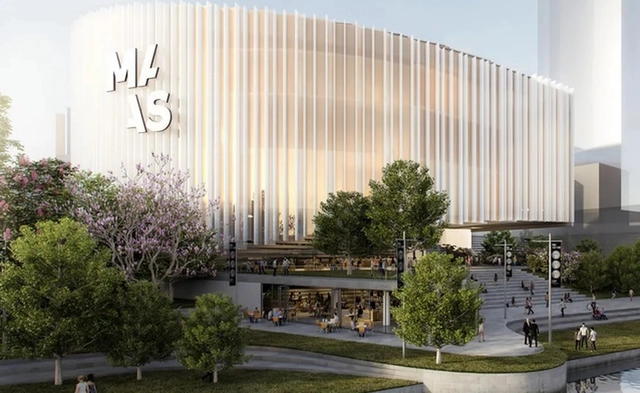
Six design teams have been shortlisted in the competition for the landmark new Powerhouse Precinct at Parramatta, Sydney. The Powerhouse Precinct is the largest cultural infrastructure project in Australia. The competition is focused on a 24-hour museum that will showcase Museum of Applied Arts and Sciences (MAAS) collection. The project aims to transform one of Australia’s oldest cultural institutions, setting an international benchmark in cultural precinct design.
https://www.archdaily.com/916649/steven-holl-and-carlo-ratti-among-final-teams-for-sydneys-powerhouse-precinct-at-parramattaEric Baldwin
The Extraction Infrastructure Web / J. Meejin Yoon's Response to Curatorial Statement at Shenzhen Biennale (UABB) 2019

What happens when the sensor-imbued city acquires the ability to see – almost as if it had eyes? Ahead of the 2019 Shenzhen Biennale of Urbanism\Architecture (UABB), titled "Urban Interactions". ArchDaily is working with the curators of the "Eyes of the City" section at UABB 2019 to set up a discussion on how new technologies - and Artificial Intelligence in particular - might impact architecture and urban life. Here you can read the “Eyes of the City” curatorial statement by Carlo Ratti, Politecnico di Torino, and SCUT. If you are interested in taking part in the exhibition at UABB 2019, submit your proposal to the “Eyes of the City” open call until May 31st, 2019: www.eyesofthecity.net
Urban development has intensified the development of a national landscape of energy production – a territory that could be called the ‘extraction infrastructure web’. This landscape exists out of sight; obfuscated by a complex distribution of corporate, government and environmental databases. The city benefits from the energy network, while averting its gaze from the social and environmental consequences of the flow of energy from the territories of extraction to the metropolis.
https://www.archdaily.com/916525/the-extraction-infrastructure-web-j-meejin-yoons-response-to-curatorial-statement-at-shenzhen-biennale-uabb-2019J. Meejin Yoon
From the "Eyes on the Street" to the "Eyes of the City"/ Antoine Picon's Response to Curatorial Statement at Shenzhen Biennial 2019
.jpg?1556705336&format=webp&width=640&height=580)
What happens when the sensor-imbued city acquires the ability to see – almost as if it had eyes? Ahead of the 2019 Shenzhen Biennale of Urbanism\Architecture (UABB), ArchDaily is working with the curators of the "Eyes of the City" section at UABB 2019 to set up a discussion on how new technologies - and Artificial Intelligence in particular - might impact architecture and urban life. Here you can read the “Eyes of the City” curatorial statement by Carlo Ratti, Politecnico di Torino, and SCUT. If you are interested in taking part in the exhibition at UABB 2019, submit your proposal to the “Eyes of the City” open call until May 31st, 2019: www.eyesofthecity.net
Comparisons, transpositions and metaphors can be misleading if one does not unpack carefully their point of departure. The notion that the digital age introduces us to a new regime of "eyes on the street", an expression famously coined by Jane Jacobs, requires understanding exactly what the author of The Death and Life of Great American Cities implied when she used it. For Jane Jacobs, the active presence of city dwellers in the street, their unconscious or conscious monitoring of what was going on in their immediate surroundings was the best way to ensure public safety. "The public peace — the sidewalk and the street peace— of cities is not kept primarily by the police, necessary as police are. It is kept primarily by an intricate, almost unconscious, network of voluntary controls and standards among the people themselves, and enforced by the people themselves," wrote Jane Jacobs.
https://www.archdaily.com/916169/from-the-eyes-on-the-street-to-the-eyes-of-the-cityAntoine Picon
We Are Looking Back! / Yung Ho Chang's Response to Curatorial Statement at Shenzhen Biennial 2019
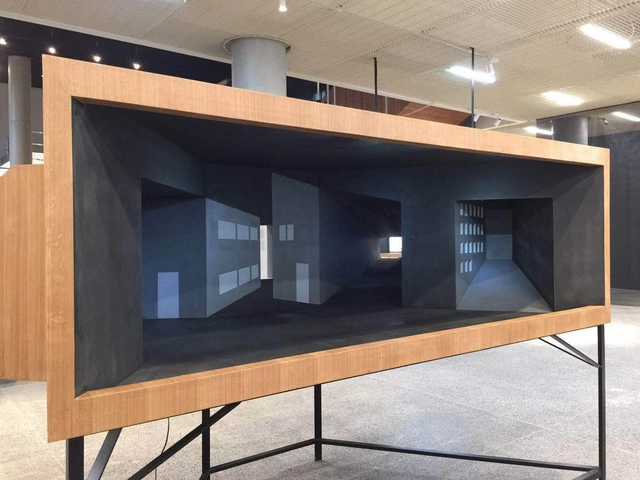
ArchDaily is working with the "Eyes of the City" curatorial team, to publish a series of articles by international architects, designers, writers and thinkers who will discuss the ways in which new technologies - and Artificial Intelligence in particular - might impact architecture and urban life. After the publication of the curatorial statement by Carlo Ratti, Politecnico di Torino and SCUT, we are hosting a text by Chinese architect Yung Ho Chang, curator of the first edition of Shenzhen Biennale in 2005. The open call for proposals for the “Eyes of the City” will run from April 1st to May 31st: www.eyesofthecity.net
https://www.archdaily.com/915461/we-are-looking-back-yung-ho-changs-response-to-curatorial-statement-at-shenzhen-biennial-2019Yung Ho Chang
Eyes of the City: Carlo Ratti, Politecnico di Torino and SCUT on Their Curatorial Theme of Shenzhen Biennale 2019
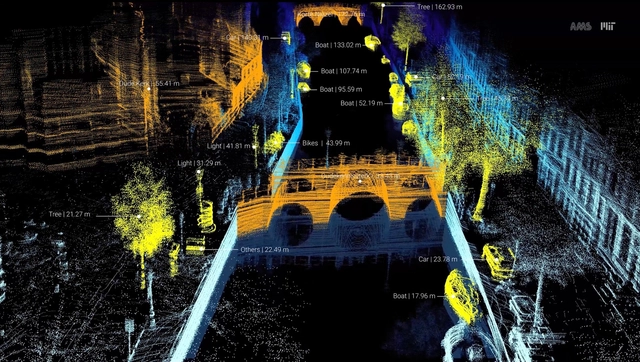
Opening on December 15th, 2019 in Shenzhen, China, "Urban Interactions" is the 8th edition of the Bi-City Biennale of Urbanism\Architecture (UABB). The exhibition consists of two sections, namely “Eyes of the City” and “Ascending City”, which will explore the evolving relationship between urban space and technological innovation from different perspectives. The “Eyes of the City" section features MIT professor and architect Carlo Ratti as Chief Curator and Politecnico di Torino-South China University of Technology as Academic Curator. The "Ascending City" section features Chinese academician Meng Jianmin and Italian art critic Fabio Cavallucci as Chief Curators.
ArchDaily is working with the "Eyes of the City" curatorial team, to publish a series of articles by international architects, designers, writers and thinkers who will discuss the ways in which new technologies - and Artificial Intelligence in particular - might impact architecture and urban life. The open call for proposals for the “Eyes of the City” will run from April 1st to May 31st: www.eyesofthecity.net
https://www.archdaily.com/914539/how-will-we-live-with-the-eyes-of-the-street-carlo-ratti-michele-bonino-and-sun-yimin-on-the-theme-of-shenzhen-biennial-2019Maria Erman
Carlo Ratti Unveils Structure Grown from Mushrooms at Milan Design Week

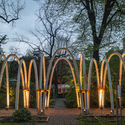
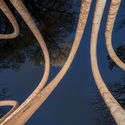
Carlo Ratti Associati, working in collaboration with energy company Eni, has developed an architectural structure made of mushrooms, unveiled at Milan Design Week. “The Circular Garden” was grown from soil made over the past six weeks, and will be returned to the soil at the end of the month. The structure is composed of a series of arches adding up to a 1-kilometer-long mycelium, experimenting with sustainable structures that can grow organically.


https://www.archdaily.com/914704/carlo-ratti-unveils-structure-grown-from-mushrooms-at-milan-design-weekNiall Patrick Walsh
Shenzhen 2019 Bi-City Biennale of Urbanism\Architecture - “Eyes of the City” Exhibition Section - Call for Submissions
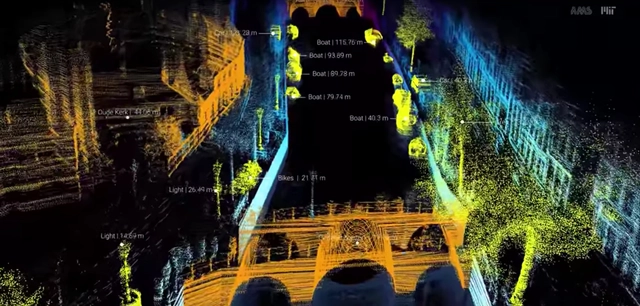
We, the curators of the Carlo Ratti/South China-Torino Lab (Politecnico di Torino-South China University of Technology CUT) team, are pleased to announce the Open Call for proposals to participate in the “Eyes of the City” exhibition section in the framework of the 2019 Shenzhen Bi-City Biennale of Urbanism\Architecture (UABB). We invite international architects, planners, designers, philosophers, thinkers, scientists, companies, educational institutions, research laboratories, think-tanks and students to submit their proposals from April 1st to May 31st, 2019. The Open Call will accept proposals for design projects, research projects and critical essays that will form the core of the “Eyes of the City” exhibition section, that will be hosted in UABB’s main venue.
Download the information related to this competition here.
https://www.archdaily.com/914096/shenzhen-2019-bi-city-biennale-of-urbanism-architecture-eyes-of-the-city-exhibition-section-call-for-submissionsRene Submissions
Carlo Ratti Reveals Design for the Italian Pavilion at Expo Dubai 2020
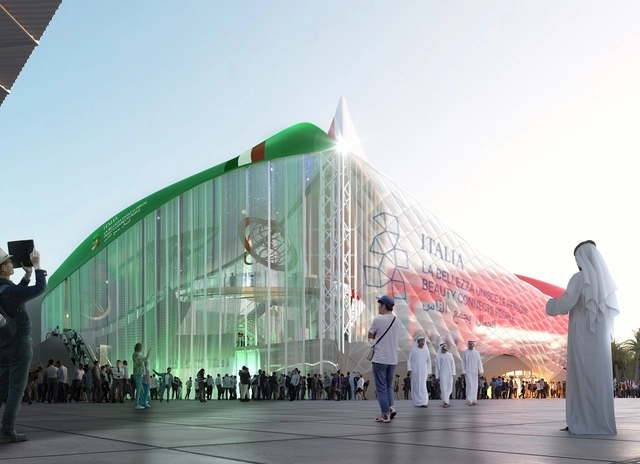
Carlo Ratti Associati has published details of their competition-winning design for the Italian Pavilion at Expo Dubai 2020, designed in collaboration with Italo Rota, Matteo Gatto, and F&M Ingegneria. Inspired by Dubai’s marine tradition, the pavilion’s construction sequence will see three boats arrive in Dubai by sea, before being raised and turned upside down to become the roof of the pavilion.
Titled “Sailing Beauty,” the pavilion seeks to explore new ways in which “beauty connects people,” embodying the theme of Italy’s participation in Dubai Expo 2020. The pavilion also pays tribute to the long history of explorers throughout the centuries who “sailed the seas and wove together a shared Mediterranean cultural heritage.”


https://www.archdaily.com/913382/carlo-ratti-reveals-design-for-the-italian-pavilion-at-expo-dubai-2020Niall Patrick Walsh
Carlo Ratti Associati Designs Self-Driving Robotic Bar

Carlo Ratti Associati has teamed up with Makr Shakr, the world’s leading producer of robotic bartending systems, to design a driverless robotic bar which “aims to propose new on-demand ways to enjoy leisure in cities.” GUIDO (Italian for “I drive”) features two mechanical arms with the ability to precisely prepare and serve drinks in seconds, mounted atop an autonomous vehicular platform.
Self-driving technology allows GUIDO to weave through the built environment, responding to bookings from a customer app. As orders are placed through the app, GUIDO sources the cocktail’s components from bottles stored on the counter, and prepares the drink on site. GUIDO’s system also performs ID age verification and supports paying via mobile phone.
https://www.archdaily.com/909466/carlo-ratti-associati-designs-self-driving-robotic-cafeNiall Patrick Walsh
Carlo Ratti Designs Prefab Housing for Rural India
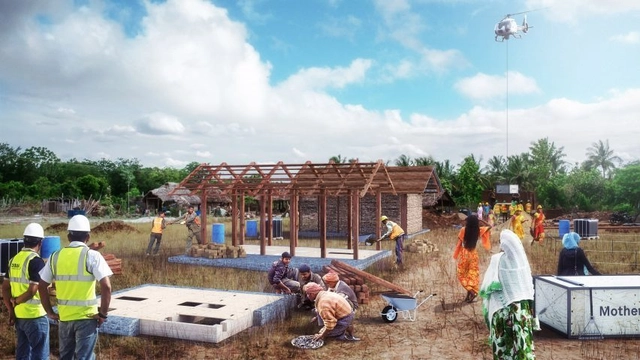
Architecture practice Carlo Ratti Associati has designed a low-cost prefabricated housing system for Indian non-profit WeRise. The new "Livingboard" system was made so that homeowners can build any structure they like on top of it. Made as a pilot project to encourage rural housing development, the system is being tested in a village outside Bangalore. As a portable "motherboard", the design provides homeowners prefabricated and flat-packed elements like waste management and water treatment systems.
https://www.archdaily.com/908715/carlo-ratti-designs-prefab-housing-for-rural-indiaEric Baldwin
BIG and Carlo Ratti Associati Reveal Design for One of Singapore's Tallest Buildings

Bjarke Ingels Group and Carlo Ratti Associati have broken ground on 88 Market Street, a new skyscraper at the heart of Singapore's business district. Transforming a site which was previously occupied by a parking structure from the 1980s, the 280-meter-tall building will include plentiful greenery both on its facades and internally. Inside, the building will include offices, 299 serviced residential units, and ancillary retail space.


https://www.archdaily.com/888942/big-and-carlo-ratti-associati-reveal-design-for-one-of-singapores-tallest-buildingsRory Stott