1. ArchDaily
  2. Bernard Khoury Architects

Bernard Khoury Architects: The Latest Architecture and News

Gyumri’s Revival: Rebuilding Armenia’s Cultural Heritage After the 1988 Earthquake

Subscriber Access | 

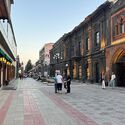
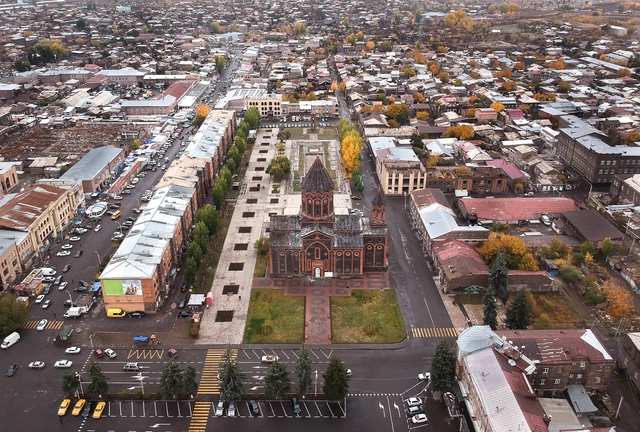
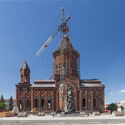
Gyumri, the capital of Armenia's Shirak region and the country's second-largest city, was historically known for its culture and architectural heritage. While it was part of the Soviet Union, the city hosted many factories that turned it into a primary industrial center in the region, reaching a population of approximately 225,000 people. However, during the past decades, Gyumri has seen a considerable population decline as a consequence of a devastating earthquake that destroyed the city in 1988 and killed thousands of people. More than 30 years later, Gyumri's regeneration process is still unfolding. The city's ongoing efforts to restore its built environment and boost economic development offer valuable insights into how urban regeneration can be navigated in the aftermath of disaster.
Gyumri’s Revival: Rebuilding Armenia’s Cultural Heritage After the 1988 Earthquake - Image 1 of 4Gyumri’s Revival: Rebuilding Armenia’s Cultural Heritage After the 1988 Earthquake - Image 2 of 4Gyumri’s Revival: Rebuilding Armenia’s Cultural Heritage After the 1988 Earthquake - Image 3 of 4Gyumri’s Revival: Rebuilding Armenia’s Cultural Heritage After the 1988 Earthquake - Image 4 of 4Gyumri’s Revival: Rebuilding Armenia’s Cultural Heritage After the 1988 Earthquake - More Images+ 5

Khalil Khouri, Modernism, and the Arab World: In Conversation with Bernard Khoury

Subscriber Access | 

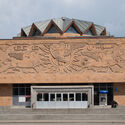
In Beirut, the Interdesign Building stands as a striking yet enigmatic structure. Never used since its conception in 1973, the building was designed by Lebanese architect Khalil Khouri and, in some ways, it represents a physical testament to the region’s hopes and struggles. During the inaugural edition of We Design Beirut, the exhibition “All Things Must(n't) Pass: A Subjective Recount Of Khalil Khouri’s Life And Career As A Designer” opened the building to the public, aiming to tell the story of its architect, Khalil Khouri, through the lens of his son and grandson, Bernard and Teymour Khoury. On this occasion, ArchDaily’s Editor in Chief, Christele Harrouk sat down with Bernard Khoury at his DW5 office to discuss the life of his father and a little-known chapter of Lebanese architectural history.

Khalil Khouri, Modernism, and the Arab World: In Conversation with Bernard Khoury - Image 5 of 4Khalil Khouri, Modernism, and the Arab World: In Conversation with Bernard Khoury - Image 1 of 4Khalil Khouri, Modernism, and the Arab World: In Conversation with Bernard Khoury - Image 2 of 4Khalil Khouri, Modernism, and the Arab World: In Conversation with Bernard Khoury - Image 3 of 4Khalil Khouri, Modernism, and the Arab World: In Conversation with Bernard Khoury - More Images+ 34

Celebrating Creativity: We Design Beirut Announces Program Featuring Activations and Exhibitions Across the City

We Design Beirut, Lebanon’s four-day design experience will take place from May 23-26, 2024. This multidisciplinary event aims to showcase and celebrate design and creativity through a varied program, including showcases, installations, talks, and workshops. Founded by Mariana Wehbe in collaboration with industrial designer Samer Alameen, the event seeks to foster a global conversation on design and sustainability through programs in the fields of interior design, architecture, furniture, product design, functional art, ceramics, and home accessories.

Celebrating Creativity: We Design Beirut Announces Program Featuring Activations and Exhibitions Across the City - Image 1 of 4Celebrating Creativity: We Design Beirut Announces Program Featuring Activations and Exhibitions Across the City - Image 2 of 4Celebrating Creativity: We Design Beirut Announces Program Featuring Activations and Exhibitions Across the City - Image 3 of 4Celebrating Creativity: We Design Beirut Announces Program Featuring Activations and Exhibitions Across the City - Image 4 of 4Celebrating Creativity: We Design Beirut Announces Program Featuring Activations and Exhibitions Across the City - More Images+ 9

Graham Foundation Supports 38 Projects, Exhibitions, Publications and Public Programs Focusing on Architecture's Role in Culture Creation

The Graham Foundation announced awards to organizations worldwide, supporting 38 different projects. The projects range from exhibitions, publications, and other activations serving the public through arts and culture. Together, these projects examine various topics, platforms, and issues in contemporary architecture discourse and showcase the work of architects, artists, curators, designers, educators, and other professionals working with organizations around the world in places like Chicago, Los Angeles, Tijuana, and Beirut.

Graham Foundation Supports 38 Projects, Exhibitions, Publications and Public Programs Focusing on Architecture's Role in Culture Creation - Image 5 of 4Graham Foundation Supports 38 Projects, Exhibitions, Publications and Public Programs Focusing on Architecture's Role in Culture Creation - Image 4 of 4Graham Foundation Supports 38 Projects, Exhibitions, Publications and Public Programs Focusing on Architecture's Role in Culture Creation - Image 3 of 4Graham Foundation Supports 38 Projects, Exhibitions, Publications and Public Programs Focusing on Architecture's Role in Culture Creation - Image 2 of 4Graham Foundation Supports 38 Projects, Exhibitions, Publications and Public Programs Focusing on Architecture's Role in Culture Creation - More Images+ 2

Beirut Architecture City Guide: 20 Contemporary Projects to Explore in the Lebanese Capital

Subscriber Access | 

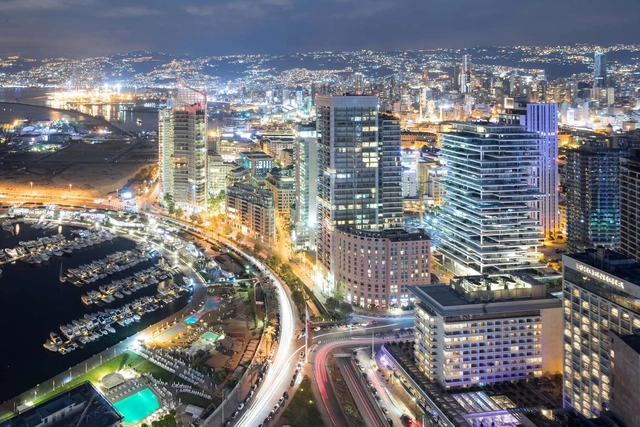
Situated on the coast of the Mediterranean Sea, Beirut is one of the oldest cities in the world that has been shaped throughout its 5,000 year history by Phoenicians, Romans, Greeks, and the Ottomans. The Lebanese capital has been for decades a cosmopolitan city and a focal cultural and geographical link between Europe and the Middle East.

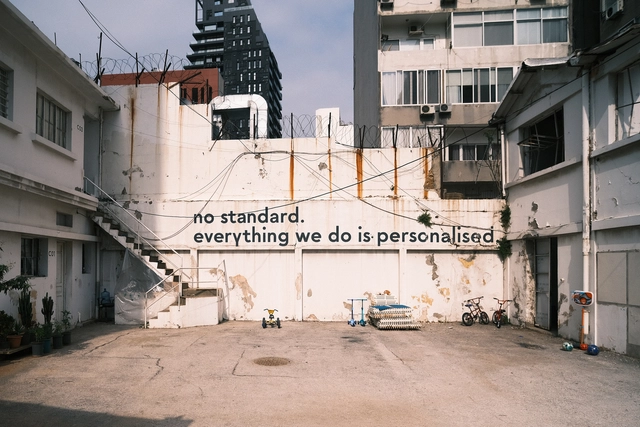
Often labeled as a resilient city, Beirut has been subject to numerous devastating events throughout its history, from a brutal 15-year civil war to one of the biggest non-nuclear blasts in history. Nowadays, the city boasts a skyline full of contrasts, where contemporary buildings rise alongside Ottoman, Roman, and Byzantine ruins. Its architecture, along with its renowned cuisine, distinguished night life, archaeological sites, and hospitable people have reclaimed it as a sought-after touristic destination.

Beirut Architecture City Guide: 20 Contemporary Projects to Explore in the Lebanese Capital - Image 11 of 4Beirut Architecture City Guide: 20 Contemporary Projects to Explore in the Lebanese Capital - Image 8 of 4Beirut Architecture City Guide: 20 Contemporary Projects to Explore in the Lebanese Capital - Image 4 of 4Beirut Architecture City Guide: 20 Contemporary Projects to Explore in the Lebanese Capital - Image 14 of 4Beirut Architecture City Guide: 20 Contemporary Projects to Explore in the Lebanese Capital - More Images+ 16

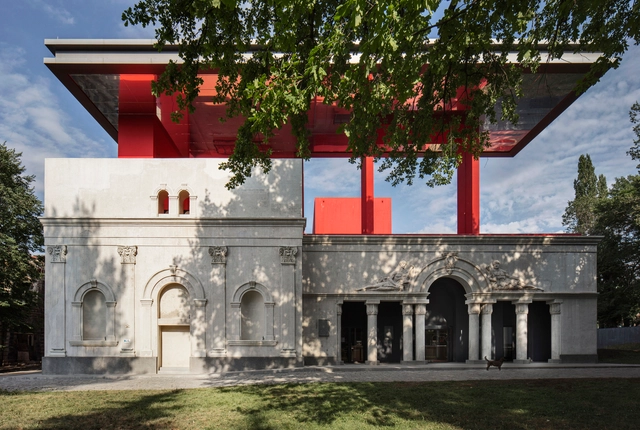
Tumo Center for Creative Technologies / Bernard Khoury Architects

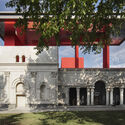
Tumo Center for Creative Technologies / Bernard Khoury Architects - Exterior Photography, Adaptive Reuse, FacadeTumo Center for Creative Technologies / Bernard Khoury Architects - Interior Photography, Adaptive Reuse, ChairTumo Center for Creative Technologies / Bernard Khoury Architects - Interior Photography, Adaptive Reuse, StairsTumo Center for Creative Technologies / Bernard Khoury Architects - Interior Photography, Adaptive Reuse, FacadeTumo Center for Creative Technologies / Bernard Khoury Architects - More Images+ 30

The Contemporary Approach to Rebuilding Cities Post-Disaster: The Case of Beirut

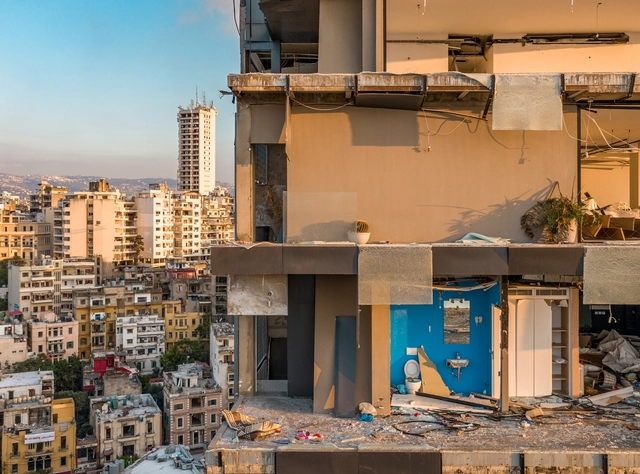
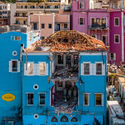
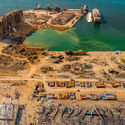
Almost 6 months ago, on August 4th, 2020, the city of Beirut was shaken by one of the biggest non-nuclear blasts in history. Leaving the northern side of the capital in ruins, the explosion damaged around 40,000 buildings. New contemporary structures completed recently by local international architects are now facing reconstruction dilemmas, raising existential questions such as: How should reconstruction efforts of “new” damaged buildings look like? Should architects rebuild them as they were before the blast, erasing what has happened or should they leave scars and portray new realities?

In order to explore ideas and highlight different perspectives, ArchDaily had the chance to sit with three architects whose buildings were impacted by the blast. Bernard Khoury, Paul Kaloustian, and Lina Ghotmeh talked about their projects and their vision of the reconstruction of Beirut with ArchDaily's Managing Editor, Christele Harrouk, alongside Architectural Photographer Laurian Ghinitoiu, who documented in a featured photo series the extent of the destruction.

The Contemporary Approach to Rebuilding Cities Post-Disaster: The Case of Beirut - Image 1 of 4The Contemporary Approach to Rebuilding Cities Post-Disaster: The Case of Beirut - Image 2 of 4The Contemporary Approach to Rebuilding Cities Post-Disaster: The Case of Beirut - Image 3 of 4The Contemporary Approach to Rebuilding Cities Post-Disaster: The Case of Beirut - Image 4 of 4The Contemporary Approach to Rebuilding Cities Post-Disaster: The Case of Beirut - More Images+ 15

Beirut: Between a Threatened Architectural Heritage and a Traumatized Collective Memory

It only took a couple of seconds to destroy 40% of the city of Beirut on August 4th, 2020. A couple of trivial seconds were enough to determine the fate of the urban and social fabric of the Lebanese capital and its architectural heritage. Years and years of accumulated cultural assets fell instantly in distress, causing more harm than the infamous 15-year civil war. These seconds have erased the past, present, and destroyed future aspirations.

Hit right in its rich cultural center, the blast of the port shook the northeastern side of the Lebanese capital, leaving the neighborhoods of Mdawar, Rmeil, Gemmayze, Achrafieh, Mar Mkhayel, Karantina, and Geitawi, severely hurt. According to the UN Development Programme (UNDP), 200,000 housing units were affected by the explosions, with an estimated 40,000 buildings damaged, of which 3,000 were severely damaged.

Beirut: Between a Threatened Architectural Heritage and a Traumatized Collective Memory - Image 1 of 4Beirut: Between a Threatened Architectural Heritage and a Traumatized Collective Memory - Image 2 of 4Beirut: Between a Threatened Architectural Heritage and a Traumatized Collective Memory - Image 3 of 4Beirut: Between a Threatened Architectural Heritage and a Traumatized Collective Memory - Image 4 of 4Beirut: Between a Threatened Architectural Heritage and a Traumatized Collective Memory - More Images+ 20

Venice Biennale 2014: "European-ness Porosity" Symposium

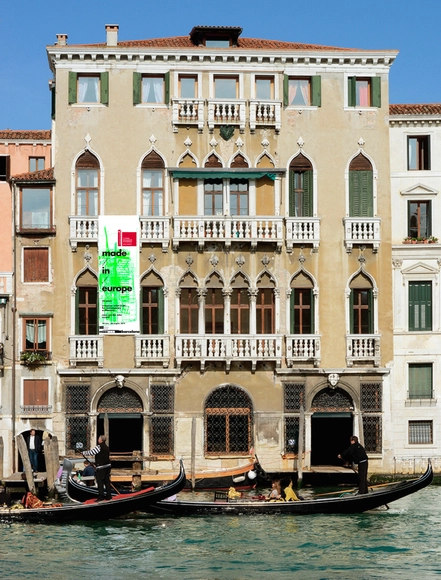
"European-ness Porosity" is presented as part of “MADE IN EUROPE: 25 years of the European Union Prize for Contemporary Architecture – Mies van der Rohe Award.”

From the Organizers. Europe is currently experiencing a paradigm shift from national to urban identities. As its boundaries become increasingly blurred, each city is claiming an identity of its own. Europe is predominantly urban, and the condition of the European city is related to a stratification of architectures, functions and events which, palimpsest-like, shape a compact, complex understanding of the urban experience that embraces its architectonic heritage, industrial development, social housing, archaeological sites, modern infrastructure and the cities rebuilt after WW2.

The globalisation process began with the emigration of artists and architects during WW1, and continuing with the exodus due to the rise of the Nazi Party in Germany and the start of WW2. In this sense, Europe acted as a transmission device, the key node in a complex process of emission and assimilation. Today we live in a liquid reality whose theme is permeability, a reality in which professionals and intellectuals can move across porous borders.