The “Reconstructing the Future for People and Planet” Conference, hosted by Bauhaus Earth and the Pontifical Academy of Sciences (PAS), has begun at the Casina Pio IV in the Vatican Gardens. The conference opened with a speech from Ursula von der Leyen, president of the European Commission. The extensive program brings together renowned scientists, architects, spatial planners, and policymakers to discuss the transformation of the built environment from a driver of climatic and societal crises into a force for regeneration.
The term ‘Architect’ can be open to interpretation much like the reverence of an Artist. However, the universally recognized definition of the role is regarded as one who designs and plans buildings, a key member in terms of building construction. Architecture as a profession presents itself as a very diverse occupation. As an Art and Science in every sense, it offers insight into a vast range of subjects that can be applied to a range of different ventures.
Often Architecture students are offered with such a rigid path, constrained with these short-sighted ideas that an Architect must follow a particular direction to flourish in the field. When in fact it is interesting to note the vast opportunities that arise when given opportunity to diversify. Here are the Architects that have branched out and become successful fashion designers …
The Architecture Film Festival London, now at its third edition, fosters conversations around architecture, society and the built environment through the medium of film. Along with the International Film Competition, the 2021 programme, debuting on June 2nd and held online, will feature a collection of diverse thematic screenings, essays and events titled "Capsules", which offer a platform to multiple curatorial voices.
Bauhaus Campus 2021 Architecture Competition for Students Poster
After putting his career as an architect on hold to fight the first world war between 1914 and 1918, Walter Gropius sensed the world needed a radical change, a change in which arts and architecture would play a fundamental role.
One of the most highly regarded architects of the 20th century, Walter Gropius (18 May 1883 – 5 July 1969) was one of the founding fathers of Modernism, and the founder of the Bauhaus, the German "School of Building" that embraced elements of art, architecture, graphic design, interior design, industrial design, and typography in its design, development and production.
https://www.archdaily.com/375067/happy-birthday-to-bauhaus-founder-and-acclaimed-modernist-walter-gropiusAD Editorial Team
Design research in cooperation with the Bauhaus Dessau Foundation, the Anhalt University of Applied Sciences and the Cluster of Excellence “Matters of Activity. Image Space Material” at Humboldt Universität zu Berlin.
Modernism could be described as one of the most optimistic styles in architectural history, drawing from notions of utopia, innovation, and the reimagination of how humans would live, work, and interact. As we reflected in our AD Essentials Guide to Modernism, the philosophy of Modernism still dominates much of architectural discourse today, even if the world that gave rise to Modernism has changed utterly.
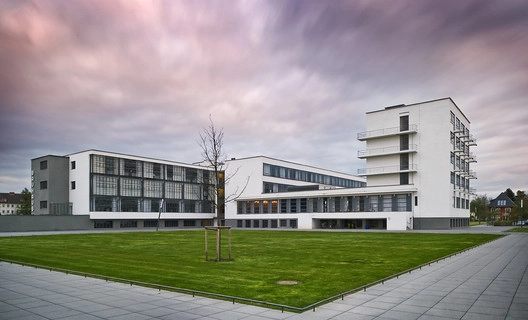
As we say goodbye to 2019, a year that saw the centenary of the Bauhaus, we have collated a list of key architectural styles that defined Modernism in architecture. This tool for understanding the development of 20th-century design is complete with examples of each style, showcasing the practice of Modernism that lay behind the theory.
From academic institutes in North America to residential projects in the Middle East, the various disciplines of Bauhaus and its influence on architecture and design are noticeably present in projects all over the world. While most projects acquired the school's universal language, a few unique ones combined Bauhaus' theory and design principles with the site's cultural and climatic specificity.
This article is a collaboration between ArchDaily and the Arieh Sharon Org. All historical images were shared by the organization.
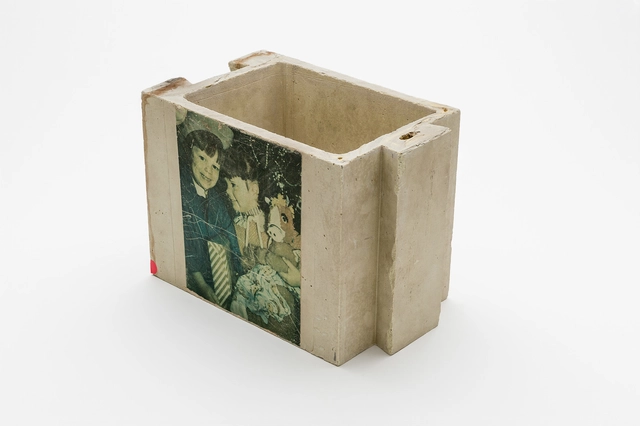
Minimum Cost Housing Group, McGill University, sulphur concrete block, c. 1972. Sulphur concrete, 31 x 24 x 21 cm / Minimum Cost Housing Group fonds, Canadian Centre for Architecture. Gift of Vikram Bhatt
The brick in the picture is being preserved as part of the archival holdings of the Canadian Centre for Architecture on the work of the Minimum Cost Housing Group (MCHG). Founded at the McGill University School of Architecture in the early 1970s with the goal of analysing “How the other half builds,” the MCHG focused on practices of building and dwelling in developing countries. The group’s research and project work, including experiments with sulphur concrete, were part of a paradigm shift in the discourse on the housing crises of the global South. Measures such as slum clearances and resettlement, often financed by the World Bank or other international organisations to counter the hardships of the “urban poor,” were mere expressions of the functionalist logics propagated by the construction industries in capitalist societies. Many architects and planners criticised the destruction of existing structures and practices of communal dwelling that went along with these measures, and shifted their focus to informal and vernacular building practices. The notion of Habitat, already discussed in the 1953 CIAM meeting, shaped the approaches to the human settlement problems of the poor from the 1970s onwards.
When members of the Bauhaus school fled Germany, many of these talented visionaries made their way to Tel Aviv. At the time, the city was in its fledgling stages and served as the ideal blank canvas for this idealistic concept. Today, the city boasts over 4,000 Bauhaus buildings and has earned distinction as a UNESCO World Cultural Heritage site. Last year, for the 100th anniversary of Bauhaus, the city opened the White City Center in partnership with the German government to actively promote the preservation of this iconic architectural style. The White City Center hosts exhibitions where visitors can learn more about this iconic style. The Bauhaus Center is also worth a visit and hosts weekly guided tours on Fridays for a small fee. For those who are planning a visit here’s our list of the top six must-see Bauhaus buildings in Tel Aviv.
https://www.archdaily.com/932625/tel-aviv-city-guide-6-bauhaus-buildings-to-see-in-the-white-cityThe White City Center
in 2019, the Bauhaus turned 100 and a crop of museum buildings sprang up for the celebration.
In 2019, two museums bearing the name Bauhaus appeared on the German culture circuit. Angling to capitalize on the design school’s centennial, the Bauhaus Museum Weimar was first out of the gate, opening in early April; a few clicks behind, the Bauhaus Museum Dessau followed suit in early September. A third project, the much-delayed extension to Walter Gropius’s 1979 Bauhaus- Archiv/Museum für Gestaltung in Berlin, did not manage to keep pace and isn’t expected to open for a couple more years yet.
ArchDaily in collaboration with Google Arts & Culture. Image Courtesy of Tomás Olivos
Bauhaus: a school, a design discipline, and a movement that has been influencing generations of architects and designers for 100 years.
The school was a lot more than modernist designs and primary colors, it was a movement with a political, social, and cultural impact, led by some of the most notable figures in the field. Since its inauguration in 1919, the school has defined its own style through the intersection of architecture, art, industrial design, typography, graphic design, and interior design. When the school was forced to close its doors in the face of political pressure, its professors and students dispersed, spreading its teachings across the world.
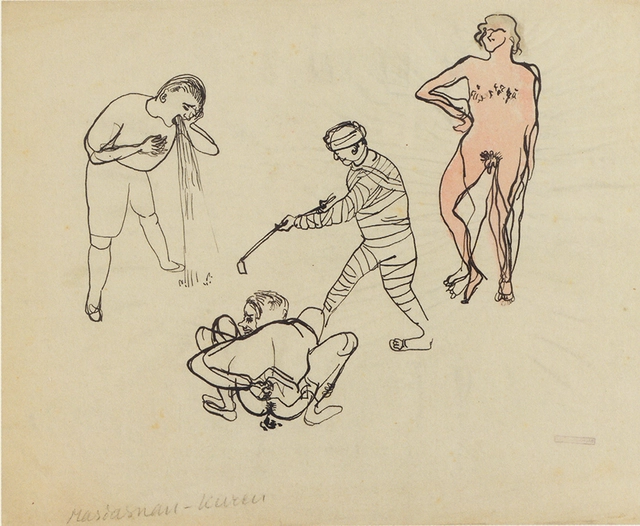
Bauhaus, among many other design movements and disciplines, has had great influence on contemporary architecture. Many claim that the school is in fact a pillar in modern-day architecture and design with its rationality, simplicity, and efficiency. However, behind Bauhaus’ smooth surfaces, a life of violence, occultism, sexuality, and pharmacology was taking place.
In a recent article on Metropolis Magazine, Princeton University School of Architecture professor and architectural historian Beatriz Colomina explains how Bauhaus was a “cauldron of perversions”, suppressing transgressive ideas and pedagogies.
The 1930s were a pivotal decade for British avantgarde architecture. Despite the relative paucity of modernist buildings being commissioned, by 1937 the country had, for a brief moment, become the epicentre of progressive contemporary architecture in Europe.
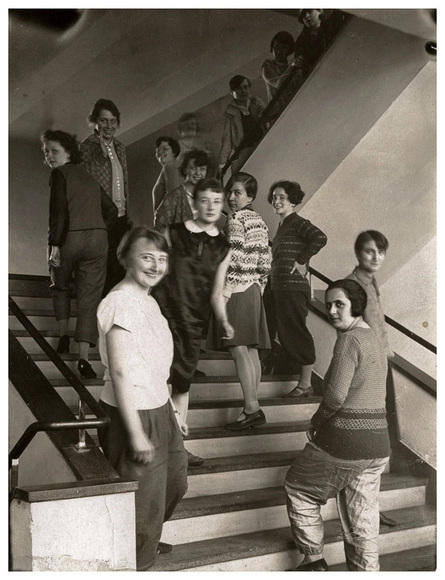
Weavers on the Bauhaus staircase, 1927. From top to bottom: Gunta Stölzl (left), Ljuba Monastirskaja (right), Grete Reichardt (left), Otti Berger, (right), Elisabeth Müller (light patterned sweater), Rosa Berger (dark sweater), Lis Beyer-Volger (center, white collar), Lena Meyer-Bergner (left), Ruth Hollós (far right) and Elisabeth Oestreicher.. ImagePhotograph by T. Lux Feininger; collection of the Bauhaus-Archiv Berlin
The Bauhaus was founded on the promise of gender equality, but women Bauhauslers had to fight for recognition. A new book recounts the achievements and talents of 45 Bauhaus women.
After the end of World War I, a spirit of optimism and a euphoric mood prevailed in Germany. Thanks to a new republican government and women’s suffrage, the war-torn nation was experiencing a radical new beginning.
As part of that convention-breaking wave, in 1919 German architect Walter Gropius assumed leadership of what would become the legendary Bauhaus. Initially, he declared that there would be “absolute equality” among male and female students.
Marking the centenary of the Bauhaus’s founding, the Bauhaus-Archiv / Museum für Gestaltung’s exhibition at the Berlinische Galerie is presenting famous, familiar and forgotten Bauhaus originals and recounting the history behind the objects: Who is the woman sitting on the tubular-steel chair? Does the Haus am Horn have a secret twin? Why have the tea infusers which were created as prototypes for industrial production always remained one-of-a-kind pieces? The exhibition sheds light on how unique work and series, remake and original are inseparably linked in the history of the Bauhaus. Around 1,000 Bauhaus originals from the Bauhaus-Archiv’s collection will be on display, as well as exceptional loans from international collections and contemporary artistic positions.
In 1919, the creation of the Bauhaus school in Germany marked an important moment in the history of architecture, one that would ignite innumerable debates about architecture and design for years to come. This school, which later became more of a movement than an institution, faced an array of political resistance throughout its existence, eventually closing its doors in 1933 during the Nazi regime. However, the knowledge instilled by the Bauhaus transcended time and space to travel across the globe and make its mark on cities worldwide.
There are moments in history when a confluence of ideas, people, and broader cultural and technological forces creates a spark. Sometimes the spark amounts to nothing more than a flicker. But if conditions are right, it can erupt into a dazzling, brilliant light that, while burning for only a brief moment, changes the world around it.
The Bauhaus was one of these – a place that despite the economic turmoil and cultural conservatism of the world around it, offered a truly radical, international and optimistic vision of the future. The origins of the Bauhaus lie in the late 19th century, in anxieties about the soullessness of modern manufacturing, and fears about art's loss of social relevance. The Bauhaus aimed to reunite fine art and functional design (applied arts), creating practical objects with the soul of design. The effect was eventually design good design was made accessible to people at an effective price.


















.jpg?1577789705 "Villa Savoye / Le Corbusier")
.jpg?1577789737 "Vitra Design Museum / Gehry Partners. Image © Liao Yusheng")