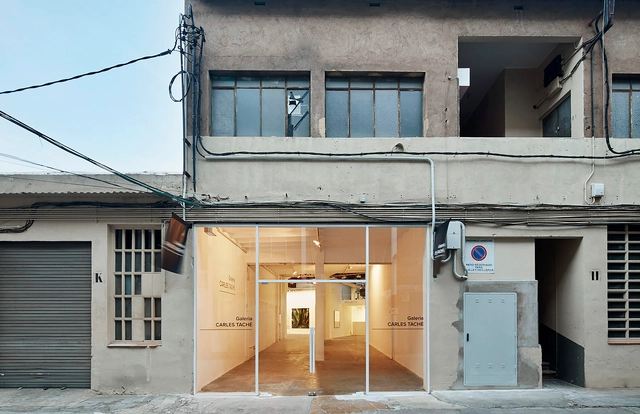
The relationship between art and humanity dates back to the origins of civilization. Museums have become spaces where vast collections of art and artifacts narrate the history of time, humankind, cities, and countless stories about cultures and societies. Over the years, the museum's role has evolved, taking on different forms and scales, including the modern-day art gallery. The importance of art and culture in contemporary cities and neighborhoods is undeniable. However, galleries serve multiple roles in integrating art and culture into daily life. Why are these spaces valuable to communities? How do they support emerging artists? How can galleries revitalize neighborhoods?
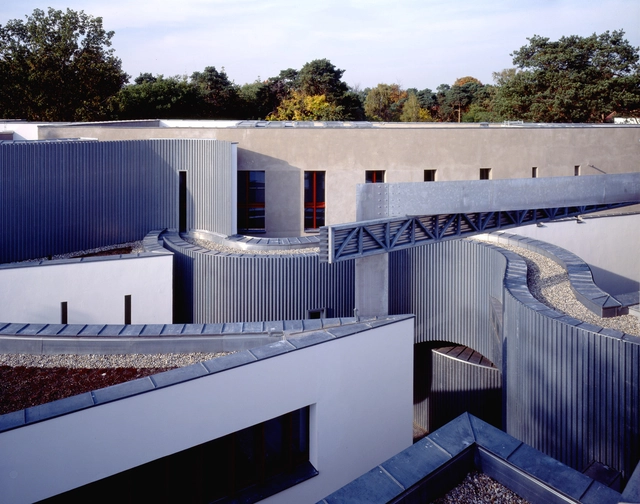
Polish-Israeli architect Zvi Hecker, internationally recognized as an influential figure of Modernism in Israel, as well as a painter, illustration artist, and furniture designer, has passed away at the age of 92, as reported by Moderne Regional. Throughout his career, Hecker combined geometry and modularity with asymmetry and spiraling complex compositions inspired by the pattern of sunflower seeds, a recurring inspiration for his work. His complex geometric explorations are exemplified in a variety of projects on various scales and programs, including the Spiral Apartment House in Ramat Gan, Israel (1981–1989), the Heinz-Galinski-Schule in Berlin, Germany (1992–1995), and the crystal-like Synagogue in the Negev Desert, Military Academy, Israel, (1969).
When members of the Bauhaus school fled Germany, many of these talented visionaries made their way to Tel Aviv. At the time, the city was in its fledgling stages and served as the ideal blank canvas for this idealistic concept. Today, the city boasts over 4,000 Bauhaus buildings and has earned distinction as a UNESCO World Cultural Heritage site. Last year, for the 100th anniversary of Bauhaus, the city opened the White City Center in partnership with the German government to actively promote the preservation of this iconic architectural style. The White City Center hosts exhibitions where visitors can learn more about this iconic style. The Bauhaus Center is also worth a visit and hosts weekly guided tours on Fridays for a small fee. For those who are planning a visit here’s our list of the top six must-see Bauhaus buildings in Tel Aviv.
https://www.archdaily.com/932625/tel-aviv-city-guide-6-bauhaus-buildings-to-see-in-the-white-cityThe White City Center
Tel Aviv’s architectural heritage has achieved global attention through the UNESCO recognition of the city’s British Mandate-era International style and Bauhaus-influenced buildings. Less known is the city’s Brutalist heritage and historic builds designed in the succeeding decades. Brutalism played a significant role in the Israeli design sphere of the post World War II-era. Concrete’s inexpensive availability and fast construction capabilities were adopted into the early Socialist mentality of the state to accommodate its rapidly expanding population and willingness to portray a muscular exterior.
Thousands of people in Tel Aviv put together over 500,000 plastic building blocks to create the tallest LEGO structure in the world. The project was created in memory of 8-year-old Omer Sayag, who loved the toy blocks before he was taken by cancer in 2014.
The name Niemeyer stands for one thing above all: curves. Whether undulating lines, soaring domes, or swooping pillars that repeat in perfect rhythm, his designs reject “the straight line, hard and inflexible, created by man” in favor of “the curved Universe of Einstein,” as he wrote in his 2000 memoir The Curves of Time. Indeed, a late interview with him was headlined “the architect who eradicated the straight line.”
But what happens to an artist who becomes wedded to a certain philosophy of form and pursues it exclusively for decades; does it become restrictive? I wonder whether Niemeyer ever questioned his monogamous dedication to the curve. Perhaps a certain restlessness drove the uncharacteristically sharp-edged plan of the Tel Aviv house he designed for hotel magnate Yekutiel Federmann—or perhaps it reflects the political and personal upheaval of the moment.
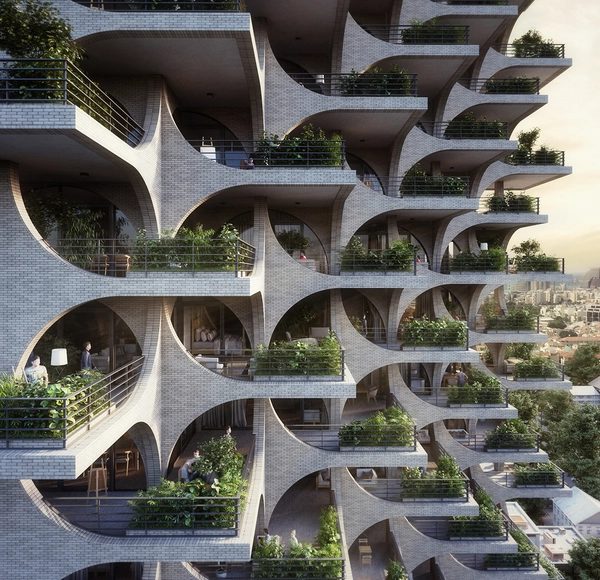
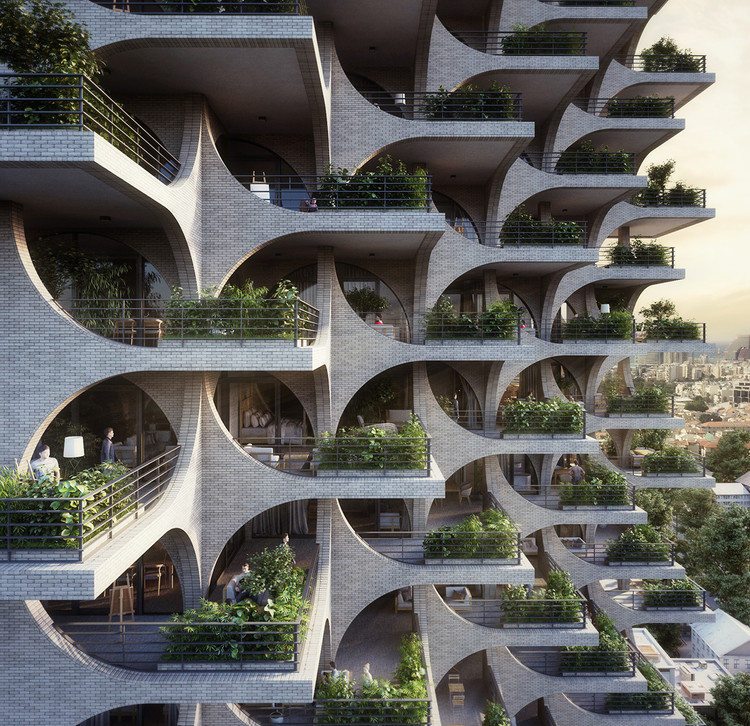
With the completion of the citywide light-rail expected in 2020, connecting Tel Aviv’s city center to neighboring Ramat Gan, Ramat HaHayal, Bat Yam, Jaffa, and Givatayim brings a new wave of residential architecture to transform the skyline. The city of Tel Aviv boasts the highest land value in the Middle East, and with this new connectivity it is only projected to increase demand and value.
The city Tel Aviv is deemed a UNESCO World Heritage Site for its collection of over 4,000 Bauhaus and Eclectic Architecture-style builds. The original city plan was made in 1925 by Sir Patrick Geddes, and is about to witness a significant shift. To promote density, the “TAMA 38” policy gives developers the opportunity to add additional units and floors in exchange for updating the existing units and infrastructure.
The exhibition Social Construction: Modern Architecture in British Mandate Palestine, tracing the influence of international Modernism on the architectural vernacular that developed in Palestine during 1917–48, is on display at the Yale Architecture Gallery from August 31to November 18, 2017. Originally organized by the Israel Museum, in Jerusalem, the show draws inspiration from the extensive research of architects Ada Karmi-Melamede and Dan Price, whose accompanying book, Architecture in Palestine during the British Mandate, 1917–1948, explores not only the functional aspects of this new architecture but also the social values that shaped the defining language of this new architectural style. The original exhibition was curated and designed by Oren Sagiv, chief of exhibition design at the Israel Museum, with Eyal Rozen.