1. ArchDaily
  2. Assemble Studio

Assemble Studio: The Latest Architecture and News

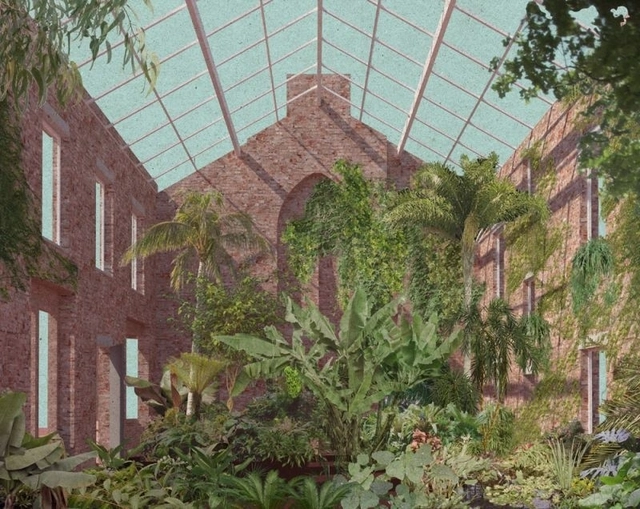
Rhythms of the Soil: Architecture as Agroecology

At a time of ecological collapse and rising food insecurity, architecture is increasingly called upon to engage not only with landscapes but with the systems that sustain and regenerate them. Among these systems, agriculture occupies a paradoxical role, as both a leading contributor to environmental degradation and a potential agent of ecological recovery. Industrial farming has depleted soils, fragmented habitats, and driven climate change through monocultures, fossil-fuel dependency, and territorial standardization. In response, agroecology has emerged as a counter-practice rooted in biodiversity, local knowledge, and the cyclical rhythms of nature. It reframes farming not as extraction, but as regeneration of ecosystems, communities, and the soil itself.

This reframing opens space for architecture to contribute meaningfully. To align with agroecology is not only to support food production, but to engage with the broader cultural, spatial, and ecological conditions that sustain it. It implies designing with seasonal variation, supporting shared use, and building in ways that respect both the land and those who work it. Architecture becomes more than enclosure — it becomes a mediator of cultivation, reciprocity, and coexistence.


Rhythms of the Soil: Architecture as Agroecology - Image 1 of 4Rhythms of the Soil: Architecture as Agroecology - Image 2 of 4Rhythms of the Soil: Architecture as Agroecology - Image 3 of 4Rhythms of the Soil: Architecture as Agroecology - Image 4 of 4Rhythms of the Soil: Architecture as Agroecology - More Images+ 47

In Bermondsey, London, Local Designers Collaborate to Revive a Neighborhood Market

Subscriber Access | 
In Bermondsey, London, Local Designers Collaborate to Revive a Neighborhood Market  - Featured Image
© Jim Stephenson

For more than a century, a street market known as ‘The Blue’ was the beating heart of Bermondsey in Southeast London. On Saturdays gone by, hundreds flocked to the historic neighborhood, a site with roots reaching back to the 11th century when it was once a pilgrimage route to Bermondsey Abbey. Market punters used to sample goods from more than 200 stalls that famously sold everything under the sun. “You can buy anything down The Blue” was the phrase everyone went by.

In Bermondsey, London, Local Designers Collaborate to Revive a Neighborhood Market  - Image 1 of 4In Bermondsey, London, Local Designers Collaborate to Revive a Neighborhood Market  - Image 2 of 4In Bermondsey, London, Local Designers Collaborate to Revive a Neighborhood Market  - Image 3 of 4In Bermondsey, London, Local Designers Collaborate to Revive a Neighborhood Market  - Image 4 of 4In Bermondsey, London, Local Designers Collaborate to Revive a Neighborhood Market  - More Images+ 5

Assemble Awarded the 2015 Turner Prize for Granby Four Streets

Assemble, a London-based collective who "work across the fields of art, design and architecture to create projects in tandem with the communities who use and inhabit them," have been announced as the winners of the 2015 Turner Prize – Europe’s most prestigious contemporary visual art award. Their nomination was a surprise to many, not least because an architect (or architecture collective, in this case) has not been shortlisted before. Previous winners—some of whose work has intersected with the world of architecture—include Gilbert & George, Anish Kapoor (known for the Orbit at the 2012 London Olympic Games), Antony Gormley, Damien Hirst, Gillian Wearing and Grayson Perry (a collaborator on FAT's final built work).

 Assemble Awarded the 2015 Turner Prize for Granby Four Streets - Image 1 of 4 Assemble Awarded the 2015 Turner Prize for Granby Four Streets - Image 2 of 4 Assemble Awarded the 2015 Turner Prize for Granby Four Streets - Image 3 of 4 Assemble Awarded the 2015 Turner Prize for Granby Four Streets - Image 4 of 4 Assemble Awarded the 2015 Turner Prize for Granby Four Streets - More Images+ 6

Metropolis Selects "7 Design Innovators to Watch"

Subscriber Access | 

Candles shaped like icebergs that melt to increase awareness for global warming. Reconstructions of Brutalist playgrounds. Geometric overalls with patterns representing the taste buds. These are just a few of the projects tackled by the young minds selected by Metropolis Magazine as their “7 Designers to Watch.” The list includes architects RAAF, LAB.PRO.FAB and Assemble Studio, alongside furniture designers, industrial designers and a design strategist.

Granby Workshop: Assemble Launch an Eclectic Range of Socially Conscious Homeware

In the late nineteenth century the rise of the industrial revolution inspired a counter-movement to reignite the production of handmade goods across the world. Led by classically trained artisans from rural England, the Arts and Crafts movement briefly swept Europe and North America on principles of celebrating high calibre and unique goods resulting in an array of furniture, textiles, wallpaper and architecture, among others.

More than a century later, the Arts and Crafts movement is in the midst of a renaissance led by 2015 RIBA Turner Prize nominees Assemble Studio. Founded under the moniker Granby Workshop, the newly formed Liverpool-based artisan collective aims to eliminate widespread dereliction in one of the city's most blighted boroughs through the replacement of objects that have, over time, been stripped away. Sustained through a crowd funding model, Granby Workshop has launched a broad collection of locally sourced, designed and assembled homewares available for purchase online.

London Collective Assemble Shortlisted For The Turner Prize

Assemble, a collective of artists, designers and architects based in London, have been shortlisted for the Turner Prize - the UK's foremost annual award for British visual artists. Much to the delight and surprise of members of the profession, this young collaborative team are the first spatial designers to be recognised by this prize in its three decade history, leading Sam Jacob to assert that they "represent something different: a validation of the belief that there are other ways of doing things." The four nominees for the award also include London artist Bonnie Camplin and German-born Nicole Wermers.

From Derelict Structure to Urban Cinema

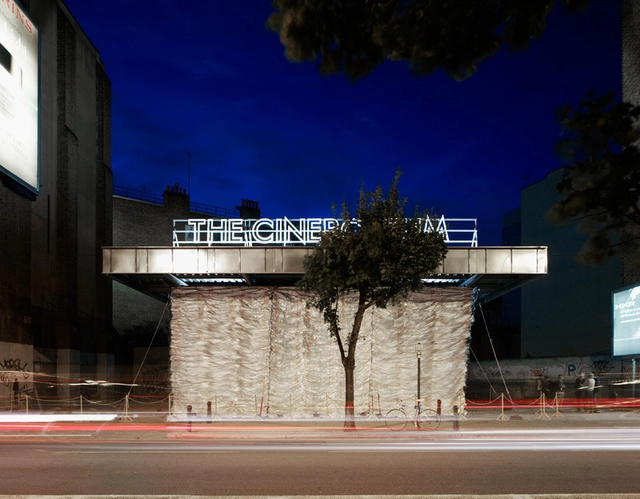
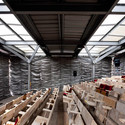
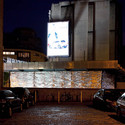
The Cineroleum, a self-initiated project built in 2010 by London based practice Assemble Studio, transformed a derelict petrol station into a "hand-built" cinema on one of capital's busiest roads. Aimed at raising awareness to the wider potential for reusing the 4,000 empty petrol stations across the UK for public use, the adapted structure on Clerkenwell Road was "enclosed by an ornate curtain" strung from the "roof of the petrol station's forecourt. Described as an "improvisation of the decadent interiors that greeted audiences during cinema’s golden age," classic infusions of cinematic iconography were integrated into a space built from only cheap, reclaimed or donated materials.

From Derelict Structure to Urban Cinema - Image 1 of 4From Derelict Structure to Urban Cinema - Image 2 of 4From Derelict Structure to Urban Cinema - Image 3 of 4From Derelict Structure to Urban Cinema - Image 4 of 4From Derelict Structure to Urban Cinema - More Images+ 15

Round Up: Ingenious Interiors

Round Up: Ingenious Interiors - Featured Image
Cinema Center in Matadero de Legazpi / ch+qs arquitectos. Image © Fernando Guerra | FG+SG

The winners of the 2013 Interior Design Excellence Awards and the Great Indoors Awards have been announced, showcasing an innovative range of projects from around the world. We've rounded up some of the best of these award-winning interiors just for you, including: the origami-inspired, timber battens of Assemble Studio; the fantastic basketry of the Cinema Center in Matadero de Legazpi, by Churtichaga & Quadra Salcedo Architects; OHLAB's golden Relojería Alemana; El Equipo Creativo's PAKTA Restaurant of looms; and Breathe Architecture's rebellious metallic and wooden Captain Melville. Enjoy!