1. ArchDaily
  2. Artificial Island

Artificial Island: The Latest Architecture and News

Subscriber Access

Flat Land, Hidden Water: Architecture on Reclaimed Ground

Audio available

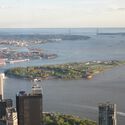
Reclaimed land is often presented as new ground: flat, available, and ready for architecture. It promises cities more space where space is scarce, allowing them to extend waterfronts and build cultural districts. Sometimes, these newly claimed lands may also develop into financial centers, create parks, and imagine futures beyond the limits of existing land. Yet reclaimed land is never simply land. It is an engineered surface, produced through fill, seawalls, drainage, and soil stabilization — a long-term negotiation with the water it claims to have displaced.

This makes reclamation one of architecture's most powerful and ambiguous spatial fantasies. On one hand, it offers freedom: a tabula rasa where streets and buildings can be planned almost from scratch. On the other, this apparent freedom conceals dependency. Made land must constantly prove itself as ground. It has to resist flooding, support foundations, grow trees, and hold public life above a terrain that did not previously exist.
Flat Land, Hidden Water: Architecture on Reclaimed Ground - 1 的图像 4Flat Land, Hidden Water: Architecture on Reclaimed Ground - 2 的图像 4Flat Land, Hidden Water: Architecture on Reclaimed Ground - 3 的图像 4Flat Land, Hidden Water: Architecture on Reclaimed Ground - 4 的图像 4Flat Land, Hidden Water: Architecture on Reclaimed Ground - More Images+ 8

Herzog & de Meuron Unveils New Images of Lusail Museum on Qatar's Al Maha Island

Audio available

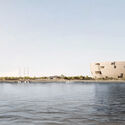
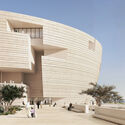
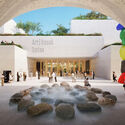
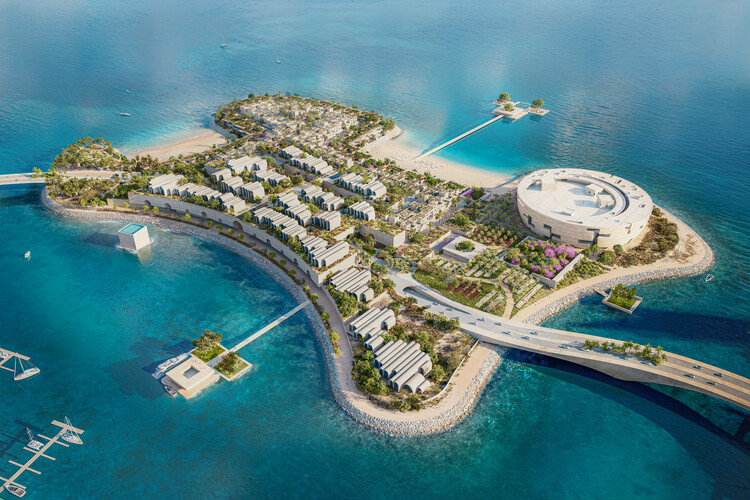
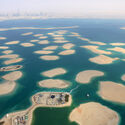
Al Maha Island is a 230,000 m² human-made island located off the coast of Lusail, Qatar. Built as an entertainment and leisure destination north of Doha, it opened in 2022, just ahead of the FIFA World Cup. In 2024, Qatar Museums released renderings of the future Lusail Museum, designed by Swiss architecture office Herzog & de Meuron and located on the southern tip of the island. Most recently, the firm revealed updated images of the island masterplan and the museum's exterior design. The new Lusail Museum will house a collection of Orientalist art, exploring the movement of people and ideas across the globe, past and present, and will offer opportunities for study and debate on contemporary global issues. It is expected to become the cultural anchor of Lusail City, in a building conceived by Jacques Herzog as "a vertically layered souk, or miniature city contained within a single building."

Herzog & de Meuron Unveils New Images of Lusail Museum on Qatar's Al Maha Island - Imagen 1 de 4Herzog & de Meuron Unveils New Images of Lusail Museum on Qatar's Al Maha Island - Imagen 2 de 4Herzog & de Meuron Unveils New Images of Lusail Museum on Qatar's Al Maha Island - Imagen 3 de 4Herzog & de Meuron Unveils New Images of Lusail Museum on Qatar's Al Maha Island - Imagen 4 de 4Herzog & de Meuron Unveils New Images of Lusail Museum on Qatar's Al Maha Island - More Images+ 2

Subscriber Access

Unpacking the History of Artificial Islands: The True Cost on the Built Environment

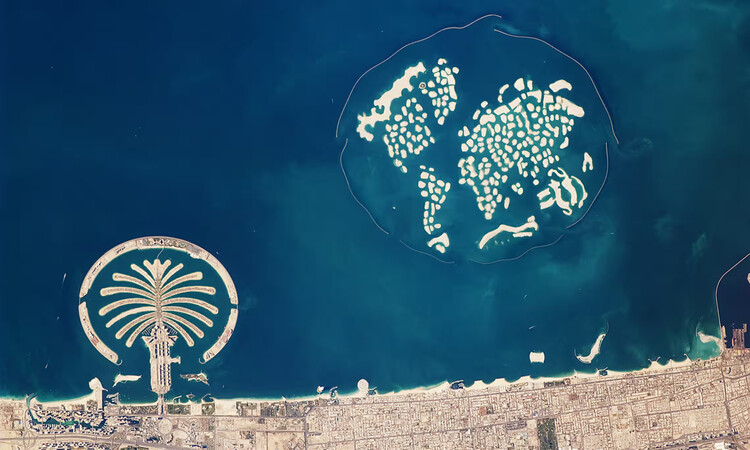
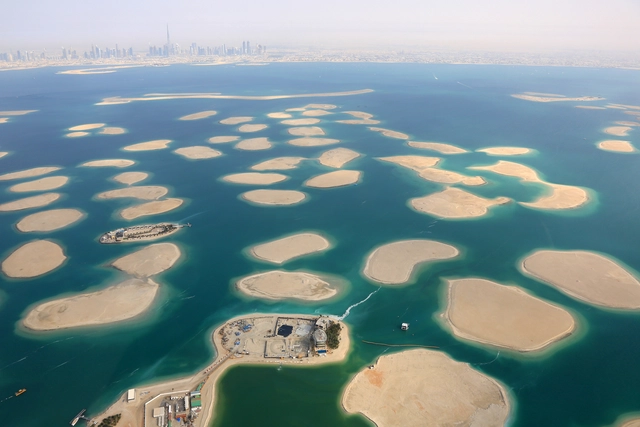
Contrary to common belief, artificial islands have a lengthy historical background in many regions worldwide. This heritage dates back to the reclaimed islands in Ancient Egypt, the hundreds of Stilt crannogs found in Scottish and Irish lakes and waterways, and the ceremonial islands constructed during the Aztec Empire. By definition, an artificial island is an island that has been constructed by humans rather than formed through natural processes. Artificial islands can be built for many different reasons, and these reasons are only increasing as the world faces the looming issue of space scarcity.

In the past, these islands were intended for ceremonial or agricultural purposes, often verging on solutions for urban space. More recently, the islands have been built to mitigate overcrowding, reclaim land, provide new urban expansions, and meet infrastructure and industrial needs. Artificial islands also have certain strategic advantages and economic gains and can lead to geopolitical benefits. However, these types of projects come at a significant cost to our ecosystem, harming the environment in severe and vast ways.

Unpacking the History of Artificial Islands: The True Cost on the Built Environment - Image 1 of 4Unpacking the History of Artificial Islands: The True Cost on the Built Environment - Image 2 of 4Unpacking the History of Artificial Islands: The True Cost on the Built Environment - Image 3 of 4Unpacking the History of Artificial Islands: The True Cost on the Built Environment - Image 4 of 4Unpacking the History of Artificial Islands: The True Cost on the Built Environment - More Images+ 3

The Floating Village of Ganvie: A Model for Socio-Ecological Urbanism

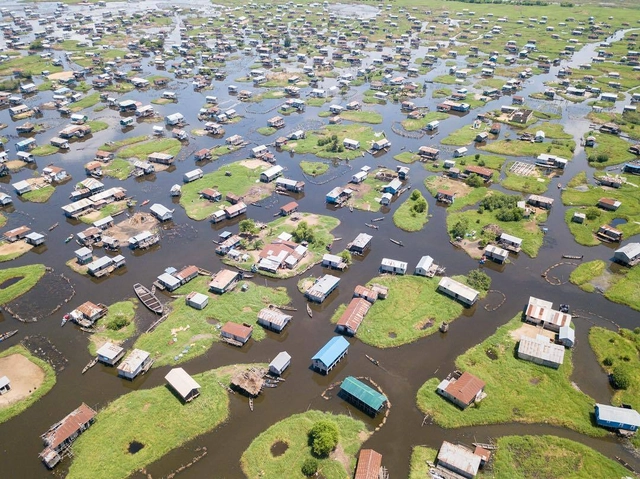
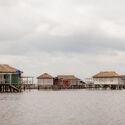
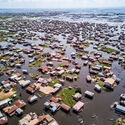
Located in the southern part of Benin-Republic, near the port city of Cotonou, is Ganvie; the largest floating village in Africa. It is situated in the middle of Lake Nokoué and is characterized by colorful wooden stilt houses arranged around artificial islands dating back to the 17th century.

This unique architecture was born from the history of the Tofinu tribe, who built it as a refuge from the slave trade. It has been sustained over time by their communal socio-ecological aquacultural systems and has now become a global tourist attraction for the country. The village was recognized as a world cultural heritage site by UNESCO in 1996, attracting up to 10,000 visitors annually. However, this influx of tourists has impacted the locals and their socio-ecological practices that sustain this water environment. Aquaculture has become increasingly challenging to maintain as the village struggles to retain its economic foundation. Additionally, traditional building practices have given way to modern ones, and the village faces ongoing environmental challenges. Nevertheless, the unique lifestyle of the locals around the water still offers many lessons for the design of prospective floating cities.

The Floating Village of Ganvie: A Model for Socio-Ecological Urbanism - 1 的图像 4The Floating Village of Ganvie: A Model for Socio-Ecological Urbanism - 2 的图像 4The Floating Village of Ganvie: A Model for Socio-Ecological Urbanism - 3 的图像 4The Floating Village of Ganvie: A Model for Socio-Ecological Urbanism - 4 的图像 4The Floating Village of Ganvie: A Model for Socio-Ecological Urbanism - More Images+ 5