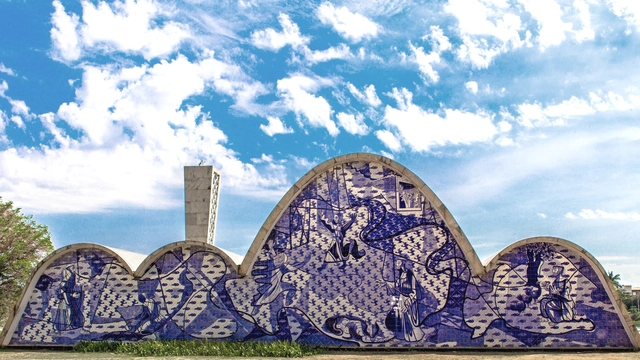
"I felt like I was Nino Rota and Oscar Niemeyer was Fellini, it was like I was creating an important piece of music in that work of art." Renowned visual artist Athos Bulcão uses this comparison between the Italian composer and the film director to refer to the relationship between his work with ceramic tiles and architecture. This fusion between art and architecture marked an important period in the history of Brazil, shedding light on issues such as national identity, the massification of art, and architectural techniques aimed at the tropical climate.
Few places in the world have so many cultural and artistic facilities as the islands of Naoshima, Teshima, and Inujima, in Japan's Seto Inland Sea. Eighteen museums, galleries, and installations make up the Benesse Art Site Naoshima, a project idealized by billionaire businessman Soichiro Fukutake in the 1980s.
At the time, Fukutake invited none other than architect Tadao Ando to design the Benesse House Museum on the island of Naoshima, which went beyond an economic reboot to create a simpler, slower way of life - evidently for those who can afford it - far removed from the Japanese megacities.
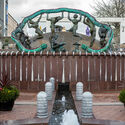
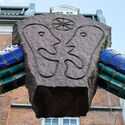
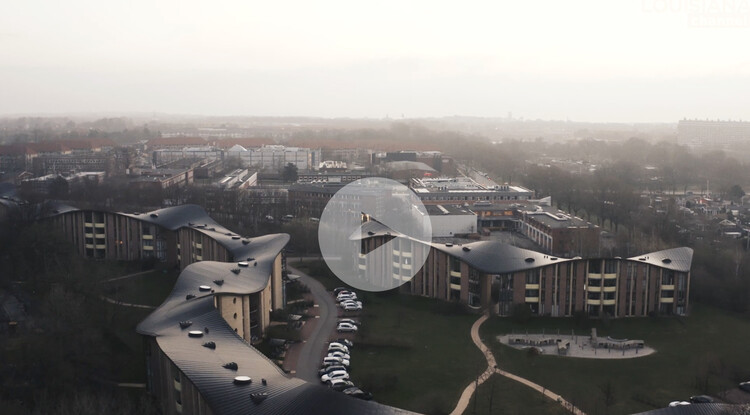
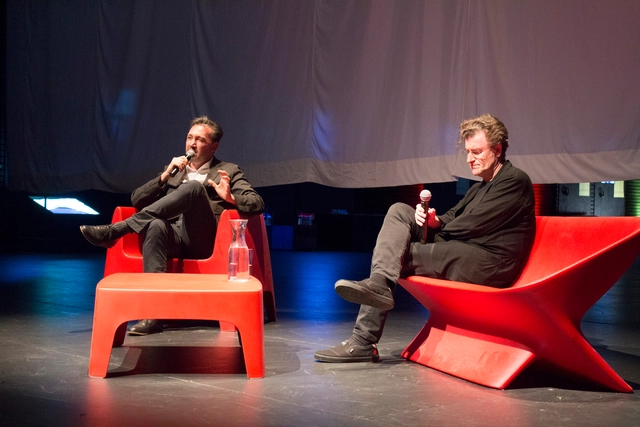
Talking to the Louisiana Channel, Danish professor, sculptor, and artist Bjørn Nørgaard outlines the philosophy that underpins his work and reflects upon his architectural projects. Nørgaard describes in the film, a co-production with Munkeruphus, the strong influence of his mentor in the 1960s - German artist Joseph Beuys - whose theories formed a key part of Nørgaard's evolution and ethos as an artist. The concept of "die soziale Plastik", or social sculpture, would go on to shape Nørgaard's approach to architecture and other forms of art - its main philosophy being that every part of life can be approached creatively.
Rare are the fields, from arts and culture, that have so many things in common with architecture, as film does. Acknowledging that this is far from new, this topic has been debated by theorists and authors from both fields ever since the beginning of the 20th century. Architecture has been trying to embody subtle and poetical features from film while cinema has historically served as a means to discuss, represent, and denounce topics tightly related to architecture and cities.
An interesting example of this overlapping can be found in the contemporary production of French-Italian film company Bêka & Lemoine, whose works show a sensible look towards the details and the simplicity of the architecture and urban spaces. Currently encompassing thirty feature films, Ila Bêka's and Louise Lemoine's portfolio casts light on the everyday life of different cities around the world, revealing an attentive gaze to the most trivial aspects of human existence in the urban realm.
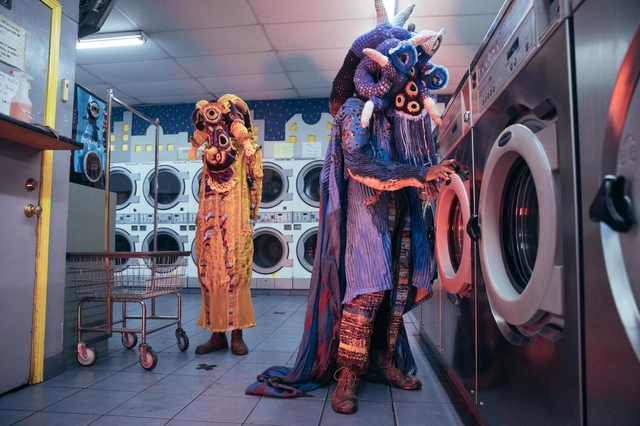
Liam Young, The Zero Waste Weavers of Planet City, 2021. Photo by Driely S
This year's Shanghai Biennale, themed Bodies of Water, examines the interconnectivity and interdependency of people, climates, ecosystems and technologies, exploring the idea of collectivity in the light of accelerating climate change and the current global pandemic. The 13th edition of the oldest biennial in China features works by 64 participating artists exploring the intricate web of interferences and connections in the contemporary world.
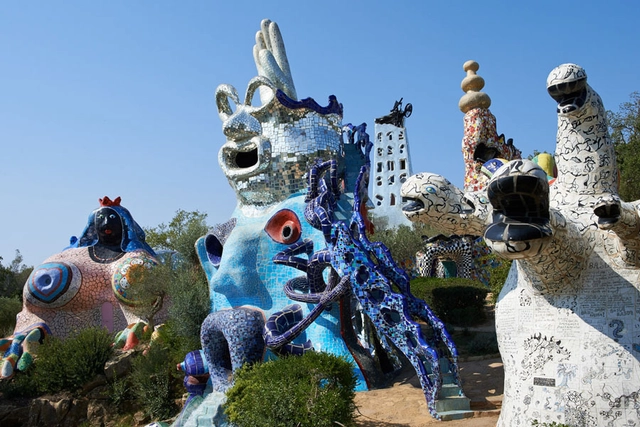
Tarot is often described as a mirror of the soul. Much like the spaces we inhabit, we can look at the symbols housed within the 72-card deck and see reflections of ourselves and our belief systems. The object and practice itself contain many architectural associations: It’s not uncommon for words like “structures,” “foundations,” and “home” to come up in a tarot reading. Traditional cards depict towers, castles, and churches. Sometimes the cards are described as keys, sometimes as gateways.
https://www.archdaily.com/959469/the-fantastic-architecture-of-niki-de-saint-phalleLeilah Stone
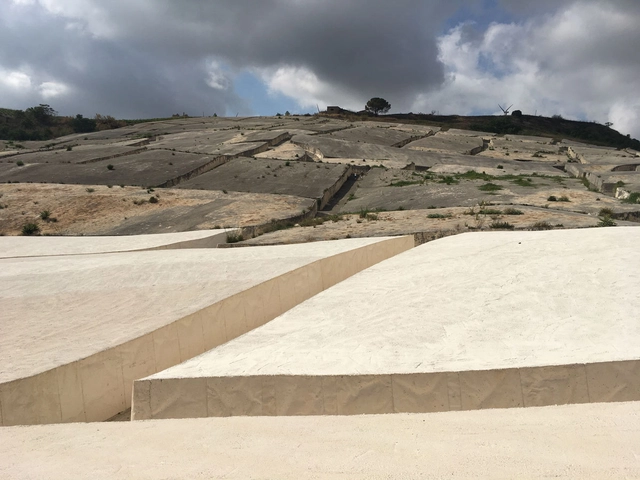
In 1968, the small town of Gibellina in Sicily was flattened by the colossal Belice earthquake, a magnitude 5.5 quake that killed hundreds and left 100,000 homeless. Planners were unable to rebuild Gibellina at its original site, so the new city—Gibellina Nuova—was constructed 11 kilometers (7 miles) away instead. In anticipation of the design and construction of Gibellina Nuova, and in the wake of the Belice earthquake tragedy, the mayor of Gibellina called on several artists to submit proposals for projects to decorate the new city. One of the artists was the prolific “polymaterialist” Italian painter and sculptor Alberto Burri (1915-1995).
https://www.archdaily.com/958178/the-psycho-geography-of-the-cretto-di-burriLilly Cao
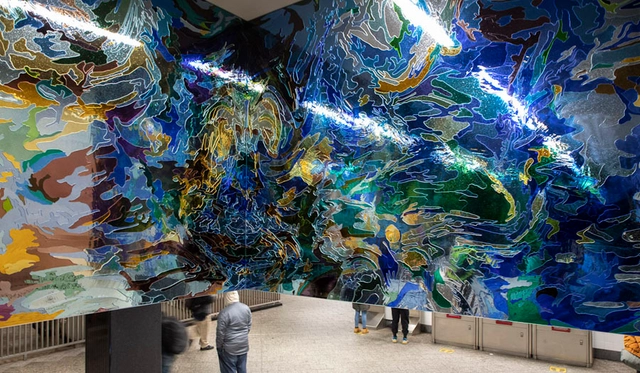
Public art is an innate cultural privilege for New Yorkers. Top-notch art can be found across the city’s boroughs everywhere from parks, squares, alleys, and rooftops—sometimes to the jaded disdain of passerby. While permanent staples, such as Robert Indiana’s Love on 6th Avenue or George Segal’s Gay Liberation at the Stonewall National Monument are ingrained in the urban texture, others are more ephemeral. Public art has the power to swiftly take over Instagram feeds but also has a history of sparking polarizing interpretations at town hall hearings.
https://www.archdaily.com/956185/has-the-pandemic-changed-the-experience-of-encountering-art-in-publicOsman Can Yerebakan
This article is based on a lecture given by Chilean artist and architect Alfredo Jaar at the 20th Architecture and Urbanism Biennale in Valparaiso, Chile, on October 26, 2017.
It's June of 1980. Alfredo Jaar, a recent dropout of the University of Chile's architecture program, walks through the center of Santiago carrying two large signs. He grabs a spot in the shade next to a kiosk and intercepts passers-by to ask them his questions. In the midst of a military dictatorship, Jaar wants the people to vote, but not for the constitutional plebiscite or in the democratic elections. He doesn't even have paper or pencil for them to vote with. There's no line to mark on. His campaign centers on a mint--white and round--like a casino raffle ball.
Jaar's questions are loaded ones. "Are you happy?" (¿Es usted feliz?) he asks. "How many people in Chile do you think are happy?" "How many people in the world?"
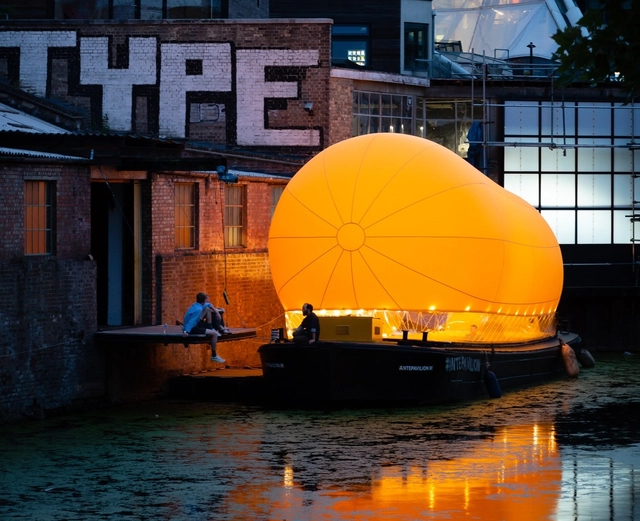
Architecture is defined by its permanence. While the discipline's most celebrated works are often those that were built to last, there's inherent beauty and value in an architecture of impermanence. Moving beyond conventional buildings and considering environmental and social impacts, temporary structures hold the potential to push the boundaries of architecture and the categorization of art.
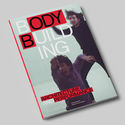
Bodybuilding, SO – IL and Ana Prvački, L’air pour l’air, Chicago, 2017. Photograph by Laurian Ghinitoiu
Six months after the release of the namesake book during the latest installment of the biennial, PERFORMA has launched Bodybuilding, which features thirty-five architecture studios who engage with performativity.
Is architecture a period or a comma? Are built forms hermetic bodies or catalysts for action? PERFORMA curator Charles Aubin and architect Carlos Mínguez Carrascor, published Bodybuilding: Architecture and Performance, during the most recent installment of the PERFORMA 19 biennial in New York City last November. Noticing a lack of a comprehensive, multigenerational survey on the subject, the duo’s interest in investigating the ways architects engage with performance goes as far back as a symposium they co-organized at the Performa 17 Hub in 2017. The book, which features essays by Mabel O. Wilson and Bryony Roberts, Lluís Alexandre Casanovas Blanco, and Victoria Bugge Øye, seeded the fundamental approaches now deeply rooted in the online exhibition: the impact of movement on systematic urbanization, the body’s relationship to buildings and monuments, and architecture’s role in action, be it physical or sociopolitical.
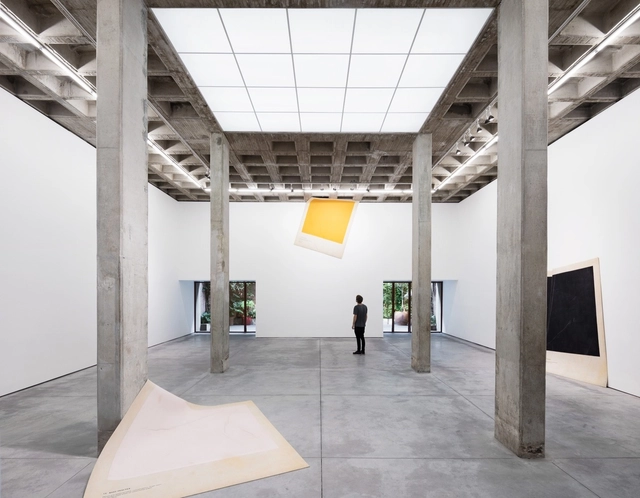
Overall, when designing exhibition spaces, certain aspects contribute to an effective display of the pieces: diffuse lighting, spatial distribution, and high ceilings are some of them. The combination of these features with rooms that are able to transform themselves (using elements that can be perforated, repainted, and adapted according to each exhibition), is common in many art galleries, expressing the dialogue between art and architecture.
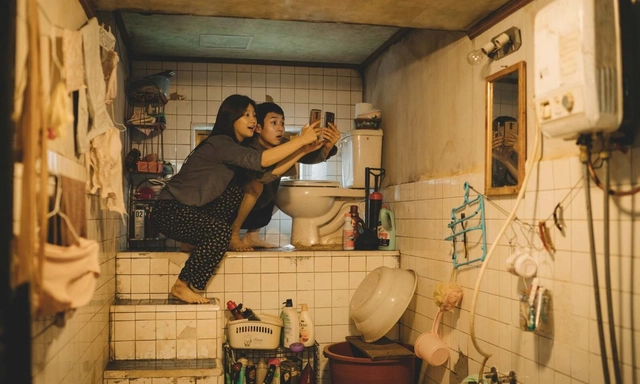
The recent success of Parasite, the award winning film directed by South Korean director Bong Joon Ho, has created a conversation around the emphasis of architecture and interior spaces in movies. This particular film does an excellent job of blurring the boundaries between the two disciplinary fields, to the point where the architecture is not just the background of the set, but it has been placed at the forefront of the storyline, and takes on the leading role in many scenes.
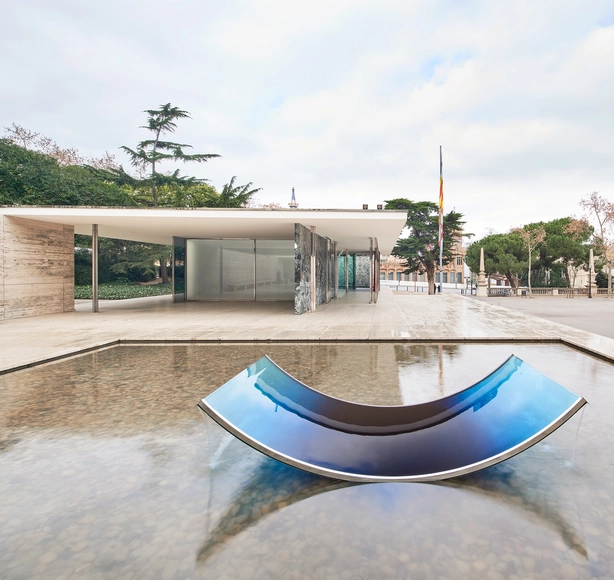
Mies van der Rohe Foundation together with Side Gallery presented "No Fear of Glass", an artistic intervention in the Mies van der Rohe Pavilion in Barcelona, Spain, developed by designer Sabine Marcelis.
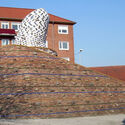
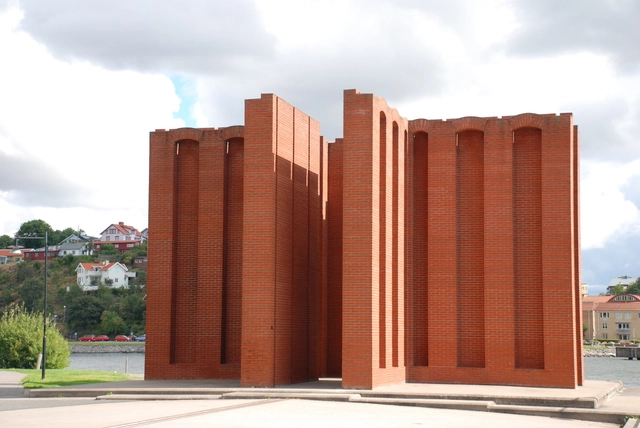
The interview Per Kirkeby: "We Build Upon Ruins" published on Louisiana Channel not only showcases the colorful canvases of the Danish painter, sculptor, filmmaker, and writer, but also his own reflections on the importance of surroundings that "give us so much baggage." It's this very idea that Kirkeby brings to his brick sculpture displays, where something simple and sometimes useful puts aside inaccessible conceptualism to pay homage to the surroundings rather than the sculptures themselves.
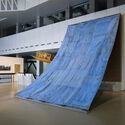
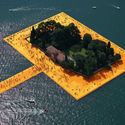
The Bulgarian artist Christo will wrap the famous Arc de Triomphe in Paris with recyclable blue fabric in his next work. The work, which will open on April 9 and last for two weeks, coincides with the artist's large exhibition at the Center Pompidou, which brings together works done in partnership with his late wife, Jeanne-Claude, during the period in which they lived in Paris.
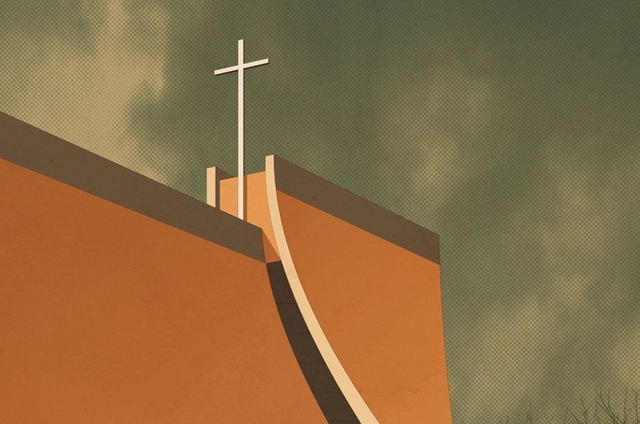
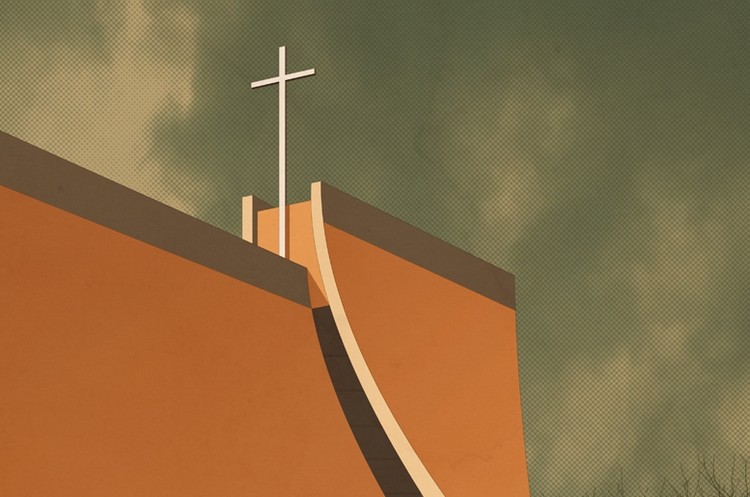
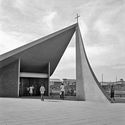
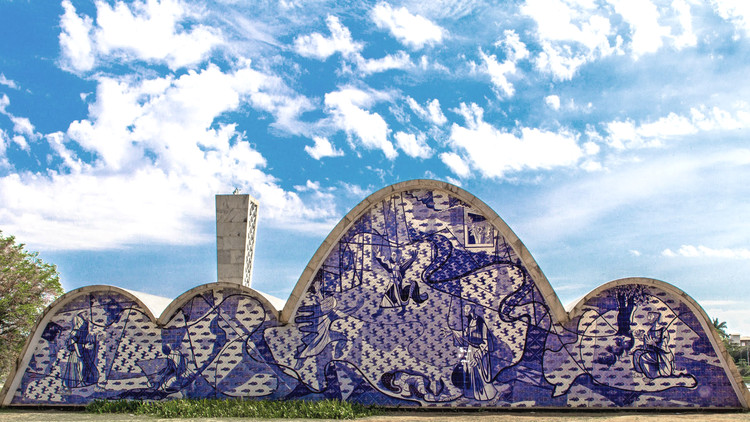
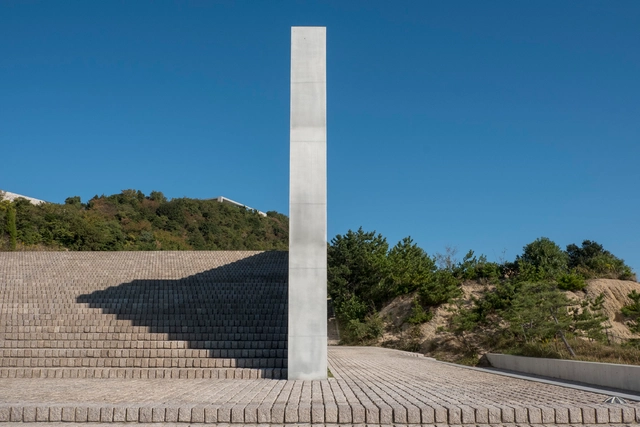
Architecture can be understood through many prisms but is often seen solely as the response to material demands - housing, leisure, commerce, etc. But perhaps no space is more emotionally and symbolically loaded than that of sacred spaces. Designing spaces for worship (religious or otherwise) can be one of the most creative and liberating tasks of this profession. These spaces transcend the terrestrial plane of mere material to become part of a universe of subjectivity and faith.
We present below a series of illustrations of such spaces by André Chiote, featuring famed architectural works by designers such as Gottfried Bohm, Oscar Niemeyer, and Peter Zumthor.





















.jpg?1554393919&format=webp&width=640&height=580)