

“We as a profession have to encourage young architects to understand that the technology they’re using is merely a tool. They have to understand how to build the building that they’re creating, but also understand that this place is going to affect somebody. So what can we do to make it a place that—in a sense—I want to be a part of, that I want to attach to?”
Architectural Education: The Latest Architecture and News
Archiculture Interviews: Peter Lippman
https://www.archdaily.com/773535/archiculture-interviews-peter-lippmanSabrina Santos
Deborah Berke Named Dean of Yale School of Architecture

Deborah Berke of Deborah Berke Partners has been appointed as the new dean of the Yale School of Architecture. Having served as an adjunct professor at Yale since 1987, Berke will be the first woman to lead the school. She will assume her position on July 1, 2016, during the architecture school's 100th anniversary, succeeding Robert A.M. Stern's 18-year term.
https://www.archdaily.com/774381/deborah-berke-named-dean-of-yale-school-of-architectureKarissa Rosenfield
First-Year Architecture Students Design READER Shelter in Estonia

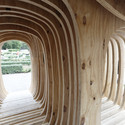
First-year architecture and urban planning students at the Estonian Academy of Arts have designed and created READER, a shelter based on the concept of removal from daily life, and focusing on oneself. Passers-by are invited to enter the shelter and “escape from the real world of problems into the fictional world of books.” And for those who don’t have a book on hand, the structure is meant to evoke the pages of a book through its ribbed wooden structure.




https://www.archdaily.com/773539/first-year-architecture-students-design-reader-shelter-in-estoniaSabrina Santos
NCARB Names 13 US Architecture Schools for Integrated Licensure Initiative

The National Council of Architectural Registration Boards (NCARB) has named the first 13 accredited architectural schools to implement the "Integrated Path Initiative." Each selected school has proposed a pre-graduation curriculum that would provide students with the necessary mix of education, work experience, and opportunities to complete the Architect Registration Examinations (ARE) to achieve licensure before graduation. The initiative was spearheaded by NCARB to shorten the time it takes for US architects to get licensed.
The 13 accepted schools represent "a wide range B.Arch and M.Arch programs in nine jurisdictions, including both public and private institutions," says NCARB. These schools are:
https://www.archdaily.com/772820/ncarb-names-13-us-architecture-schools-for-integrated-licensure-initiativeKarissa Rosenfield
12 Architecture Schools to Offer "Integrated Path" to Licensure Before Graduation

In an ongoing effort to ease the path to licensure, the National Council of Architectural Registration Boards (NCARB) has accepted proposals from 12 accredited US architecture schools to implement an "Integrated Path" to licensure. The initiative would give students the opportunity to complete the Intern Development Program (IDP) requirements and take the Architect Registration Exams (ARE) prior to graduation. Students would not be required to pass all ARE divisions in order to graduate.
“The programs in this inaugural class exhibited a high degree of creativity, and are focused on strengthening the relationship between schools, the practice community, and licensing boards,” said Licensure Task Force (LTF) Chair Ron Blitch, a Louisiana architect who is a former NCARB President and current member of the NAAB Board of Directors and the Louisiana State Board of Architectural Examiners.
https://www.archdaily.com/771706/12-architecture-schools-to-offer-integrated-path-to-licensure-before-graduationKarissa Rosenfield
Norman Foster’s Advice for the Young: “Find Something You Believe In”
Unless architecture is truly your passion, Norman Foster thinks you should simply find something else to pursue. In the Louisiana Channel's latest, the prolific English architect advises the young to live "every living second of your life" doing what you love.
https://www.archdaily.com/628284/norman-foster-s-advice-for-the-young-find-something-you-believe-inKarissa Rosenfield
In Conversation With Will Hunter, Director Of The New London School Of Architecture

The great schools of architecture have been around since time immemorial, or at least that's how it can often feel. In London, a city particularly dense with institutions of this calibre, this is perhaps felt more acutely. How, then, do you develop an entirely new school in this tightly packed environment which has the potency and capacity to compete? Will Hunter, former executive editor of the London-based Architectural Review, began a process to do just this with an article in 2012. Following this, he set up the ARFA—Alternative Routes For Architecture—in order to explore different models for architectural education, calling upon professionals and academics to contribute to a series of informal discussions.
“When the tuition fees in the UK escalated to around £9000 per year in 2013, it got me thinking about different models for architectural education,” Hunter recalls. The casual meetings held around this time gradually become more serious until, “at a certain point, we decided to test them: to make a school.” The project gathered momentum from that point on and now, two years later, the London School of Architecture (LSA) are preparing to take in their first ‘trailblazing cohort’ of postgraduate students.
https://www.archdaily.com/620066/conversation-with-will-hunter-london-school-of-architectureJames Taylor-Foster
"Sculpting the Architectural Mind" at Pratt Institute

On March 6 and 7, New York's Pratt Institute will host "Sculpting the Architectural Mind," a conference exploring the connection between "Neuroscience and the Education of an Architect."
Examining the past and potential role of applied neuroscience within architectural education, the conference will touch on topics such as design cognition and the effect of digital media production. "Sculpting the Architectural Mind" is both analytical and speculative, searching for new means of integrating digital tools into the design process and questioning what effects such an approach would have upon the built environment. The themes will be explored over four sessions spaced over the conference's two days.
https://www.archdaily.com/598604/sculpting-the-architectural-mind-at-pratt-institutePatricia Arcilla
UK Report Says Universities are Failing to Prepare Architecture Students for Practice

UK universities are failing to properly equip graduates with the necessary skills required for practicing architecture, according to RIBA’s 2014 Skills Survey. Of the 149 employers and 580 architectural students or recent graduates who responded to the wide-spread survey, a large majority criticized architectural education for prioritizing “theoretical knowledge ahead of practical ability” and agreed that most graduates are ill-prepared for work after studying at the university.
“I can think of no other profession where new graduates must wait a decade or more to be given significant responsibility because they have not acquired basic skills in university,” says Yarema Ronish, RIBA client adviser and director at Richard Morton Architects.
https://www.archdaily.com/594681/uk-report-says-universities-are-failing-to-prepare-architecture-students-for-practiceKarissa Rosenfield
The Berlage’s Master of Science in Architecture and Urban Design: Architectural Education in the Age of Global Practice
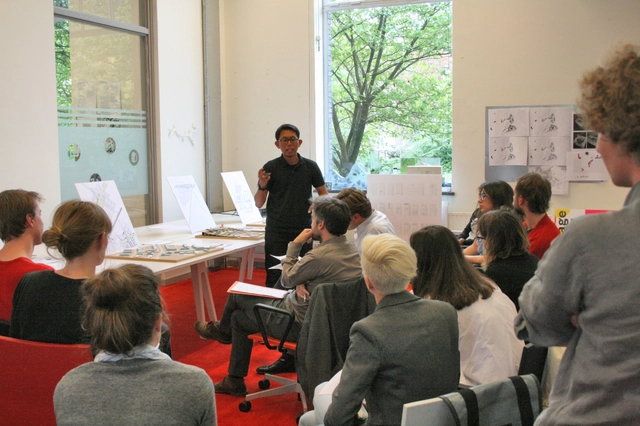
In the second decade of the twenty-first century, the built environment continues to be redefined on an unprecedented scale by global shifts of culture, economy, and geopolitical structures. Cities and countrysides are transforming differently from country to country; national and local governments continue to define specific legal frameworks impacting building practice; and value systems and social norms remain strongly bound to culture. At the same time, different regions around the world deal with similar changes, from urban sprawl and rapid urbanization to the consequences of an aging population and the lifestyle challenges of the middle class.
In the last two decades the spread of professional skills and new technologies around the world expanded the market for international design services. The looming new role of global professionals raises crucial questions regarding the knowledge and expertise of architects and urban designers: How can we learn from different cultures of building all over the globe? How can designers perform within the clash of cosmopolitanism and localism? Which design strategies and research approaches mediate between international and local conditions? How can a globally oriented designer engage with local mores and trades? Do practitioners who operate internationally have an ethical duty to assist in transferring new skills to local architects? These considerations underscore how globalism is affecting every practitioner, even those who never leave their home nations.
Drawings, technologies, clients, and workforces flow easily between networked continents and cultures. Yet designers are often confronted with the intractability of local circumstances. How can architects and urban designers critically contribute to the construction of a borderless, cosmopolitan culture that transcends national borders and identities?
https://www.archdaily.com/585676/the-berlage-s-master-of-science-in-architecture-and-urban-design-architectural-education-in-the-age-of-global-practiceSponsored Post
AA DLAB 2014: The Natural and Digital Worlds Combine With Root-Like "CALLIPOD" Pavilion

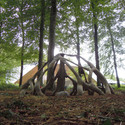
Created for AA DLAB 2014 - the annual summer workshop undertaken by the Architectural Association at their Hooke Park facility - the 4.4 metre wide "CALLIPOD" pavilion blends perfectly into the wooded surroundings, appearing as though the roots of nearby trees have sprung from the ground to create a dome in the depths of the Dorset woodland. However, despite its natural outward appearance, the process of creating CALLIPOD was highly technical, combining a detailed algorithmic exploration of form and structure with both digital and traditional methods of fabrication.



https://www.archdaily.com/582672/aa-dlab-2014-the-natural-and-digital-worlds-combine-with-root-like-callipod-pavilionRory Stott
US Architecture Schools Express Interest in Conferring Licensure to Graduates

Becoming licensed is no easy feat for the recently graduated architecture student. The combination of required internship hours and exam scores proves a daunting obstacle for most, often taking years of work after college to surpass. Now, however, the National Council of Architectural Registration Boards (NCARB) is testing the waters for an alternative system that could grant licensure to students immediately upon graduation.
https://www.archdaily.com/580916/us-architecture-schools-express-interest-in-conferring-licensure-to-graduatesConnor Walker
AIA Honors Peter Eisenman with 2015 Topaz Medallion

Following Moshe Safdie’s selection to be the next AIA Gold Medalist, the American Institute of Architects’ (AIA) and Association of Collegiate Schools of Architecture (ACSA) has announced Peter Eisenman, FAIA, as winner of the 2015 Topaz Medallion. Eisenman, known for a lifetime of scholarly work and his long associations with Princeton, Harvard, Cooper Union and Yale, will be honored for his global impact on architectural education after more than 60 years of teaching.
“There are probably very few schools of architecture where Peter is yet to have lectured,” wrote Marlon Blackwell, FAIA, in a recommendation letter.
https://www.archdaily.com/576543/peter-eisenman-to-be-honored-with-2015-topaz-medallionKarissa Rosenfield
Two Universities Win NCARB Award for Merging Practice and Education

The National Council of Architectural Registration Boards (NCARB) has awarded Parsons The New School for Design and Clemson University the 2014 NCARB Award to aid the development of innovative programs that merge practice and education.
"The award honors innovative ways for weaving practice and academy together to address real-world architecture challenges," says NCARB CEO Michael J. Armstrong. "The winning proposals for 2014 explore new paradigms of practice and move students from the theoretical to applied practices working with licensed practitioners."
https://www.archdaily.com/566055/two-universities-win-ncarb-award-for-merging-practice-and-educationKarissa Rosenfield
Michael Graves School of Architecture to Open in 2015

Kean University has announced plans to open a new architecture school based on the design philosophy of Michael Graves. Following the footsteps of a man who laments the “loss of drawing,” the new Michael Graves School of Architecture will prioritize hand drawings as a key to design process.
“In our technologically savvy world, to this day, Michael Graves’ philosophy is to draw by hand first so that the students see, ‘feel’ and experience the new building spatially. Then, only after the drawing is complete will the students transfer the design to a computer so that the computer becomes an execution tool, not an ideation tool,” describes acting dean and former student of Graves, David Mohney.
https://www.archdaily.com/563210/michael-graves-school-of-architecture-to-open-in-2015Karissa Rosenfield
The UK 2015 Top 10 Schools of Architecture

The Guardian has released its annual UK University rankings, including their list of the top schools of architecture in the country. This year Cambridge University has taken first place, knocking off UCL's Bartlett School of Architecture after three consecutive years in the top spot.
This year there are two new entries into the top 10, with Queen's University Belfast and Northumbria University bagging 5th and 6th respectively, replacing Oxford Brookes and Kent, who drop to 12th and 14th. Elsewhere, the Glasgow School of Art had a disappointing result dropping to 43rd, and the University of Greenwich has reacted positively to their last-place position from last year by rising to 21st.
Read on for more analysis and the top 10 in full
https://www.archdaily.com/512991/the-uk-2015-top-10-schools-of-architectureRory Stott
NCARB Endorses Licensure for US Architects Upon Graduation

The U.S. National Council of Architectural Registration Boards (NCARB) has released a statement endorsing licensure upon graduation from accredited programs. Though the release did not specify a definite plan of action, the announcement acknowledges the benefits of restructuring U.S. licensure so that “rigorous internships and examination requirements” are all fulfilled during the education process.
Envisioned by NCARB’s “Licensure Task Force,” the “new path” concept overhaul will move forward by identifying schools interested in participating in the program. A Request for Information will be sent out later this year, followed by a Request for Proposal process in 2015.
Though many U.S. architects have seemingly longed for news such as this, others argue that there are drawbacks to licensure upon graduation. Let us know your thoughts in the comment section after the break.
https://www.archdaily.com/511718/ncarb-endorses-licensure-for-us-architects-upon-graduationKarissa Rosenfield
INFOGRAPHIC: Architecture Education Today

Each year when Design Intelligence publishes "America's Best Architecture & Design Schools," we try to look beyond the rankings. At the end of the day, the report is a snapshot of the state of architecture today and, as such, is a minefield of useful information, particularly for current (or soon-to-be) architecture students. Check out the short infographic after the break to see how the profession's outlook has grown far more optimistic for architecture grads; what firms look for in recent grads (it may surprise you); and the unequal relationship of high-ranking sustainability programs vs. the prevalence of LEED certification.
https://www.archdaily.com/450372/infographic-architecture-education-todayVanessa Quirk