1. ArchDaily
  2. ARCHICAD

ARCHICAD: The Latest Architecture and News

How Will BIM 2.0, AI Assistance, and Integrated Workflows Shape the Architect’s Design Experience?

 | Sponsored Content

When architects are still students, a moment often marks a turning point: their first encounter with software. It's not just about learning a tool but discovering a space where ideas transcend physical models, taking shape in a digital environment and beginning a relationship many will carry throughout their careers. What happens next? Software keeps evolving, and with it, the design experience. In recent years, this evolution has accelerated—machine learning, AI, prompts, and integrated workflows have moved from the periphery to the core of design practice, becoming part of the shared language between software and users. As these tools take hold, a key question emerges: How will this reshape our experience of designing architecture in the future?

How Will BIM 2.0, AI Assistance, and Integrated Workflows Shape the Architect’s Design Experience? - Image 1 of 4How Will BIM 2.0, AI Assistance, and Integrated Workflows Shape the Architect’s Design Experience? - Image 2 of 4How Will BIM 2.0, AI Assistance, and Integrated Workflows Shape the Architect’s Design Experience? - Image 3 of 4How Will BIM 2.0, AI Assistance, and Integrated Workflows Shape the Architect’s Design Experience? - Image 4 of 4How Will BIM 2.0, AI Assistance, and Integrated Workflows Shape the Architect’s Design Experience? - More Images+ 13

BIM and the Future of Architecture: Accelerating Design Processes with Archicad 27

 | Sponsored Content

Architecture is a unique field that combines equally constant aesthetic and functional needs, while immersed in dynamic technological environments. At this juncture, design processes and buildings are becoming increasingly intricate, requiring architects to manage projects efficiently while fostering multidisciplinary and multi-level collaboration throughout workflows. Additionally, the new technologies and tools we employ in the process must evolve at the same pace —sometimes even faster— by embracing aspects such as sustainability and efficiency, all while keeping an eye on the future.

The tools available in the multidisciplinary architectural environment have evolved significantly quickly. Both students and experienced architects have now nearly completely transitioned from manual methods to computer-aided drafting software. Today, we find ourselves immersed in the era of architecture driven by technologies such as Building Information Modeling (BIM), artificial intelligence, and digital processes. At the same time, the fundamentals of BIM and its historical background trace back to the early days of computing, research, and new technologies, which sparked a rapid evolution within the AEC industry and among its professionals.

What is the Future of BIM? Graphisoft Unveils Archicad 26

 | Sponsored Content

Considered the second most requested skill (behind field experience) in the industry and used by a growing number of design professionals, Building Information Modeling (BIM) has proved to be the present of architecture. But with constant new features and exciting improvements, it is also very much the future. For decades, the revolutionary software has established itself as a powerful tool with a long list of invaluable capabilities: detecting errors, reducing costs and material waste, mitigating risks, optimizing workflows and, above all, allowing for seamless, multi-disciplinary collaboration.

How to Create and Manage Façade Panels with BIM Elements: Tutorials and Inspiration

 | Sponsored Content

Panelized facade systems are a popular exterior design element across multiple project types in today’s architecture. Different material and color options create unique and completely customized exteriors versatile enough to fit almost any design style. Ensuring the vision comes to life exactly as imagined, however, can be tedious with Revit’s or ARCHICAD’s innate capabilities alone. The time-consuming manual process of specifying the design, pattern, colors, and fabrication methods of a panelized facade can be simplified and made more intuitive with Steni’s BIM elements.

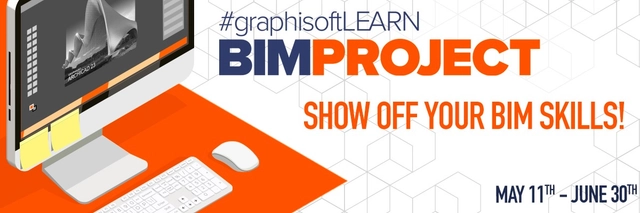
Graphisoftlearn BIMProject

Projects should be delivered using ARCHICAD, the industry first BIM software for architects developed by GRAPHISOFT, and its supported 3rd party applications.

Anthony Laney on how Graphisoft has Improved his Studio’s Design Practices and Aspirations.

Subscriber Access | 

Architects no longer need to drag around giant roller drawings to a job site, now they can flip through a 3D model on an iPad. This shift in technology elevates the conversation about design and simplifies presenting design ideas from the start.

GRAPHISOFT announces ArchiCAD 16 + Live Webinar

Subscriber Access | 
GRAPHISOFT announces ArchiCAD 16 + Live Webinar - Featured Image

GRAPHISOFT recently announced the release of the next upgrade to its BIM design software; ArchiCAD 16. This version of ArchiCAD provides solutions that respond to some of the most dynamically developing segments of the BIM industry. They are building components, freedom of design and energy efficiency.

The value of BIM software can be measured only by how well it is used, within a given workflow and how well a team accurately generates and shares data across project teams; ultimately managing that data throughout the building lifecycle. On June 19th, in a live webinar, GRAPHISOFT will cover the basics of ArchiCAD and give attendees a foundation to make the most of the new tools found in ArchiCAD 16.

More after the break.

GRAPHISOFT BIMx™ for iPad/iPhone

Subscriber Access | 

GRAPHISOFT recently released an innovative, interactive BIM communication tool for architects. The add-on for ArchiCAD 15, BIMx, is an easy-to-use mobile design demonstration tool for exploring, communicating and sharing building concepts.

Through BIMx, ArchiCAD 15 users gain unprecedented ability to share entire BIM models with anyone through an interactive community on Facebook or through iOS devices. BIMx demonstrations can be executed on a desktop computer or laptop as well. More information and some images after the break.