1. ArchDaily
  2. AR Technology

AR Technology: The Latest Architecture and News

On Designing National Pavilions: Power and Identity at Universal Exhibitions

Subscriber Access | 

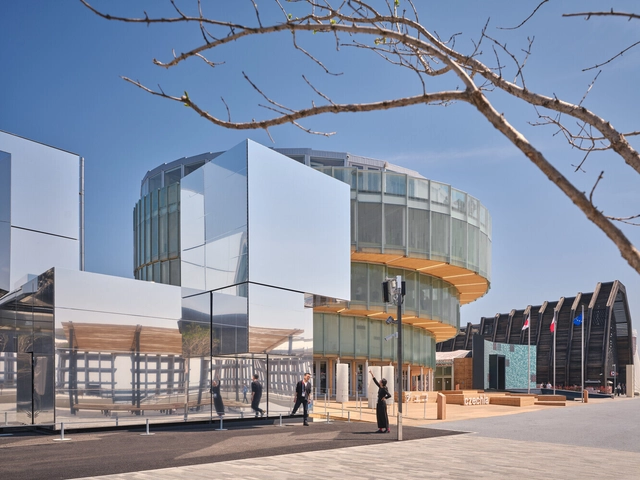
What can a pavilion’s architecture reveal about its country? At major World Expos, national pavilions are designed to answer this question, transforming into spaces laden with symbolism. Though temporary, these structures are rich in meaning, functioning as architectural expressions of political identity. Their forms and materials encapsulate national ambitions. Expo Osaka 2025, the latest chapter in this ongoing narrative, showcases how nations increasingly use built space to construct global images of themselves—sustainable, technological, culturally distinct, and geopolitically relevant.

On Designing National Pavilions: Power and Identity at Universal Exhibitions - Image 1 of 4On Designing National Pavilions: Power and Identity at Universal Exhibitions - Image 2 of 4On Designing National Pavilions: Power and Identity at Universal Exhibitions - Image 3 of 4On Designing National Pavilions: Power and Identity at Universal Exhibitions - Image 4 of 4On Designing National Pavilions: Power and Identity at Universal Exhibitions - More Images+ 10

Tideland Studio Applies Architectural Technologies to Create a Sensorial Understanding of Environmental Changes

While it is undeniable that the surrounding environment is changing due to human activity, the effects can be difficult to perceive directly, as they are often illustrated with unrelatable pictures of far-away places or overused graphics and statistics. Danish office Tideland Studio aims to change this. Through their work, they aim to bring forth a new type of sensible understanding of the changes happening around us. They work across disciplines, melding research, art, and architecture while employing the newest survey and fabrication technologies to give presence to the abstract phenomena that shape our planet. Because of their practical approach to research and the new perspectives that they open toward extreme environments affected by climate change, ArchDaily has selected Tideland Studio as one of the 2023 New Practices. The annual survey highlights emerging offices that use innovation and forward-looking processes to rethink the ways in which we practice architecture.

Tideland Studio Applies Architectural Technologies to Create a Sensorial Understanding of Environmental Changes - Image 1 of 4Tideland Studio Applies Architectural Technologies to Create a Sensorial Understanding of Environmental Changes - Image 2 of 4Tideland Studio Applies Architectural Technologies to Create a Sensorial Understanding of Environmental Changes - Image 3 of 4Tideland Studio Applies Architectural Technologies to Create a Sensorial Understanding of Environmental Changes - Image 4 of 4Tideland Studio Applies Architectural Technologies to Create a Sensorial Understanding of Environmental Changes - More Images+ 8

Going Against the Grain: Firms Disrupting the Status Quo

Subscriber Access | 

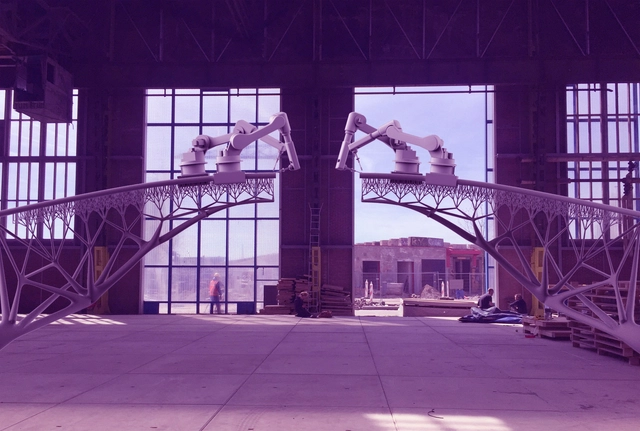
Architecture is a long-standing profession, one that has produced the iconic landmarks we admire around the world, monuments which we revere around the world, and played a part in establishing the organisation of the cities we live in today. This description, however, is architecture in the traditional sense - and there are numerous examples of individuals and firms who have strayed away from traditional architectural practice, either through delving into adjacent fields or 'disrupting' the field with the harnessing of new technologies.

Going Against the Grain: Firms Disrupting the Status Quo - Image 1 of 4Going Against the Grain: Firms Disrupting the Status Quo - Image 2 of 4Going Against the Grain: Firms Disrupting the Status Quo - Image 3 of 4Going Against the Grain: Firms Disrupting the Status Quo - Image 4 of 4Going Against the Grain: Firms Disrupting the Status Quo - More Images+ 7

The Future of Universities, Offices and Cities: Highlights From Digital Futures 2020

Subscriber Access | 

Like most functions in recent months, this year’s Digital FUTURES, which is held annually since 2011 at Tongji University in Shanghai, had to move online due to the pandemic. The organizers took this as an opportunity to give the event a global dimension, turning the festival into what they rightfully call the most significant worldwide event for architectural education ever staged, with a 24/7 display of workshops, lectures and panel discussions involving some of the most prominent architects and educators. Here is an overview of the festival, together with a selection of lectures from Digital FUTURES World.

BIG, UNStudio and Squint/Opera Launch AR Design Tool

Squint/Opera, BIG, and UNStudio have collaborated in the design of Hyperform, a revolutionary data-driven design tool that allows architects across the world to collaborate in augmented reality. The tool allows designers to immerse themselves in a virtual 3D environment, where site images, maps, data, and 3D models can be uploaded, viewed and altered through collaboration.