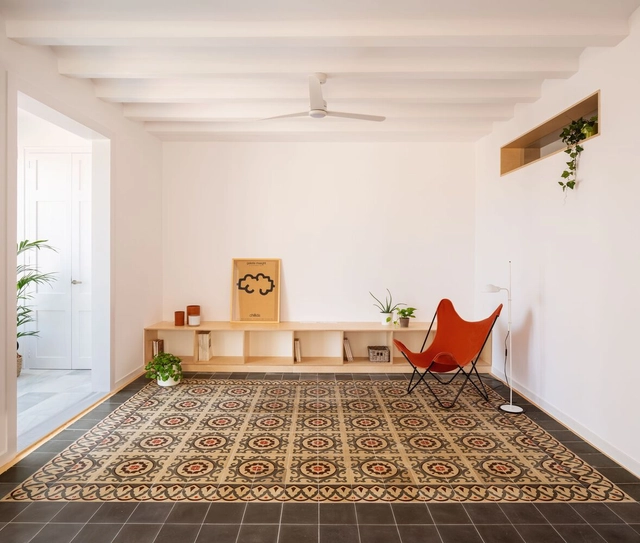
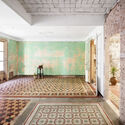
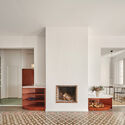
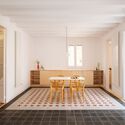
In the quest to preserve certain architectural, historical, and cultural features of original Catalan homes, apartment renovations are conceived as a means of connecting the past and the present through the recovery and/or restoration of coverings, flooring, carpentry, facades, and more. The history of ceramics in Spain has evolved over the years, experiencing periods of productive flourishing as well as decline. However, the expressive language, versatility, and adaptability of hydraulic tiles to tradition and the future stand out in homes' interior and exterior spaces with their wide combination of colors, textures, and patterns.
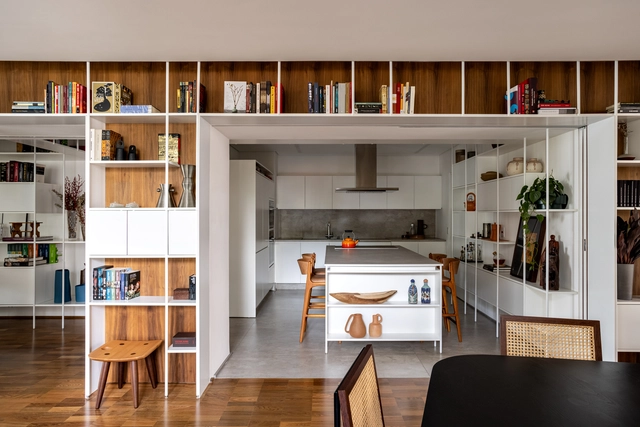
Beyond the wide variety of landscape, environmental, economic, social, and cultural particularities that distinguish each region of Latin America, the renovation of interior spaces that make up domestic life generally focuses on achieving the greatest possible integration of environments along with providing flexibility, spaciousness, and better conditions for ventilation and natural lighting. Seeking to revalue unused spaces and/or give them a second life, renovations aim to transform the ways of living through strategies capable of involving the restoration of materials, the preservation of structures, the maintenance of installations, and more.
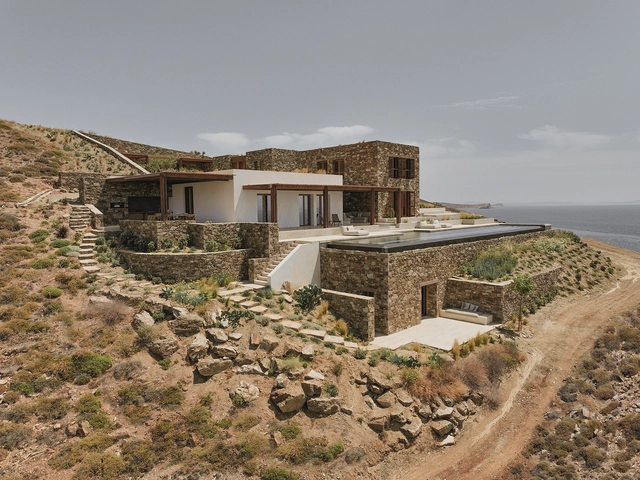
Sloped terrain offers a tantalizing prospect for developers. With breathtaking views over either natural or urban landscapes, often without the realistic possibility of being overlooked by future development, a parcel of land on a slope provides a high reward. However, whether it’s the extra excavation involved to cut and fill or cantilever out on a flat surface, the complications of water drainage, or the loss of light and difficulty of access at the front of the property, building on sloped terrains is not without its difficulties.
But it’s not necessarily the angle of the site that’s most at fault, it’s the shape of the building. By splitting up a multi-story structure and repositioning – possibly even disconnecting – each level, projects designed to comply with the existing topography by applying multiple ground levels can reduce the amount of excavation required. The split floor plan can also help to improve access and natural light and increase both interior and exterior space.
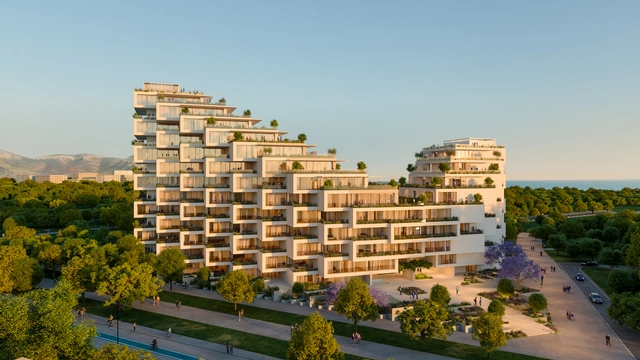
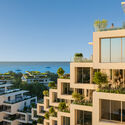
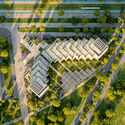
Bjarke Ingels Group has revealed the design of Park Rise residences, a new development the Little Athens neighborhood of Ellinikon, featuring modern homes, greenspace, retail, office, and hospitality. The Ellinikon is an ambitious urban regeneration project that reimagines the grounds of Athens' old international airport and transforms it into a 6.2 million-square meter smart city. Within this development, the Little Athens neighborhood aims to become an integrated part of Ellinikon's smart urban ecosystem and bring over 1100 new residences to the northwestern coastline of the development.
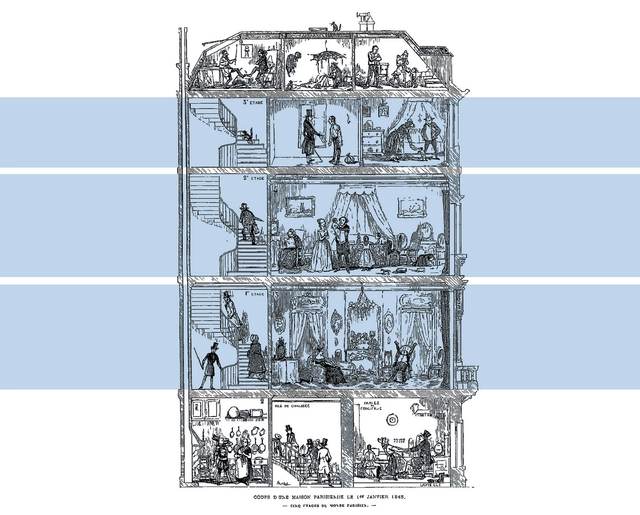
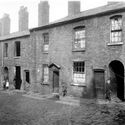
The introduction of new techniques and materials, along with innovations in indoor plumbing systems, resulting from the industrial revolution, paved the way for vertical living. Investigating specifically a period of time where a flux of population was driven to cities, and social class divisions were being questioned, this article looks back at the evolution of the house plan in Europe between 1760 and 1939.
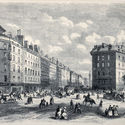
Tackling the transformation of the housing unit during the industrial revolution all the way to the interwar period, this feature highlights four prominent examples that rethought traditional layouts and responded to the challenges of their time. Still influential today, the mentioned models, restored for use, happen to be part of the 21st-century urban fabric. Located in London, Paris, Amsterdam, and Moscow, the plans showcase the ever-changing interior wellbeing standards, directly linked to a broader metamorphosis, equalizing and providing for growing urban populations. Discover the evolution of living units from the Back to Back Houses to the Garden Cities of England; the Haussmannien Block, a Vertical Living for a Modern Bourgeoisie; the Extension of Amsterdam, from Alcove Housing to Social Housing Blocks; and the Transition Type House in Russia.











.jpg "Residential houses \"Eigen Haard\", Spaarndammerplantsoen, Amsterdam, Original state, 1915. Image Courtesy of Wikimedia")