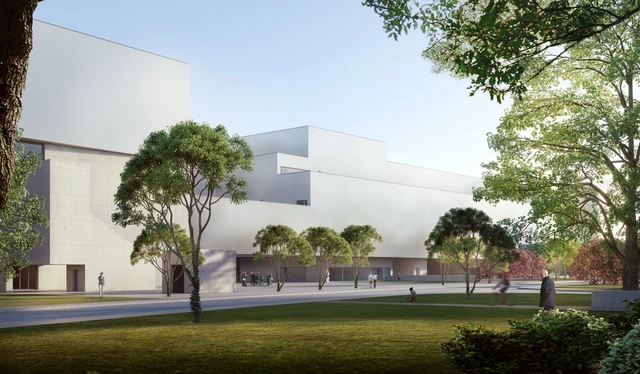
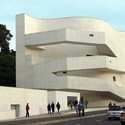
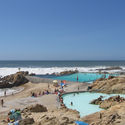
Portuguese architect Álvaro Siza Vieira was chosen by the Holy See to create the installation that will represent it at the Venice Architecture Biennale, which will take place between May 20 and November 26, 2023. In collaboration with Studio Albori from Italy, the pavilion of the Vatican, curated by Roberto Cremascoli, will be dedicated to the theme of social friendship. This is in commemoration of the tenth anniversary of the pontificate of Pope Francis.
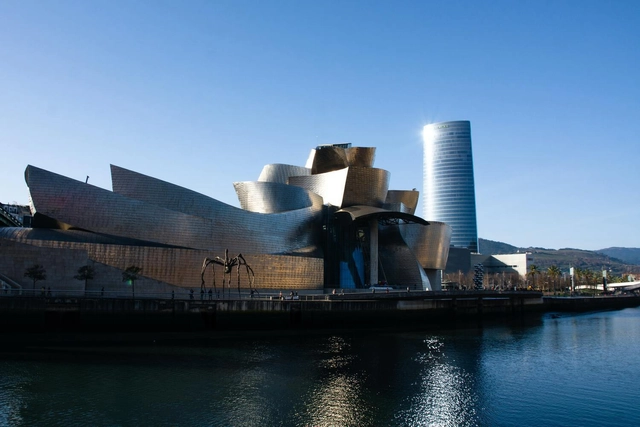
The Guggenheim Museum in Bilbao is celebrating its 25th anniversary this October 2022. Set on the edge of the Nervión River in the Basque Country, Spain, Frank Gehry's Guggenheim boosted the city's economy with its astounding success and changed the museum's role in city development. Twenty-five years on, the Bilbao Effect continues to challenge assumptions about urban transformations and inspires the construction of iconic pieces of architecture that uplift cities' status, calling investors and visitors.
Álvaro Joaquim de Melo Siza Vieira, or simply Álvaro Siza, was born in Matosinhos, Portugal, on June 25, 1933. His first work – four houses in Matosinhos – was built in 1954, even before completing his studies at the School of Fine Arts from the University of Porto (current Faculty of Architecture of the University of Porto – FAUP), which happened a year later.
Manhattan's dense landscape has just received another skyscraper, this time designed by a Portuguese Pritzker Prize Winner. At 137 meters high and with 35 floors, 611 West 56th Street, Álvaro Siza's first building in New York, was just completed, on the outside. The luxury apartment complex, which is also Siza's first work in the United States, has several facilities for its residents, such as a swimming pool, a spa, a gym, a playground for children and rooms for events.
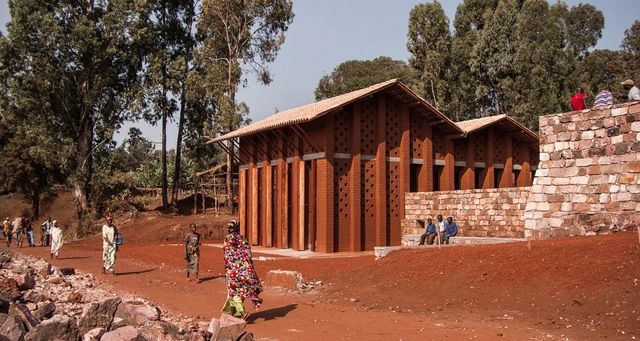
Library of Muyinga. Image Courtesy of BC Architects
In his 1983 now-classic essay Towards a Critical Regionalism, Six Points of an Architecture of Resistance, Kenneth Frampton discussed an alternative approach to architecture, one defined by climate, topography and tectonics, as a form of resistance to the placeness of Modern Architecture and the gratuitous ornamentation of Postmodernism. An architectural attitude, Critical Regionalism proposed an architecture that would embrace global influences while firmly rooted in its context. The following explores the value and contribution of Frampton’s ideas for contemporary architecture.
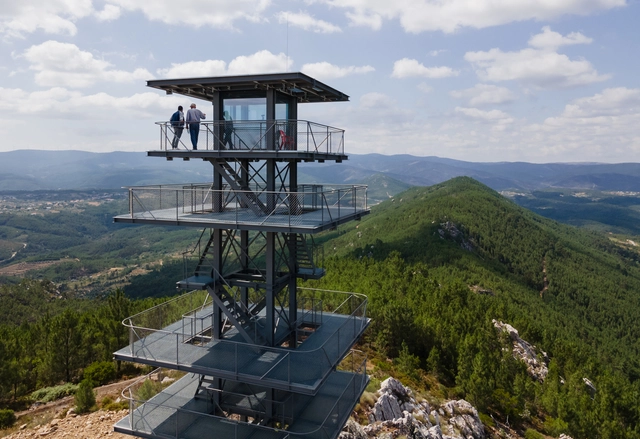
Álvaro Siza's latest project in Portugal is a 16-meter high watchtower built with a lightweight steel structure featuring photovoltaic panels on the roof. This project is very different from most of Siza's works, both in terms of scale and materials. The watchtower is located in Serra das Talhadas, in the municipality of Proença-a-Nova, and is part of a larger project comprising several structures dedicated to ecotourism in the area, including the still unbuilt Miradouro do Zebro.
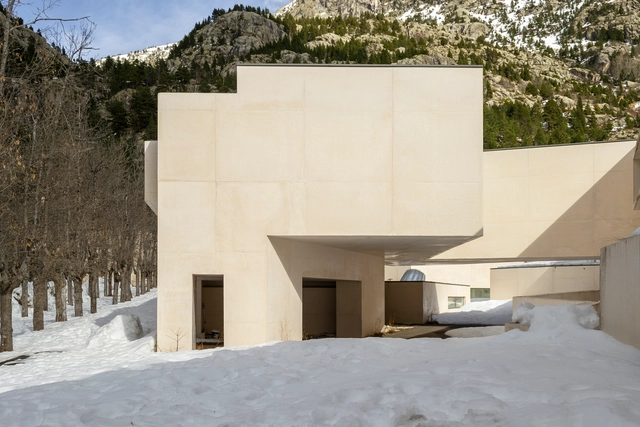
It's hard to forget the impact of economic crises on architecture; however, artist Jorge Isla reminds us with his series of photographs capturing the iconic High Performance Sports Center in the Balneario de Panticosa in Spain designed by architect Álvaro Siza. Construction on the site began at the start of the 21st century, but, due to heavy snows and Spain's financial upheaval, was abandoned shortly after.
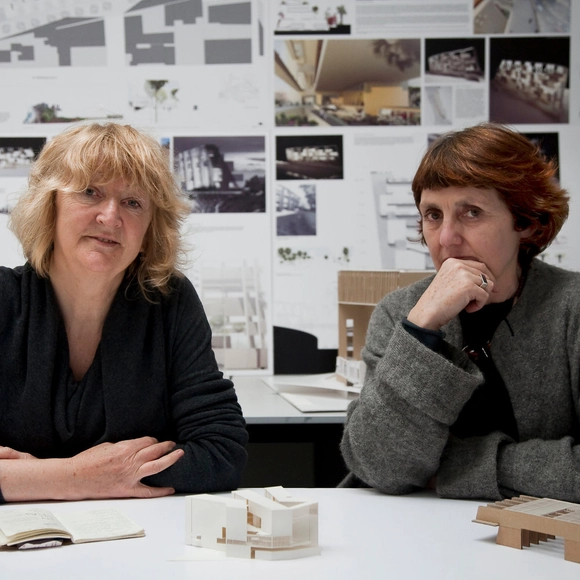
This year, architecture’s highest honor, the Pritzker Prize, has been granted to Grafton Architects, a Dublin-based architectural firm mainly ran by female partners Yvonne Farrell and Shelley McNamara. For the first time ever in its 42-year history, due to the constraints set by Covid-19 global pandemic, the organizers of the Pritzker Prize decided to use Livestream the award ceremony. Having reached the end of 2020, ArchDaily has summed up what current and previous Pritzker Prize winners have accomplished during this turbulent year.
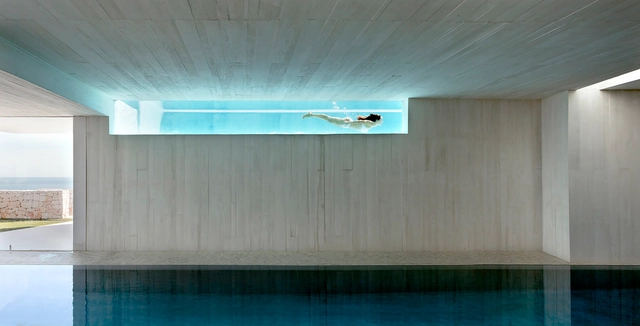
What's better than a house with a pool? A house with a pool that's part of the structure of the house. These projects show different ways to incorporate pools and how to resolve issues of weight, moisture and leaks. See the houses below, featuring photos by photographers like Mariela Apollonio, Kent Soh y Marcello Mariana.
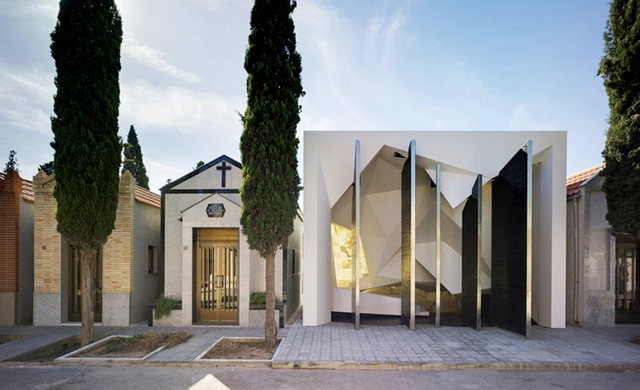
Mortality defines both architecture and human experience. Throughout time, funerary structures have been designed across societies and civilizations to ground personal and shared beliefs. The idea of the afterlife shapes how these buildings are made, from symbolic monuments to vast tombs and crypts. Now a new range of modern architecture has been designed for remembrance and reflection.
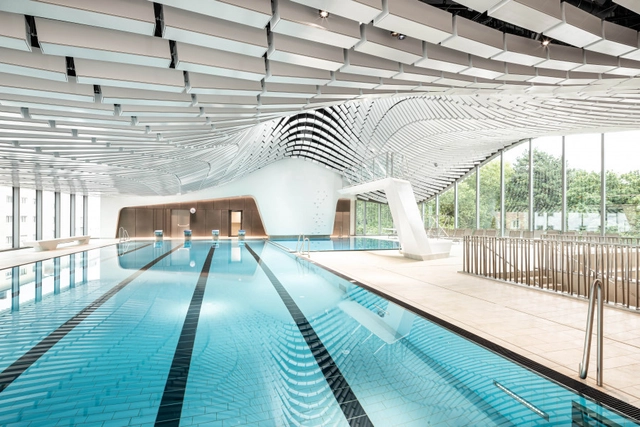
Aquatic centers are defined by activity. Making space for focused exercise and leisure alike, they are designed to support different scales of movement. At their core, they center on swimming pools. These structures explore ideas of light and space spanning millennia, from Pakistan's "Great Bath" at the site of Mohenjo-Daro and Ancient Greek palaestras to contemporary swimming complexes.
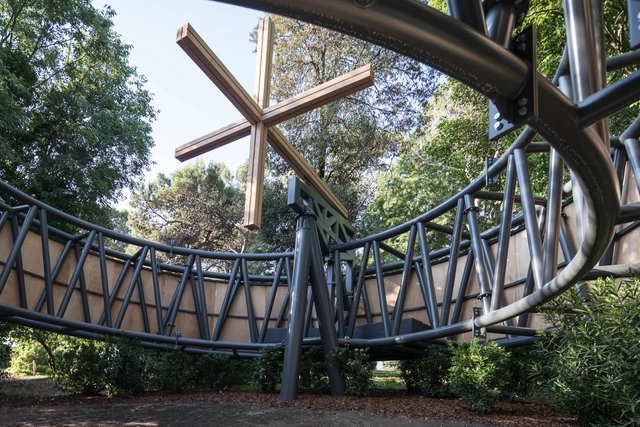
There are three words that have long-awaited to be put together: The Siza Pavilion. Their story begins with top furniture brand CAMERICH and the Aedes Architecture Forum’s search for a visionary in architecture and product design. The 1992 Pritzker Prize Laureate, Álvaro Siza, was later selected and commissioned a pavilion for China’s International Furniture Fair (CIFF 2019).
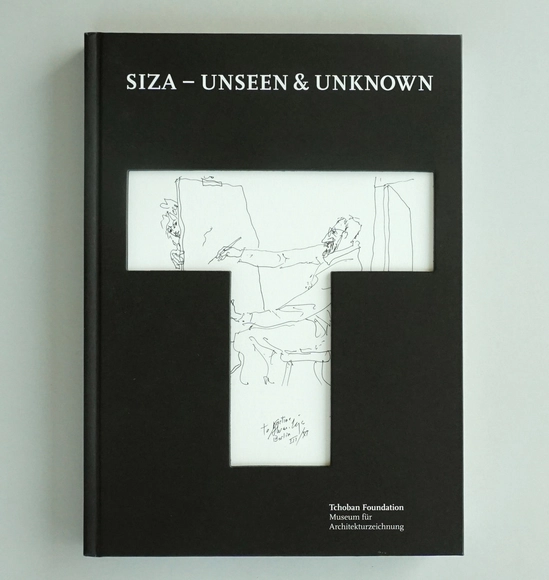
Álvaro Siza was born in 1933, on the same year that the Bauhaus closed its doors. He is perhaps the last living modernist or, at the very least, the most significant voice to carry out the unfinished modernist project all the way into the 21st century. 'Siza – Unseen & Unknown' showcases this continuity through 100 sketches, as well as its contradictions. These drawings are from his most personal archive, in addition to small collections of close friends and family. Hence, they focus not only on the professional legacy but also on the familial one, where Maria Antónia Siza (1940–1973) takes centre stage. His wife will draw him, he will draw her and the loving embrace of the human body will be transversal to architecture, art, life. In many ways, the Bernini folds of Maria Antónia’s clothes and hair develop in Siza’s own ink lines and this anthropomorphic research goes on long after her death at just thirty two years old. Those bodies will grow increasingly more abstract, like the Venus de Milo, losing its limbs and becoming something more.
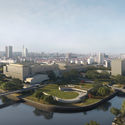
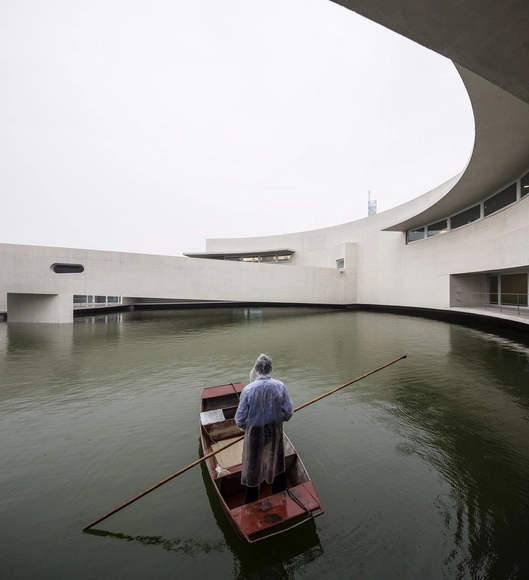
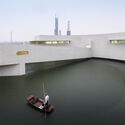
Álvaro Siza and Carlos Castanheira have announced a new project for the Haishang Museum in the Jiading district of Shanghai. The proposal includes a building for the museum and three other smaller structures; a pavilion, a tea house and a bridge. As Castanheira says, the project will be many projects within one.
One of the most highly regarded architects of his generation, Portugese architect Álvaro Siza (born 25 June 1933) is known for his sculptural works that have been described as "poetic modernism." When he was awarded the Pritzker Prize in 1992, Siza was credited as being a successor of early modernists: the jury citation describes how "his shapes, molded by light, have a deceptive simplicity about them; they are honest."
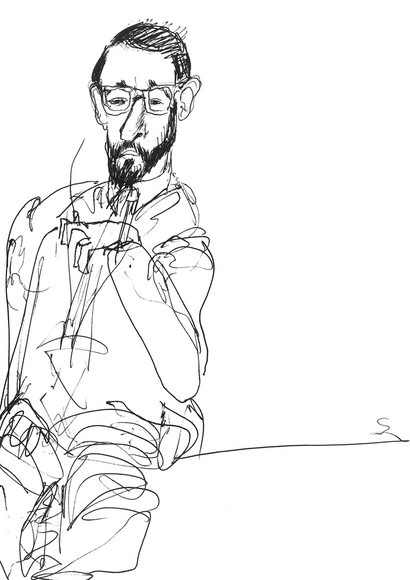
Portrait of Álvaro Siza, drawn by his wife: Maria Antónia Siza Ca. 1970-73, India ink on paper (30 × 21 cm). Image Courtesy of Tchoban Foundation
The Tchoban Foundation - Museum for Architectural Drawing in Berlin shared with us this article about the exhibition Siza: Unseen and Unknown curated by architect António Choupina together with Dr. h. c. Kristin Feireiss. According to them, "this exhibition was conceived as a family show, not in the sense of an architectural dynasty but rather as a lyrical collection of drawings from the architect’s private surroundings". The selected drawings are from the Siza family’s own collection and include sketches from known and less well-known projects, as well as architectural fantasies.
Álvaro Siza was born in 1933, on the same year that the Bauhausclosed its doors. He is perhaps the last living modernist or, at the very least, the most significant voice to carry out the unfinished modernist project all the way into the 21st century.
Siza: Unseen and Unknownshowcases this continuity through 100 sketches, as well as its unavoidable contradictions. These drawings are from his most personal archive, in addition to small collections of close friends and family. Hence, they focus not only on the professional legacy but also on the familial one, where Maria Antónia Siza (1940-1973) takes centre stage. His wife will draw him, he will draw her and the loving embrace of the human body will be transversal to architecture, art, life.
There are at least as many definitions of architecture as there are architects or people who comment on the practice of it. While some embrace it as art, others defend architecture’s seminal social responsibility as its most definitive attribute. To begin a sentence with “Architecture is” is a bold step into treacherous territory. And yet, many of us have uttered — or at least thought— “Architecture is…” while we’ve toiled away on an important project, or reflected on why we’ve chosen this professional path.
Most days, architecture is a tough practice; on others, it is wonderfully satisfying. Perhaps, though, most importantly, architecture is accommodating and inherently open to possibility.
This collection of statements illustrates the changing breadth of architecture’s significance; we may define it differently when talking among peers, or adjust our statements for outsiders.





















.jpg?1567193500&format=webp&width=640&height=580)