1. ArchDaily
  2. Agriculture

Agriculture: The Latest Architecture and News

Foster + Partners Reveals Designs for Ellison Institute of Technology Campus Expansion in Oxford

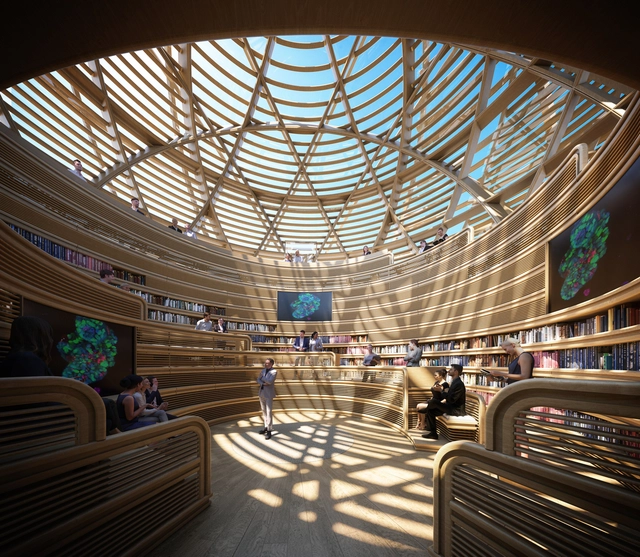
Foster + Partners has just revealed the designs for the Ellison Institute of Technology (EIT) campus in Oxford. Initially established as a research and development center, the campus is now gaining a significant expansion. The Institute’s core focus and research was around cancer, wellness, and public health at large, and it is now extending its mission to encompass new vital domains: medical science and healthcare, food security, sustainable agriculture, clean energy, climate change, and government policy economics.

Foster + Partners Reveals Designs for Ellison Institute of Technology Campus Expansion in Oxford - Image 1 of 4Foster + Partners Reveals Designs for Ellison Institute of Technology Campus Expansion in Oxford - Image 2 of 4Foster + Partners Reveals Designs for Ellison Institute of Technology Campus Expansion in Oxford - Image 3 of 4Foster + Partners Reveals Designs for Ellison Institute of Technology Campus Expansion in Oxford - Image 4 of 4Foster + Partners Reveals Designs for Ellison Institute of Technology Campus Expansion in Oxford - More Images+ 7

Willow Technologies Transforms Agricultural By-Products Into Building Materials in Ghana

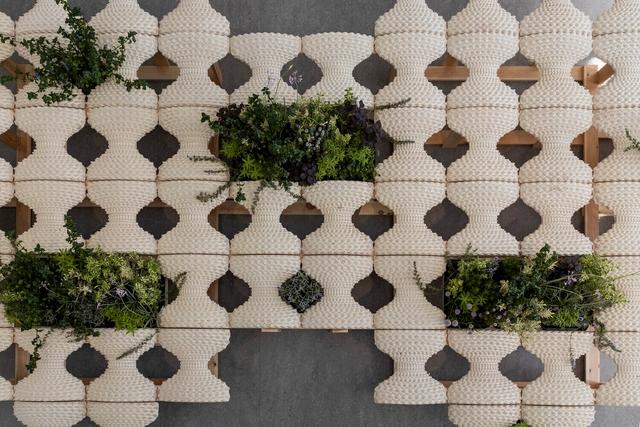
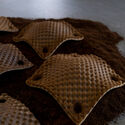
Willow Technologies is a material research and building technology practice that has been selected as part of ArchDaily's 2023 Best New Practices. Founded by Ghanaian-Filipino designer and architectural scientist Mae-Ling Lokko, it operates in the gap between research, development, and diffusion of bio-based building materials. Working with agro-waste and bio-based materials usually incurs technical questions regarding scalability, industrial production, standardization, fireproofing, and mechanical strength. Exploring this data is where Willow Technologies situates itself, but peculiarly through the lens of developing regions in West Africa. Through comprehensive works with coconuts, moringa, rice, and other indigenous crops, Lokko’s practice has been able to investigate and catalog the material character of various crops, their possible by-products, local transformation techniques, and the prospect and challenges of scalability as building materials.
Willow Technologies Transforms Agricultural By-Products Into Building Materials in Ghana - Image 1 of 4Willow Technologies Transforms Agricultural By-Products Into Building Materials in Ghana - Image 2 of 4Willow Technologies Transforms Agricultural By-Products Into Building Materials in Ghana - Image 3 of 4Willow Technologies Transforms Agricultural By-Products Into Building Materials in Ghana - Image 4 of 4Willow Technologies Transforms Agricultural By-Products Into Building Materials in Ghana - More Images+ 9

How Will We Live With Livestock?

Subscriber Access | 

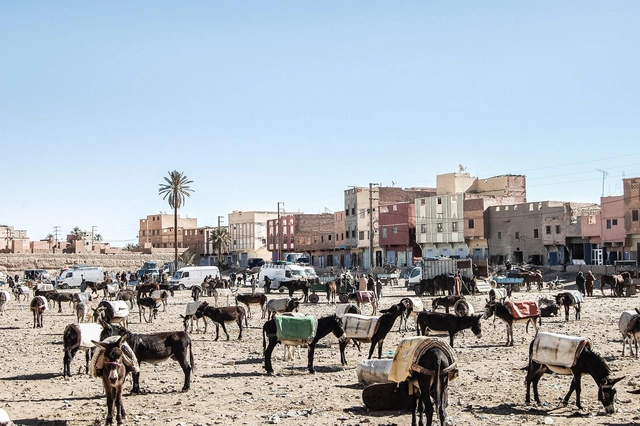
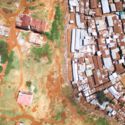
As populations continue to migrate from rural to urban areas, space is at a premium. Many settlements are becoming ever-more congested – with adequate, affordable housing in short supply and transport systems struggling to serve their respective residents. But as much the conversation about urbanization is about people, it is sometimes also about the animals that come with those people – urban livestock that play a key role at providing sustenance on an individual level, in addition to becoming an avenue for communal trade.

How Will We Live With Livestock? - Image 1 of 4How Will We Live With Livestock? - Image 2 of 4How Will We Live With Livestock? - Image 3 of 4How Will We Live With Livestock? - Image 4 of 4How Will We Live With Livestock? - More Images+ 4

URB Unveils Plan for World’s Largest Agritourism Destination in Dubai, UAE

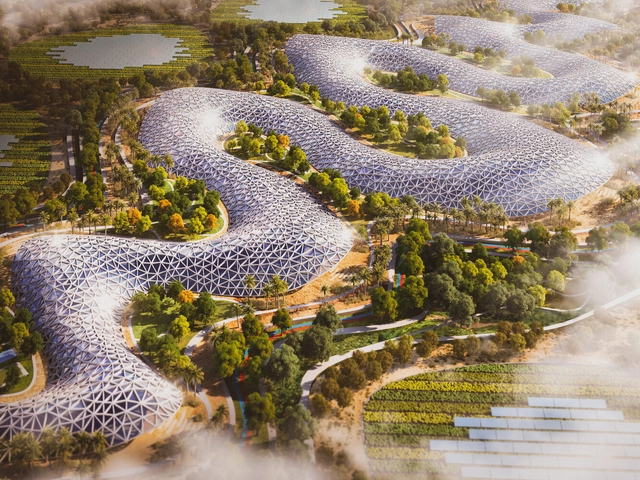
URB to develop the world's largest agritourism destination in Dubai, providing food security and to foster sustainability of the local communities, heritage, and cultural landscapes. In line with the city's ambition of making its rural areas restorative land facilities, "Agri Hub" targets to create 10,000 new jobs across various sectors, including a new agricultural research institute and a public farm for educational and retail purposes.

The Challenge of Food Production in a Planetary City

Subscriber Access | 

In an age of unprecedented globalization, our food supply chains — the institutions and mechanisms involved in food production and distribution — have become longer. So much so that they are hardly perceived as chains or systems. They have been integrated into our lives, and into our cities, and transformed our relationships with food. And yet, those very long food supply chains are implicated in some of our most pressing global problems, from food security and waste to biodiversity and climate change. These food supply chains have come to their current state, their current length, over decades, or centuries perhaps, through all sorts of political, social, cultural, and economic processes, and carry with them a range of burdens: vague producer-consumer relationships, and a host of negative environmental externalities, among many others.

The Challenge of Food Production in a Planetary City - Image 1 of 4The Challenge of Food Production in a Planetary City - Image 2 of 4The Challenge of Food Production in a Planetary City - Image 3 of 4The Challenge of Food Production in a Planetary City - Image 4 of 4The Challenge of Food Production in a Planetary City - More Images+ 9

Returning the Building to the Soil: an Interview with the Architect and Scientist Mae-Ling Lokko

Agriculture and the food industry seem to have little in common with architecture, but it is precisely the overlap of these three areas that interests Ghanaian-Filipino scientist and architect Mae-ling Lokko, founder of Willow Technologies based in Accra, Ghana. Working with recycling agricultural waste and biopolymer materials, Lokko searches for ways to transform the so-called agrowaste into building materials.

Returning the Building to the Soil: an Interview with the Architect and Scientist Mae-Ling Lokko - Image 1 of 4Returning the Building to the Soil: an Interview with the Architect and Scientist Mae-Ling Lokko - Image 2 of 4Returning the Building to the Soil: an Interview with the Architect and Scientist Mae-Ling Lokko - Image 3 of 4Returning the Building to the Soil: an Interview with the Architect and Scientist Mae-Ling Lokko - Image 4 of 4Returning the Building to the Soil: an Interview with the Architect and Scientist Mae-Ling Lokko - More Images+ 5

Israel Pavilion at the 2021 Venice Biennale Highlights the Impact of Agriculture on Communities, Landscapes and Fauna

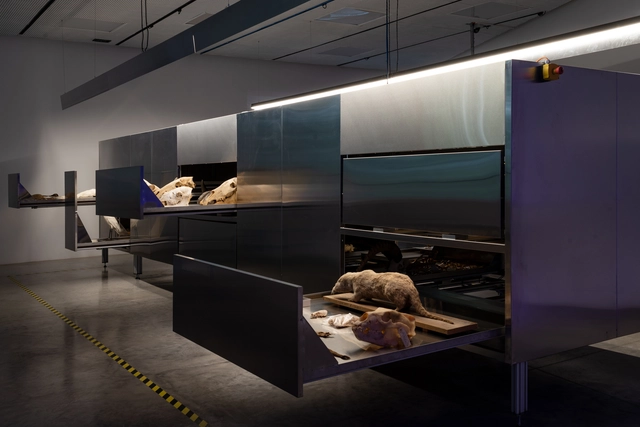
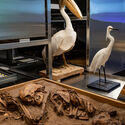
Israel’s Pavilion for the 17th Venice Architecture Biennale highlights the impact of intensive mechanized agriculture on landscapes and ecosystems, as well as the disruption caused to local communities. Titled Land. Milk. Honey and curated by an interdisciplinary team comprising Dan Hasson, Iddo Ginat, Rachel Gottesman, Yonatan Cohen and Tamar Novick, the exhibition portrays the fundamental changes experienced by the region through the stories of local animals, constructing a history of the 20th-century development.

Israel Pavilion at the 2021 Venice Biennale Highlights the Impact of Agriculture on Communities, Landscapes and Fauna - Image 1 of 4Israel Pavilion at the 2021 Venice Biennale Highlights the Impact of Agriculture on Communities, Landscapes and Fauna - Image 2 of 4Israel Pavilion at the 2021 Venice Biennale Highlights the Impact of Agriculture on Communities, Landscapes and Fauna - Image 3 of 4Israel Pavilion at the 2021 Venice Biennale Highlights the Impact of Agriculture on Communities, Landscapes and Fauna - Image 4 of 4Israel Pavilion at the 2021 Venice Biennale Highlights the Impact of Agriculture on Communities, Landscapes and Fauna - More Images+ 8

What Will the Countryside be for When We All Live in Cities?

Subscriber Access | 

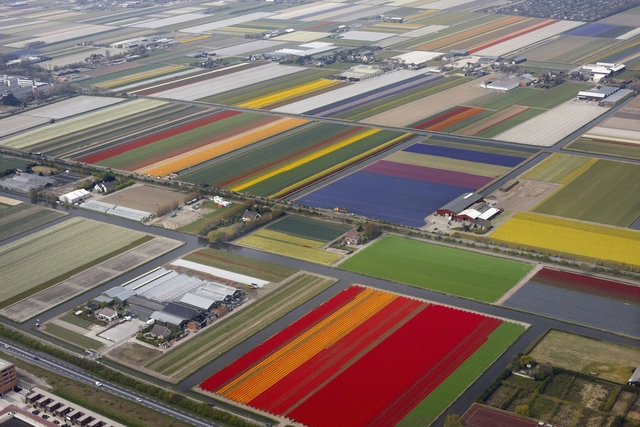
In February 2020, the Solomon R. Guggenheim Museum will present an exhibition titled “Countryside, The Future.” The brainchild of a team led by Rem Koolhaas and AMO, the exhibition will mark the latest chapter in one of Koolhaas’ fields of study from recent years; the impact of an increasingly urbanized world on the non-urban areas “left behind.” This investigation is for good reason.

Open Call: "Beyond Cement: Towards an Alternative Vision for Chekka and Surrounding Towns"

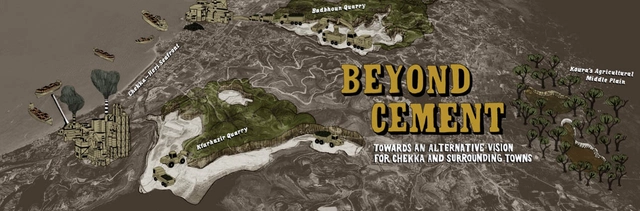
Many challenges underline the urgency of reconsidering dominant approaches to development, land use, and the institutional framework that governs them, in addition to the political context, which requires a novel and creative counter-approach in Chekka and Surrounding Towns in North Lebanon.
As such, this competition is an open call for planners, designers, environmental scientists, agricultural engineers, economists and other professionals to draft an intervention framework, which simultaneously answers the concept of sustainable development and the immediate needs of the people, including job opportunities and a local economy, without compromising their health, the environment and local economic resources.

Ilimelgo Reimagines Future of Urban Agriculture in Romainville

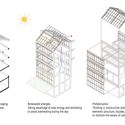
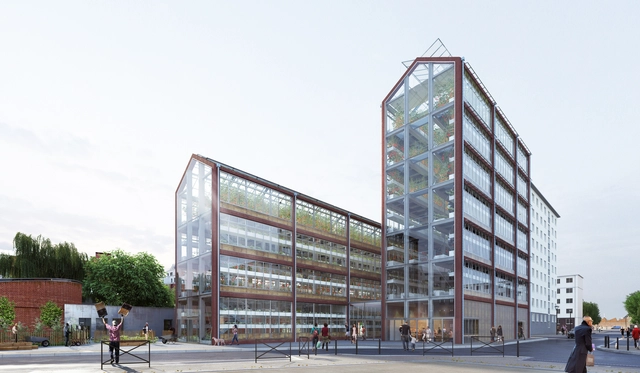
In their winning competition entry, French architecture firm Ilimelgo reimagines the future of urban agriculture with a vertical farming complex in the Parisian suburb of Romainville. The project integrates production of produce into the city through a 1000 square meter greenhouse that maximizes sunlight and natural ventilation. Recognizing the developing world’s diminishing agricultural space, the project aims to meet the growing demands for crop cultivation in urban environments.

Ilimelgo Reimagines Future of Urban Agriculture in Romainville  - Image 1 of 4Ilimelgo Reimagines Future of Urban Agriculture in Romainville  - Image 2 of 4Ilimelgo Reimagines Future of Urban Agriculture in Romainville  - Image 3 of 4Ilimelgo Reimagines Future of Urban Agriculture in Romainville  - Image 4 of 4Ilimelgo Reimagines Future of Urban Agriculture in Romainville  - More Images

These Floating Farms Could Be Key to Feeding Future Populations

Subscriber Access | 

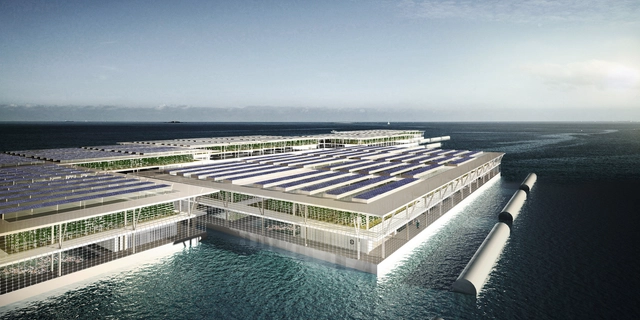
Tap a button on your phone and hop into the shower; walk downstairs 15 minutes later, and you have a fresh pot of coffee waiting for you. That’s a ritual that is no longer just a fantasy for many people. The rise of the internet of things has allowed us to control remote appliances with just a tap of the touchscreen. Until now, the scale of these processes has largely been limited to personal devices: anything from brewing a pot of coffee to warming up your car on a frosty morning. But what if we could grow food for thousands of people, with that same tap of a button? That is the goal of Forward Thinking Architecture’s “Smart Floating Farms” project.

These Floating Farms Could Be Key to Feeding Future Populations - Image 1 of 4These Floating Farms Could Be Key to Feeding Future Populations - Image 2 of 4These Floating Farms Could Be Key to Feeding Future Populations - Image 3 of 4These Floating Farms Could Be Key to Feeding Future Populations - Image 4 of 4These Floating Farms Could Be Key to Feeding Future Populations - More Images+ 2