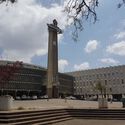
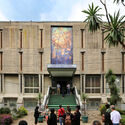
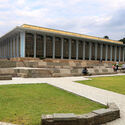
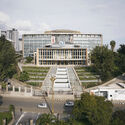
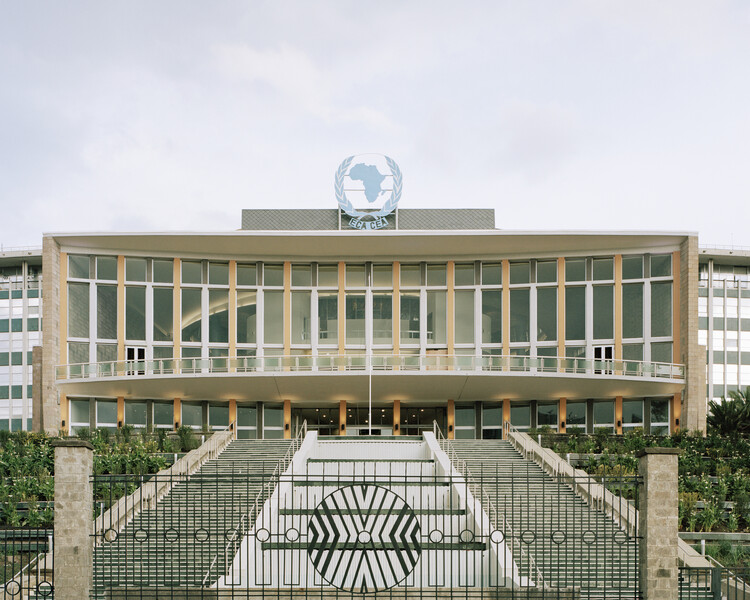
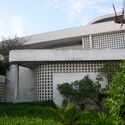
In January 2026, the World Monuments Fund/Knoll Modernism Prize was awarded to Australian firm Architectus for their conservation of the Africa Hall in Addis Ababa, Ethiopia. The award recognizes that Modernist buildings, once seen as a vanguard of architecture, are falling into disrepair and are underappreciated by the public. The situation in Africa is typical of this global sentiment, and this was the first time a building on the continent was graced with this award. The prize also spotlights Ethiopia's rich Modernist inventory, which marks its continental role in the mid and late twentieth century.
In an age so obsessed with skincare and appearances, few architects are truly interested in the intestines of our buildings. With a practice rooted in contextual awareness and technical pragmatism, sensitive to the needs of the people it serves and to resource limitations, Moroccan architect Aziza Chaouni focuses on the hidden systems that allow architecture to be. Over the past two decades, she has been working on projects across different geographies, particularly in the Saharan region, actively engaging with its communities and heritage.
Currently leading the South–North (SoNo) Lab for Sustainable Construction and Conservation at EPFL in Lausanne, Switzerland, Chaouni brings to the academic realm her architectural expertise in operating under pressing constraints, advocating for reciprocal collaboration between the Global South and the Global North. ArchDaily had the opportunity to speak with Aziza about her experience in Africa and how it can foster more sustainable ways of designing buildings for the future of our cities.
The City of Amsterdam has launched an international architectural competition for the design of the National Slavery Museum, in partnership with the National Slavery Museum Foundation.
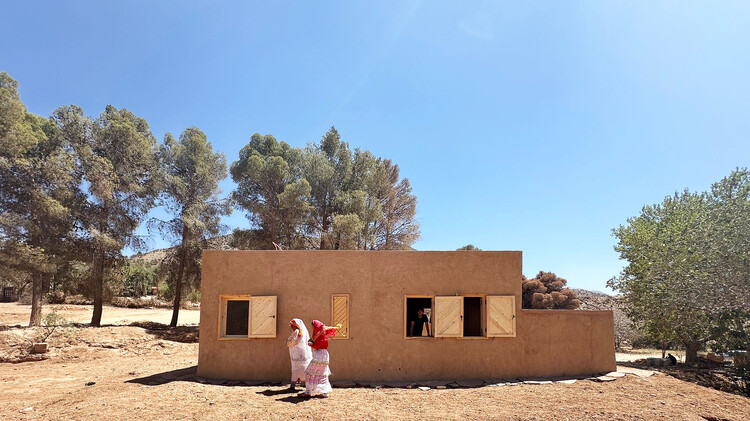
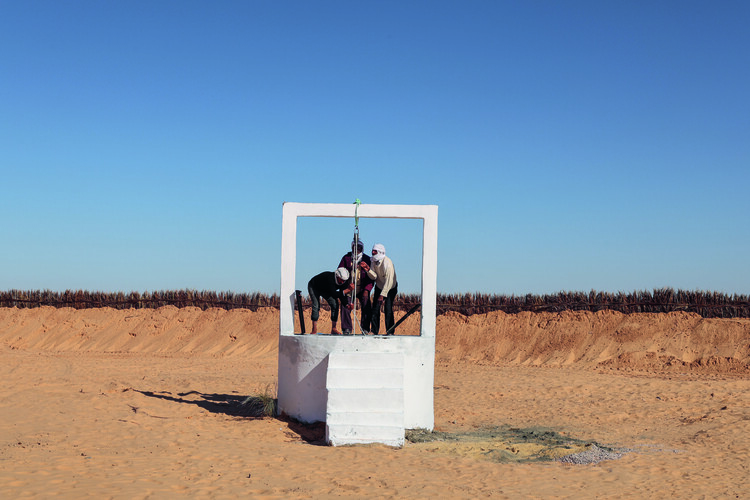
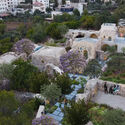
Bir Ettin Restoration / Bled El Abar Collective. Image Courtesy of Bled El Abar Collective
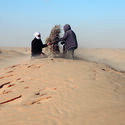
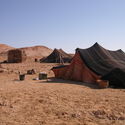
In some languages, the very word for building refers to its immovability. The discipline of engineering related to buildings is referred to as statics. Thus, architecture is closely related to the fixed and the immobile. And yet, for millions of nomadic people around the world, shelters must be of a light and distinctly movable structure, while home is the vast landscape in which they reside. Such lifestyles, which carry centuries of traditions, are constantly under threat from the pull factors of sedentary life in towns and cities. In Tunisia, one project acknowledges the risk of heritage loss and attempts to improve conditions for nomadic herders.
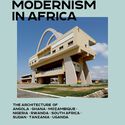
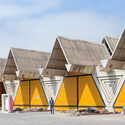
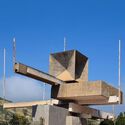
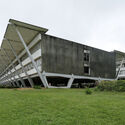
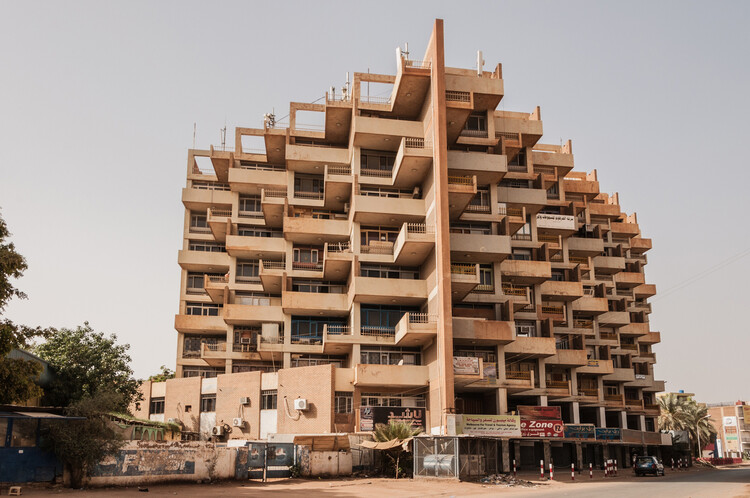
Launched in September 2024, the Rediscovering Modernism in Africa series joined a growing worldwide interest in this topic. Previously underrepresented in architectural discussions, the work of architects and researchers on the continent and abroad has continued to tell the story of these high-quality modern works of architecture. These buildings represent designers striving to create locally suited architecture using global concepts and technologies, coinciding with huge political changes as most African countries gained their independence.
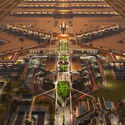
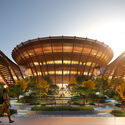
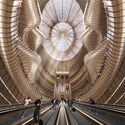
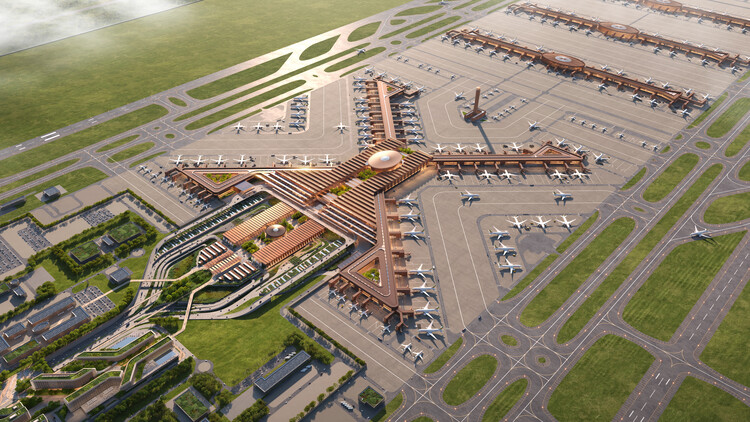
Construction has begun on the new Bishoftu International Airport (BIA), designed by Zaha Hadid Architects for Ethiopian Airlines Group. Ethiopia's Prime Minister, Abiy Ahmed Ali, laid the cornerstone at the airport's groundbreaking ceremony on Saturday, January 10, 2026. The new airport will be located approximately 40 kilometers south of the Ethiopian capital, Addis Ababa, and is planned to become Africa's largest airport. Phase One of the project is designed to serve 60 million passengers per year. Subsequent phases are expected to increase capacity to up to 110 million passengers annually, supported by four runways and parking for 270 aircraft, more than four times the capacity of Ethiopia's current main airport, according to statements by the Prime Minister.
Malabo served as the capital city of Equatorial Guinea from the country's independence from Spain on October 12, 1968, until January 2, 2026, when a decree issued by President Teodoro Obiang Nguema Mbasogo officially transferred the capital to Ciudad de la Paz ("City of Peace"), located in Djibloho Province. Obiang formalized the move as part of a long-planned territorial reorganization. While the former capital remains an important economic center on Bioko Island, Ciudad de la Paz was conceived as a planned capital on Africa's mainland. The initiative to relocate the capital dates back to 2008, with construction beginning in 2011. The new capital, also referred to as Djibloho, after the province, or Oyala, has been framed by the government as a decentralization effort aimed at improving national accessibility.
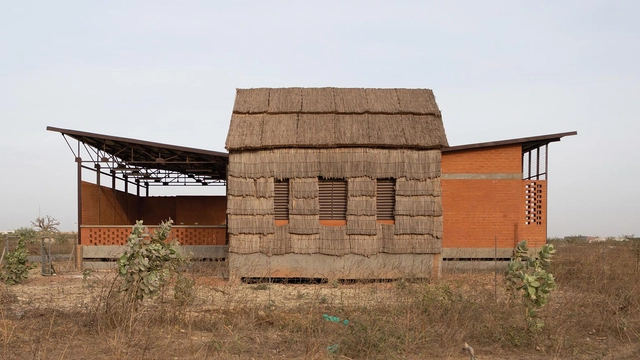
Founded by Senegalese architect Nzinga Mboup and French architect Nicolas Rondet, Worofila is a studio dedicated to bioclimatic and ecological architecture. Based in Dakar, Senegal, the firm explores the potential of vernacular materials like earth bricks and typha, applying modern techniques to create effective construction solutions. Their work addresses key issues of the environment, sustainability, and urbanization, merging traditional materials with innovative practices.
In this interview, Nzinga and Nicolas share their vision for a distinctly African modernity that integrates contemporary methods with traditional knowledge and resources. They advocate for a development approach that not only meets immediate needs but also empowers communities and fosters meaningful, long-term progress. Their insights provide a compelling perspective on how architecture can drive a more sustainable and contextually relevant future for African cities.
We are pleased to announce an evening conversation hosted by the Pan-African Biennale (PAB), in collaboration with Black Females in Architecture (BFA), a collective that advocates for greater representation, support, and visibility for Black women working across architecture and the built environment.
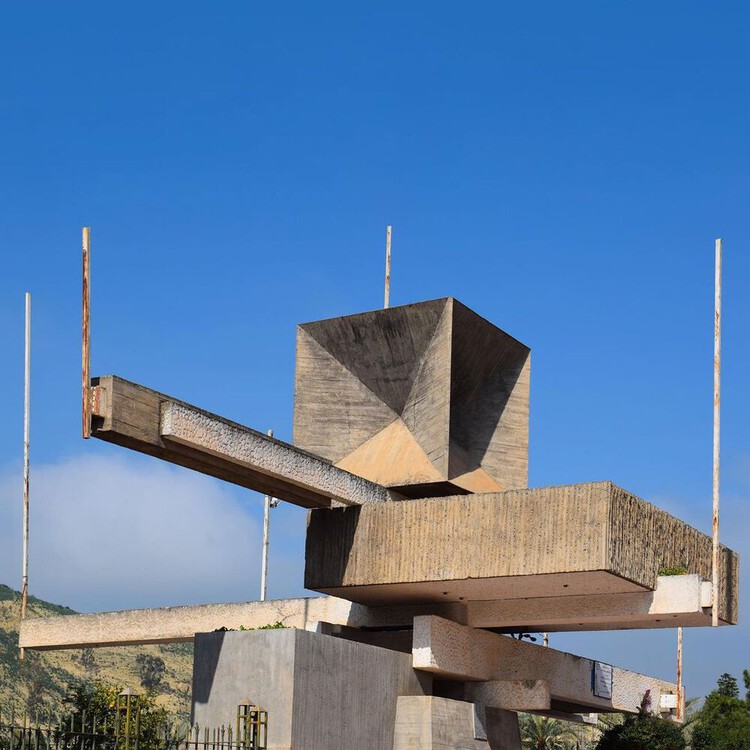
Modernism has a long history in Morocco. Being close to Europe and under French Protectorate rule, it kept pace with architectural developments in the movement. Its relative peace after the Second World War further strengthened its role as some European architects sought a hub for new ideas. Architects in independent Morocco adopted Modernism as they were tasked to build the infrastructure of a new nation. The architect Jean-François Zevaco, born in Morocco to French parents, practiced across these formative periods, developing his own expressive version of modern architecture.
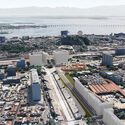
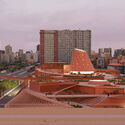
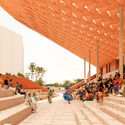
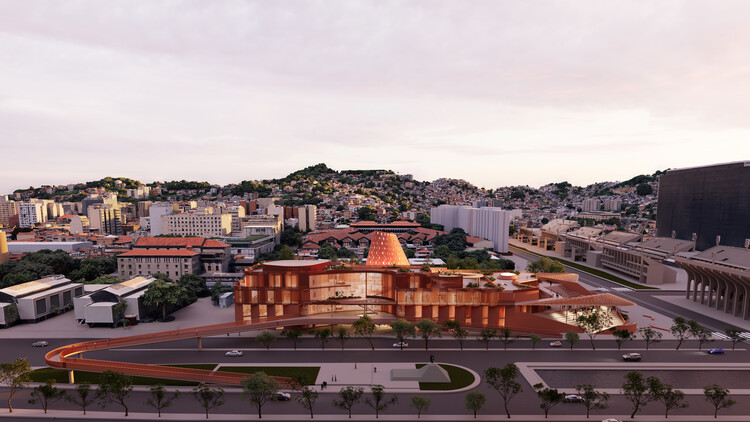
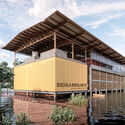
Biblioteca dos Saberes by Kéré Architecture. Northern view. Render. Image Courtesy of Kéré Architecture
Kéré Architecture has unveiled its proposal for the 40,000-square-meter Biblioteca dos Saberes (House of Wisdom) in Rio de Janeiro's Cidade Nova neighborhood. Designed by Francis Kéré, Mariona Maeso Deitg, and Juan Carlos Zapata, the cultural complex is commissioned by the Rio de Janeiro City Hall and planned for a site near Valongo Wharf and the Little Africa area. The design was presented to members of the community on November 20, the National Day of Zumbi and Black Consciousness in Brazil. Important features include a perforated façade for sun protection, roof gardens, landscaped terraces, shaded courtyards, open-air areas, a canopied amphitheater, and a pedestrian bridge connecting the building to the nearby monument to Zumbi dos Palmares.
The Holcim Foundation for Sustainable Construction has announced the Grand Prize Winners of the 2025 Holcim Awards, selecting one project from each global region to represent the most impactful approaches to sustainable design in this cycle. This edition marks the introduction of the Grand Prize format, replacing the previous tiered distinctions to better acknowledge diverse regional contexts and avoid hierarchical rankings. Evaluated by juries chaired by Sou Fujimoto (Asia Pacific), Kjetil Trædal Thorsen (Europe), Sandra Barclay (Latin America), Lina Ghotmeh (Middle East and Africa), and Jeanne Gang (North America), the winning projects reflect the Foundation's principles of holistic, transformational, and transferable design.
The second edition of the Ammodo Architecture Award has recognized 26 recipients for their contributions to socially and ecologically responsible design. Selected from 168 submissions spanning over 60 countries, the laureates represent a wide range of practices, from established offices to emerging collectives and community-led initiatives. Each recipient receives a grant ranging from €10,000 to €150,000 to support the continued development of their projects. Beyond recognition and financial support, the Ammodo Architecture initiative also functions as a knowledge platform, connecting awardees across regions and facilitating the exchange of ideas on key themes identified by the advisory committee.
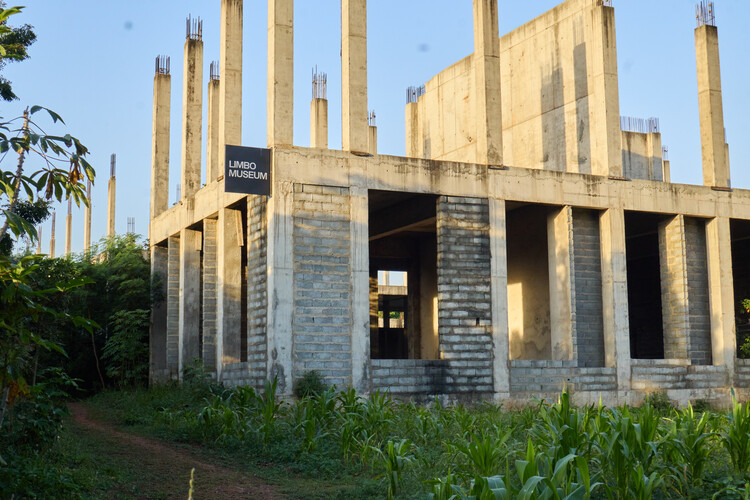
On the Other Side of Languish exhibition by Reginald Sylvester II. Debut exhibition of the Limbo Museum in Ghana, West Africa. Image Courtesy of Limbo Museum
The Limbo Museum is a new institution dedicated to architecture, art, and design based in Ghana, West Africa. The museum challenges the concept of the ruin, operating from a formerly abandoned Brutalist estate that currently conveys the image of an unfinished building. The project was founded by Limbo Accra, a spatial design and research-based practice established in 2018 by Dominique Petit-Frère and Emil Grip, dedicated to "unlocking the potential of unfinished buildings across West Africa and beyond." On October 31, 2025, the museum opened its first public exhibition, On the Other Side of Languish by Reginald Sylvester II, developed through the institution's visiting artist residency program.
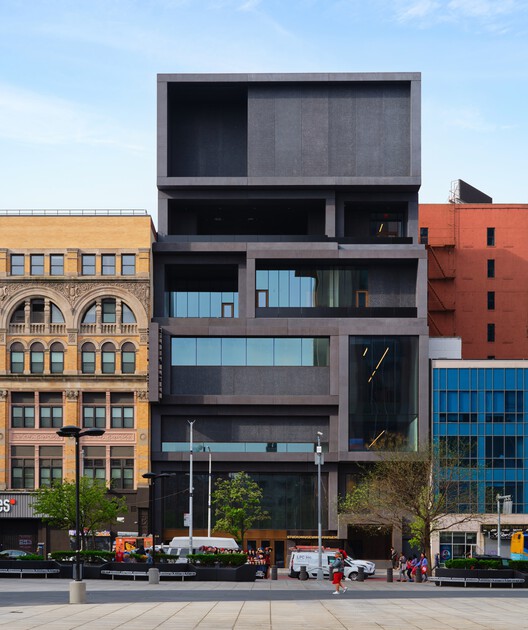
The Studio Museum in Harlem is preparing to open its new purpose-built home to the public on November 15 with a Community Day celebration. Designed by Adjaye Associates in collaboration with Cooper Robertson, the seven-story, 82,000-square-foot building is located on West 125th Street in Harlem, New York City. Serving as a major institution dedicated to artists of African descent, the museum's new facility marks the first structure in its fifty-seven-year history conceived specifically for its mission. The opening signals a new chapter for the museum's engagement with art, education, and the local community through expanded spatial and programmatic capacities.
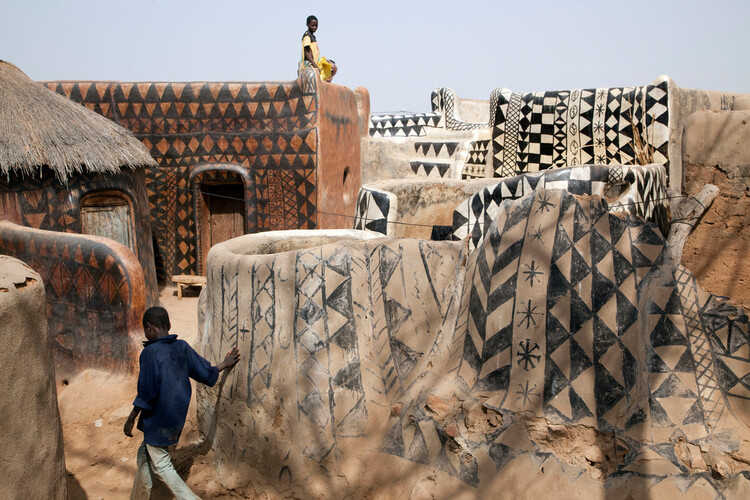
Vernacular architecture is often referred to as harboring lessons for creating low-energy buildings and the fight against climate change. Yet, as weather patterns are changing, there are cases where traditional building techniques are themselves becoming at risk. As well as changes in temperature, different regions have faced becoming wetter or drier, experiencing increased risk of droughts, flooding, storms, and changes to local flora. The painted houses of Tiébélé in Burkina Faso, recognized as a UNESCO World Heritage Site, are one example.