As technology moves forward, so does architecture and construction. Architects, designers, and planners around the world now have infinite tools and resources to design and build the cities of today and the future. As promising as this may sound, new construction is also consuming our world’s limited resources faster than we can replenish them.
This situation leaves architects with an important responsibility: the rehabilitation and reuse of the existing built environment. This means using creative thinking and design to save and incorporate old or historic buildings that currently exist, in the present and future of our cities, by adapting them through creative and sensitive treatments.
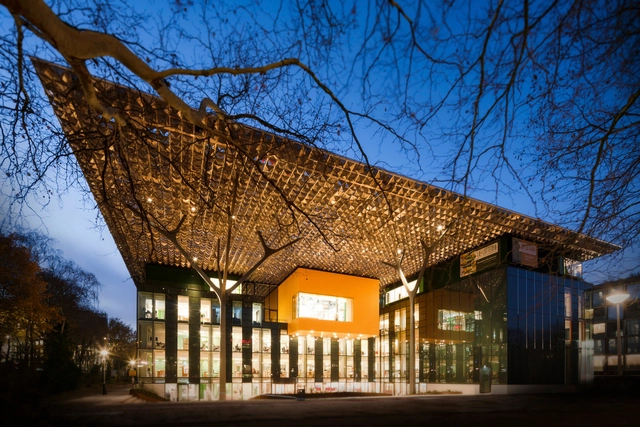
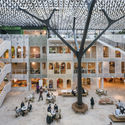
Dutch firm Benthem Crouwel Architects have transformed an office building in Amsterdam into the most sustainable renovated property in the Netherlands. Now the new head office for the Dutch Charity Lotteries, the building received BREEAM Outstanding rating for its sustainable design. The adaptive reuse features a series of slender, tree-shaped columns that support an iconic roof with nearly 7,000 polished aluminum leaves.
As industry has shifted over the past century, in format, location, and type, the manufacturing and industrial spaces scattered across the western world have been repurposed. You have no doubt seen these structures, though perhaps without realizing. The large windows, high ceilings, and open floor plans optimized for factory work now mark the territory of the “creative class”. Such spaces have been disproportionately appropriated by creative industries such as arts and architecture; think of Herzog + de Meuron’s renovation of the Tate Modern (from a former power station) or the recent collaborative transformation of a locomotive yard into a library in the Netherlands.
https://www.archdaily.com/911719/lacaton-and-vassals-frac-dunkerque-is-an-architectural-echo-both-in-form-and-in-conceptKatherine Allen
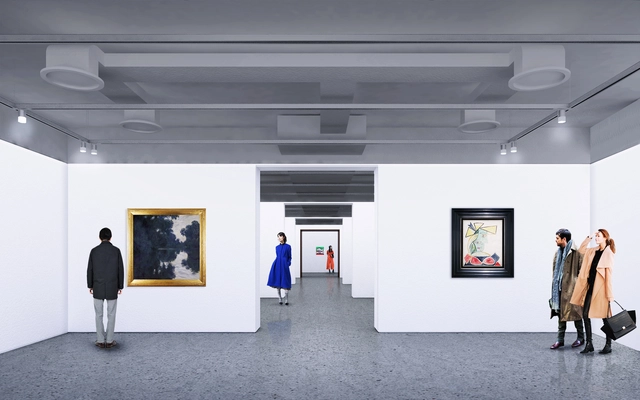
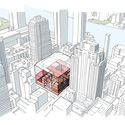
Renowned auction house Sotheby’s has unveiled a dramatic OMA/Shohei Shigematsu-designed expansion and re-imagination of their New York City headquarters. Together with OMA Associate Christy Cheng, Shigematsu has redesigned the headquarters to include vast new exhibition galleries for fine art, precious objects, luxury goods, and more. Comprising 40 galleries of varying size across four floors, the new space will increase Sotheby’s exhibition space from 67,000 square feet to 90,000 square feet.
In the proposal, nine galleries will facilitate discreet private sales for dedicated small objects such as watches and jewelry. Three two-story spaces will be set aside for exhibitions, along with a 150-foot-long space for full collections, according to The New York Times. The new space will include “dynamic repertoire” of "spatial conditions", including a white cube, double height, enfilade, corridor cascade, octagonal, and an L-shaped space.
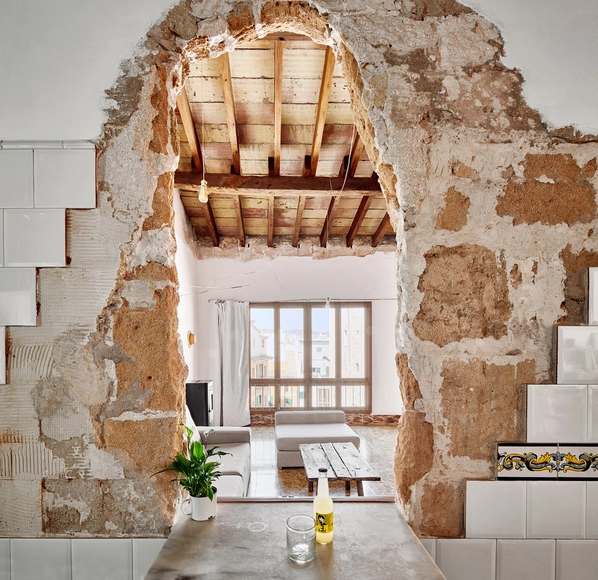
If walls could speak, they would have the most stories to tell - stories of antiquity, war, scandal, and reconciliation. Approaches to preservation are as varied as the architects behind them, but many take on the challenge with flair and restraint in equal measure. It is common to see preservation that combines ancient structure with contemporary features, creating beautiful combinations of old and new.
Take a look at some architectures from our projects database that highlight the beauty in the imperfections of ruins and great combinations of used and new materials.
This collection is one of many interesting content groupings made by our registered users. Remember you can save and manage what inspires you on My ArchDaily. Create your account here.
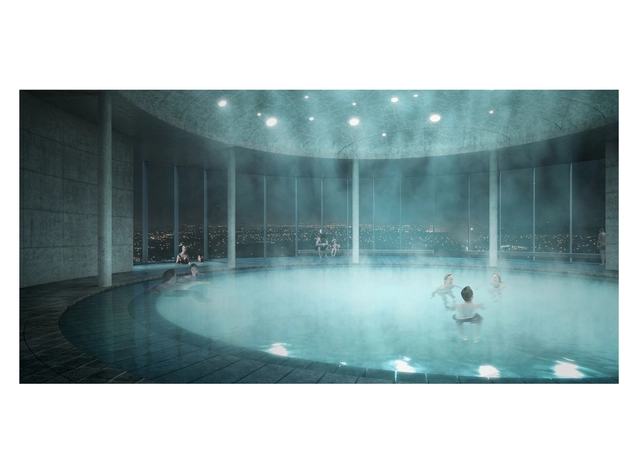
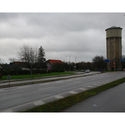
Raise your hand if you’ve ever wanted to go swimming inside a water tower. In reality, it would probably be dark and creepy and not as cool as it sounds, but that’s not the case with Danish firm SquareOne’s design, where the top of an abandoned water tower becomes a public swimming pool and spa. Utilizing the existing structural system of the tower, SquareOne is also proposing adding 40+ student housing units suspended around the tower. This dual-purpose scheme addresses Copenhagen’s desperate housing shortage while also giving new life to an old building.
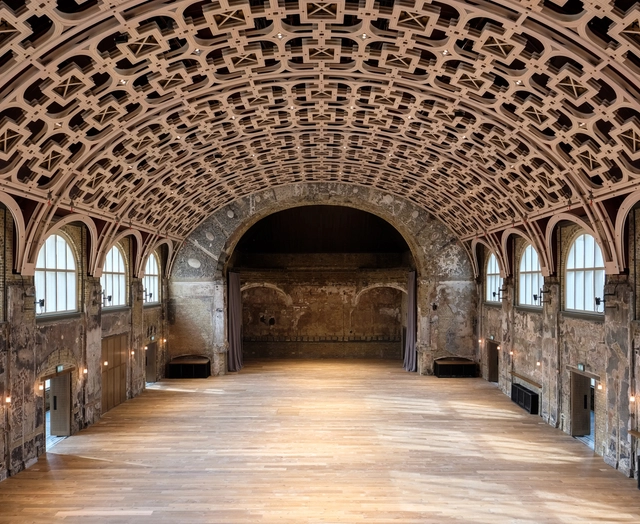
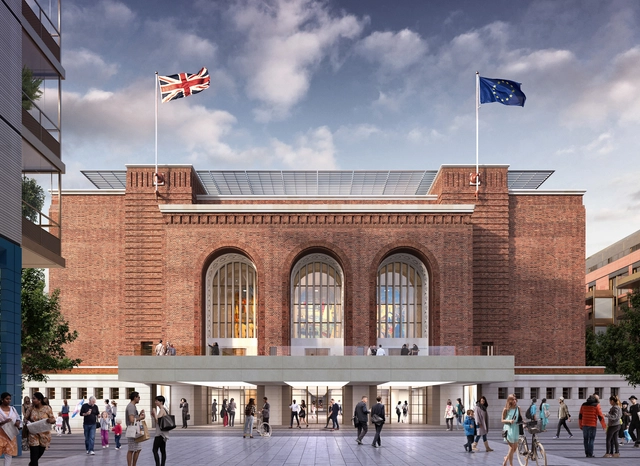
Rogers Stirk Harbour + Partners have gained planning permission for the proposed extension and full refurbishment of the Grade II-listed Hammersmith Town Hall in London. A joint venture with Hammersmith & Fulham Council and commercial partners a2Dominion, the scheme seeks to promote “the creation of a new high quality civic mixed-use development” derived from the historic structure.
Through the demolition of a 1970s extension, the scheme will create a new public square that enhances the setting of the existing protected Town Hall, reinstating its presence on Kings Street. The main alternations seek to enhance the existing building through a glass box rooftop extension containing council office space.
https://www.archdaily.com/911692/rogers-stirk-harbour-plus-partners-gains-approval-for-hammersmith-town-hall-refurbishment-in-londonNiall Patrick Walsh
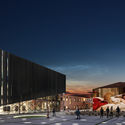
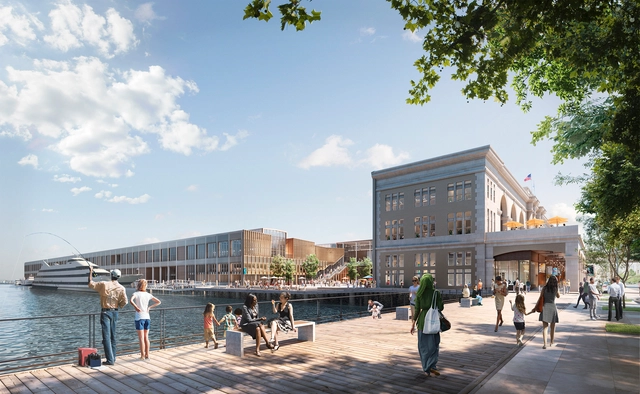
Schmidt Hammer Lassen has announced details of their second U.S. project: the Seaport World Trade Center in Boston, Massachusetts. An adaptive reuse project that will bring new life to Boston’s Commonwealth Pier, the 68,500-square-meter mixed-use project seeks to reactivate a historic maritime hub to create a new waterfront destination.
The largest pier building in the world when completed in 1901, the Commonwealth Pier will be reactivated with the introduction of new materials, increased daylight, and new points of connectivity. The exercise in adaptive reuse will contain flexible office space, dynamic event space, new retail, dining, and public amenities.
https://www.archdaily.com/911496/schmidt-hammer-lassen-revitalizes-bostons-commonwealth-pier-through-adaptive-reuseNiall Patrick Walsh
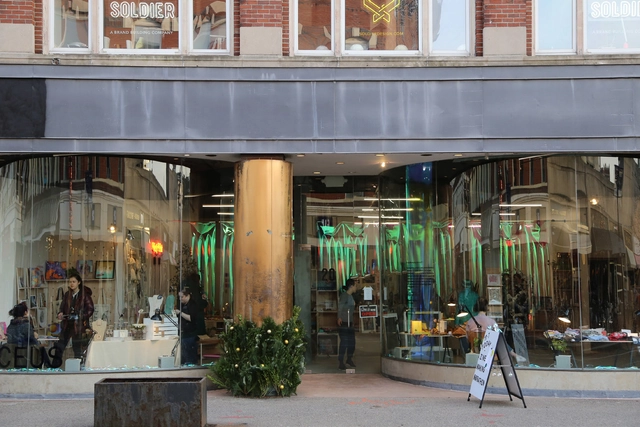
As retail moves evermore online, vacant storefronts have become ubiquitous sights in American cities and towns. Often located in formerly prime downtown real estate, the darkened windows have a knock-on effect, sapping urban vibrancy and sometimes falling into disrepair. Discourse surrounding the predicament of dead malls and traditional retail space is ongoing, but a one-size fits-all solution clearly isn't the answer here.
It is, once again, the time of year where we look towards the future to define the goals and approaches that we will take for our careers throughout the upcoming year. To help the millions of architects who visit ArchDaily every day from all over the world, we compiled a list of the most popular ideas of 2018, which will continue to be developed and consolidated throughout 2019.
Over 130 million users discovered new references, materials, and tools in 2018 alone, infusing their practice of architecture with the means to improve the quality of life for our cities and built spaces. As users demonstrated certain affinities and/or demonstrated greater interest in particular topics, these emerged as trends.
https://www.archdaily.com/910525/the-trends-that-will-influence-architecture-in-2019Pola Mora
For those in the northern hemisphere, the last full week in January last week kicks off with Blue Monday - the day claimed to be the most depressing of the year. Weather is bleak, sunsets are early, resolutions are broken, and there’s only the vaguest glimpse of a holiday on the horizon. It’s perhaps this miserable context that is making the field seem extra productive, with a spate of new projects, toppings out and, completions announced this week.
The week of 21 January 2019 in review, after the break:
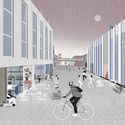
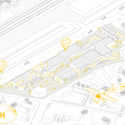
MVRDV have released details of their proposed mixed-use complex, designed to redevelop a post-industrial site in Kiel, Germany. The 65,000-square-meter proposal will adopt a flexible design system as opposed to a fixed, unchangeable plan, thus allowing the scheme to adapt to future demands as the design development progresses.
Labeled the “KoolKiel,” MVRDV’s scheme will occupy an existing large, single-story building previously used to store chains of ships, and for the printing of Germany’s famous Werner comics in the 1980s. The site’s current use as a hub for media and creative industries, and its resulting charismatic identity, has strongly influenced the MVRDV scheme, with the retention of the existing structure and lively, playful exterior spaces.
Cities around the world are growing at an unprecedented rate, and for the first time in recent history represent the preferred place for people to live. Urbanization has historically aided millions in escaping hardship through increased employment opportunities, better education and healthcare, large-scale public investments, and access to improved infrastructure and services. The city has been the ideal for heightened livability for people worldwide.
Videos
AFAIR UI 2018 Design Competition: "Lost and Found"
Have you ever had the idea to occupy a space that is soulless and lacking of identity? When you are in a transitional space, for example, can your surroundings leave you any meaningful/memorable expressions or a positive impact? Residual spaces. They are spaces of nothingness, physically and psychologically. Ironically, their widespread existence tend to be abandoned/forgotten and considered useless and hopeless. "Lost and Found" challenges you to explore and address meaningful expressions of these spaces. How far can we dig in the potentials that correspond to the surroundings of these residual spaces? Either solving an issue or embracing a local phenomenon, architecture contributes to kick-start positive changes to our society. Just look around you. After all, they are just lost spaces, in need to be found.
First Prize: The Music Telescope / Lucia Filippini, Elisa Dellarossa & Tuana Yıldız. Image Courtesy of Bee Breeders
Bee Breeders have selected the winners of the Mango Vinyl Hub Competition, challenging entries to marry architecture, music, industry, and design in the repurposing of a decrepit tin foil factory in Cesis, Latvia. With a focus on the revival of the vinyl record industry, “successful projects temper the impulse of retrojecting nostalgic hallmark or tradition, through revitalization of purpose of an artifact and history of a bygone era.”
Here are the winning visions of the Mango Vinyl Hub:
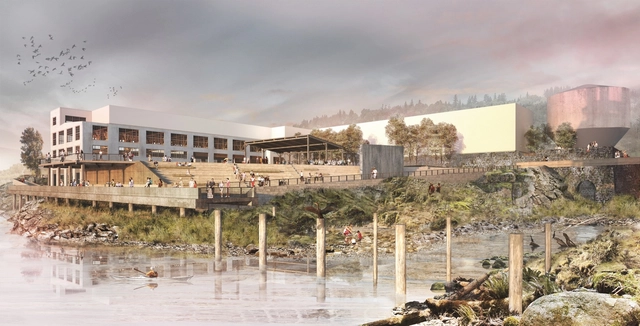
Snøhetta has unveiled plans for a new riverwalk masterplan located alongside Oregon’s Willamette Falls – the second largest waterfall by volume in North America – that will open up the attraction to public access for the first time in over 150 years. Selected to lead the project in 2015 alongside Mayer/Reed and DIALOG, Snøhetta’s scheme is the result of a 2-year design process developed as a collaboration with the city and thousands of individual community members.
The resulting plan calls for the reutilization and augmentation of existing industrial structures on the 22-acre site, giving visitors the opportunity to experience the falls and its rugged basalt shoreline and reconnecting Oregon City to its historic waterfront.
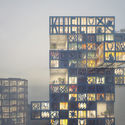
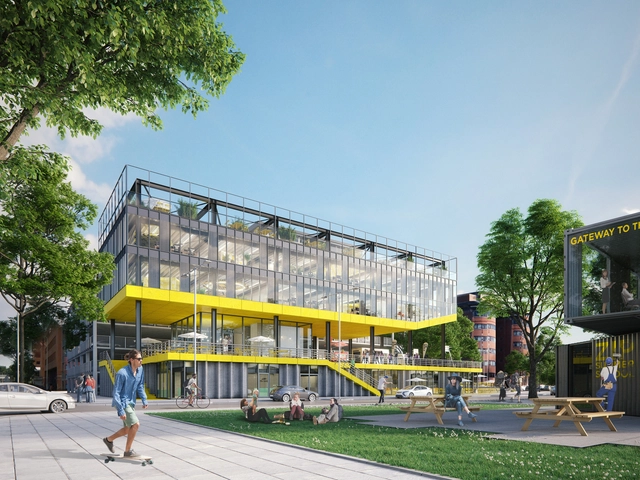
Dutch architectural firm, Studio Komma, in collaboration with concept-developer The Men of Foam, have won the Lot 2 Urban Lab Challenge, with their proposal, ZIP2516. Located in The Hague, The Netherlands, in an upcoming living and working district, the project “seeks to create an iconic building that is an accelerator for the transformation of an industrial area into a new energetic urban district.”
ZIP2516 will house a variety of programs, including social and commercial entrepreneurship and public space. The ground floor of the building will accommodate the flagship store of social entrepreneur, Happy Tosti. The first floor of the building will feature a public square and “urban playground,” with office and start-up space on the floors above, and a “gin bar with roof terrace” on top.
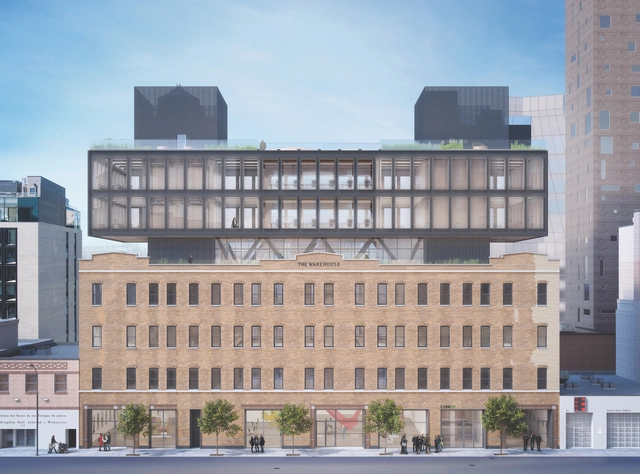
Elijah Equities, LLC has unveiled plans for the redevelopment of The Warehouse in New York City, a property currently occupied by car parking and art galleries, which will be transformed into 100,000 square feet of rentable office and retail space designed by Morris Adjmi.
Situated next to the High Line, the building currently at the site is a four-story, 65,000-square-foot former apparel-manufacturing warehouse. The redevelopment will add a three-story, steel-framed, cantilevered addition, resulting in a seven-story building with over 18,000 square feet of rooftop and outdoor amenity space.




_7061.jpg?1550506965&format=webp&width=640&height=580)












.jpg?1548884950&format=webp&width=640&height=580)