1. ArchDaily
  2. AD Topics

AD Topics: The Latest Architecture and News

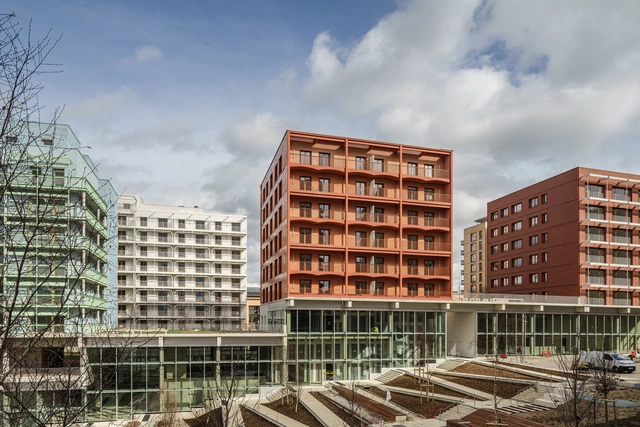
Beyond Sports: 10 Reversible and Multifunctional Olympic Villages

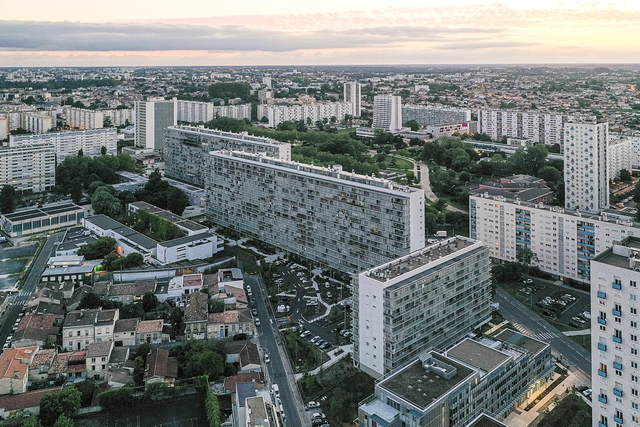
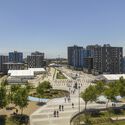
The first Olympic village was built for the 1924 Summer Games in Paris. Before this, athletes stayed in hotels, hostels, schools, headquarters, and even on the ships that brought them to the host cities. Pierre de Coubertin, co-founder of the International Olympic Committee (IOC), proposed the idea of an Olympic village. He realized it would be more cost-effective to house athletes in temporary structures rather than hotels. He believed the village would also create a sense of community among the international competitors.
Beyond Sports: 10 Reversible and Multifunctional Olympic Villages - Image 1 of 4Beyond Sports: 10 Reversible and Multifunctional Olympic Villages - Image 2 of 4Beyond Sports: 10 Reversible and Multifunctional Olympic Villages - Image 3 of 4Beyond Sports: 10 Reversible and Multifunctional Olympic Villages - Image 4 of 4Beyond Sports: 10 Reversible and Multifunctional Olympic Villages - More Images+ 7

Reimagining an Abandoned Urban Landmark: The Story Behind the Piraeus Tower in Athens, Greece

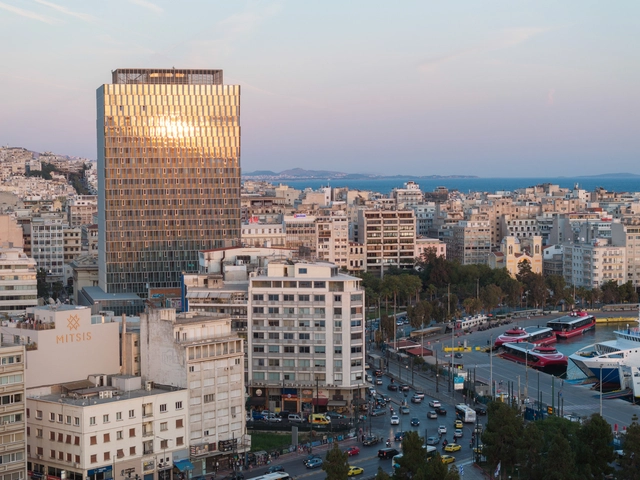
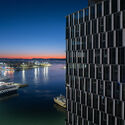
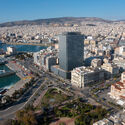
The landmark of Piraeus, located in the heart of the largest passenger port in Europe, began construction in 1972 but remained unfinished and vacant for decades. Finally completed in 2023, after an international competition, it now stands as Greece's first green and digital skyscraper. The architectural firm PILA took on the design of the facades, while the office ASPA-KST designed the commercial spaces, and the new general architectural study was entrusted to Betaplan. After over four years of renovation, Piraeus Tower officially opened its doors to tenants and visitors on June 4th with a night of celebrations, establishing itself as a bustling hub and injecting vitality into the area.

Reimagining an Abandoned Urban Landmark: The Story Behind the Piraeus Tower in Athens, Greece - Image 1 of 4Reimagining an Abandoned Urban Landmark: The Story Behind the Piraeus Tower in Athens, Greece - Image 2 of 4Reimagining an Abandoned Urban Landmark: The Story Behind the Piraeus Tower in Athens, Greece - Image 3 of 4Reimagining an Abandoned Urban Landmark: The Story Behind the Piraeus Tower in Athens, Greece - Image 4 of 4Reimagining an Abandoned Urban Landmark: The Story Behind the Piraeus Tower in Athens, Greece - More Images+ 14

How to Improve Energy Efficiency in Modernist Buildings?

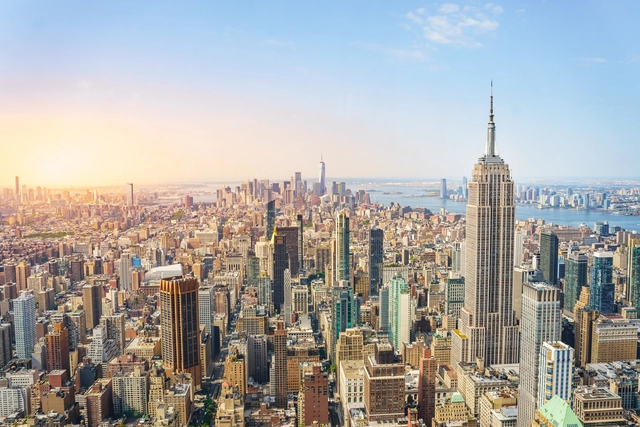
Throughout the history of architecture, energy efficiency, and CO2 emissions were considered marginal issues until the late 20th century. The low scores of some iconic modernist buildings in the Energy Star certification program illustrate this situation. The MetLife/PanAm Building (designed by Walter Gropius and Pietro Belluschi in 1963) received a dismal score of 39 (on a scale of 0 to 100), while the Lever House (designed by Skidmore, Owings & Merrill in 1952) scored 20. The worst performance was by Mies Van der Rohe's iconic Seagram Building, constructed in 1958, which received only 3 points. On the other hand, two revered Art Deco buildings from the 1930s, the Chrysler Building and the Empire State Building achieved scores of 84 and 80, respectively, as a result of extensive upgrades to their mechanical and insulation systems.

How to Improve Energy Efficiency in Modernist Buildings? - Image 1 of 4How to Improve Energy Efficiency in Modernist Buildings? - Image 2 of 4How to Improve Energy Efficiency in Modernist Buildings? - Image 3 of 4How to Improve Energy Efficiency in Modernist Buildings? - Image 4 of 4How to Improve Energy Efficiency in Modernist Buildings? - More Images+ 5

How Are Super Tall Buildings Aging?

In 1853, at the New York World Expo, a man climbed onto a suspended platform and ordered the rope supporting it to be cut. He dropped a few inches, but the safety system activated, and the platform remained stable, to the delight of the watching crowd. At that moment, perhaps not even Elisha Graves Otis realized how his invention would permanently change the course of architecture.

With the invention of the elevator, the sky became the limit, and buildings of 7 to 10 stories began to appear. Mosette Broderick, Director of Architectural and Urban Studies at New York University, explains that the Equitable Life Assurance Building that opened in 1870 with seven stories inspired both fascination and fear.

How Are Super Tall Buildings Aging? - Image 1 of 4How Are Super Tall Buildings Aging? - Image 2 of 4How Are Super Tall Buildings Aging? - Image 3 of 4How Are Super Tall Buildings Aging? - Image 4 of 4How Are Super Tall Buildings Aging? - More Images+ 2

What Are Vernacular Technologies?

Vernacular architecture has been gaining more and more space in theory and design practice, with its characteristics being studied and revised. An impulse related to different factors, but mainly to the context of climate change that we are experiencing, which calls for more sustainable and context-connected construction solutions.

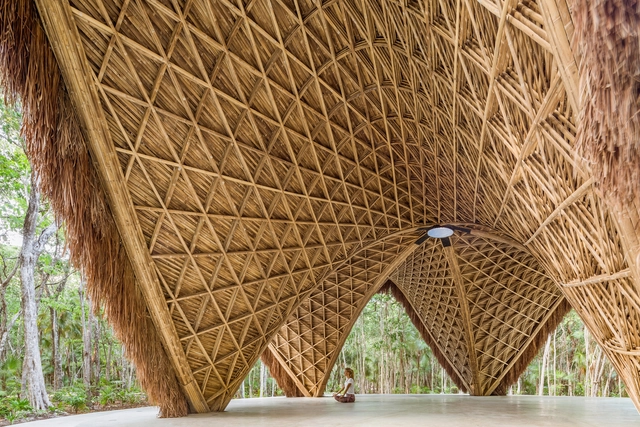
Within this scope, much is said about the different vernacular techniques employed in architecture, whether it is the production of adobe bricks, thatched roofs, woven bamboo walls, among many others. However, while vernacular technique focuses on specific actions or skills, its meaning differs from vernacular technologies.

What Are Vernacular Technologies? - Image 1 of 4What Are Vernacular Technologies? - Image 2 of 4What Are Vernacular Technologies? - Image 3 of 4What Are Vernacular Technologies? - Image 4 of 4What Are Vernacular Technologies? - More Images

Land as Raw Material: Latin American Homes Built With Locally Sourced Soil

Organizing, shaping, stacking. Transforming raw materials from the soil into architecture. This is a challenge that many Latin American architects embrace, demonstrating that scarcity can be daunting but also a rich opportunity to unleash creativity.

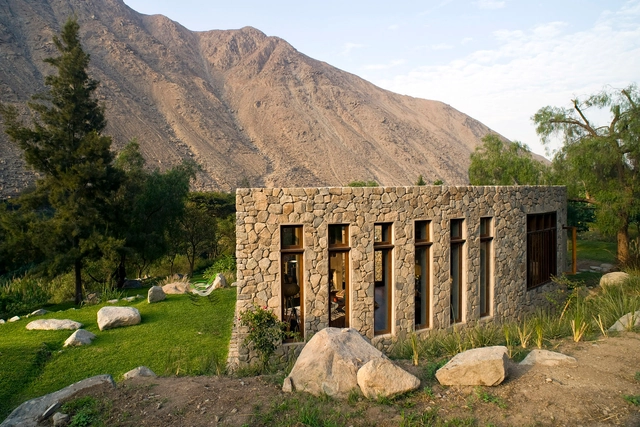
The use of materials extracted from the local soil serves a dual purpose. In regions with limited industrialization, using locally sourced materials makes economic sense because industrial materials such as concrete and steel are expensive and often require long-distance transportation, adding to their cost. Environmentally, choosing locally sourced materials from the start of a project reduces transportation needs and carbon emissions, supporting sustainability efforts.

Land as Raw Material: Latin American Homes Built With Locally Sourced Soil - Image 1 of 4Land as Raw Material: Latin American Homes Built With Locally Sourced Soil - Image 2 of 4Land as Raw Material: Latin American Homes Built With Locally Sourced Soil - Image 3 of 4Land as Raw Material: Latin American Homes Built With Locally Sourced Soil - Image 4 of 4Land as Raw Material: Latin American Homes Built With Locally Sourced Soil - More Images+ 9

Between Modular and Vernacular: How Combining Construction Techniques Can Bring Agility and Identity to Social Housing in the Global South

The opening scenes of the award-winning Brazilian film "City of God" (2002) portray a newly constructed housing complex situated on the outskirts of Rio de Janeiro. Subsequently, this complex evolves into a hub of poverty and violence. Despite the film being set in the 1960s, the housing development depicted was a recent construction.

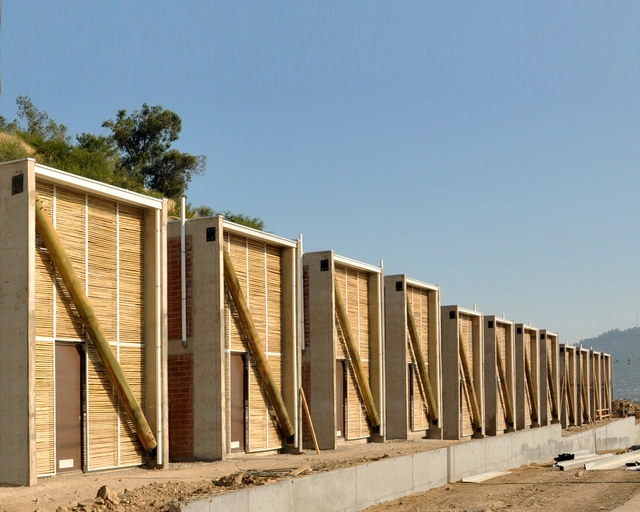
This choice made no difference because, despite the 40-year difference between the depicted era in the film and the time of filming, the architectural solutions employed by housing programs in the country remained stagnant. They continued to replicate outdated models, showcasing a lack of progress in the sector.

Between Modular and Vernacular: How Combining Construction Techniques Can Bring Agility and Identity to Social Housing in the Global South - Image 1 of 4Between Modular and Vernacular: How Combining Construction Techniques Can Bring Agility and Identity to Social Housing in the Global South - Image 2 of 4Between Modular and Vernacular: How Combining Construction Techniques Can Bring Agility and Identity to Social Housing in the Global South - Image 3 of 4Between Modular and Vernacular: How Combining Construction Techniques Can Bring Agility and Identity to Social Housing in the Global South - Image 4 of 4Between Modular and Vernacular: How Combining Construction Techniques Can Bring Agility and Identity to Social Housing in the Global South - More Images+ 8

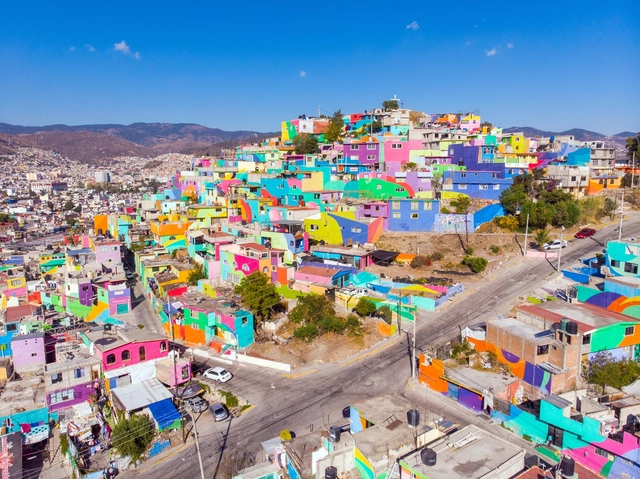
Colors of the Favela: The Transformative Impact of Painting on Communities

In the perception of many, the favela embodies contradictory and opposed representations. For those outside its boundaries, the favela is frequently associated with crime, poverty, or illness. Yet, it is also regarded as the aesthetic embodiment of a nation, serving as the birthplace of culturally renowned elements worldwide, such as samba in the case of Brazil.

Colors of the Favela: The Transformative Impact of Painting on Communities - Image 1 of 4Colors of the Favela: The Transformative Impact of Painting on Communities - Image 2 of 4Colors of the Favela: The Transformative Impact of Painting on Communities - Image 3 of 4Colors of the Favela: The Transformative Impact of Painting on Communities - Image 4 of 4Colors of the Favela: The Transformative Impact of Painting on Communities - More Images

ArchDaily Topics - April: Public

In Ancient Greece, a Polis referred to both the city and its body of citizens, where one cannot exist without the other. It is in this intersection, where Public Architecture, has the opportunity to construct the ideals of society: a space where individuals gather, relate to one another, and become citizens.

ArchDaily Topics - February: Representation in Architecture

Subscriber Access | 

Starting this month, ArchDaily will introduce monthly themes. Our editors and curators will align their efforts to go deeper into topics we find relevant in today’s architectural discourse, presenting new articles, projects, collaborations, and submissions by our readers. This month we will begin with Architectural Representation.

What started as a ground cut to represent buildings as a 2D maze or the flat representation of styles on an elevation, later evolved into the axonometric representations of battlefields and fortresses for military use, and since then into a diverse variety of views, formats and techniques that go beyond the mere representation of a volume for its construction.