1. ArchDaily
  2. Achim Menges

Achim Menges: The Latest Architecture and News

The Architect as a Scientist: New Materials Emerging Between Science and Design

What is architecture? For some, its traditional role is to bring together imagination, technical knowledge, and problem-solving, allowing architects to design and construct while balancing ideas with the means to realize them. From the stone and wood of early buildings to the steel and concrete of the 20th century, each era demanded not only an understanding of form but also of the properties and potential of the materials in use. This grasp of materials has always been a core part of the creative process, though its scope was limited by the know-how and technologies available.

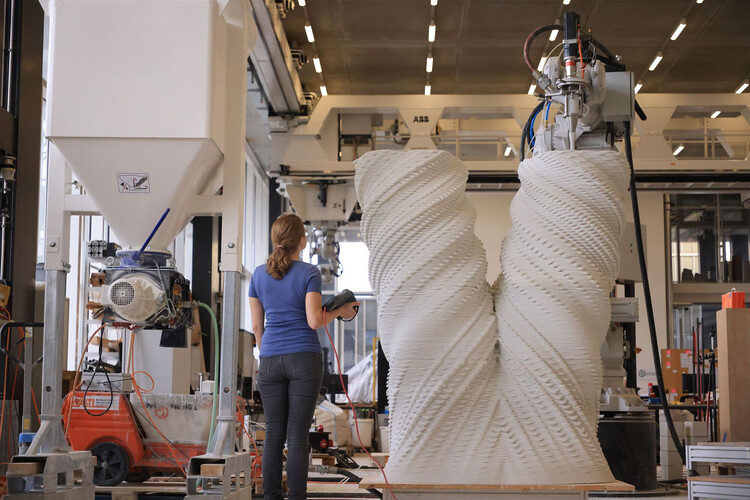
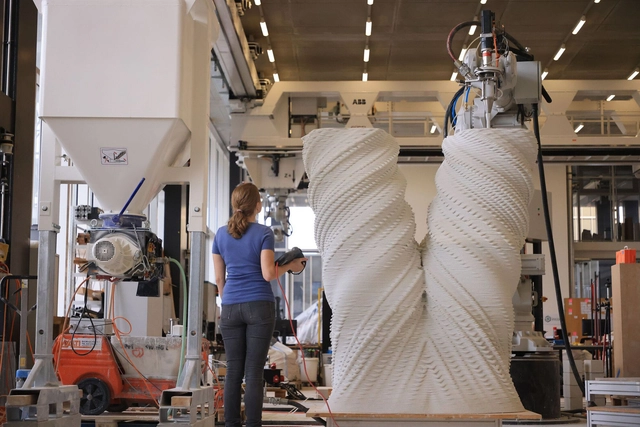
Over time, that balance has begun to shift. Architects have moved from merely using materials to actively designing them, applying scientific principles and experimenting with biological, chemical, and computational processes. This evolution has expanded the possibilities of architecture, intersecting nature, technology, and art, while pushing the role of the architect into a more experimental, science-driven dimension, where the manipulation and creation of materials becomes central to the creative act rather than merely a means to achieve forms or structures.

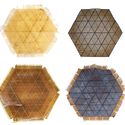
The Architect as a Scientist: New Materials Emerging Between Science and Design - Image 1 of 4The Architect as a Scientist: New Materials Emerging Between Science and Design - Image 2 of 4The Architect as a Scientist: New Materials Emerging Between Science and Design - Image 3 of 4The Architect as a Scientist: New Materials Emerging Between Science and Design - Image 4 of 4The Architect as a Scientist: New Materials Emerging Between Science and Design - More Images+ 11

Climate-Responsive Temporary Pavilions: Exploring 4 Ephemeral Structures across Europe

Subscriber Access | 

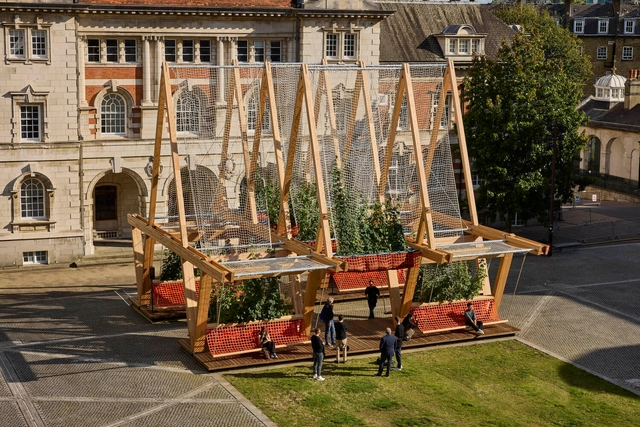
Pavilions offer architects a unique opportunity to experiment, serving as compact spaces that push the boundaries of design and spatial concepts. Free from many conventional functional constraints, these structures allow for artistic expression and the testing of new technologies. Pavilions often act as living laboratories of architecture, positioned in public or cultural contexts. They transform their surroundings into interactive, memorable experiences, providing a stage for architects to showcase their most innovative ideas. In recent years, climate responsiveness has emerged as a crucial focus in pavilion design. By using temporary structures as a testing ground for more sustainable practices, architects can experiment with alternative materials and environmentally conscious approaches that address the climate crisis.

Climate-Responsive Temporary Pavilions: Exploring 4 Ephemeral Structures across Europe - Image 1 of 4Climate-Responsive Temporary Pavilions: Exploring 4 Ephemeral Structures across Europe - Image 2 of 4Climate-Responsive Temporary Pavilions: Exploring 4 Ephemeral Structures across Europe - Image 3 of 4Climate-Responsive Temporary Pavilions: Exploring 4 Ephemeral Structures across Europe - Image 4 of 4Climate-Responsive Temporary Pavilions: Exploring 4 Ephemeral Structures across Europe - More Images+ 3

The Architect-Researcher: Exploring New Possibilities for the Production of Architecture

The Architect-Researcher: Exploring New Possibilities for the Production of Architecture - Featured Image
NUS School of Design & Environment / Serie Architects + Multiply Architects + Surbana Jurong. Image

While research seems intrinsic to the design process, architectural research is a professional path in itself, whose purpose is to highlight scientific evidence and explore alternatives outside of pre-established norms or empirical considerations. Its purpose is to create a framework of knowledge that can inform the design to reach objectively better outcomes. The following discusses the role and state of research in architecture, some prominent areas of inquiry, and the architects or institutions that dedicate their work to these subjects.

The Architect-Researcher: Exploring New Possibilities for the Production of Architecture - Image 1 of 4The Architect-Researcher: Exploring New Possibilities for the Production of Architecture - Image 2 of 4The Architect-Researcher: Exploring New Possibilities for the Production of Architecture - Image 3 of 4The Architect-Researcher: Exploring New Possibilities for the Production of Architecture - Image 4 of 4The Architect-Researcher: Exploring New Possibilities for the Production of Architecture - More Images+ 3

The Future of Universities, Offices and Cities: Highlights From Digital Futures 2020

Subscriber Access | 

Like most functions in recent months, this year’s Digital FUTURES, which is held annually since 2011 at Tongji University in Shanghai, had to move online due to the pandemic. The organizers took this as an opportunity to give the event a global dimension, turning the festival into what they rightfully call the most significant worldwide event for architectural education ever staged, with a 24/7 display of workshops, lectures and panel discussions involving some of the most prominent architects and educators. Here is an overview of the festival, together with a selection of lectures from Digital FUTURES World.

Achim Menges to Create Robotic Pavilion for V&A

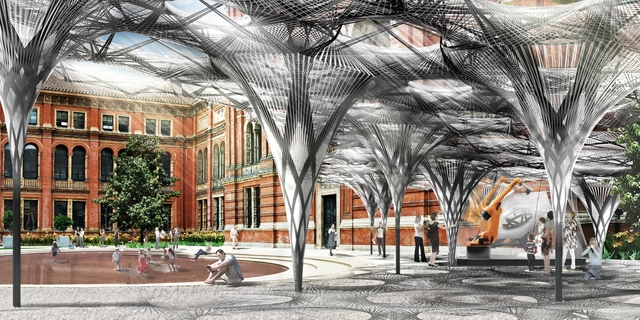
Stuttgart experimental architect Achim Menges has been commissioned to kickstart the V&A's first ever Engineering Season with a site specific, nature-inspired installation fabricated by robots. Complemented by Ove Arup's first major retrospective, Engineering the World: Ove Arup and the Philosophy of Total Design, the Elytra Filament Pavilion will be Menges' first public commission in the UK. He will work with Moritz Dörstelmann, structural engineer Jan Knippers and climate engineer Thomas Auer to complete the project.

"Elytra Filament Pavilion will explore the impact of emerging robotic technologies on architectural design, engineering and making," says the V&A. "Inspired by a lightweight construction principle found in nature, the fibrous structures of the forewing shells of flying beetles known as elytra, the Pavilion will be an undulating canopy of tightly-woven carbon fibre cells created using a novel robotic production process."