Videos
3D Printed Neighborhood. Image Courtesy of Overland Partners
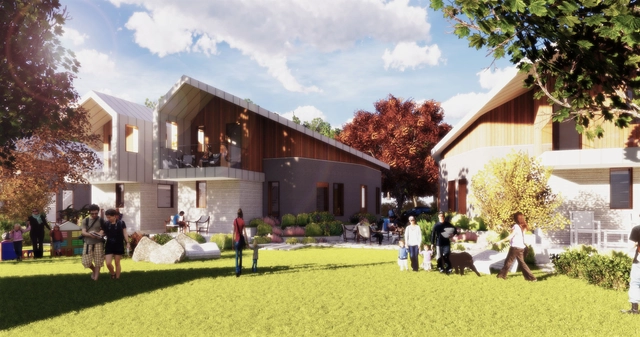
San Antonio based architecture firm Overland Partners have designed a series of proposals for new 3D printed neighborhoods in Texas. Teaming up with nonprofit, 3 Strands Neighborhoods, and ICON, a creator of printers, robotics, and advanced materials, the firm utilized the Vulcan II 3D printer to revolutionize home building. The collaboration aims to address the housing crisis in America and establish a sense of community for disadvantaged families.
SEArch+ and Apis Cor have won first place in the Virtual Construction level of NASA’s 3D-Printed Habitat Centennial Challenge, seeking to create sustainable shelters suitable for the Moon, Mars, and beyond. Using resources available on-site in these locations, the female-led, New York-based space research and design practice proposed the MARS X HOUSE, offering a robust, durable 3D-printed habitat using autonomous robotics.
Led by SEArch+ co-founder Melodie Yashar, the scheme employs evidence-based design for the form and constructability of the future habitat, intended for a crew of four to live and work on Mars for one Earth year. The habitat is designed to exceed radiation standards in order to ensure human health while connecting the crew with natural light and views of the Martian landscape.
Architects' general ignorance about the needs and requirements of people with special needs is worrisome. Beyond complying with mandatory regulations (different in each country), the quality of life for different-abled people depends on specific and daily factors that go beyond a railing or a ramp, and are often left in the hands of professionals who have never dealt with such issues.
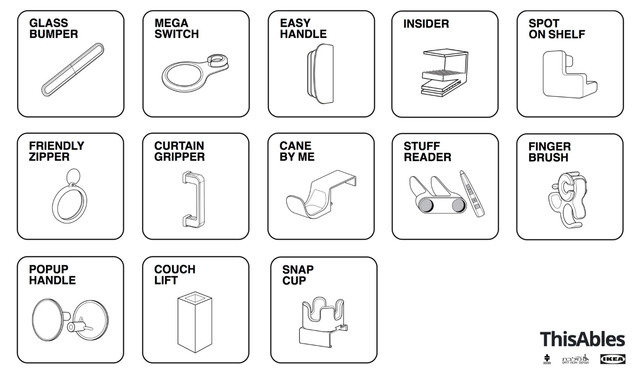
This Ables, a project developed by IKEA and the non-profit organizations Milbat and Access Israel, provides an excellent resource for how to create an equitable design in the smallest and simplest of details. From door handles that are can be opened with a forearm to a couch lift that enables users to sit down and get up easily, these 13 products are available to the general public on ThisAbles.com. Some products can even be 3D-printed independently.
See the video below for more details of the project.
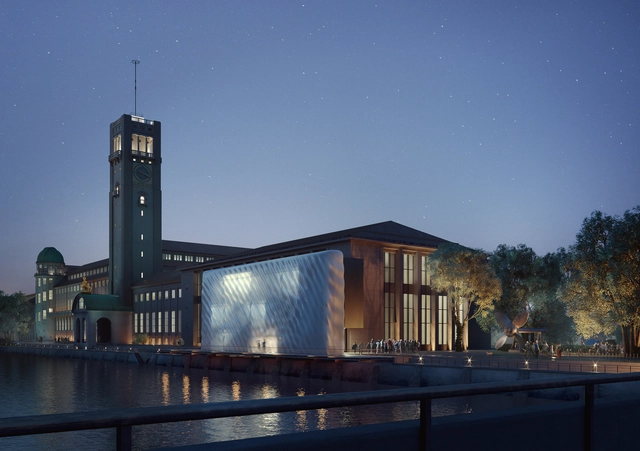
3F Studio has designed a 3D-printed façade destined to serve as the new entrance of the Deutsches Museum in Munich, Germany. The German-based startup, founded by Moritz Mungenast, Oliver Tessin and Luc Morroni, originates from the research project Fluid Morphology, a multifunctional, translucent 3D printed façade application, developed at the Associate Professorship of Architectural Design and Building Envelope at the Technical University of Munich (TUM).
3F Studio specializes in 3D Printed performative architecture and design. The computational-based design process allows for “environmentally informed architectural design” and integrates functions such as ventilation, insulation, and shading already integrated into the new façade.
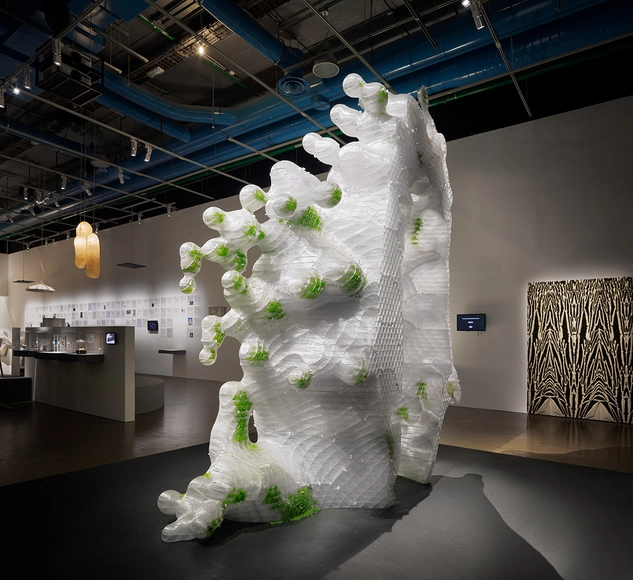
The renowned Centre Pompidou in Paris is to open its doors to two living sculptures, embodying the future forms of spatial intelligence. The exhibition, titled “La Fabrique du vivant” [The Fabric of the Living], will feature “H.O.R.T.U.S. XL Astaxanthin.g” by ecoLogicStudio in collaboration with Innsbruck University - Synthetic Landscape Lab, CREATE Group / WASP Hub Denmark - University of Southern Denmark, and "XenoDerma" by Urban Morphogenesis Lab directed by Claudia Pasquero at The Bartlett UCL.
Running from February 20th to April 15th, the exhibition will examine the notion of “living” in a digital era, where new interactions are emerging between the fields of life science, neuroscience, and synthetic biology. Permeating the entire urbanscape, this global, digital apparatus “encompasses miniaturization, distribution, and intelligence of manmade urban networks of in-human complexity, engendering evolving processes of synthetic life on Earth.”
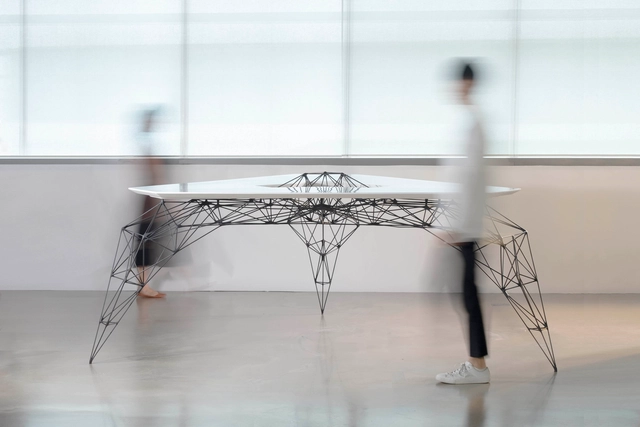
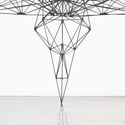
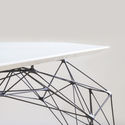
A sturdy featherweight table? Sounds... contrary to reason. But this contradiction was the very impetus for the design. Created for a research center that’s pushing the boundaries of design and manufacturing using technology and science, the designers--AIRLab, in collaboration with DManD-- sought to dematerialise the typical structure of a table, creating a sense of instability with the visual counterpoint of a solid surface.
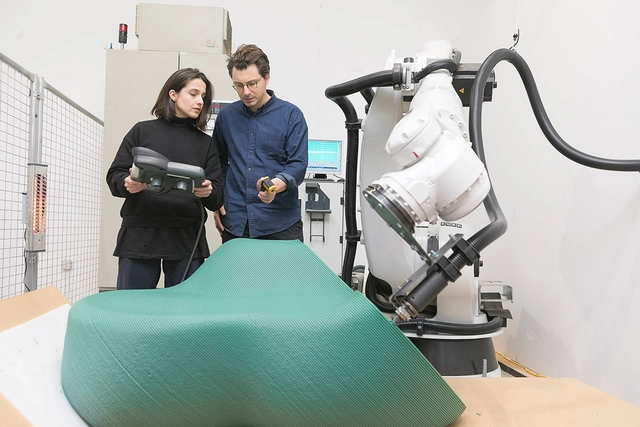
The New Raw has launched the Zero Waste Lab in Thessaloniki, a research initiative where Greek citizens can upcycle plastic waste into urban furniture. Part of the larger Print Your City project, the project utilizes a robotic arm and recycling facilitates to create custom furniture pieces that close the plastic waste loop. The initiative aims to use flakes from recycled products to redesign public spaces within the cities.
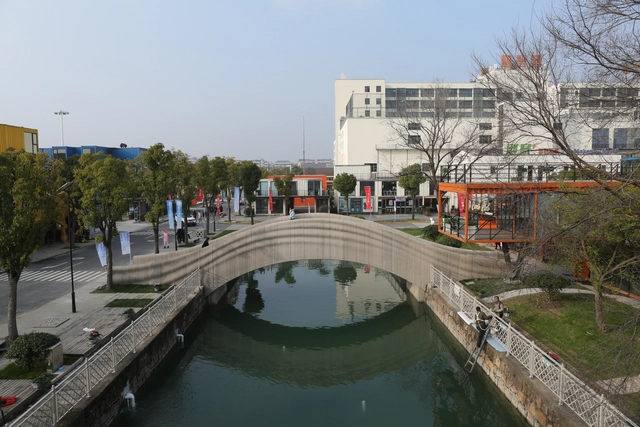
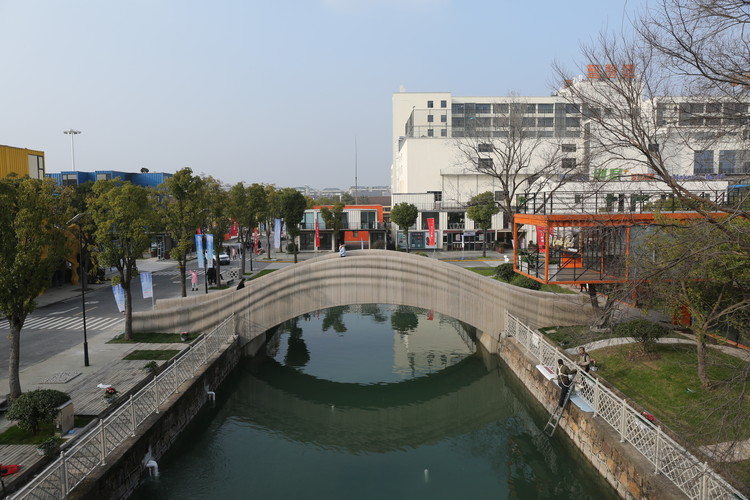
The world’s longest 3D-printed concrete pedestrian bridge has been completed in Shanghai. Designed by Professor Xu Weiguo from the Tsinghua University (School of Architecture) - Zoina Land Joint Research Center for Digital Architecture, the 26.3-meter-long bridge was inspired by the ancient Anji Bridge in Zhaoxian, China.
The single-arch structure was created using a 3D printing concrete system developed by Professor Xu Weiguo’s team, integrating digital design, cost efficiency, smart technology, and architectural dynamism. Enclosing the 3.6-meter width, the bridge’s handrails are shaped like flowing ribbons on the arch, creating a light, elegant movement across the Shanghai Wisdom Bay pond.
3D printing itself is no longer a new technology, but that hasn’t stopped researchers and innovators around the world from coming up with new applications and opportunities. Some experiments with new materials have been driven by sustainability concerns and others are simply the result of imagination and creativity. Others have chosen to invest their time utilizing more traditional materials in new ways. Materials, however, are just the beginning. Researchers have developed new processes that allow the creation of objects that were previously impossible to print and, on a larger scale, new building typologies are being tested - including a Mars habitat!
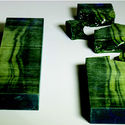
Researchers at New York’s Columbia University have unveiled a method of vibrantly replicating the external and internal structure of materials such as wood using a 3D printer and specialist scanning techniques. While conveying the external profile and patterns of natural objects is tried and tested, a major challenge in the 3D printing industry has been replicating an object’s internal texture.
In their recent study “Digital Wood: 3D Internal Color Texture Mapping” the research team describes how a system of “color and voxel mapping “led to the production of a 3D printed closely resembling the texture of olive wood, including a cut-through section.
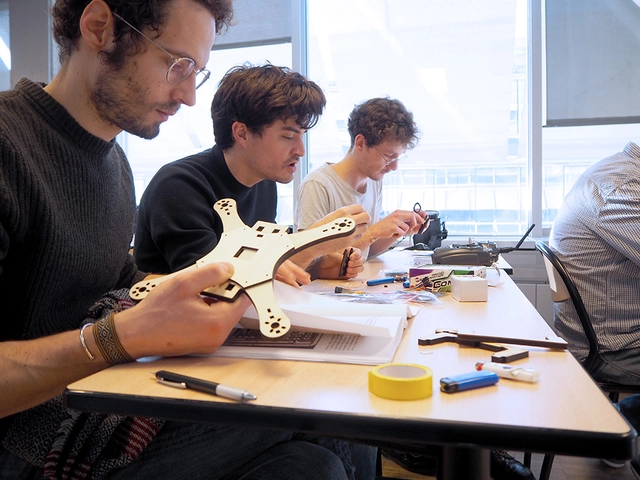
In 2016, Ecole des Ponts ParisTech has established an advanced masters program with a focus on digital fabrication and robotics. Currently recruiting for its fourth installment, the Design by Data Advanced Masters Program appeals to architects, engineers, and tech-oriented designers. Since its launch in 2016, the program’s director Francesco Cingolani has sought to shape the relationship between architecture and technology by creating a cross-disciplinary culture between the two.
As previously mentioned on Archdaily, students study the main components of the program - computational design, digital culture and design, and additive manufacturing and robotic fabrication - throughout the 12-month program to fulfill Design by Data’s main objectives while working with peers in a dynamic learning environment. While providing each participant with both technical skills and an aesthetic eye, the program ensures students will also gain critical knowledge of current innovative trends and ongoing research. By exposing them to technology through hands-on use of tools of digital fabrication, the program will teach students to approach design through a process-oriented lens.
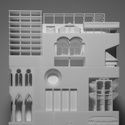
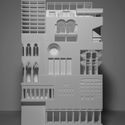
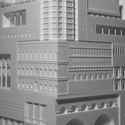
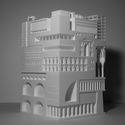
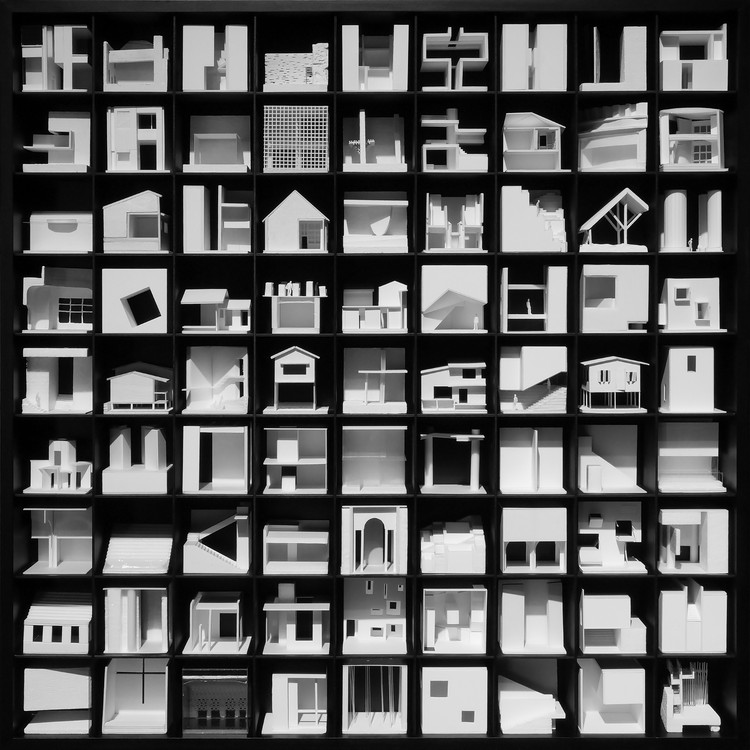
Architect and Project Professor at The University of Tokyo, Fumio Matsumoto put together more than 30 iconic buildings into a single 3D printed object called, “Memories of Architecture.” Façades, exterior forms, interior spaces, and structures of significant architectural works were reproduced at 1:300 scale and merged together in order from old to new.
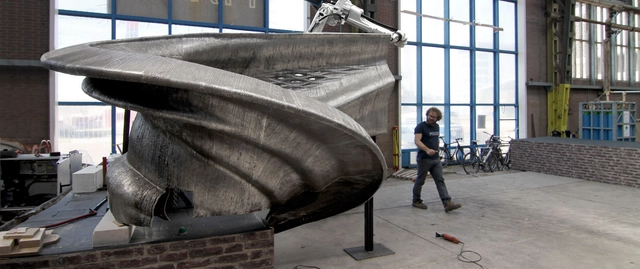
Originally slated to be built in place, further research concluded that the design would have placed too much stress of the canal walls. So it was back to the drawing board, and the studio, where the updated design is now under construction. Featuring complex curves and a 12-meter-span, the bridge is now being constructed by MX3D’s sophisticated 3D-printed robot. And with about one-third of the structure already completed, it is back on schedule for a late 2018 installation on Amsterdam’s Oudezijds Achterburgwal canal.
Have you ever spent hours calibrating the nozzle of a 3D printer or preparing a print-ready file – only to find that the model has failed because of a missed zero-thickness wall? With this in mind, the Platonics Ark—a 3D printer currently being developed in Helsinki, Finland—has one simple goal: to remove all unnecessary set-up and technical processes by means of intelligent automation and, as a result, almost entirely eliminate the wasted time that architects and designers spend calibrating printers, or working up print-ready files.
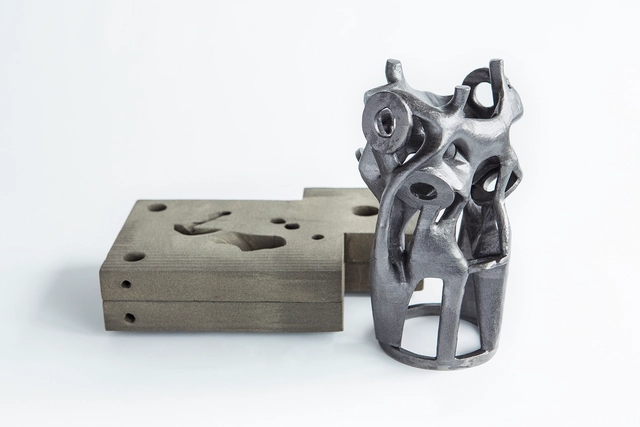
Arup's’ research into alternative production techniques and materials has focused on the potential of 3D printing metal in the construction sector. Complex and individually designed steel structural elements can be efficiently produced “resulting in endless possibilities in mass customisation, weight reduction, product integration and more.”
Working with the Anglo-Dutch company 3Dealise, their 3D-printed sand molds are used in the traditional casting process to create sophisticated, unique structural steel nodes as a certified material. Sand printing offers a quick technique that can reuse the materials and allows costs to be kept low.
The team of Foster + Partners and Branch Technology have been awarded first prize in the latest stage of NASA’s 3D-Printed Habitat Challenge, a $2.5 million multi-phase competition designed to generate ideas and advance technology for the construction of sustainable housing solutions “for Earth and beyond.”
After printing three cylinder and three beams the first two levels of Phase 2, Stage 3 asked teams to design and print a 1.5-meter dome using indigenous Martian soil and recyclable materials, envisioning how future habitats could be constructed on the Red Planet. Teams were required to develop the 3-D printing technology itself as well as the structural design for each dome. The competition also dictated each structure be built within a 22-hour time frame, using the specific materials, geometric tolerances and autonomous performance that would be demanded by the Martian landscape.
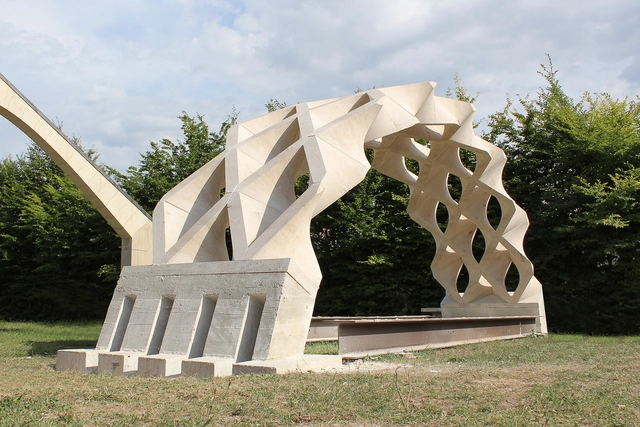
Italy-based New Fundamentals Research Group recently designed and built a full-scale prototype of an experimental barrel-vaulted stone structure for SNBR, a French company that specializes in cutting-edge stone construction. The structure is named Hypar Vault in a reference to the geometry of its constituent blocks; it uses two types of prefabricated stone modules—one type is the mirror image of the other—whose designs are based on the hypar (hyperbolic paraboloid), one of the only "doubly-ruled" surfaces in geometry. The use of these configurations allowed the vault to be constructed with almost zero wasted stone.
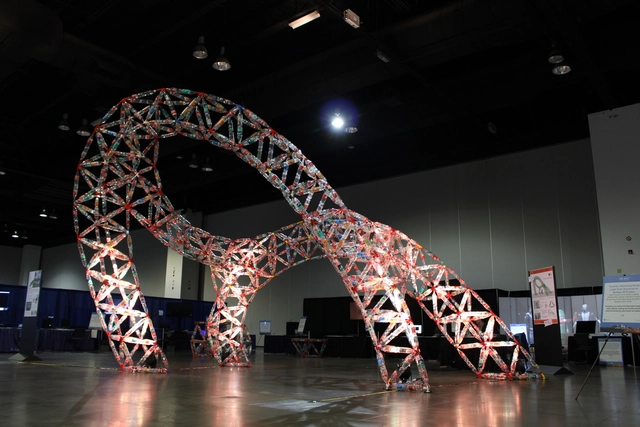
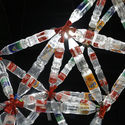
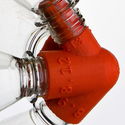
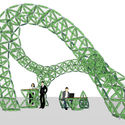
The capabilities of personal 3D printing and fabrication are only beginning to be tested, but a new system is pushing the boundaries for feasible, structurally-sound large scale structures. Unlike other structures created by 3D printing systems, Trussfab doesn’t require access to specialized equipment, nor specific engineering knowledge, to print and build large-scale structures capable of supporting human weight. Phd researcher Robert Kovacs with his team from the Human Computer Interaction Lab at the Hasso Plattner Institute in Potsdam, Germany created Trussfab as an end-to-end system allowing users to fabricate sturdy, large-scale structures using plastic bottles and 3D-printed connections, making them easy and relatively quick to construct.




.jpg?1554130599&format=webp&width=640&height=580)


.jpg?1554130599)