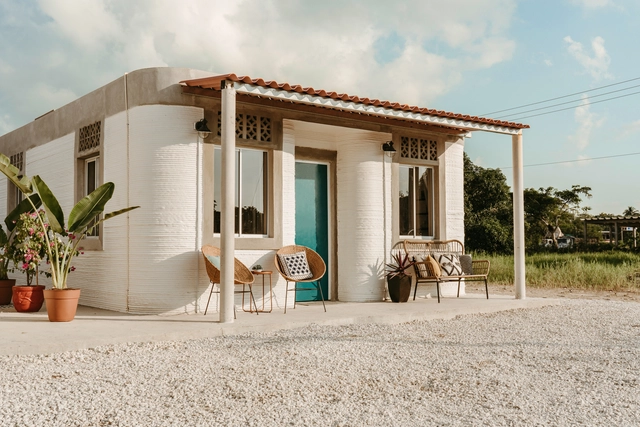
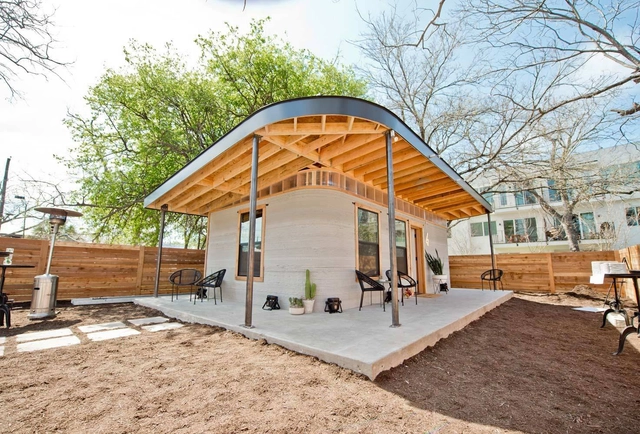
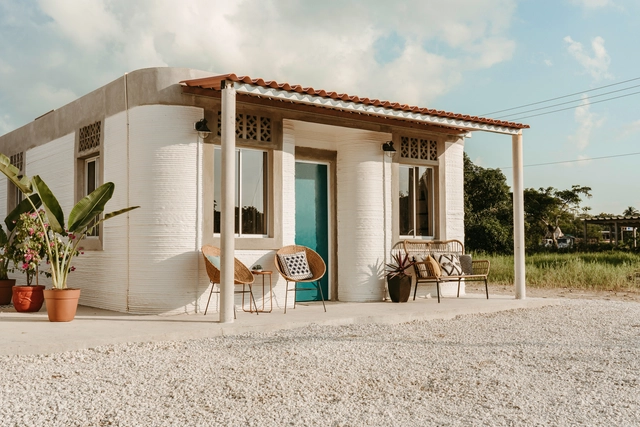
New Story Project - ICON - Mexico. Image Courtesy of ICON
BIG - Bjarke Ingels Group has joined a series of investors and partnered up with ICON, in order to push forward the use of 3D printing robotics to deliver dignified, resilient homes around the world. Aiming to contribute actively in the ongoing transformation, Bjarke Ingels, Founder and Creative Director of BIG stated that “additive manufacturing will play a transformative role in the future of construction”.
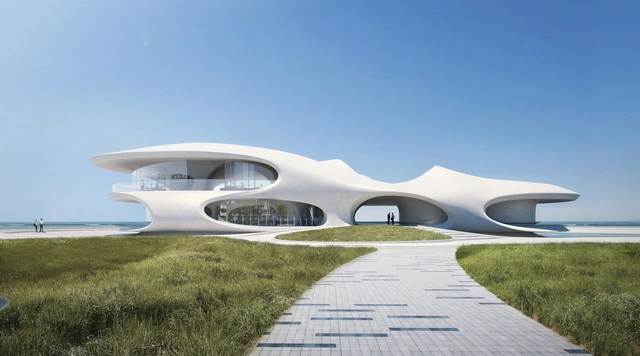
MAD Architects has just released its design for the Wormhole Library, a curved structure that serves as a multi-functional building, allowing visitors to read, enjoy the sea views and attend open-air performances. Located on the coast in Haikou, Hainan Province in China, the “wormhole” pavilion is now under construction and is expected to be completed in 2021.
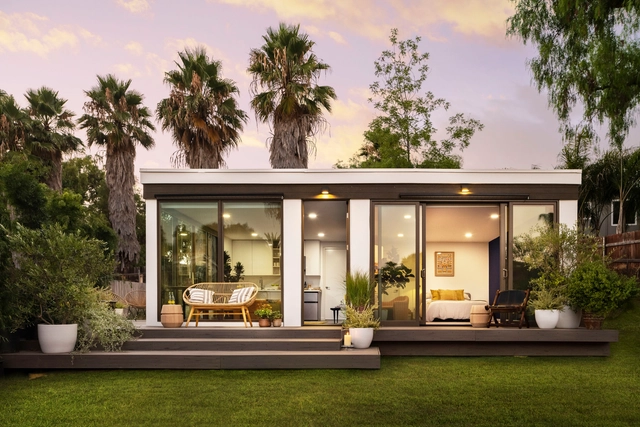
Construction technology company Mighty Buildings has completed a new 3D-printed Accessory Dwelling Unit in San Diego, California. The company recently launched with the aim of using 3D printing and robotic automation to build more affordable and sustainable homes. Their pilot project, the Mighty Duo B, comprises two modular units that took eight total weeks from fabrication to assembly on site.
A couple of years ago, digital fabrication was making headlines regularly, promising to drastically change the architecture practice. The revolution in architecture might not have arrived yet, but research projects, experiments and the dedication of several architects and universities already opened a new realm of possibilities for architectural expression. Therefore, it seems appropriate to give an overview of the impact the technology had so far within the architecture practice. This article covers the different types of processes within the field and the projects that experiment with them, with the scope of reframing the architectural potential of digital fabrication.
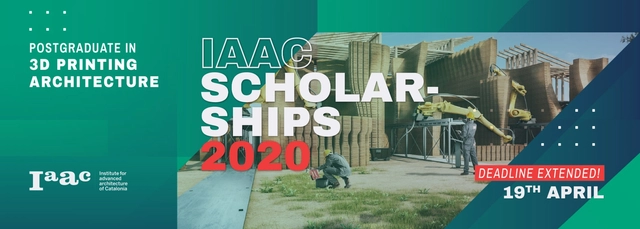
IAAC is glad to announce to you that the OTF:3D Printing Architecture program has extended the application deadline until April 19th for 2 FULL scholarships for the next academic year. This is a great opportunity to learn about novel technologies for sustainable design and construction, thanks to additive manufacturing.
Craftmanship is back. Following a century of mass production and industrial development, crafts are starting to be revalued and reinterpreted. A new sensitivity towards raw materials, the recovery of local techniques and the defense of small-scale trade are a few of the claims that this comeback represents. Materials such as earth and ceramics, textiles and wood are being reinterpreted by designers, artists, and architects around the world, in search of both their own style and the representation of collective nostalgia.
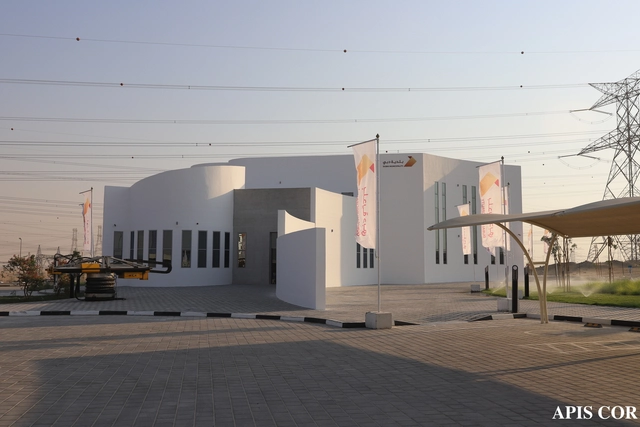
Once completed, the Dubai Municipality will become the world’s largest 3D printed building, standing tall at 9.5 meters with an area of 640 square meters. Executed by Apis Cor, a U.S.-based company, the structure was directly built on-site.
The world’s first 3D printed community is currently underway in a remote area in Mexico. The printer has been created as a solution to minimise homelessness and provide safe and adequate shelter for individuals.
New Story, a not for profit organisation, which was founded five years ago, aims to provide adequate shelter/housing for people exposed to extreme poverty and unsafe housing. New Story, to date, have constructed 2,700 homes catering for 15,000 people located in areas such as Haiti, El Salvador, Bolivia and Mexico. For these homes they have used traditional construction methods and in the past two years have started to explore innovative construction solutions for faster building production that caters for the ever changing social housing sector and housing crisis.
At the beginning of 2019, we identified 3D printing as a trend that would influence architecture in 2019. This was not a difficult prediction to make. Aside from noting a 70% increase in reader interest in 3D printing throughout the previous year, we saw how the architectural community has had a long-running engagement with 3D printing, from using the technology to tackle homelessness, to creating affordable yet complex structural connections.
This does not mean that 2019 was a "boring" year in the 3D printing world. In fact, while the influence of the technology in the architecture of 2019 was predictable, the various ways in which this influence manifested was not. Throughout the year, 3D printing seemed to appear everywhere, from spanning a canal to replicating timber, and imagining neighborhoods for Texas and Mars.
Concrete is the second-most used material on earth. It is also the second-largest emitter of CO2, with cement manufacturing accounting for 5 to 7 percent of annual emissions. The continued popularity of concrete as a material of choice in the design and construction industry, coupled with increasing unease of the environmental consequences, has put concrete firmly in the spotlight of innovation and experimentation. As a result, designers, architects, and researchers around the world are generating multiple visions for what the future of concrete in architecture could look like.
https://www.archdaily.com/926854/what-is-the-future-of-concrete-in-architectureNiall Patrick Walsh
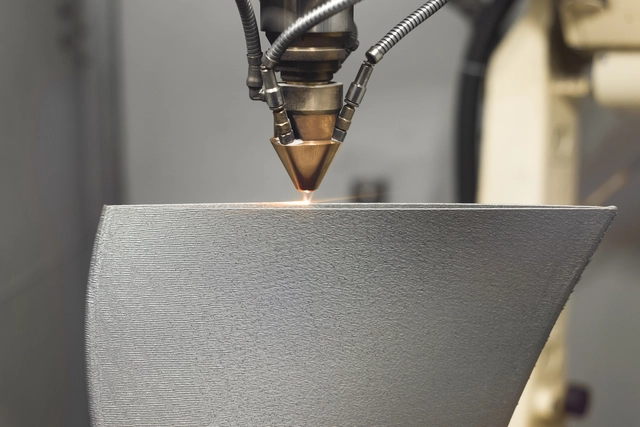
Additive Manufacturing (AM) is a term used to identify the manufacturing processes performed by 3D printing through layer-by-layer construction. In addition to avoiding the generation of waste through the use of precise geometries and exact quantities of material, these controlled processes can be much faster than traditional ones, since they don't require tools or other instruments.
Additive Manufacturing is done based on a digital model. The process begins with a CAD design or three-dimensional scan and then translates that shape into an object divided into sections, allowing it to be printed. Its use has extended from industrial design to the replica of archaeological objects to the manufacture of artificial human organs and tissues, among many others.
As construction evolves, new advancements are shaping how we design. These movements are the product of shared ideas and the convergence of building technologies that open up new possibilities for architecture. From the atomic scale of materials to preassembled homes and faraway planets, the changes in BuildTech are felt across industries. As a result, disciplines are learning from one another to reimagine how we build.
The construction industry has evolved throughout time, but always by way of builders. What happens when people are no longer part of building and construction? This is the question asked by British multinational infrastructure company Balfour Beatty, and they’ve published their answer in the 2050 Innovation Paper. The industry report has become a reference point to those looking at the evolution of buildings and design.
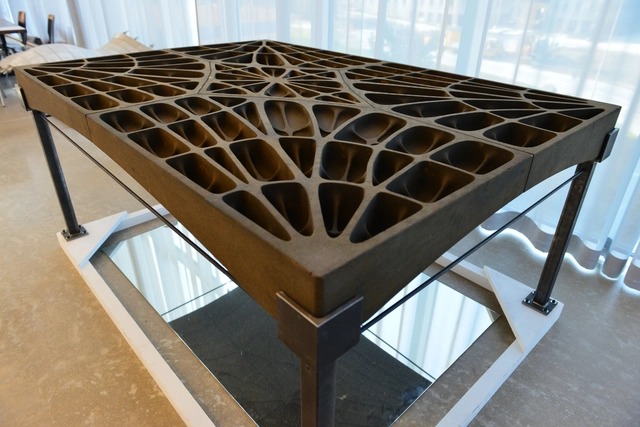
With the intention of maximizing available space and avoiding steep construction costs, researchers from ETH Zurich’s Department of Architecture have devised a concretefloor slab that with a thickness of a mere 2cm, remains load bearing and simultaneously sustainable. Inspired by the construction of Catalan vaults, this new floor system swaps reinforced steel bars for narrow vertical ribs, thus significantly reducing the weight of construction and ensuring stability to counter uneven distributions on its surface.
As opposed to traditional concretefloors that are evidently flat, these slabs are designed to arch to support major loads, reminiscent of the vaulted ceilings found in Gothiccathedrals. Without the need for steel reinforcing and with less concrete, the production of CO2 is minimized and the resulting 2cm floors are 70% lighter than their typical concrete counterparts.
https://www.archdaily.com/869192/gothic-construction-techniques-inspire-eth-zurichs-lightweight-concrete-floor-slabsOsman Bari
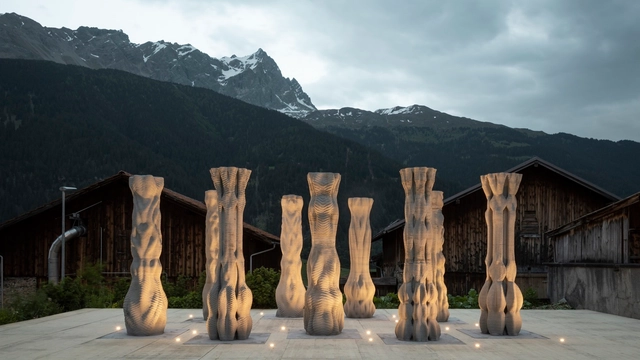
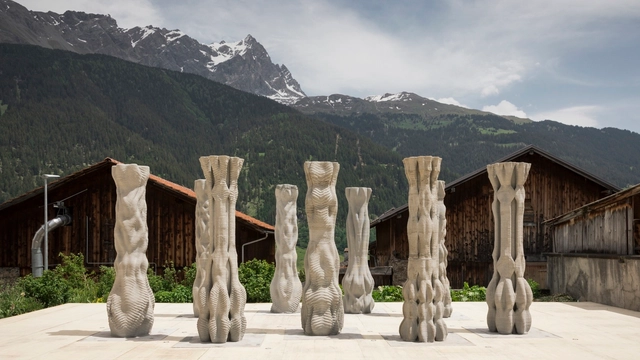
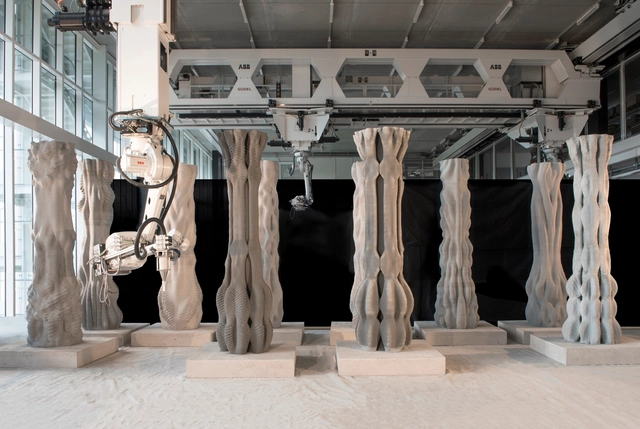
ETH Zurich has unveiled details of “Concrete Choreography,” an installation recently inaugurated in Riom, Switzerland. The installation presents the first robotically 3D printed concrete stage, consisting of columns fabricated without formwork, and printed to their full height in 2.5 hours. The process is expected to greatly improve the efficiency of concrete construction while achieving the fabrication of complex components.
https://www.archdaily.com/921635/eth-zurich-develops-3d-printed-concrete-columnsNiall Patrick Walsh
This is all quite recent: less than a year ago, a French family became the first in the world to live in a 3D printed house. Short of 20 years, this seemed like a distant dream, this new technology has developed quickly, and it arises as a possible contribution to the housing crisis around the world.
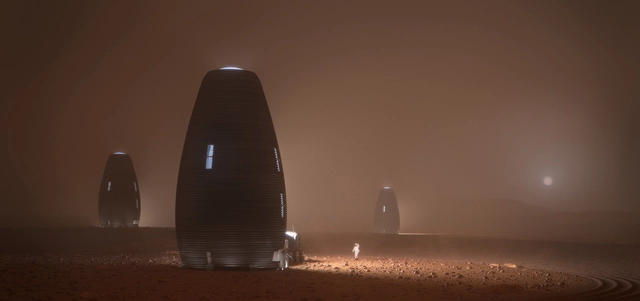
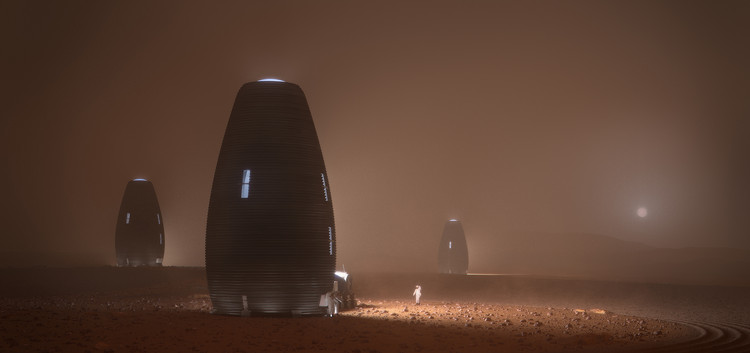
AI SpaceFactory has been awarded first place in the NASA Centennial Challenge. The multi-planetary architectural and technology design agency’s Mars habitat MARSHA was awarded the overall winner in the long-running competition series, which saw 60 challengers in total. The MARSHA habitat offers a glimpse into what the future of human life could look like on Mars, with a 15-feet-tall prototype 3D printed during the final phase of the competition, including three robotically-placed windows.
The Estonian Academy of Arts (EKA) is welcoming applications for the international summer school — 2019 EKA Summer Academy of Art, Design and Architecture – Possible Futures! Application deadline: 26 May.










.jpg?1582834753&format=webp&width=640&height=580)
.jpg?1582834791 "via Shutterstock")


.jpg?1582834753)